Matcha Latte Recipe from a Tea Sommelier
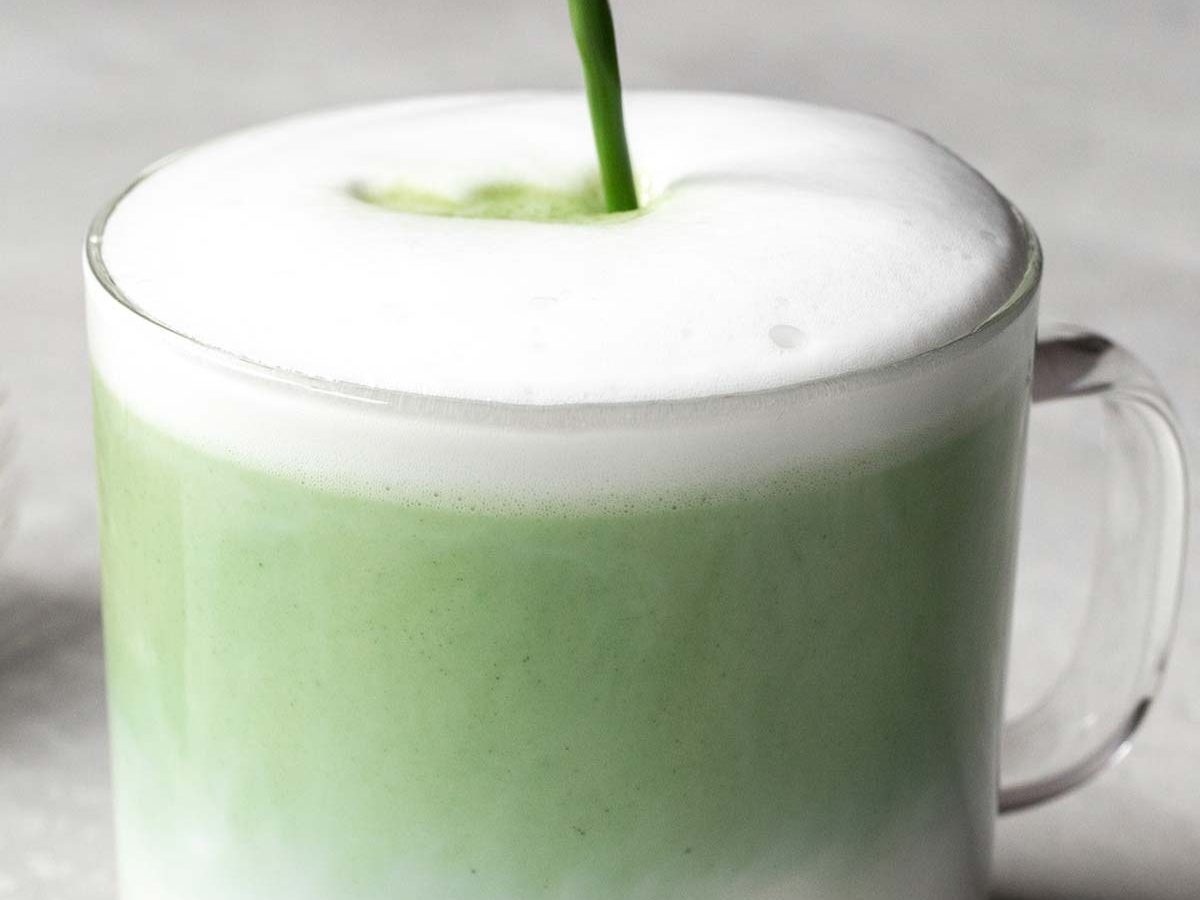
A Tea Sommelier’s guide to making a perfectly whisked matcha latte at home. Follow these clear, step-by-step instructions to choose the right matcha, create a smooth matcha paste, and make velvety frothed milk for a café-quality drink.
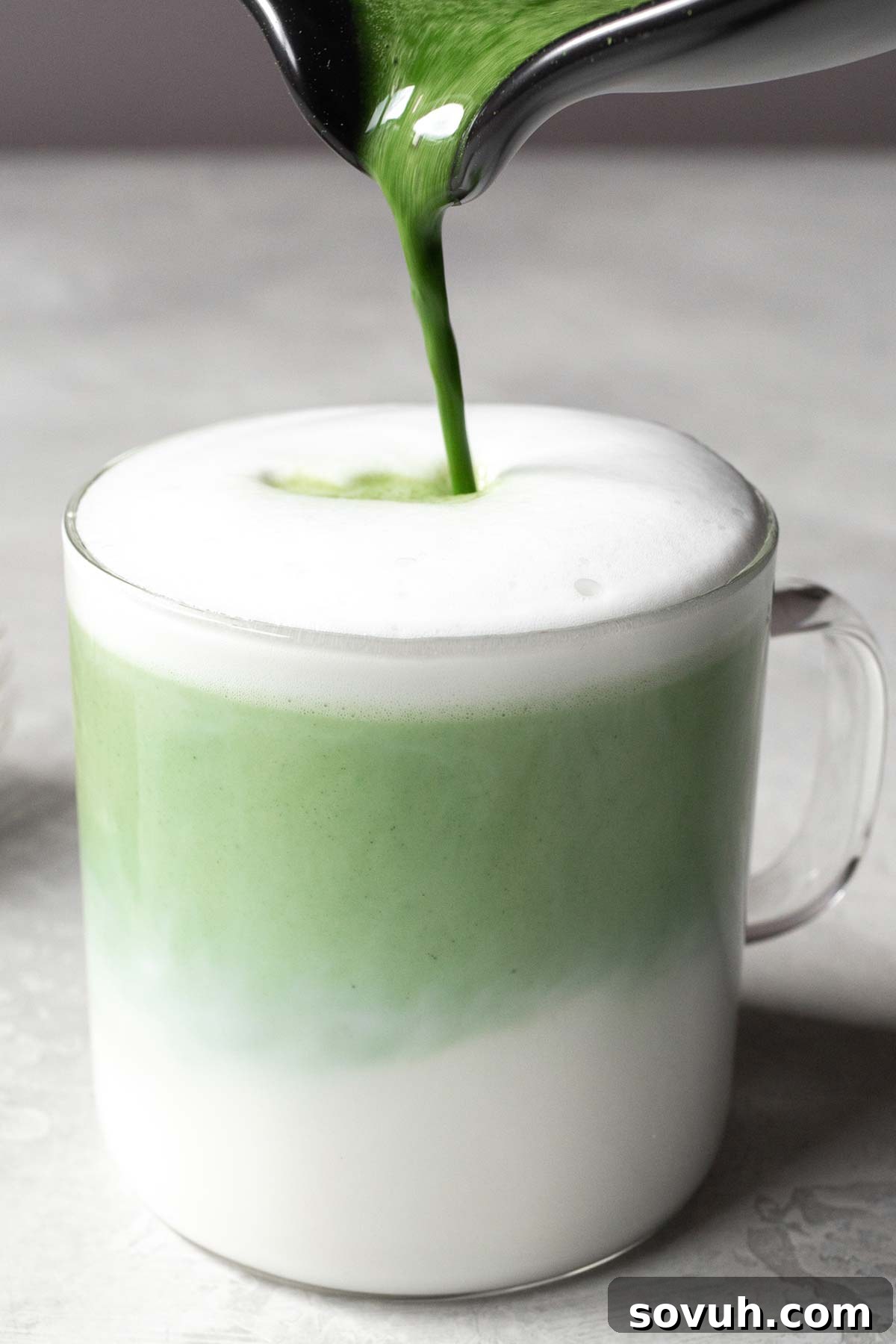
Better-than-Starbucks Matcha Latte
Matcha lattes used to be my regular coffee-shop order. Once I learned to make them at home, I stopped buying them out—my homemade matcha lattes are richer, fresher, and more balanced. With a few simple techniques and the right tools, you can consistently make a drink that tastes better than many café versions.
Perfection comes down to small details: the quality of the powder, the temperature of the water, how you whisk, and the way you froth the milk. Below I’ll walk you through each step so you can recreate a bright, smooth, and creamy matcha latte at home.
Note from Jee

Years before I became a certified Tea Sommelier, I taught matcha workshops in Manhattan. I shared a simple whisking method that helped students create smooth matcha lattes on their first try. That same technique is what I demonstrate here. It takes a little practice to perfect your wrist motion and froth, but once you get it, making an excellent matcha latte becomes quick and easy.
Ingredient Notes
- Matcha: The brighter, more vivid the green, the higher the quality. For lattes you don’t need ceremonial-grade matcha; a good-quality culinary or latte-grade matcha in the $30–50 range gives excellent flavor and color without the premium cost.
- Milk: Use any milk you prefer. Whole milk yields the richest texture; oat milk is an excellent dairy-free option that froths well and complements matcha’s grassy notes.
- Water: Filtered water is recommended. Clean-tasting water makes a cleaner, more vibrant matcha.
- Sweetener: Honey is easy to dissolve and pairs nicely with matcha. Simple syrup is an alternative if you prefer a neutral sweetener.
See the recipe card below for exact ingredient amounts and the full instructions.
Step-by-Step Instructions
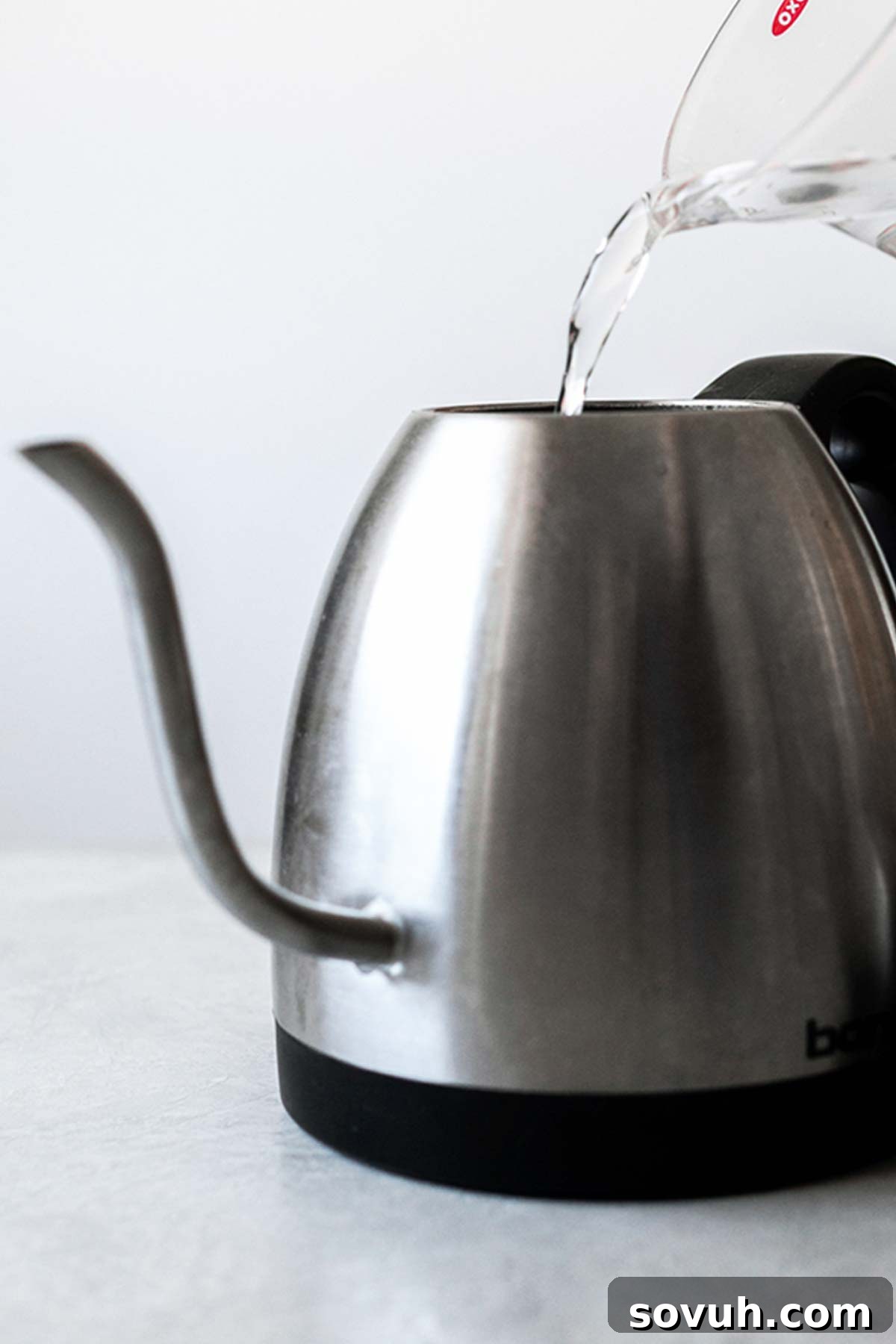
Step 1: Heat the water.
Do not use boiling water. Aim for around 175°F (80–85°C). If you have an electric kettle with temperature settings use that; otherwise bring water to a simmer on the stovetop and let it cool briefly.
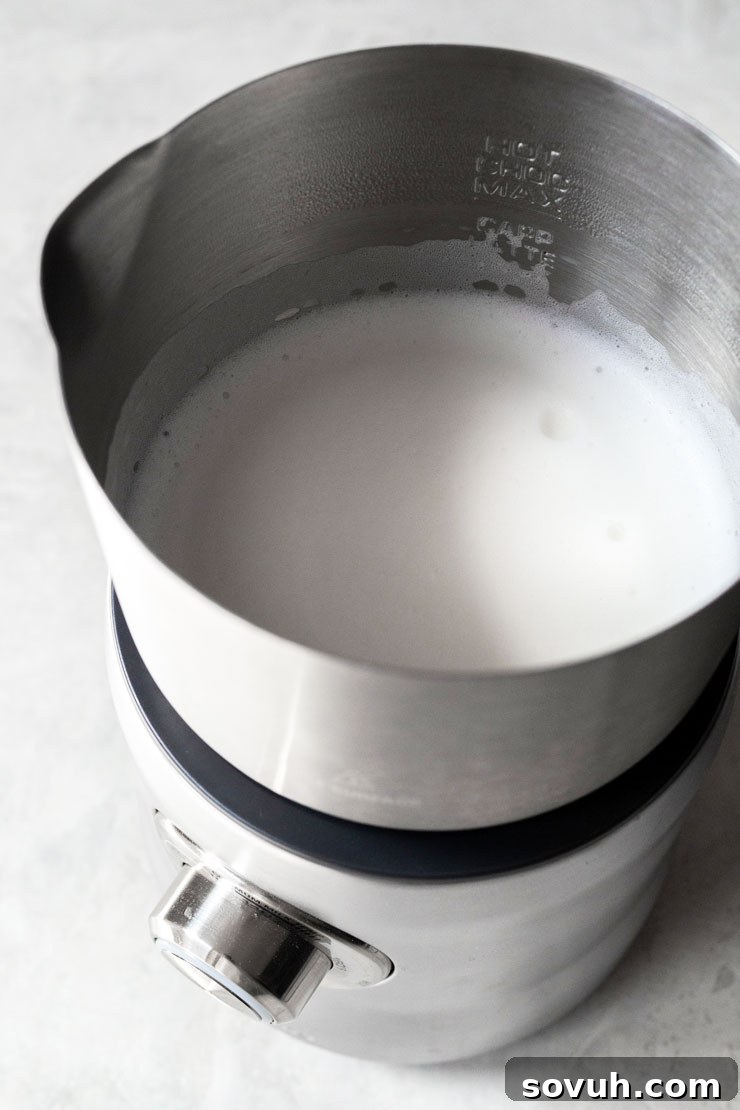
Step 2: Froth milk with sweetener.
Heat milk and honey together—either in an electric milk frother or on the stovetop. If you don’t have an electric frother, simmer the milk and honey, then pour the hot milk into a French press and pump the plunger up and down until the milk roughly doubles in volume to create a velvety foam.
Velvety, rich froth makes a big difference in texture and mouthfeel. Take the extra step to froth the milk well.
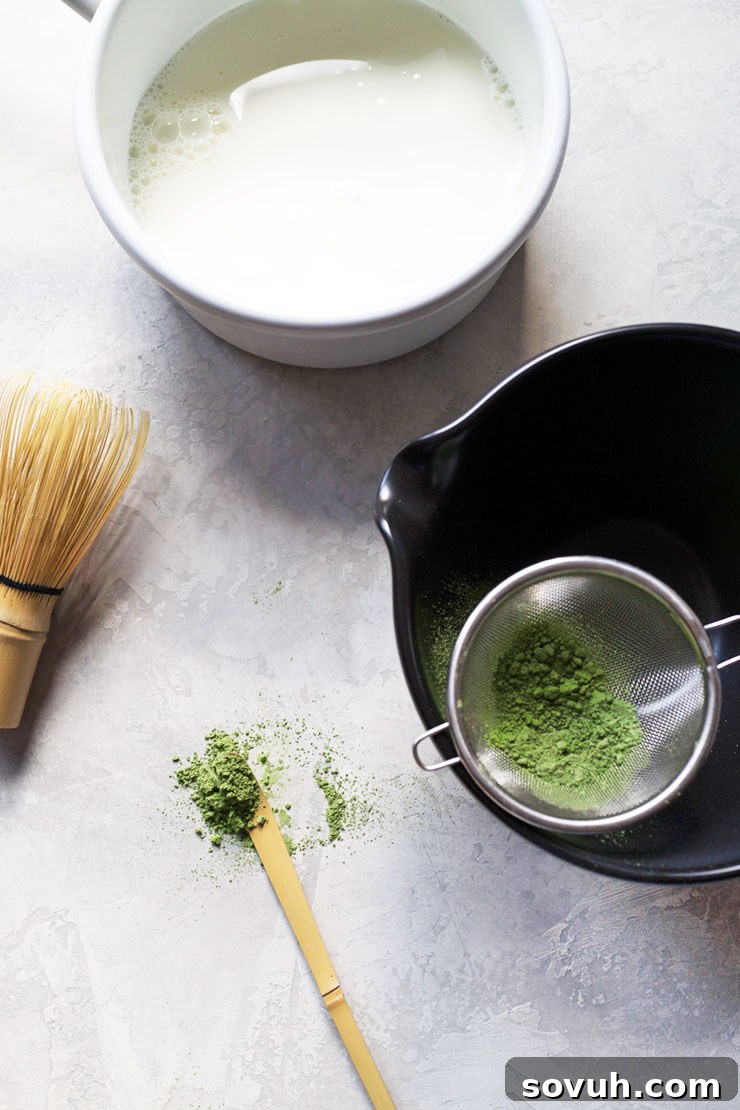
Step 3: Sift the matcha.
Sift the powder through a small mesh strainer into a bowl to remove clumps. This makes whisking faster and produces a smoother result.
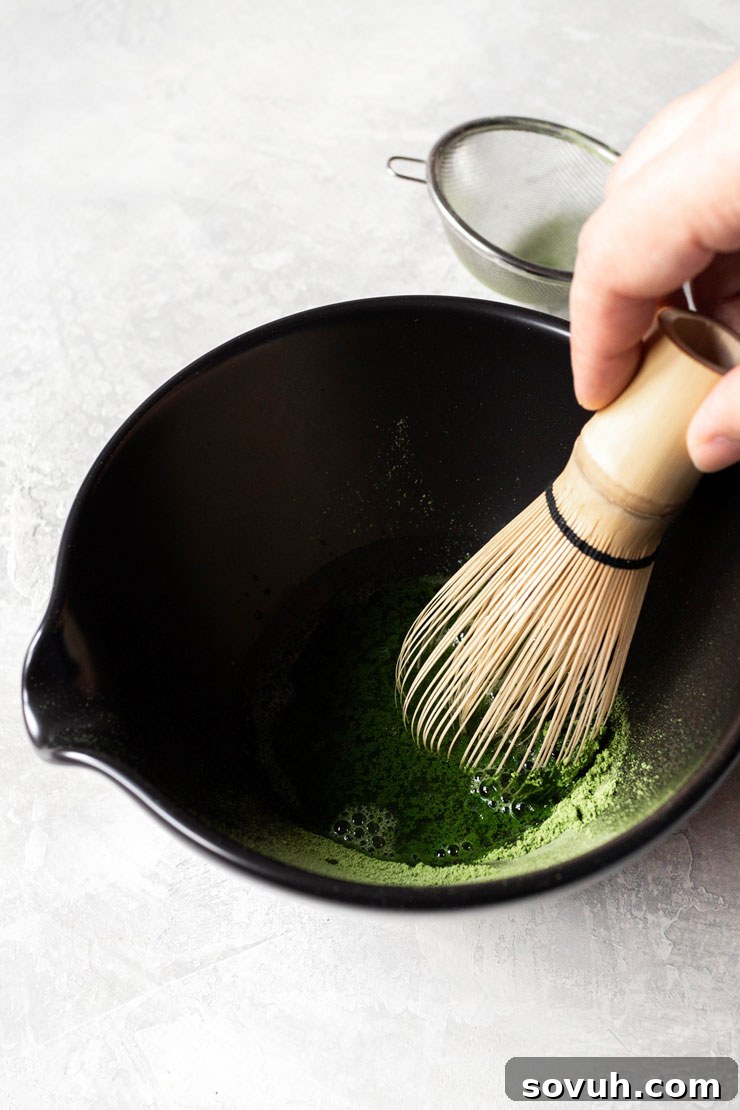
Step 4: Make a matcha paste.
Add a small splash of hot water to the sifted matcha and mix until it forms a smooth paste. This initial paste prevents lumps and makes the final whisking much easier.
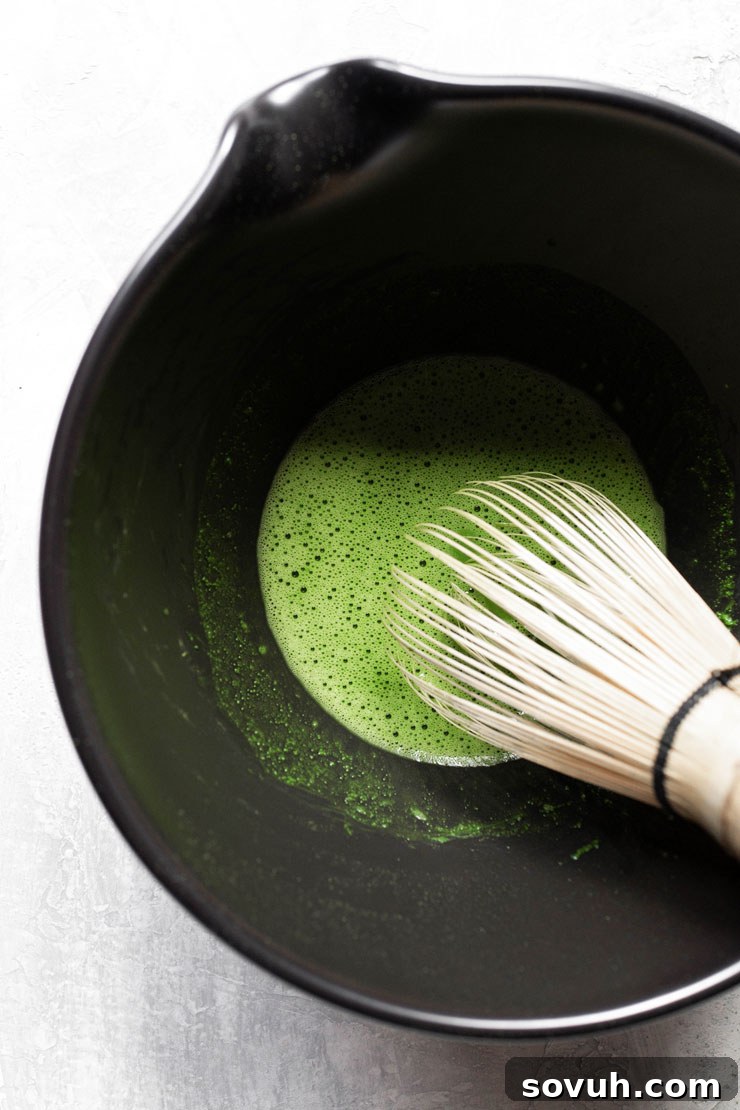
Step 5: Whisk the matcha.
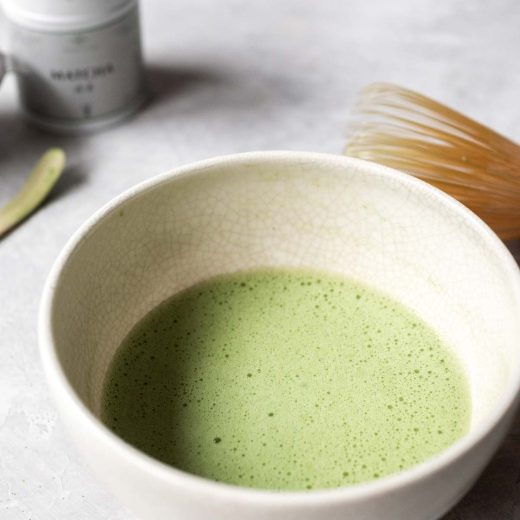
Add more hot water to the paste and whisk vigorously with a bamboo whisk (chasen). Move the whisk quickly in short up-and-down strokes, forming a loose “W” pattern. Avoid circular stirring—vigorous vertical motion creates the friction needed to suspend the powder and produce a fine, even foam.
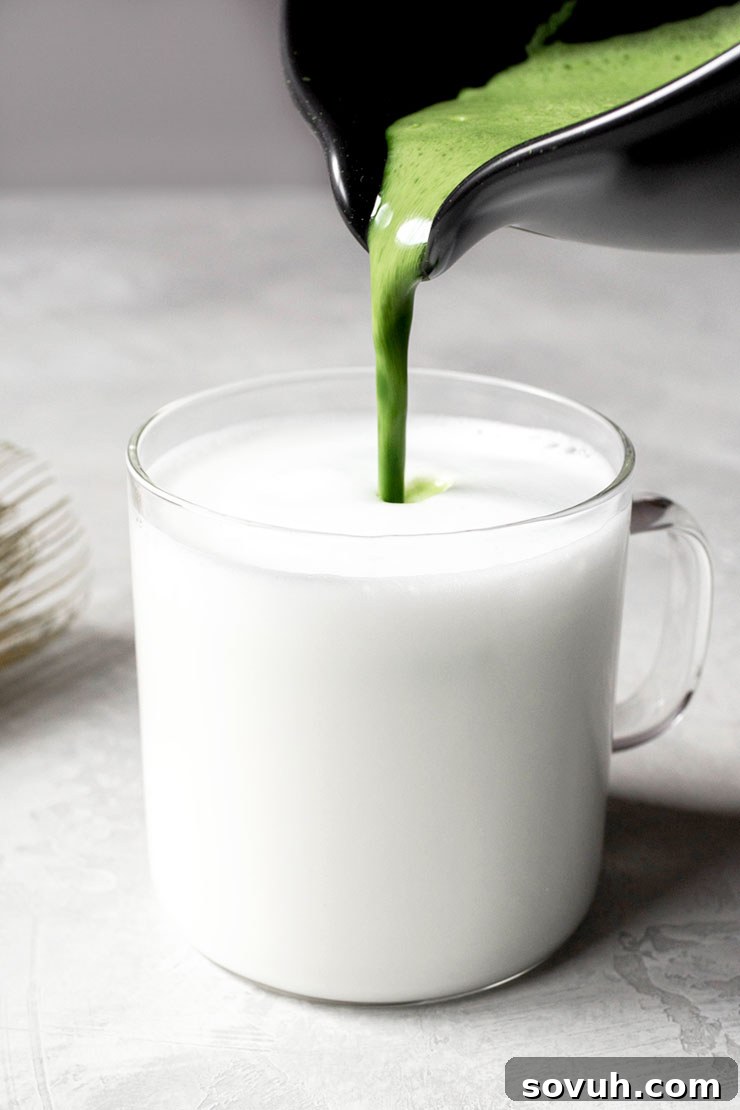
Step 6: Combine.
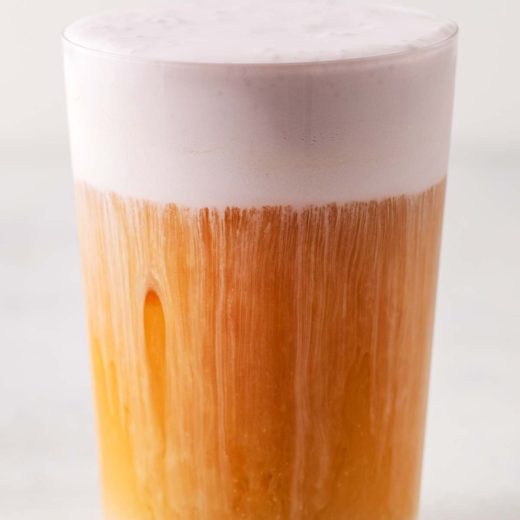
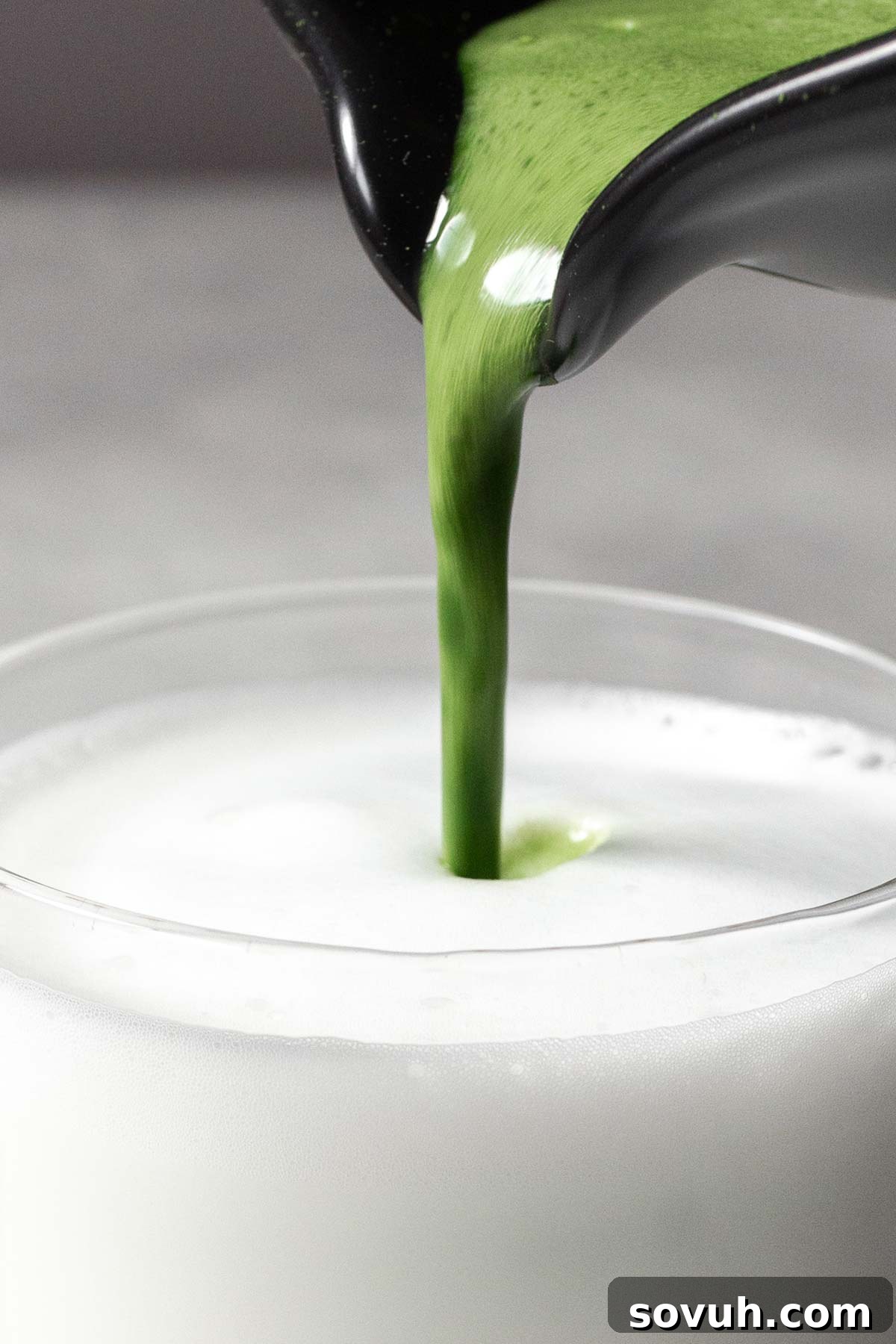
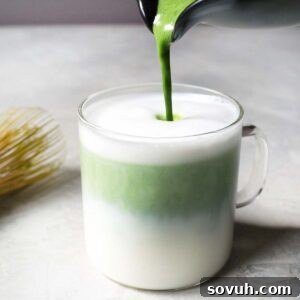
Pour the frothed milk into your cup, then gently pour or spoon the whisked matcha into the milk. For a layered look, pour matcha over the milk slowly. For a uniformly blended latte, stir gently once to combine.
Matcha Whisking Tip
Perfectly whisked matcha has a smooth surface of tiny, uniform bubbles that look almost like satin. Large bubbles or uneven foam indicate you need to adjust your whisking speed or technique—practice will quickly improve your results.
Did You Know?
Matcha’s grassy, vegetal flavor pairs naturally with something sweet to balance any bitterness. Milk and a touch of honey or syrup help round the flavor, producing a mellow, dessert-like beverage without masking the matcha’s character.
No Whisk?
A bamboo matcha whisk gives the best texture, but you can use a cocktail shaker or a jar with a tight lid: combine warm water and matcha, seal, and shake vigorously for 30 seconds until no clumps remain.
Related
- Best Matcha Brands for Lattes
- Iced Matcha Latte
- Starbucks Iced Matcha Latte Copycat
- Matcha Cold Foam
- Matcha Ice Cubes
If you tried this Matcha Latte recipe, please leave a ⭐⭐⭐⭐⭐ star rating and share how you liked it in the comments below.
Tea Sommelier’s Matcha Latte Recipe
Ingredients
- 1/3 cup water
- 1 1/4 cup milk (any kind)
- 2 teaspoons honey or simple syrup
- 1 1/2 teaspoons matcha
Instructions
- Heat water. Do not use boiling water. Target roughly 175°F (80–85°C). Use filtered water if possible.
- Froth milk and honey. Heat and froth the milk and honey in an electric milk frother. If you don’t have one, simmer the milk and honey, pour into a French press no more than half full, and pump the plunger until the milk doubles in volume.
- Sift matcha. Sift the matcha into a bowl to remove clumps.
- Make a paste. Add a small splash of hot water to the sifted matcha and stir into a smooth paste.
- Whisk the matcha. Add more hot water and whisk vigorously with a bamboo whisk using quick up-and-down motions in a “W” pattern. Avoid circular stirring.
- Assemble. Pour the frothed milk into your cup, then add the whisked matcha. Stir gently if you want a uniform latte.
Notes
- The brighter the green, the higher the quality. For lattes you don’t need the very highest grade; a $30–50 matcha works well.
- Sifting matcha prevents clumps and makes whisking much easier.
- If you don’t have a bamboo whisk, a cocktail shaker or jar with a tight lid works—shake warm water and matcha vigorously for about 30 seconds.
- Good froth transforms a homemade matcha latte into a café-quality drink—don’t skip it.
Nutrition
Nutrition information is calculated automatically and should be used as an approximation.