Master Matcha: Step-by-Step Traditional Preparation
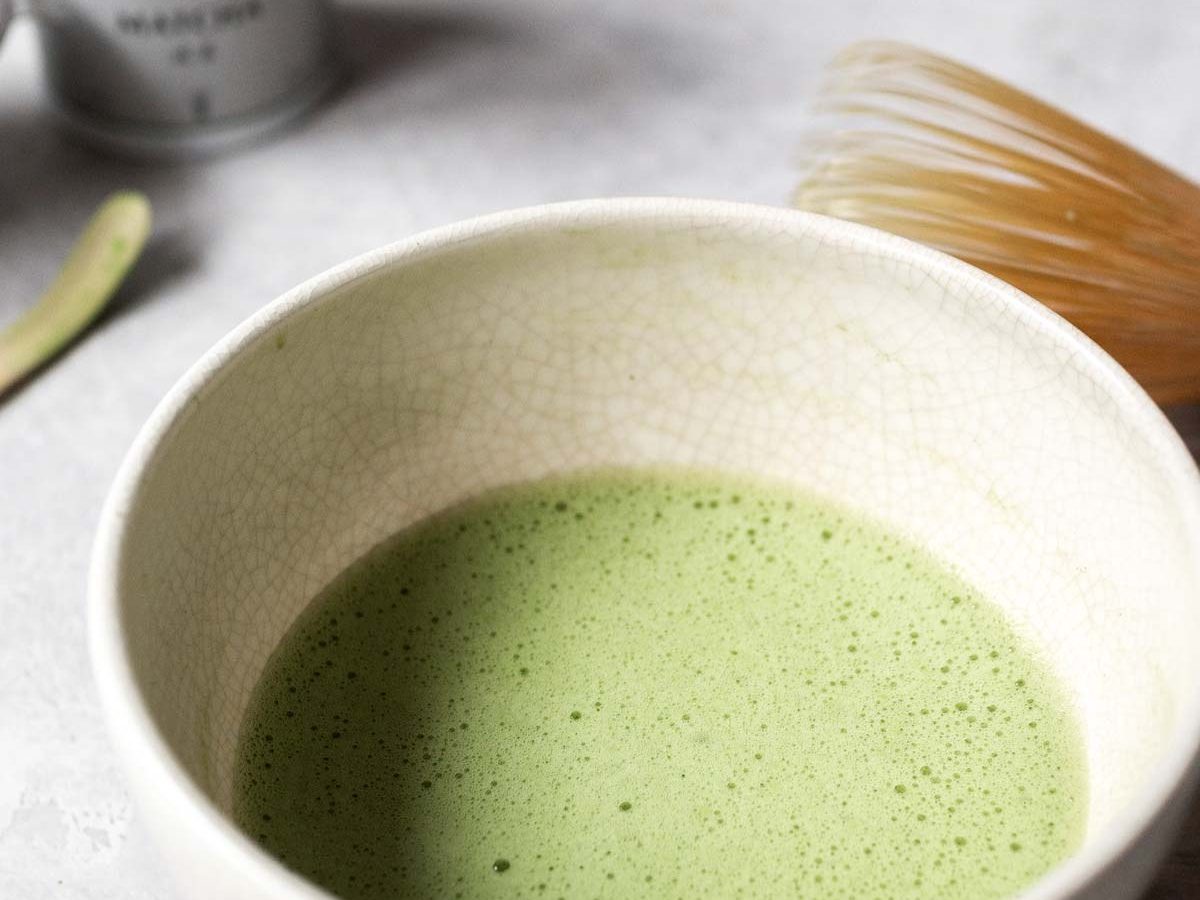
Matcha is a finely ground powdered green tea from Japan. Below you’ll find clear, practical guidance and step-by-step instructions from a certified Tea Sommelier on how to prepare matcha correctly at home.
Matcha
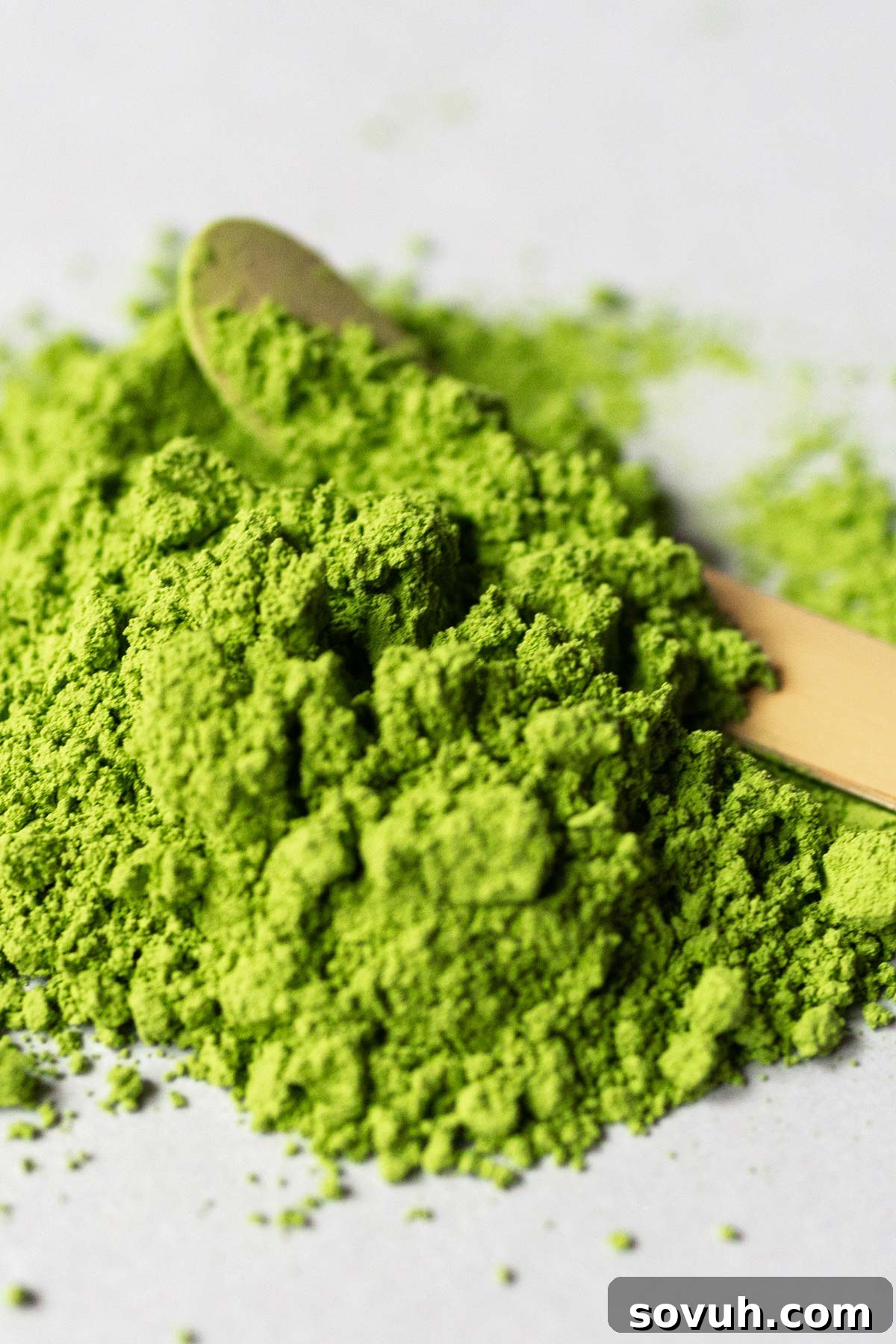
Matcha is a Japanese green tea that has been finely ground into a powder. The word combines the Japanese elements for “rubbed” or “ground” and “tea.” Because matcha is made from whole tea leaves ground into a powder, it contains caffeine like other green teas, but the experience and intensity differ because you consume the whole leaf.
Flavor profile: Matcha typically tastes vegetal, mildly bitter, and full-bodied. Many varieties are complex and can finish with a subtle sweetness. The flavor can be an acquired taste for some, while others prefer it immediately for its vivid green aroma and texture.
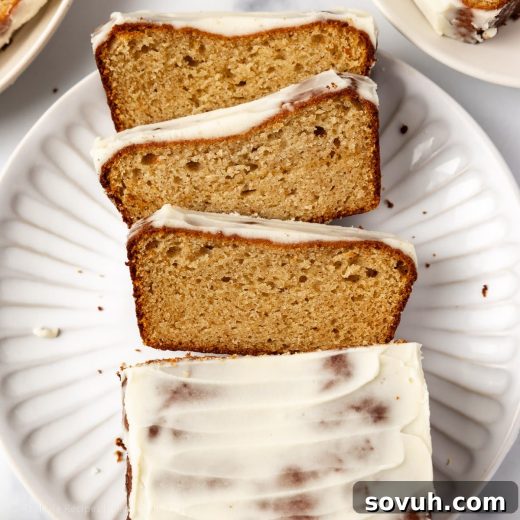
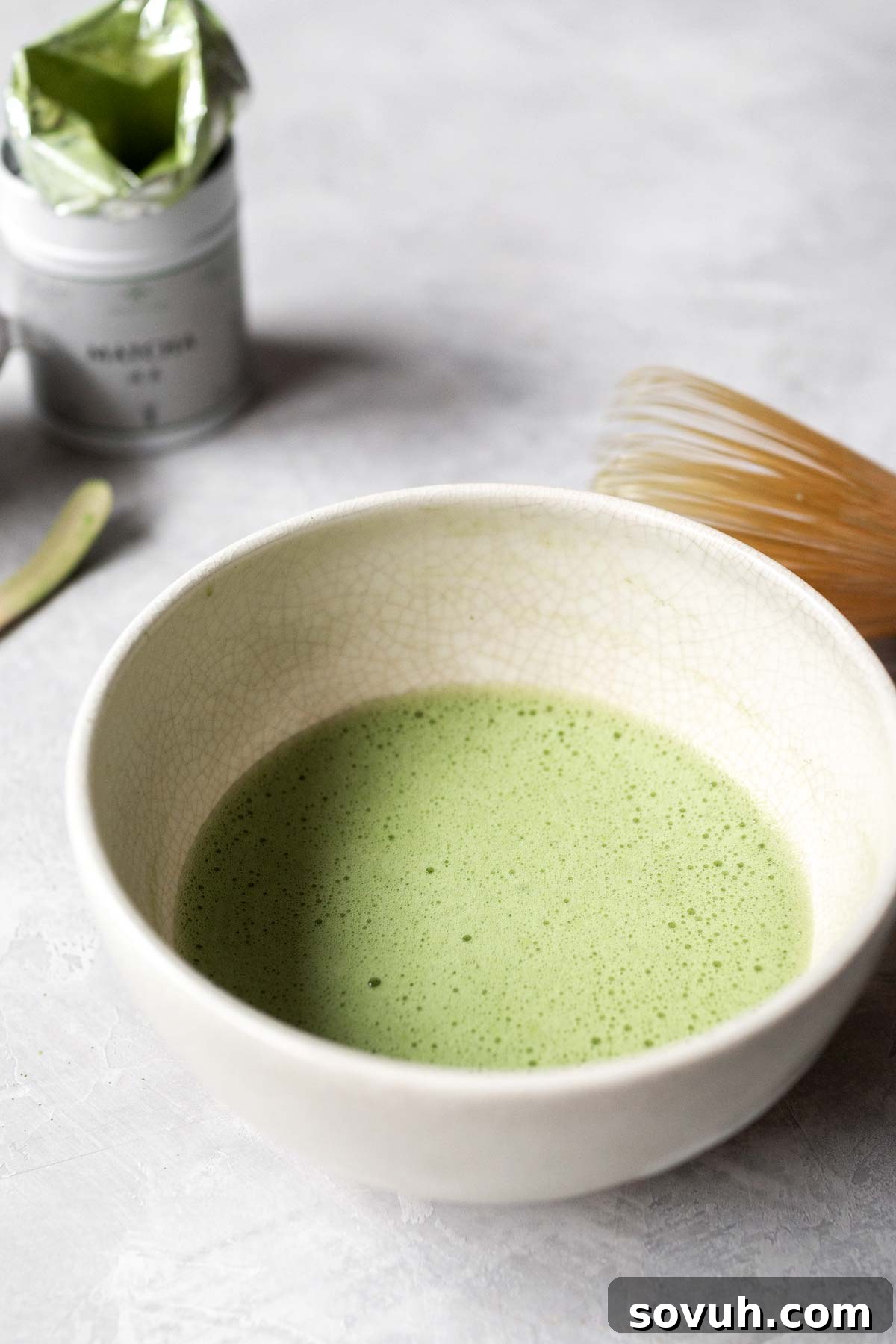
Traditional preparation: In Japanese tea ceremony, matcha is whisked with a special bamboo whisk and served in a wide, shallow bowl. Matcha is often accompanied by a small sweet to balance the tea’s natural bitterness. There are two classic styles: thin matcha (Usucha), which is frothy and enjoyed daily, and thick matcha (Koicha), a dense, ceremony-style preparation that is served without froth.
Why matcha is more expensive: Producing quality matcha requires extra care and processing compared with most other green teas. Leaves are shaded before harvest to concentrate nutrients and color, stems and veins are removed, and the leaves are finely stone-ground. These added steps, plus the labor involved, increase the cost of good matcha.
How it’s consumed: Because you whisk and drink the powder suspended in water, you’re effectively consuming the whole leaf. That gives matcha a stronger, more sustained effect compared with steeped tea leaves.
Matcha is pronounced MAHT-cha or MA-cha.
Ingredients and Tools
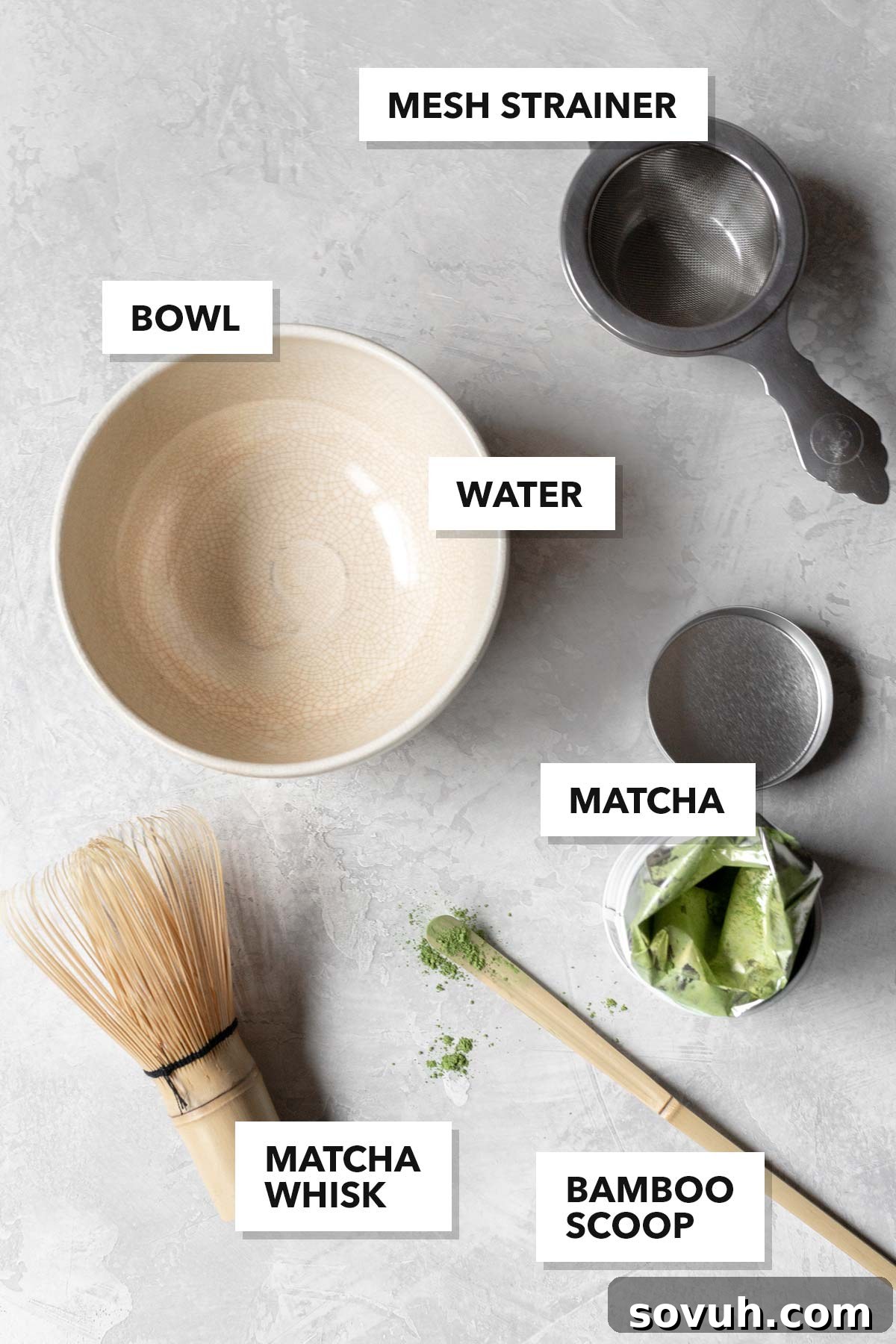
- Matcha powder: For drinking straight with only water, choose a bright, vibrant green powder in a mid-range price category. Lower-cost matcha can work fine in lattes or blended drinks.
- Water: Use filtered water whenever possible. Clean water makes a noticeable difference in clarity and flavor.
- Bowl: A matcha bowl should have a flat bottom and a wide opening so there’s room to whisk and create froth.
- Bamboo whisk (chasen): A chasen is carved from a single piece of bamboo. Whisks vary by the number of tines; more tines can make it easier to produce a fine froth. Choose a dependable starter whisk rather than the most expensive model when you’re learning.
- Bamboo scoop (chashaku) or teaspoon: The traditional scoop measures the powder. One heaping scoop or about one teaspoon (roughly 2 grams) is a common single-serving amount.
- Mesh strainer: Sifting matcha before whisking prevents clumps and yields a smoother cup.
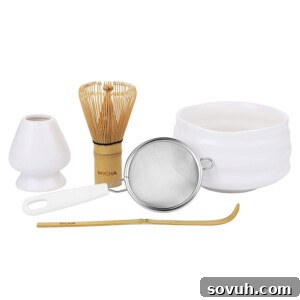
Photo credit: product imagery
Step-by-Step Instructions
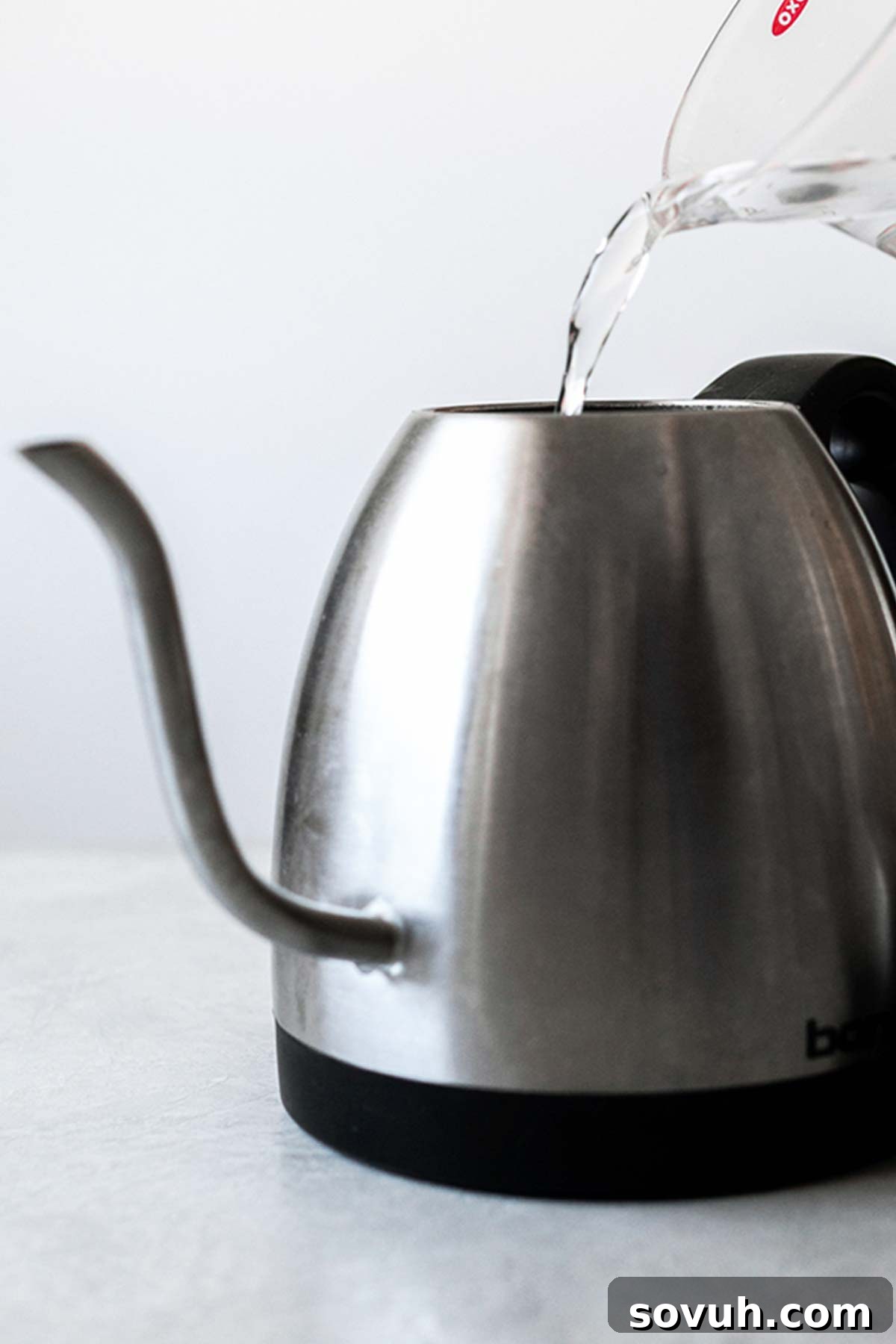
Step 1 — Heat water: Use simmering water rather than a rolling boil. If you have an electric kettle with temperature control, set it to the appropriate green-tea range. Boil a bit more water than you need so you can warm the bowl and whisk first.
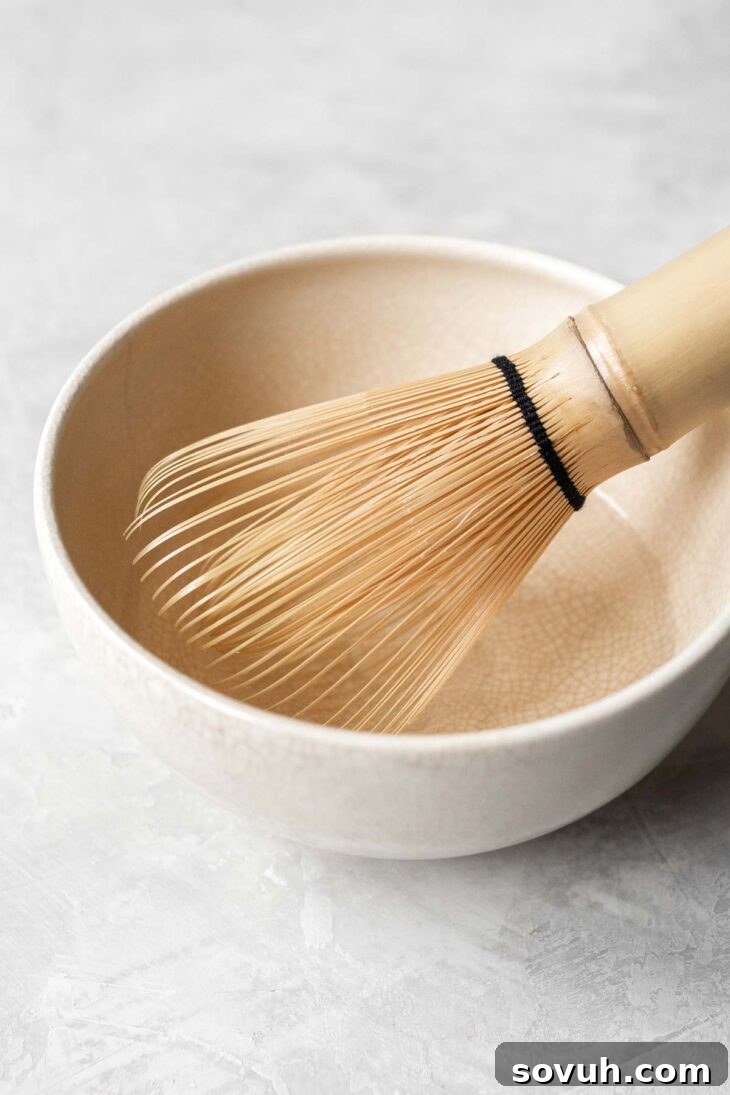
Step 2 — Warm the bowl and soften the whisk: Pour hot water into the bowl to warm it, and briefly dip the whisk to soften its tips. Discard the warming water and gently dry the bowl before proceeding.
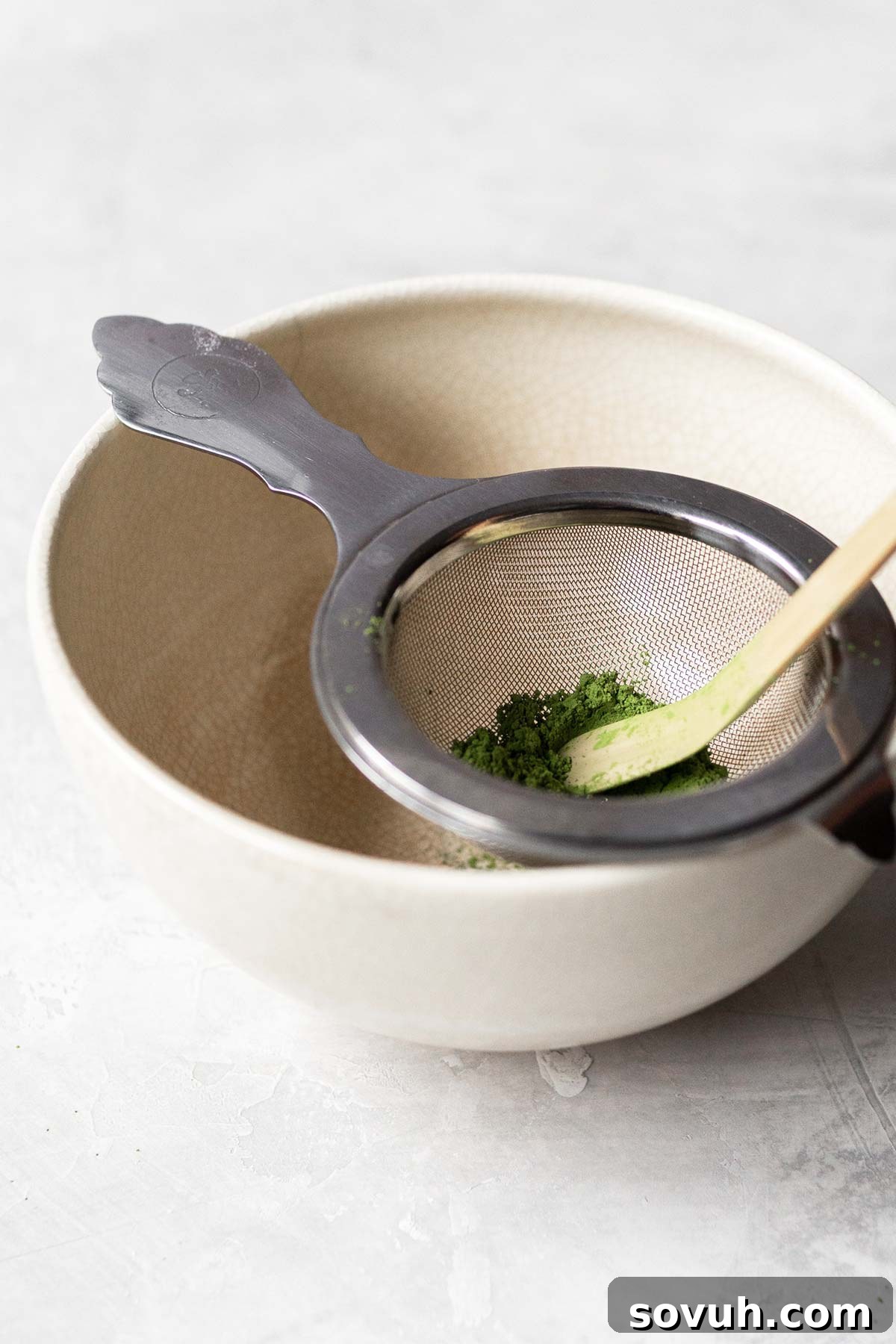
Step 3 — Measure and sift the matcha: Scoop the matcha into a mesh strainer held over the bowl and gently push it through. Sifting removes clumps and ensures a smooth texture.
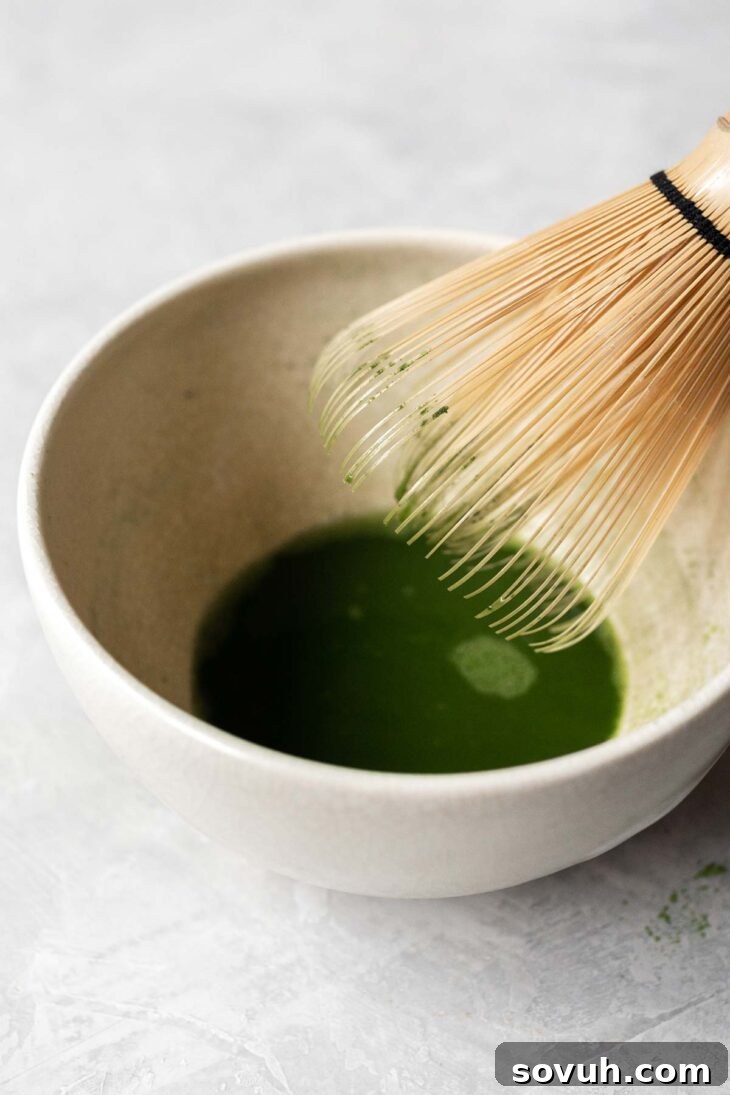
Step 4 — Make a paste: Pour a small amount of hot water (about 2 tablespoons) into the bowl and gently whisk to create a lump-free paste. Use slow circular motions until all clumps are incorporated.
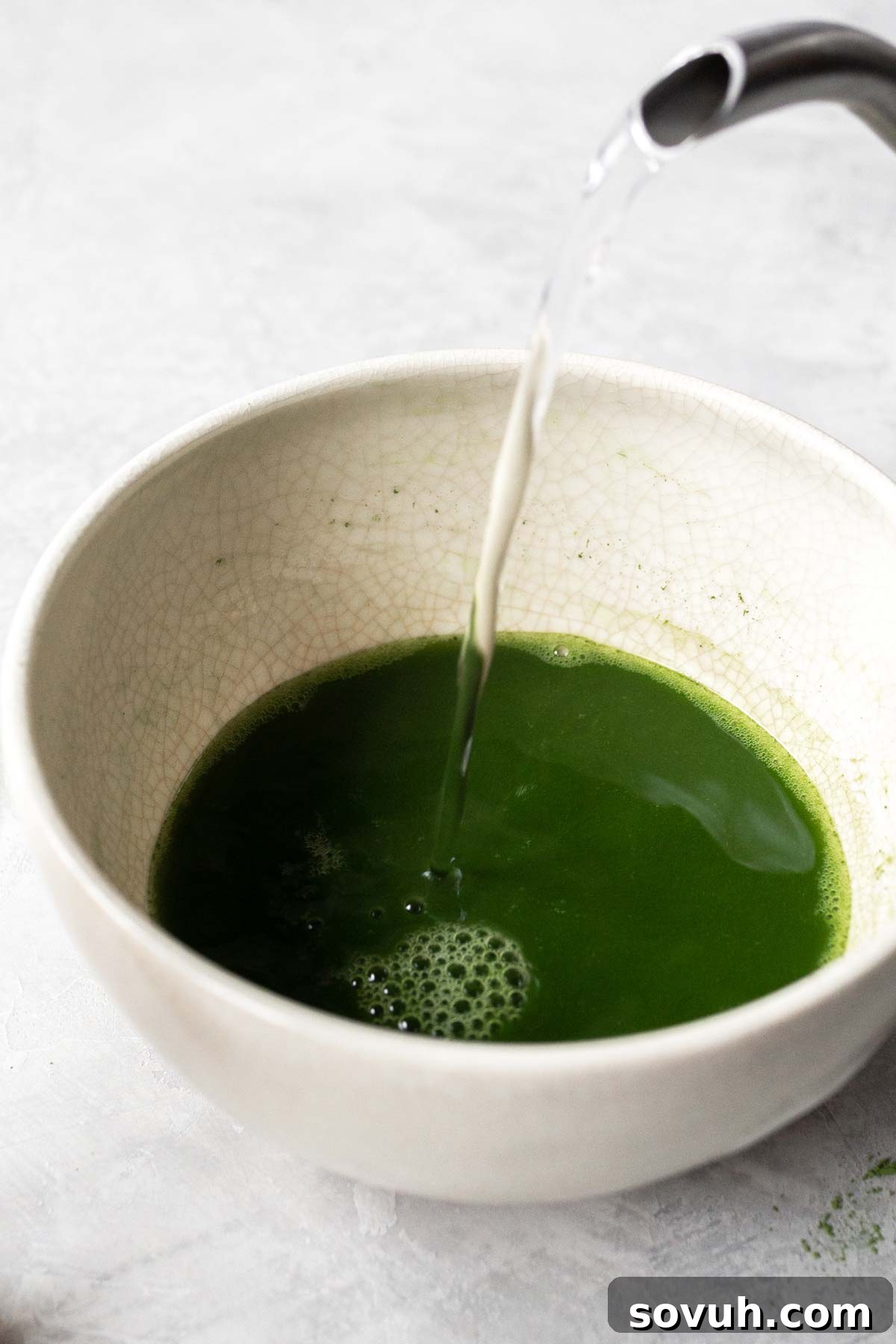
Step 5 — Add more water: Add an additional 2 tablespoons (or the amount desired for your serving) of hot water to the paste.
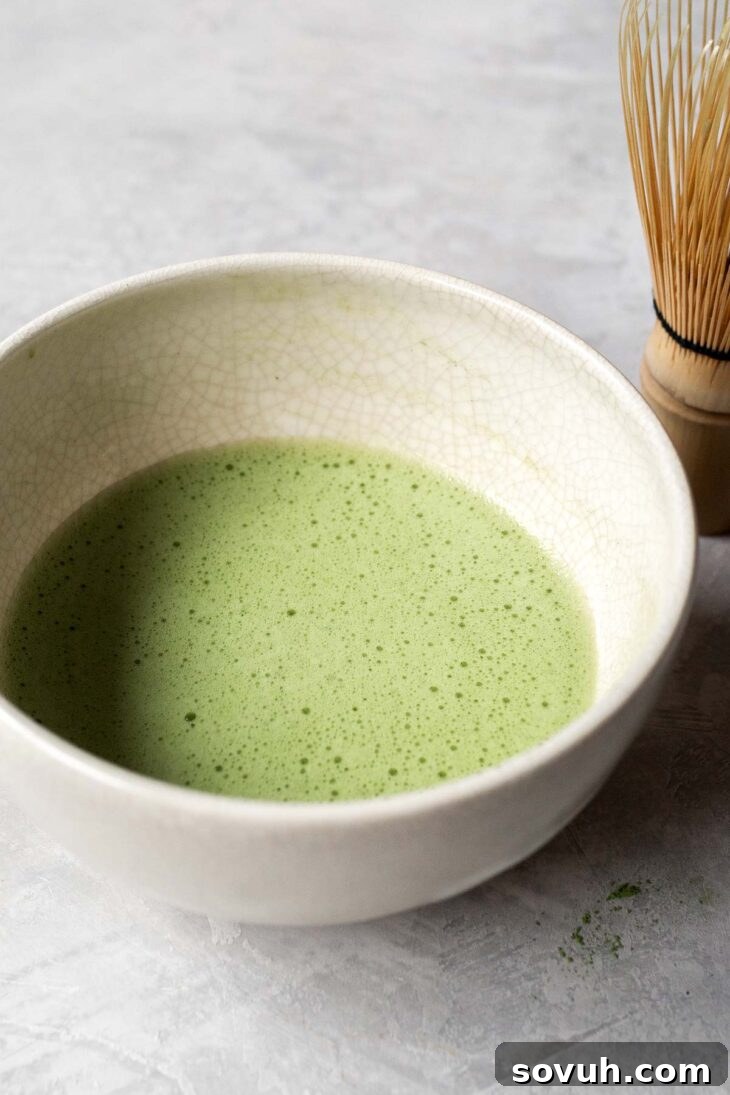
Step 6 — Whisk vigorously to froth: Hold the whisk upright and use quick wrist motions in a zig-zag or “W” pattern to produce a fine froth. Aim for roughly 10–15 zig-zag strokes. A well-made bowl of matcha will have small, fine bubbles rather than large ones.
Tea Sommelier’s Tips
Color indicates quality: High-quality matcha is bright, vivid green. The deeper and more vibrant the green, generally the higher the grade and the better it will taste when prepared with only water.
Marketing labels: Terms like “ceremonial” or “culinary” are commonly used for convenience and marketing. In practice, higher-priced powders labeled for drinking tend to be the ones you’ll want for straight matcha.
Practice your whisking: Froth texture improves with practice. Beginners often create larger bubbles at first; over time the bubbles will become finer and the froth smoother, which is a quick way to gauge progress.
Use good water: Filtered water yields a cleaner, brighter cup. Avoid strong-tasting tap water.
How to drink it: Traditional matcha is sipped directly from the bowl using both hands — left hand under the bowl and right hand around the side — and is typically finished in three sips.
Whisk care and storage: When starting out, a modestly priced whisk is wise; bamboo tines are flexible and can be damaged by scraping against the bowl. Before first use soak the whisk in warm water for about three minutes to soften the tips, taking care not to wet the handle. After use, rinse the whisk under water (avoiding the handle), let it air dry upright, and do not store it in a sealed plastic container. For the bamboo scoop, avoid getting it wet; simply wipe it clean with a dry cloth.
Store matcha properly: Keep matcha in an opaque, airtight container away from moisture, heat and light. Store at room temperature or refrigerated, and bring the powder to room temperature before measuring. For best color and flavor, consume opened matcha within several months.
Related
- 23 Delicious Matcha Drink Recipes
- Iced Matcha Latte
- Iced Pineapple Matcha
- Matcha Bubble Tea
- Matcha Ice Cubes
Save this guide for later: pin it to your Pinterest board.
How to Make Matcha
Ingredients
- 1 teaspoon matcha (about 2 matcha scoops)
- 1/4 cup water, plus extra for warming the bowl
Instructions
- Boil water. Use simmering water, not a full rolling boil. If you have a kettle with temperature control, set it for green tea. Boil extra water to warm the bowl and whisk.
- Warm the bowl and rinse the whisk. Pour hot water into the bowl halfway and swirl to warm it. Soak the whisk tips briefly to soften them, then discard the warming water and dry the bowl.
- Scoop and sift matcha into the warmed bowl. Place a mesh strainer over the bowl and push the powder through to eliminate clumps.
- Add a small amount of hot water and whisk into a paste. Pour about 2 tablespoons of hot water and whisk slowly in half circles until clumps are gone.
- Add more hot water and whisk vigorously. Add another 2 tablespoons (or to taste). Hold the whisk upright and whisk from the wrist in a zig-zag or “W” motion about 10–15 times to create a fine froth. Pop any large bubbles by pushing them to the side of the bowl.
- Drink from the bowl. Hold the bowl with both hands and sip. Traditionally, a bowl of matcha is finished in three sips.
Notes
- Quality is visible in the color: brighter green indicates higher-grade matcha.
- Filtered water improves clarity and flavor.
- Soak a new whisk in warm water for about three minutes to soften the tips; avoid wetting the handle.
Nutrition (approximate)
- Calories: 12
- Protein: 2 g
- Sodium: 3 mg
- Vitamin A: 200 IU
- Calcium: 2 mg
- Iron: 1 mg
Nutrition information is an approximation.