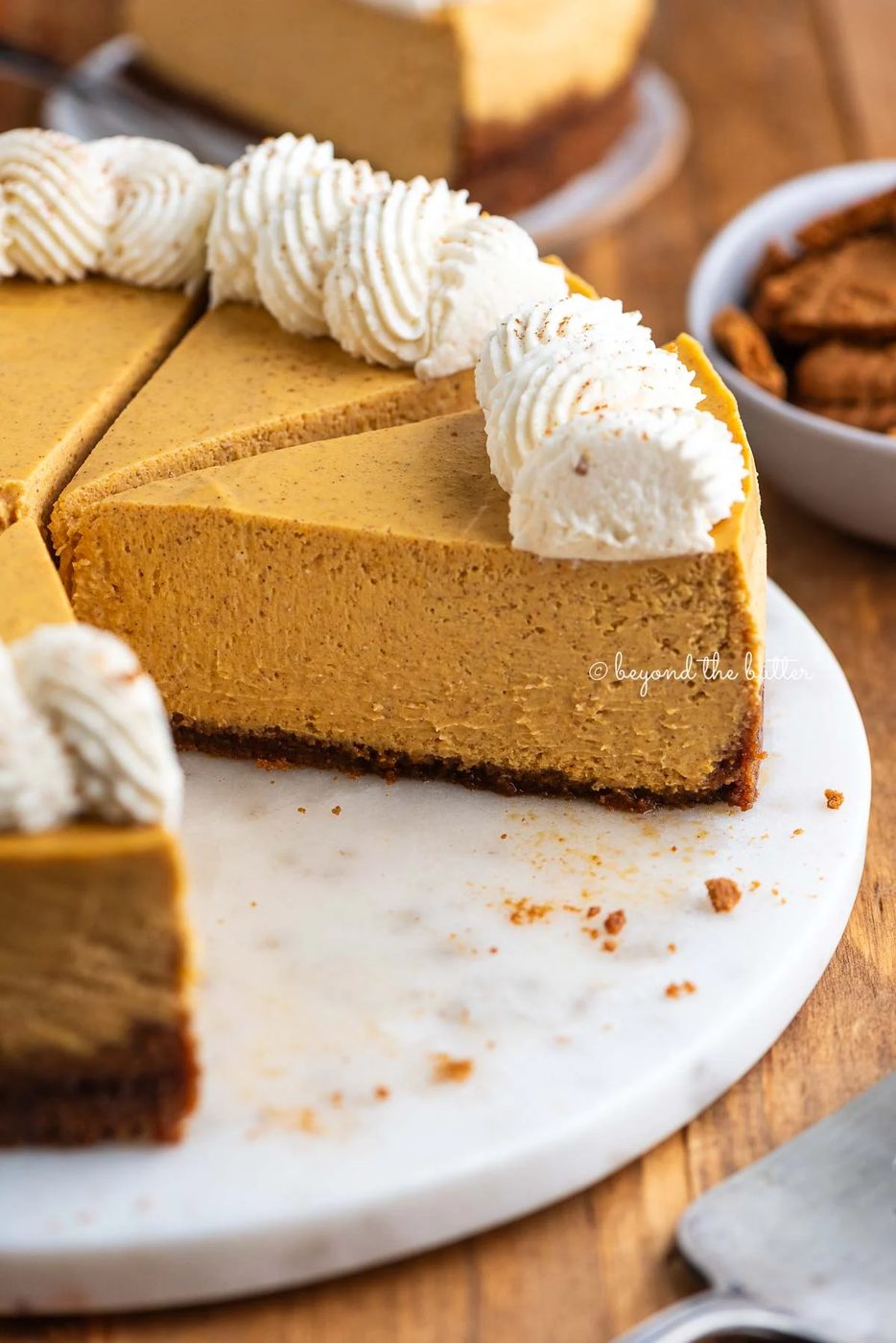
Lemon Cheesecake baked to share
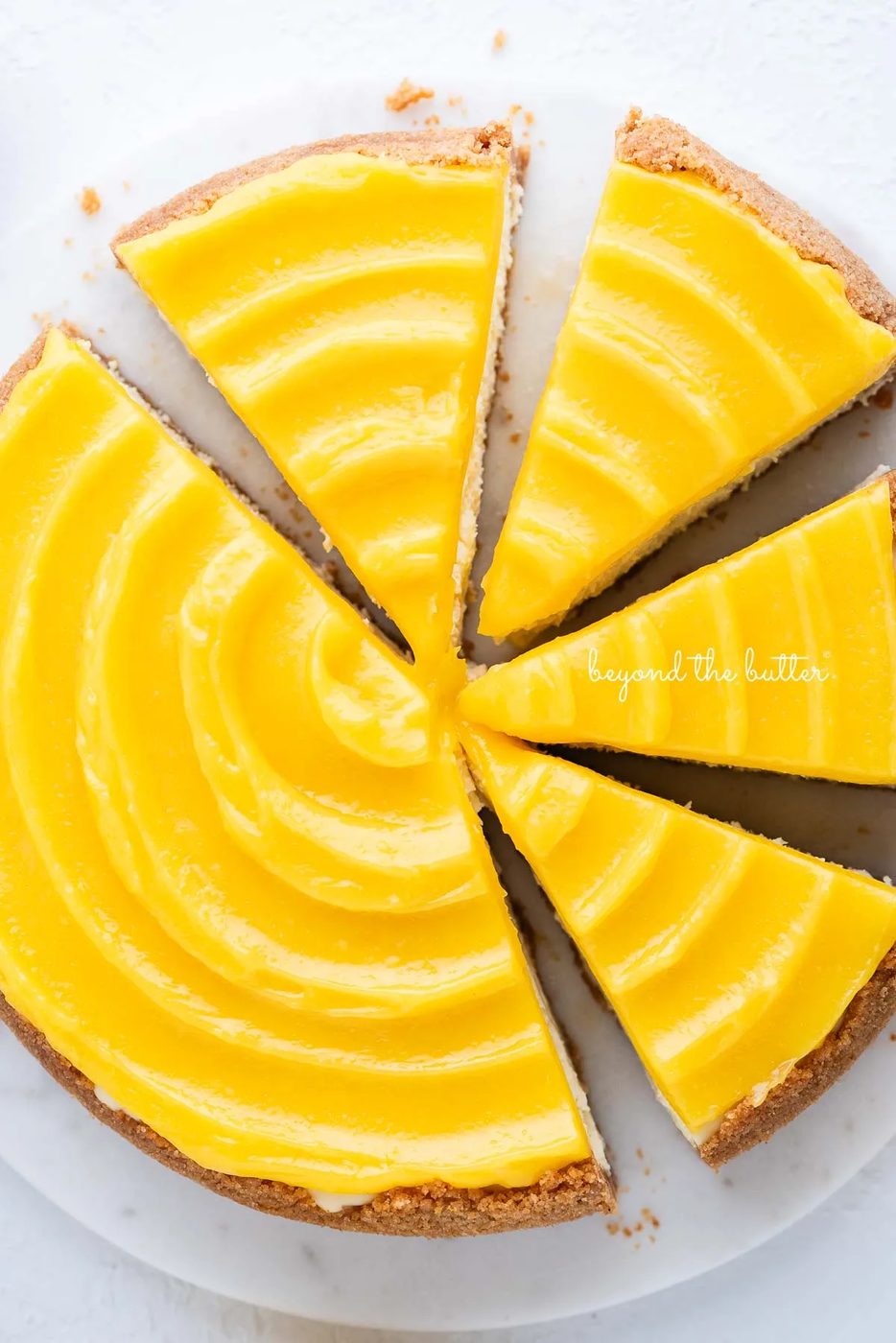
This house-made Lemon Cheesecake recipe is truly the best! It combines a buttery graham cracker crust with an ultra-creamy cheesecake bursting with zesty lemon flavor! It's the ultimate must-make dessert for all lemon dessert lovers!
This Lemon Cheesecake recipe post is sponsored by Ankarsrum. Thank you for supporting the brands that help make Sovuh possible!
I've always considered lemon dessert recipes a year-round favorite, like my Small Lemon Cream Cheese Pound Cake, Mini Lemon Meringue Pies, and Lemon Blueberry Streusel Scones. But I tend to truly crave them the most in spring. And with springtime finally here, I knew this house-made lemon cheesecake recipe would be the perfect addition to the Sovuh recipe box!
This 9-inch cheesecake recipe is pretty straightforward to mix! It's smooth and creamy, packs a ton of lemon flavor in each bite, and the optional lemon curd topping can be made in advance! Using my Anakarsrum Assistent Original Mixer and its citrus press attachment to make this lemon cheesecake recipe made things a lot simpler too!
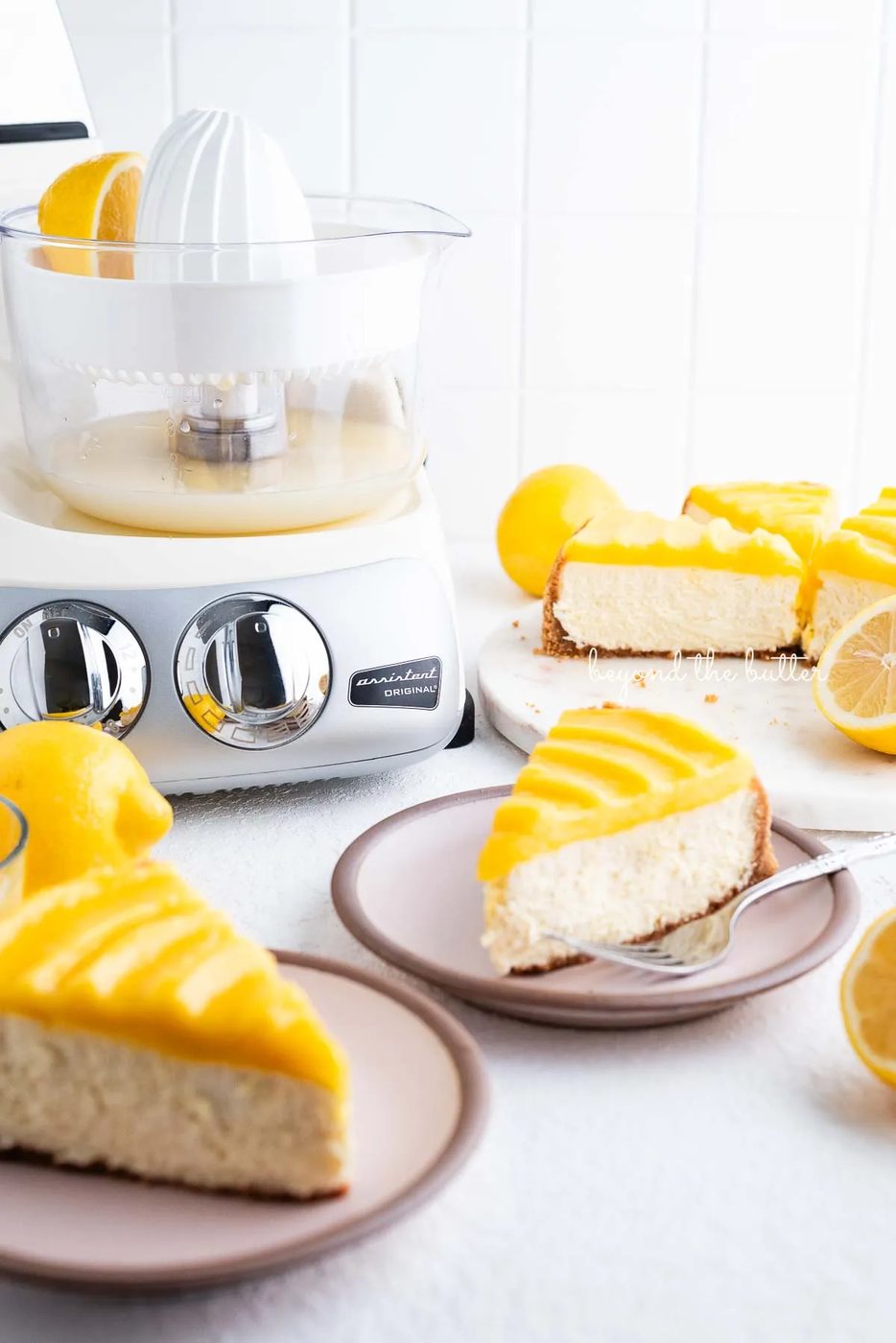
With Ankarsrum's citrus press attachment (purchased separately or with their Go Green package), you can press lemons, oranges, limes, and grapefruit easily. It has a trough that prevents the bitterness of the center fruits from ending up in the juice, along with a strainer that catches any seeds and flesh of the fruit. And with its 1.2-litre capacity, it can hold a lot of fresh juice!
To see more of what the Ankarsrum Assistent Original Mixer and its attachments can do, check out my Fluffernutter Cookies, Easy Blender Chocolate Mousse, Dulce de Leche Ice Cream, and Honey Butter Dinner Rolls!
What goes in
The following ingredients shown below are used to make this familiar lemon cheesecake recipe. Items noted in the bulleted list are key ingredients that needed a bit more explanation. Please note the optional lemon curd topping ingredients are not shown.
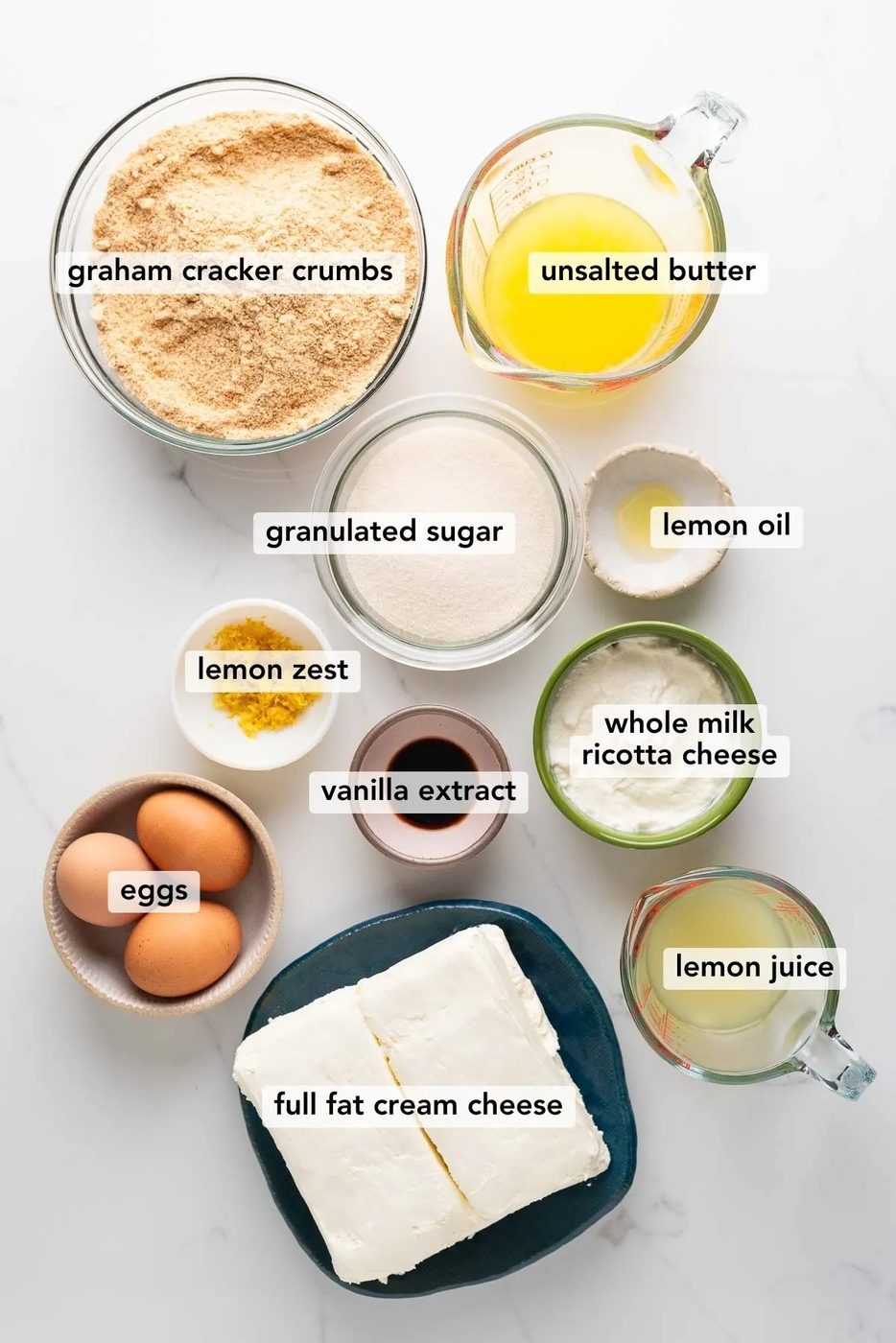
- Lemon Juice and Lemon Zest. Fresh lemon juice is best over bottled when it comes to this method. And the lemon zest is a must. You can also easily freeze any unused lemon juice and lemon zest to use later in other recipes!
- Lemon Oil. This is an optional ingredient that's typically used in place of lemon zest and juice, but for this cheesecake recipe, I used a tiny amount to elevate the lemon flavor even more. The brand I used is Boyajarin, and it comes in a tiny bottle that needs to be refrigerated after opening. I found it over on King Arthur Baking.
- Whole Milk Ricotta Cheese. Any brand of ricotta cheese is fine, but it should be whole milk.
- Cream Cheese. Full-fat cream cheese is recommended, and it's best to use the blocks of cream cheese. The Philadelphia brand is a house favorite, but use whatever brand you prefer!
How it comes together
Below is a brief overview of how to make this house-made lemon cheesecake. For the full printable recipe, which can be made using US customary or metric measurements, visit the method card below.
Quick Tip: Before starting, grease your 9-inch springform pan with flour-based baking spray. Cover the bottom and sides of the pan with parchment paper, then hold to the side.
Graham Cracker Crust
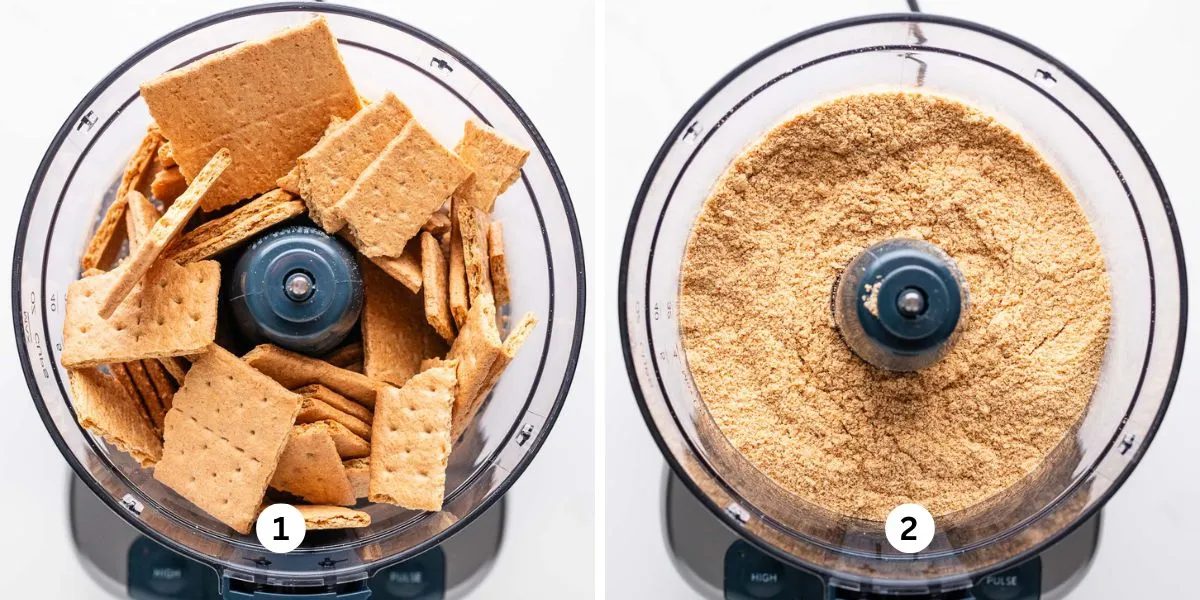
Step 1. Pulverize the graham crackers. They should be pulsed into fine crumbs (Images 1 and 2). If your food processor doesn't hold all 18 sheets of graham crackers, you can do them in batches.
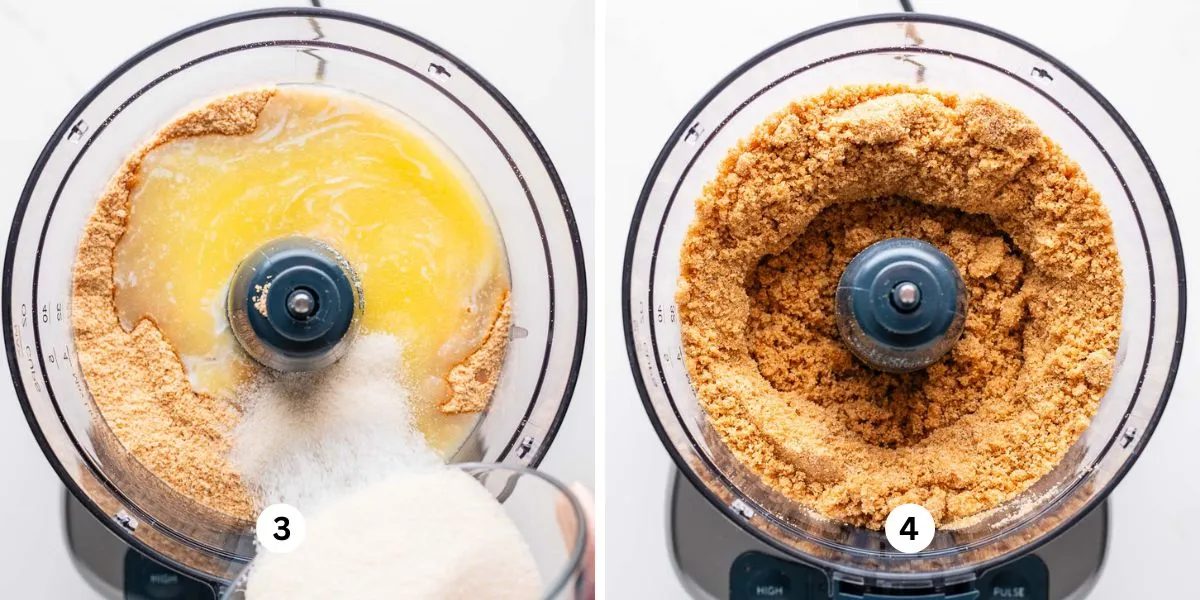
Step 2. Add the melted butter and granulated sugar. Pulse together until the graham cracker crust mixture has formed (Images 3 and 4). The consistency should be similar to wet sand.
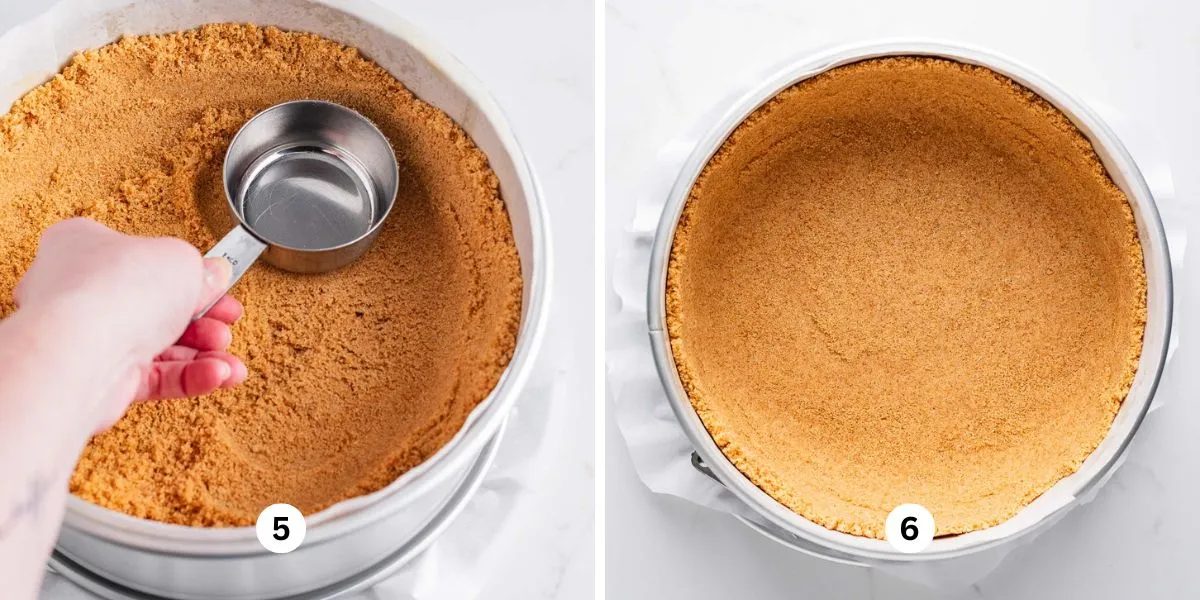
Step 3. Press the graham cracker crust into the springform pan. Make sure to get both the bottom and sides of the pan, and as evenly as you can make it. Bake for 10-12 minutes at 325ºF (Images 5 and 6). Let the crust cool down while you prepare the lemon cheesecake batter.
After the graham cracker crust has cooled, wrap the bottom and sides of the springform pan in 5-6 layers of aluminum foil. For an extra layer of protection, place the pan in an extra-large slow cooker liner. If you desire, you can clip the liner to the sides of the pan using metal binder clips.
Lemon Cheesecake Batter
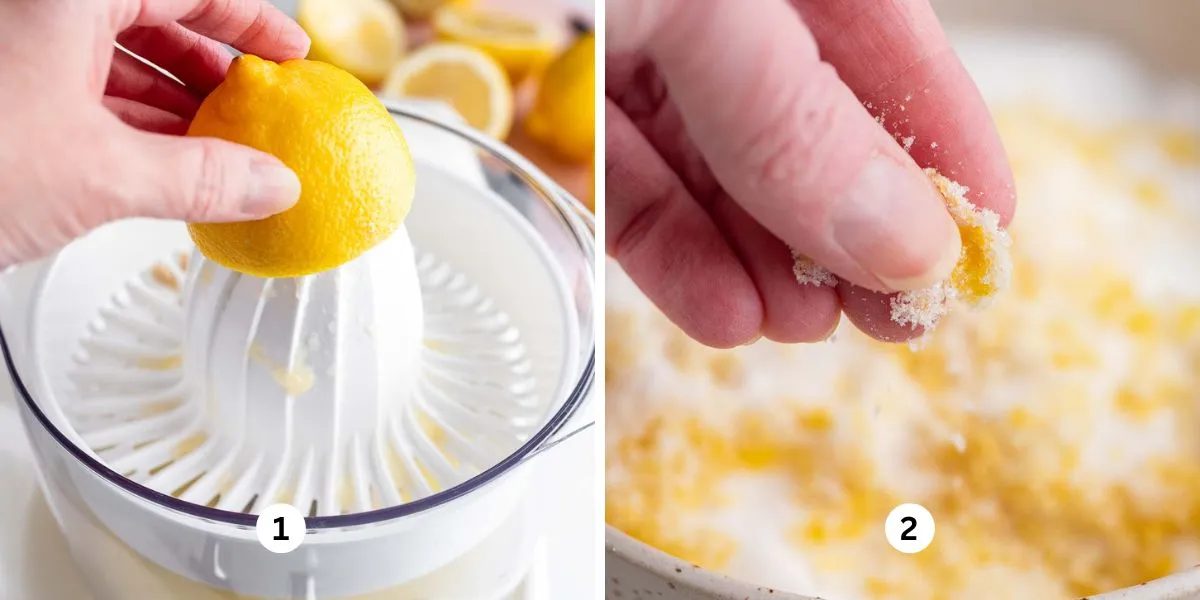
Quick Tip: Prep the lemon juice and lemon zest/granulated sugar mixture before you begin making this lemon cheesecake recipe (Images 1 and 2). It's also helpful to have your other ingredients at room temperature, especially the cream cheese.
Step 1. Beat the cream cheese first. The cream cheese should be beaten at medium-high speed until soft and airy, similar to a buttercream frosting consistency (Image 3). Keeping the mixer speed the same, add the lemon zest/granulated sugar mixture, whole milk ricotta cheese, lemon juice, lemon oil, and vanilla extract (Image 4), beating together until well blended.
Step 2. Add the eggs. On your mixer's lowest speed, add the eggs one at a time until each one is just blended (Images 5 and 6).
Quick Tip: Before transferring the lemon cheesecake batter, ensure the springform pan is wrapped in 5-6 layers of aluminum foil and (optionally) and extra large slow cooker liner.
Step 3. Transfer the lemon cheesecake batter to the springform pan (Image 7). Optionally, sprinkle some lemon zest over the top. Place the cheesecake in the roasting pan and then into the oven. Before you close the oven door, fill the roasting pan almost halfway with boiling or truly hot water (Image 8).
Step 4. Bake the lemon cheesecake. For 55-60 minutes at 325ºF. After baking, let the cheesecake in the oven cool down with the oven door still closed for 45 minutes. Remove from the oven, then allow the cheesecake to cool completely (Image 9). Then transfer it to the fridge to chill for a minimum of 4 hours. Before serving, if you'd like, top the lemon cheesecake with lemon curd (Image 10). You can use the method included below, or you can use store-bought as well! If going the store-bought route, Try the Bonne Maman lemon curd!
Quick Tip: Ensure your cheesecake has cooled 100% completely before you transfer it to the refrigerator to chill. Do not remove it from the springform pan. The lemon cheesecake must be set in the fridge for a minimum of 4 hours or, my preference, overnight. Cover the top of the cheesecake with a paper towel and a sheet of aluminum foil. After the recommended chill time, you can release the sides of the springform pan and transfer to a cake plate.
Substitutions
Below are tested and recommended substitutions that you can use in place of the following ingredients.
- Whole-Milk Ricotta Cheese. Instead of whole-milk ricotta cheese, you can use whole-milk plain Greek yogurt or full-fat sour cream. This is a 1:1 substitution.
- Lemon Oil. You can use lemon extract or lemon extract paste in place of lemon oil. This would be a 1:1 substitution. You can also omit it entirely from the method, as it's there to simply enhance the lemon flavor in this lemon cheesecake.
I did not test this method using any sugar, egg, butter, or graham cracker alternatives.
Helpful Cheesecake-Making Tips
- Use a springform pan. Cheesecakes are best baked in a springform pan because the sides can easily be removed after it's chilled in the fridge.
- Don't skip the water bath. A water bath does a phenomenal job of keeping your cheesecake from drying out, sinking, or cracking. Having one creates a nice steam bath inside your oven, like a little sauna, and all that moisture will help keep your cheesecake nice and tender. Use my 16-inch stainless steel roasting pan for the water bath, which nicely holds my 9-inch Fat Daddio's Springform Pan!
- Add aluminum foil and a slow cooker liner. Don't forget to wrap the sides of your springform pan in 5-6 layers of aluminum foil. Wrap an extra large slow cooker liner around the springform pan for added protection from the water bath.
- Keep the oven door closed. I know it is tempting, but I highly recommend not opening the door as your cheesecake bakes. Doing so will let out all that nice steam your oven created with the water bath. I also recommend keeping the door closed as the cheesecake cools down in the oven after it's done baking.
Questions on this bake
Can you freeze lemon cheesecake?Yes! You can either freeze a whole cheesecake or as individual slices. Chill the cheesecake in the fridge for the recommended time noted in this method. You can keep the cheesecake in the springform pan, or you can place it onto a freezer-safe plate.
For slices, follow the same instructions. Tightly double wrap the cheesecake in plastic wrap then cover in heavy aluminum foil. It's best to freeze cheesecake soon after you've chilled it rather than letting it sit in the fridge for a few days. Properly stored cheesecake will last up to a month in the freezer. Defrost the night before in the fridge to enjoy the next day.
Yes! Unless the method clearly states one is not needed. A water bath keeps your cheesecake from drying out, sinking, or cracking. Having one creates a nice steam bath or little sauna, and all that moisture will help keep your cheesecake nice and tender.
Can Use yogurt or sour cream in place of ricotta cheese?Yes. In place of the whole milk ricotta cheese, you can use plain, full-fat Greek yogurt or full-fat sour cream.
Can I make the lemon curd topping in advance of making the lemon cheesecake?Yes! In fact, Try making it a day or two in advance so it can chill in the fridge.
- Yield 16 servings
- Prep 45 minutes
- Cook 1 hour
- Total 2 hours 30 minutes
- Calories 510
Ingredients
Graham Cracker Crust
- 2 1/2 cups Graham Cracker Crumbs, about 18 full sheets
- 1/4 cup Granulated Sugar
- 1/2 cup Unsalted Butter melted
Lemon Cheesecake Batter
- 1 cup Granulated Sugar
- 1 tbsp Lemon Zest, from 2-3 lemons
- 32 oz Cream Cheese, softened and at room temperature
- 1/2 cup Whole Milk Ricotta Cheese, can use Plain Greek Yogurt or Full Fat Sour Cream, room temperature
- 1/3 cup Fresh Lemon Juice, from 2-3 lemons
- 1/4 tsp Lemon Oil, optional
- 1 tsp Vanilla Extract
- 3 Large Eggs, room temperature
Lemon Curd Topping (optional)
- 8 Egg Yolks, no egg whites
- 1 cup Granulated Sugar⠀
- 4 tbsp Cornstarch⠀
- 2 tsp Lemon Zest, from 1 lemon
- 8 tbsp Lemon Juice, from 2 lemons
- 5 tbsp Unsalted Butter⠀
Tools
- 9 inch Springform Pan
- Ankarsrum Assistent Original Mixer
- Ankarsrum Citrus Press Attachment
- Spatulas
- Parchment Paper
- Baking Spray
- Roasting Pan
Method
Graham Cracker Crust
- Adjust your oven rack to the center or middle position and heat the oven to 325ºF.
- Using a flour-based baking spray, grease a 9-inch springform pan. Cover the bottom and sides of the pan with parchment paper, then hold to the side.
- Using a food processor, pulverize the graham crackers into fine crumbs. Add in the granulated sugar and melted unsalted butter and pulse until the mixture has formed. It should be a similar consistency to wet sand.
- Press the graham cracker crust mixture into the bottom of the prepared springform pan, then place it in the oven and bake for 10-12 minutes at 325ºF.
- When done, remove the graham cracker crust from the oven and place it on a cooling rack to cool while you make the lemon cheesecake batter. You can leave the oven on if you wish, or turn it off and reheat it to 325ºF when you're ready to bake the cheesecake.
- When cool to the touch, wrap the bottom and up the sides of the pan with 5-6 overlapping layers of aluminum foil (or heavy-duty aluminum foil), then (optional additional step) wrap the pan in an extra-large slow cooker liner. Both measures are to prevent water from sneaking into the cheesecake while it sits in the water bath.
Lemon Cheesecake Batter
- In a small bowl, rub the lemon zest in with the granulated sugar until well blended.
- Using your Ankarsrum stand mixer fitted with the balloon whisks (or paddle attachment for other mixers), beat the cream cheese on medium-high speed until it's soft and airy. It should be the consistency of frosting.
- Add the granulated sugar/lemon zest mixture, whole milk ricotta cheese, fresh lemon juice, lemon oil (optional), and vanilla extract, beating together until well blended. Scrape down the sides of the bowl if needed.
- Switching the mixer to its lowest speed, add in the eggs one at a time until each one is just blended with the cheesecake batter. Be careful not to overbeat the batter, which can lead to cracks in your cheesecake.
- Pour the cheesecake batter into the baked graham cracker crust (make sure the springform pan is prepped with the foil and oven liner). Optionally, sprinkle some lemon zest over the top, then place the cheesecake in the roasting pan. Open the oven door, place the pan on the oven rack, then carefully fill the pan with boiling or truly hot water until it reaches almost halfway up the sides of the springform pan. Close the oven door, then bake the cheesecake for 55-60 minutes at 325ºF.
- When done, turn off the oven, but keep the oven door closed. Then allow the cheesecake to cool in the water bath for 45 minutes.
- Remove the roasting pan from the oven (the cheesecake will still be a little jiggly), then carefully remove the cheesecake and place it on a kitchen towel. Carefully remove the aluminum foil layers (and slow cooker liner) from around the springform pan and, if needed, run a paring knife around the rim of the springform pan to loosen the cheesecake from the edges. Allow the cheesecake to continue cooling at room temperature on the cooling rack.
- Once the cheesecake has completely cooled (do not put it in the fridge before then), you can loosely cover the top of the springform pan with a paper towel and a sheet of aluminum foil and place it in the refrigerator to set overnight. If you are serving the cheesecake on the same day as when you baked it, allow at least 4 hours in the fridge for it to set.
Lemon Curd Topping (Optional)
- In a medium-sized saucepan, whisk together the egg yolks, granulated sugar, cornstarch, lemon zest, lemon juice, and unsalted butter, whisking continually over low-medium heat until the lemon curd has thickened (about 5-6 minutes).
- Remove the lemon curd from heat and, using a spatula, press it through a fine-mesh sieve into a mixing bowl. When done, add a layer of plastic wrap directly over the lemon curd (to avoid it getting a film over the top) and chill in the refrigerator for at least one hour or overnight. Kept in a tightly sealed container, lemon curd will last up to a week in the refrigerator.
Baker notes
Lemon Curd Topping
This optional topping can be made 2-3 days before the lemon cheesecake. If you make the lemon curd the same day as the cheesecake, it's best to make it first so it has time to chill in the fridge.
This lemon curd recipe can be halved to make a smaller amount if desired.
Kept in a tightly sealed container, the lemon curd will last up to a week in the refrigerator.
Lemon Cheesecake
Having a water bath creates a nice steam bath inside your oven, like a little sauna, and all that moisture will help keep your cheesecake from cracking. Don't skip this.
Add the aluminum foil layers and extra large slow cooker liner around the springform pan. The liner is an extra precautionary step in case water still sneaks past the aluminum foil and into your cheesecake.
Keep the oven door closed as your cheesecake bakes and after as it cools down inside the oven.
Substitutions
Instead of whole milk ricotta cheese, you can use whole milk plain Greek yogurt or full-fat sour cream. This is a 1:1 substitution.
You can use lemon extract or lemon extract paste in place of lemon oil. This would be a 1:1 substitution. You can also omit it entirely from the method, as it's there to simply enhance the lemon flavor in this cheesecake.