Homemade Sweet Jasmine Iced Tea Recipe

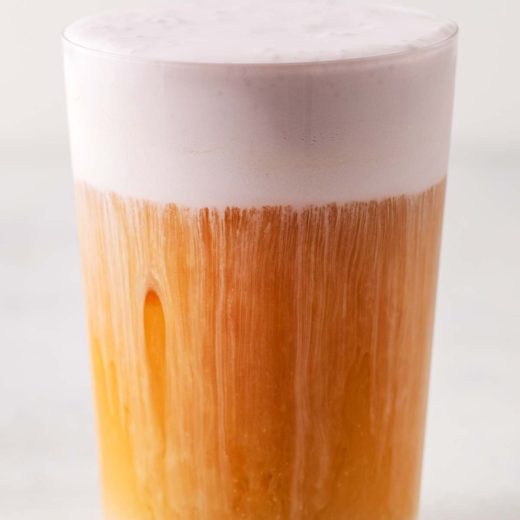
Jasmine iced tea is delightfully simple to make with just four ingredients. Follow this clear, step-by-step recipe to brew a fragrant, sweetened iced tea in minutes. This version uses a concentrated brew poured over ice for a bright, floral drink perfect for warm days.

Homemade Sweet Jasmine Iced Tea
Jasmine tea is a scented green tea, traditionally made by infusing green tea leaves with jasmine flower aroma. The result is a light, floral tea with delicate sweetness. This easy iced version is ideal for refreshing yourself on a hot afternoon or serving at gatherings.
With four ingredients—jasmine tea, sugar, water, and ice—this recipe is straightforward and quick. You can scale the quantities to make a larger pitcher for entertaining.
Note from Jee

Historically, jasmine tea was scented by layering fresh jasmine flowers with tea leaves in a warm room so the tea absorbed the floral scent. Modern production often uses jasmine extract or scenting techniques that make jasmine tea more affordable. When you see higher-priced jasmine tea, it may be scented with fresh jasmine buds rather than extract.
Jasmine tea comes in different leaf shapes—thin rolled leaves or densely rolled balls. Both carry jasmine aroma; the difference is in processing and appearance, not in whether they are jasmine tea.
Recipe Summary
- Sweet jasmine iced tea is a caffeinated cold drink made with jasmine tea, sugar, water, and ice.
- This method creates a tea concentrate by steeping jasmine tea sachets (or loose tea) in hot water, then cooling and pouring over ice.
- The recipe below yields a 16-ounce serving (2 cups). Multiply the ingredients to make larger batches for a pitcher or party.
Ingredient Notes
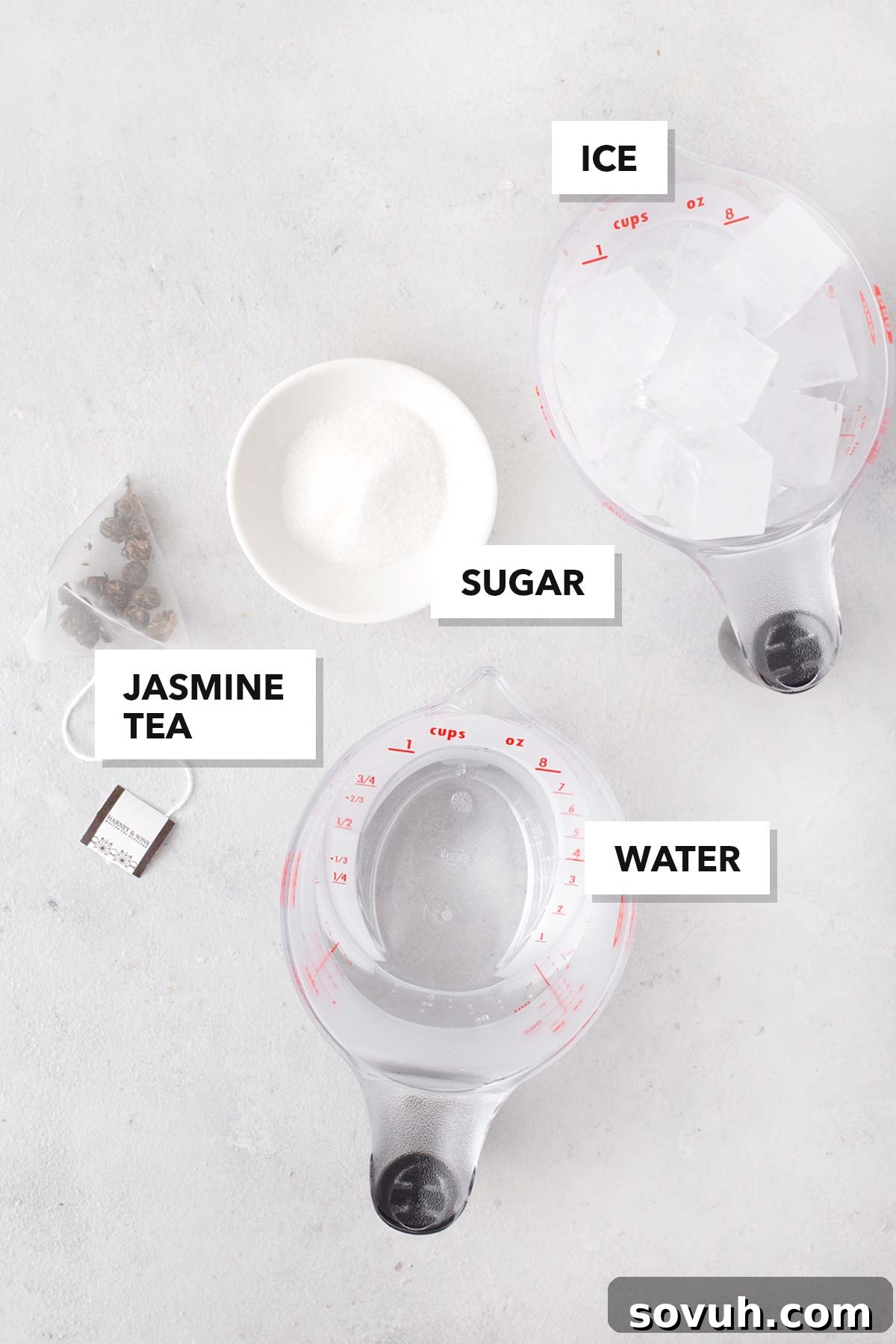
- Jasmine tea: Tea sachets are convenient for quick cleanup. You can also use traditional tea bags or loose jasmine tea—use about 1 tablespoon of loose tea to replace two sachets per 16-ounce serving.
- Sugar: White granulated sugar is used here, but brown sugar or a simple syrup work well as alternatives if you prefer different flavor notes or easier dissolving.
- Water: For the cleanest taste, filtered water is recommended for both brewing and making ice.
- Ice: Use clear, fresh ice made from filtered water if possible to avoid diluting the flavor with mineral tastes.
Full ingredient amounts and exact instructions are included in the recipe card further below.
Step-by-Step Instructions
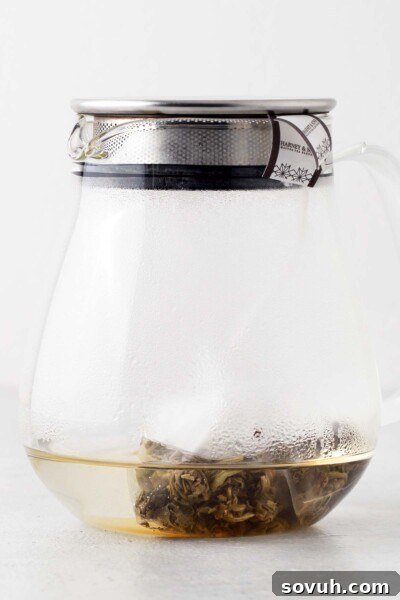
Step 1: Place jasmine tea sachets (or loose tea in an infuser) into a teapot. Add half a cup of hot water.
For jasmine and other green teas, avoid boiling water. Aim for water around 170–180°F (75–82°C) to preserve the delicate floral notes and prevent bitterness.
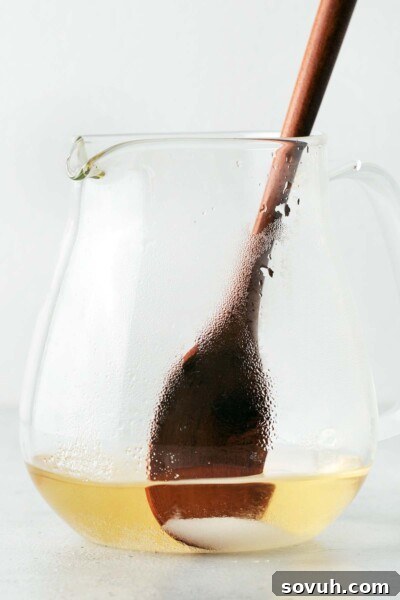
Step 2: Cover and steep for about 4 minutes, then remove the sachets or infuser. Add sugar and stir until fully dissolved.
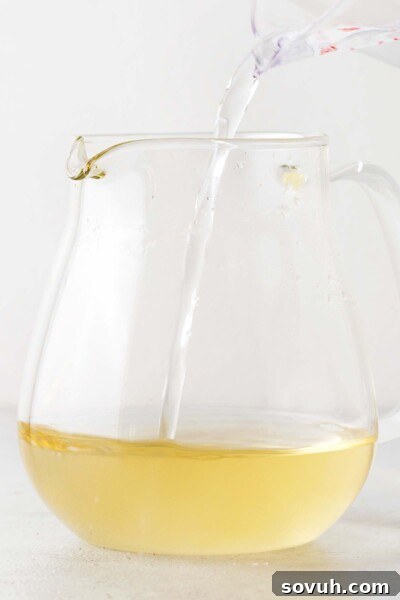
Step 3: Add cold water to the brewed concentrate and transfer the tea to the refrigerator to cool for about 30 minutes.
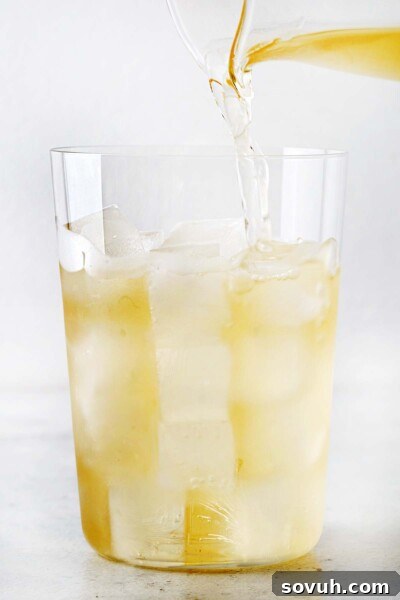
Step 4: Fill a glass with ice and pour the chilled jasmine tea over it. Serve immediately.
Recipe Notes
Use the right water temperature for jasmine tea
Green teas like jasmine can become bitter if brewed with boiling water. Check your tea packaging for the recommended temperature; when in doubt, use water below boiling to preserve aroma and sweetness.
Avoid oversteeping
Steep green tea for no more than 4 minutes to prevent astringency. If you prefer a milder flavor, shorten the steeping time slightly.
Loose tea or bags both work
Sachets and bags are convenient, but loose leaf tea can produce a fuller flavor. If using loose tea, measure about 1 tablespoon for every two sachets called for in the recipe.
Expert Tips
- Prepare jasmine iced tea ahead: it keeps well chilled in the refrigerator for up to four days, making it a great make-ahead drink.
- For an unsweetened version, simply omit the sugar and enjoy the pure floral character of the tea.
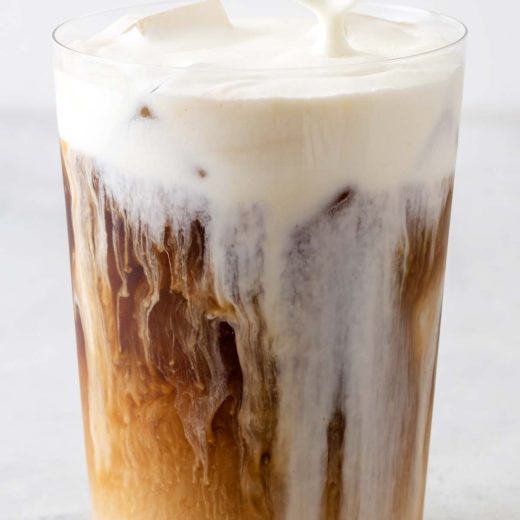
- Turn it into jasmine milk tea by adding milk or a dairy alternative. Add tapioca pearls to transform it into a jasmine bubble tea.
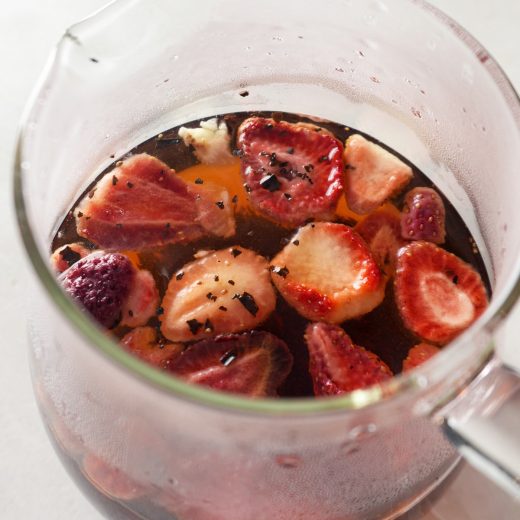
- Garnish with sliced lemon, berries, or fresh herbs like mint for color and a complementary flavor boost.
- For a sparkling variation, top a glass with a splash of chilled sparkling water just before serving for effervescence.
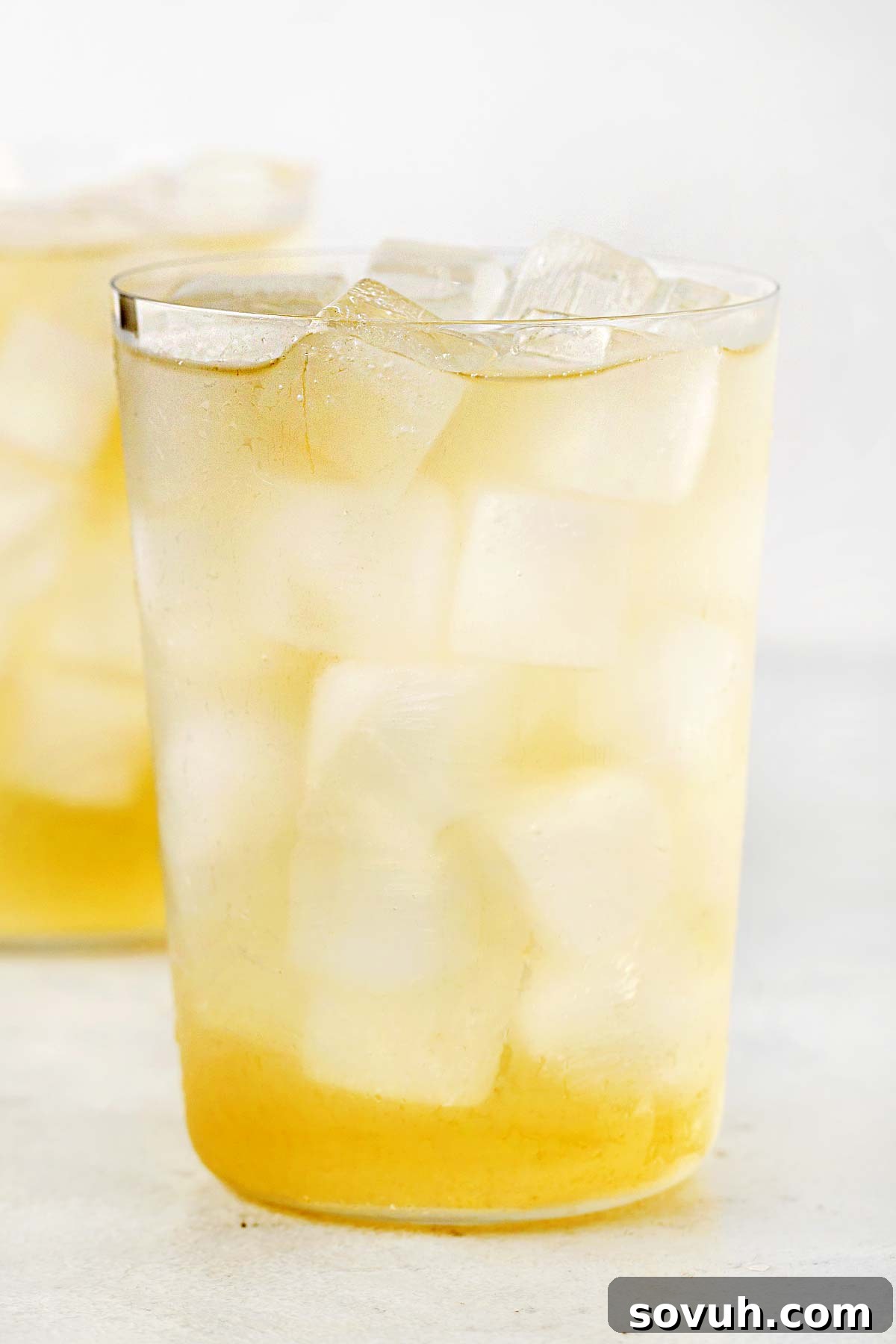
Recipe: Sweet Jasmine Iced Tea
Sweet Jasmine Iced Tea
By: Jee Choe, Certified Tea Sommelier
Prep Time: 2 minutes | Total Time: 6 minutes | Yield: 1 serving (16 ounces)
Equipment
- Teapot or heatproof container
- Electric kettle or stovetop kettle (for controlled temperature)
- Fine mesh infuser if using loose tea
Ingredients
- 2 jasmine tea sachets (or 1 tablespoon loose jasmine tea)
- ½ cup hot water (about 170–180°F / 75–82°C)
- 1 tablespoon sugar (adjust to taste)
- ½ cup cold water
- 1 cup ice
Instructions
- Place jasmine tea sachets or loose tea in a teapot. Pour ½ cup of hot water over the tea. Use water below boiling to protect the tea’s delicate aroma.
- Cover and steep for 4 minutes, then remove the sachets or strain out the leaves. Oversteeping will cause bitterness.
- Stir in sugar until dissolved. Add ½ cup of cold water, then refrigerate for about 30 minutes to chill.
- Fill a glass with ice and pour the cooled jasmine tea over the ice. Serve immediately and enjoy.
Notes
- Adjust the sweetness to your preference or substitute simple syrup for easier mixing.
- Store prepared tea in a covered container in the refrigerator for up to four days.
- For a stronger concentrate, increase the amount of tea and reduce the added water, then dilute when serving.
Nutrition (per serving, approximate)
Calories: 46 | Carbohydrates: 12 g | Fat: 0.04 g | Sodium: 24 mg | Sugar: 12 g
Nutrition information is an estimate and should be used as a guideline only.