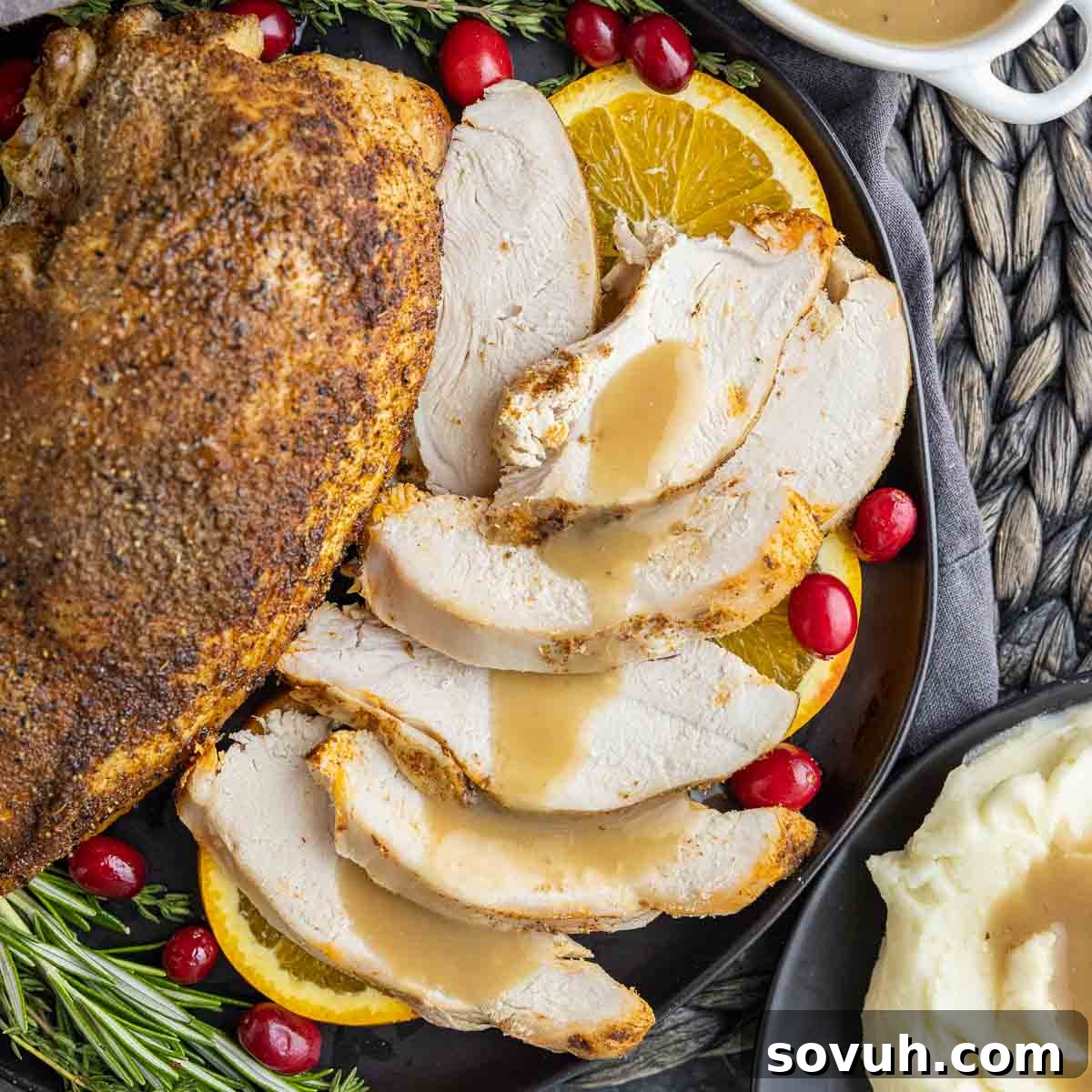
Unlock the secrets to preparing a perfectly moist and flavorful turkey breast, ideal for any holiday gathering or a simple Sunday dinner. This comprehensive guide covers everything you need to know, ensuring your turkey breast is always tender, juicy, and delicious. Whether you’re hosting a small Thanksgiving meal or simply craving the rich taste of turkey, we’ll walk you through the easiest and most effective cooking methods.
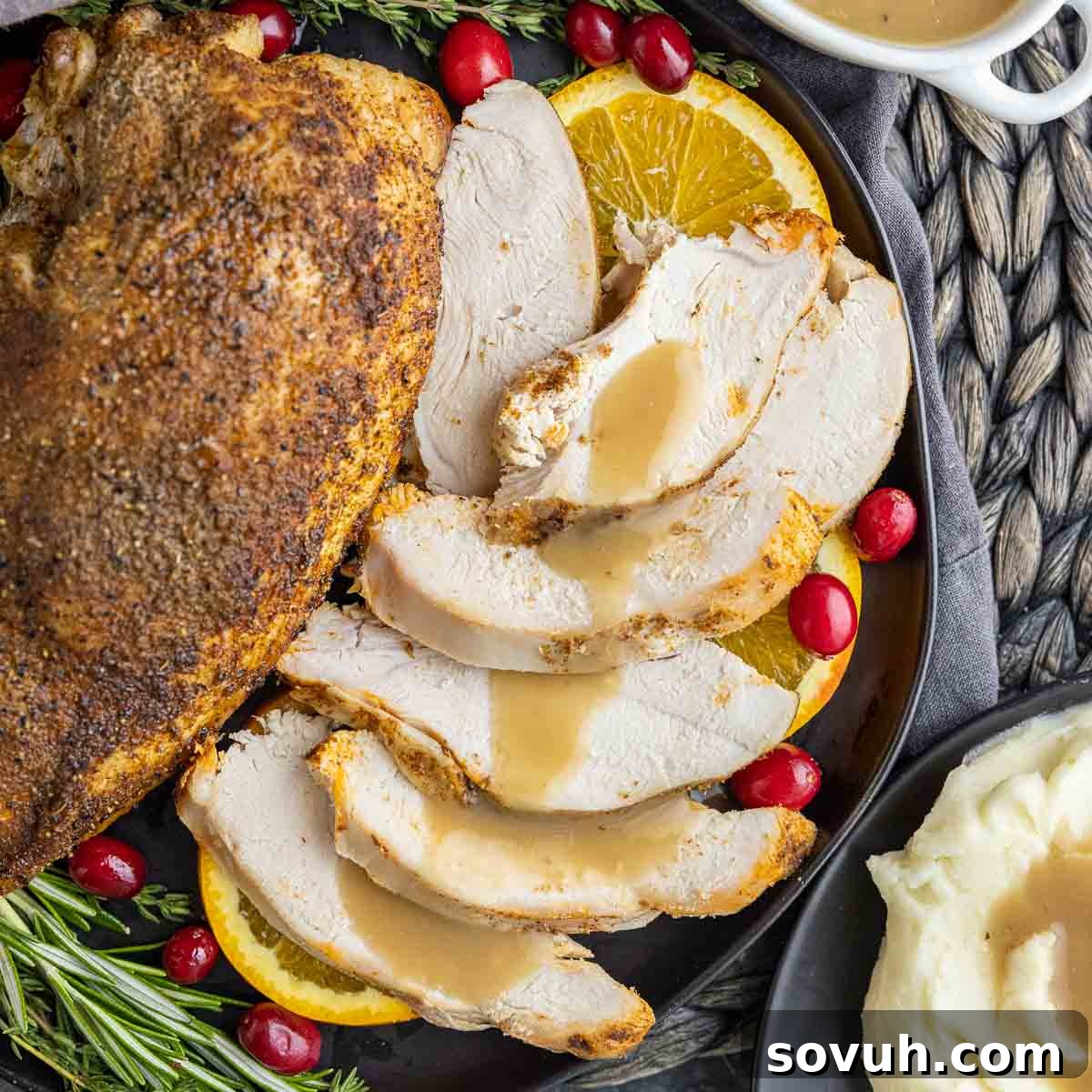
Why Choose Turkey Breast for Your Holiday Feast?
While a whole turkey is the traditional centerpiece for Thanksgiving, a turkey breast offers several compelling advantages, making it an increasingly popular choice for holiday dinners and everyday meals alike. Perhaps you have a preference for all white meat, or maybe you’re catering to a smaller guest list where a full bird would simply be too much. Turkey breast is also an excellent option if you need extra turkey to supplement a larger gathering or prefer to use your oven for other dishes. Its versatility, ease of cooking, and ability to yield consistently moist results make it a smart choice for any occasion.
No matter your reason, mastering the art of cooking a succulent turkey breast is a valuable skill. In this guide, we’ll equip you with three straightforward methods to achieve a perfectly tender and juicy turkey breast: classic oven roasting, convenient slow cooking, and quick pressure cooking (Instant Pot). These simple solutions will help you create an unforgettable holiday meal with minimal stress.
Note: This post may contain affiliate links. That means if you click on a link and make a purchase, we may receive a small commission. Thank you for supporting our content!
Understanding Turkey Breast Options: Bone-in vs. Boneless
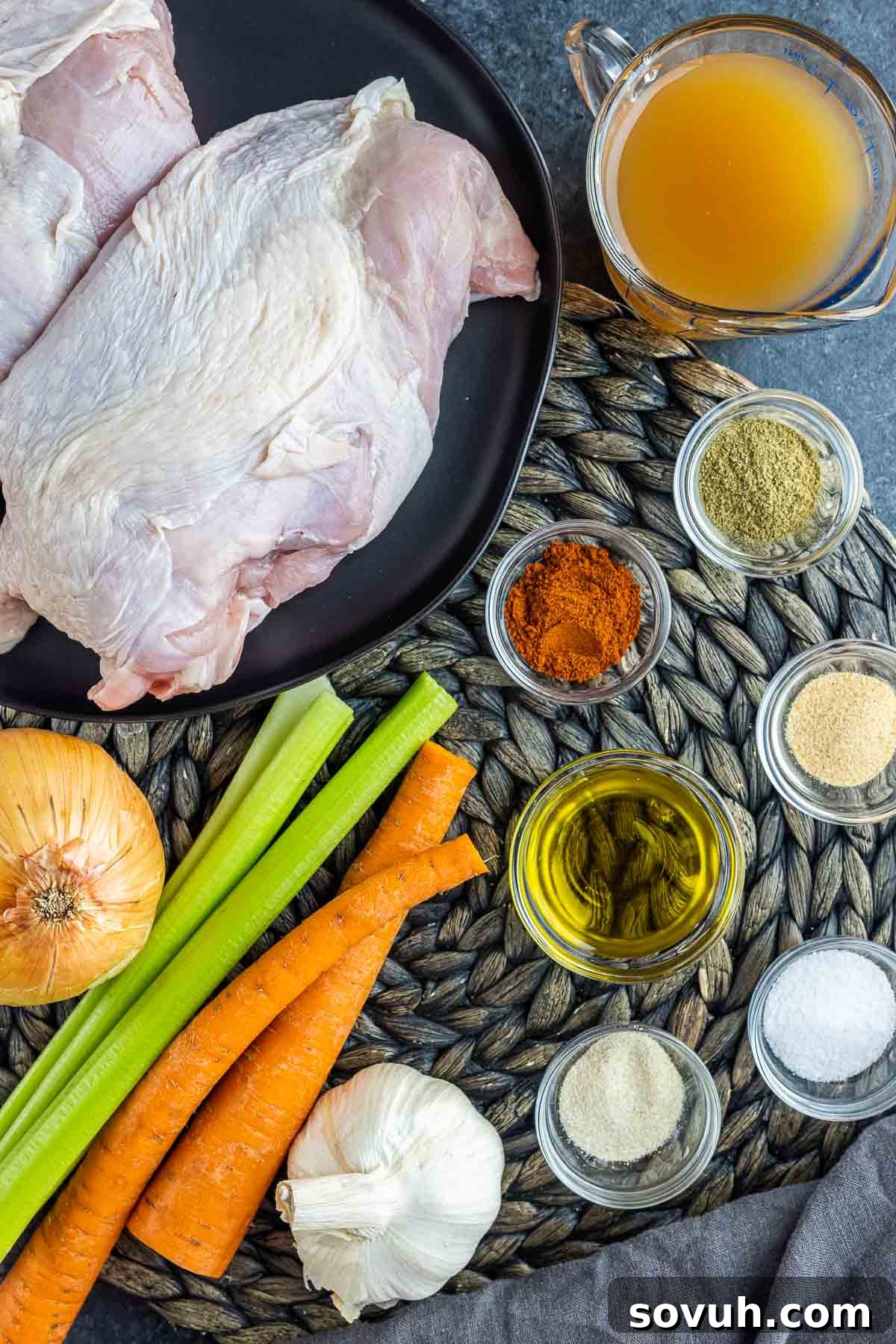
When selecting your turkey breast, you’ll typically encounter two main types: bone-in and boneless. Each offers distinct advantages that might influence your choice based on flavor preference, cooking time, and budget.
Bone-in Turkey Breast
We highly recommend opting for bone-in turkey breast. The bone contributes significantly to the flavor, infusing the meat with a richer, more profound taste as it cooks. Bones also help insulate the meat, leading to more even cooking and potentially juicier results. If you’re looking to reduce overall cooking time while still enjoying the benefits of bone-in, you can often find bone-in turkey breasts sold as “split breasts.” These have been cut into two smaller pieces, allowing them to cook faster without sacrificing flavor. Bone-in breasts typically come with the skin on, which is another great advantage for achieving a crispy exterior and moist interior.
Boneless Turkey Breast
Boneless turkey breast, often referred to as a turkey breast roast, is a convenient option. This type has been deboned and typically rolled or netted with twine to maintain its shape during cooking. While it cooks faster due to the absence of the bone, it can be slightly more prone to drying out if not cooked carefully. Boneless turkey breasts are usually a bit more expensive than bone-in varieties, as the butchering work has already been done for you. They are excellent for carving uniform slices and can be a time-saver on busy cooking days.
The Role of Skin: To Keep or Not to Keep?
The skin on a turkey breast plays a crucial role in maintaining moisture and enhancing flavor. Beneath the skin lies a layer of fat that renders during cooking, basting the meat and helping to keep it exceptionally moist and tender. This natural basting action is particularly important for turkey breast, which can otherwise be prone to drying out.
If you choose a turkey breast with the skin on, you’ll benefit from this natural moisture barrier and the potential for a deliciously crispy skin. If you opt for a skinless turkey breast, you’ll need to take extra precautions to prevent it from drying out. In this case, keeping the turkey breast covered during most of the roasting process is essential to trap moisture. You might also consider basting it periodically with broth or butter to compensate for the lack of natural fat from the skin.
Essential Equipment for a Perfect Turkey Breast
Having the right tools on hand can make all the difference in achieving a perfectly cooked turkey breast. Here’s what you’ll need for a seamless cooking experience:
- Roasting Pan with a Lid: For oven roasting, a sturdy roasting pan with a lid is invaluable. The lid helps to trap steam and moisture, ensuring your turkey breast remains tender. A heavy-duty pan also provides even heat distribution.
- Aluminum Foil: If your roasting pan doesn’t have a lid, or if you’re using a baking dish, heavy-duty aluminum foil will serve as an effective cover. It helps create a steaming environment to keep the meat from drying out.
- Instant-Read Meat Thermometer: This is arguably the most crucial piece of equipment. An instant-read meat thermometer takes all the guesswork out of cooking meats, ensuring your turkey reaches a safe internal temperature without being overcooked and dry.
- Cutting Board: A large, sturdy cutting board with a juice groove is essential for carving your turkey and collecting any delicious drippings.
- Sharp Carving Knife: A well-sharpened carving knife will allow you to slice the turkey breast cleanly and effortlessly, yielding beautiful, even pieces.
- Small Bowl: For mixing your seasoning paste.
- Paper Towels: To pat the turkey breast dry before seasoning, ensuring a crispy skin and better absorption of flavors.
Mastering Oven-Roasted Turkey Breast: A Step-by-Step Guide
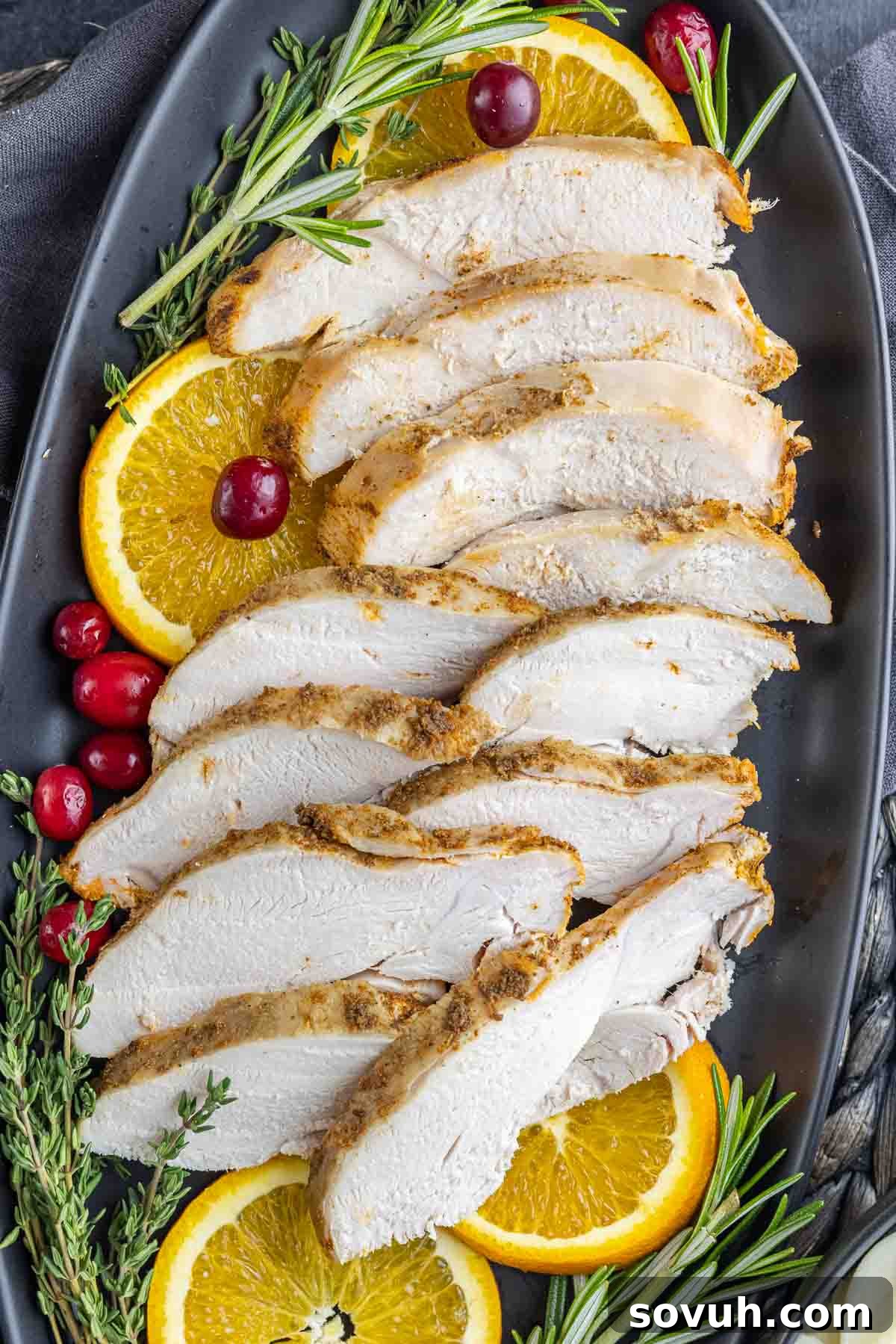
Roasting a turkey breast in the oven is a classic and reliable method that produces beautifully tender and juicy meat with a golden, crispy skin. This simple recipe is designed to deliver a perfectly cooked turkey breast every time.
How to Cook Turkey Breast in the Oven
- Preheat Your Oven and Prepare the Pan: Begin by preheating your oven to a consistent 325 degrees F (160 degrees C). Many roasting pans come with a rack, which is excellent for lifting the turkey out of its drippings. However, for even more flavor and moisture, we suggest an alternative: remove the rack and create a bed of aromatic vegetables. Lay celery stalks, carrots, quartered onions, and whole cloves of garlic directly in the bottom of the roasting pan. Pour chicken broth over these vegetables. As the turkey cooks, the broth and vegetables will release steam, which helps to keep the turkey breast incredibly moist and infuses it with aromatic flavors.
- Prepare the Turkey Breast for Seasoning: Gently pat your turkey breast dry with paper towels. This crucial step helps the seasoning adhere better and promotes a crispier skin (if applicable). In a small bowl, combine softened butter with a blend of seasonings: salt, poultry seasoning, paprika, garlic powder, onion powder, and black pepper. Mix these ingredients thoroughly to form a smooth, aromatic paste.
- Season and Roast: Generously rub the seasoned butter mixture all over the exterior of the turkey breast. If your turkey has skin, you can also gently lift the skin and spread some of the butter mixture directly onto the meat underneath for enhanced flavor and moisture. Place the turkey breast on top of the prepared bed of vegetables, breast meat side up. Cover the roasting pan tightly with its lid or heavy-duty aluminum foil. This covering creates a steaming environment that locks in moisture during the initial cooking phase.
Bake in the preheated oven for approximately 20 minutes per pound of turkey, or until an instant-read meat thermometer inserted into the thickest part of the breast (avoiding the bone) registers 160 degrees F (71 degrees C).
Pro Tip for Crispy Skin: If you are cooking a skin-on turkey breast and desire a crispy skin, remove the lid or aluminum foil during the last 20-30 minutes of baking. This exposure to direct heat will allow the skin to brown beautifully and crisp up.
Note on Cooking Time: Cooking times can vary based on the exact size and type of turkey breast (bone-in vs. boneless). Boneless turkey breasts generally cook faster than bone-in ones. Always rely on a meat thermometer to confirm doneness rather than solely on timed estimates.
- The Crucial Resting Period: Once your turkey breast reaches the target temperature, carefully remove the roasting pan from the oven. Transfer the turkey breast to a clean cutting board. Tent it loosely with aluminum foil. Allow the turkey breast to rest for an additional 10-15 minutes. During this resting period, the internal temperature will continue to rise to a safe 165 degrees F (74 degrees C) due to carryover cooking. More importantly, resting allows the juices to redistribute throughout the meat, ensuring every slice is incredibly moist and flavorful. Skipping this step can lead to a dry turkey, as all the juices will escape when you carve it.
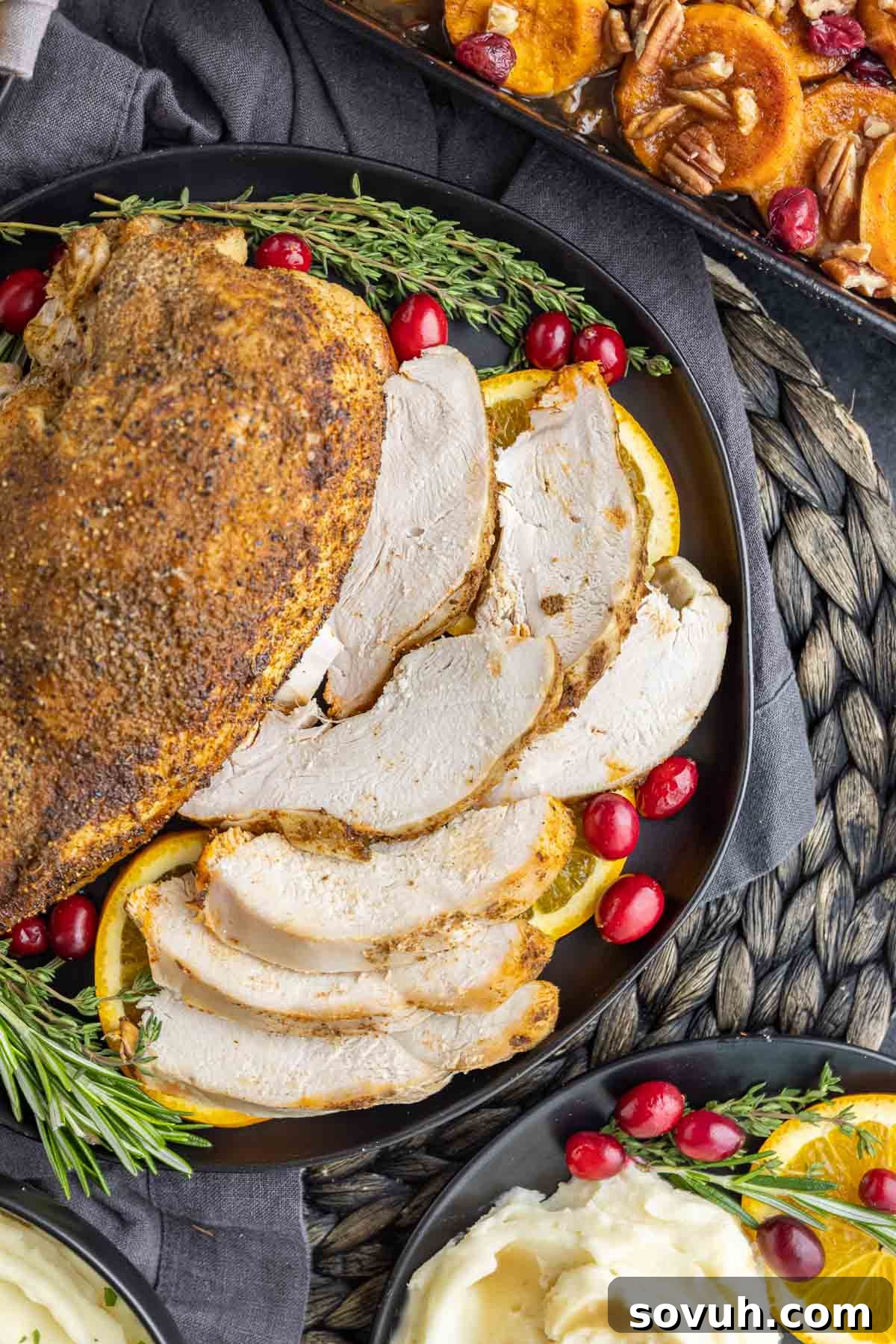
- Prepare Gravy and Serve: While the turkey rests, it’s the perfect opportunity to strain the flavorful turkey drippings from the roasting pan to make a rich, homemade turkey gravy. Once rested, carve the turkey breast into uniform slices and arrange them beautifully on a platter. Serve immediately with your favorite sides and the delicious gravy.
Ideal Oven Temperature and Cooking Duration for Turkey Breast
For the most tender and juicy results, we recommend cooking turkey breast at a moderate temperature of 325 degrees F (160 degrees C). This lower heat setting helps to prevent the meat from drying out prematurely, allowing it to cook evenly and gently.
The general guideline for cooking duration is approximately 20 minutes per pound until the internal temperature reaches 160 degrees F (71 degrees C). Remember that the turkey will continue to cook and reach 165 degrees F (74 degrees C) during its essential resting period. Always use an instant-read meat thermometer to accurately gauge doneness, as specific cooking times can vary based on your oven and the turkey’s exact weight and bone structure. A boneless turkey breast will cook faster than a bone-in one of the same weight.
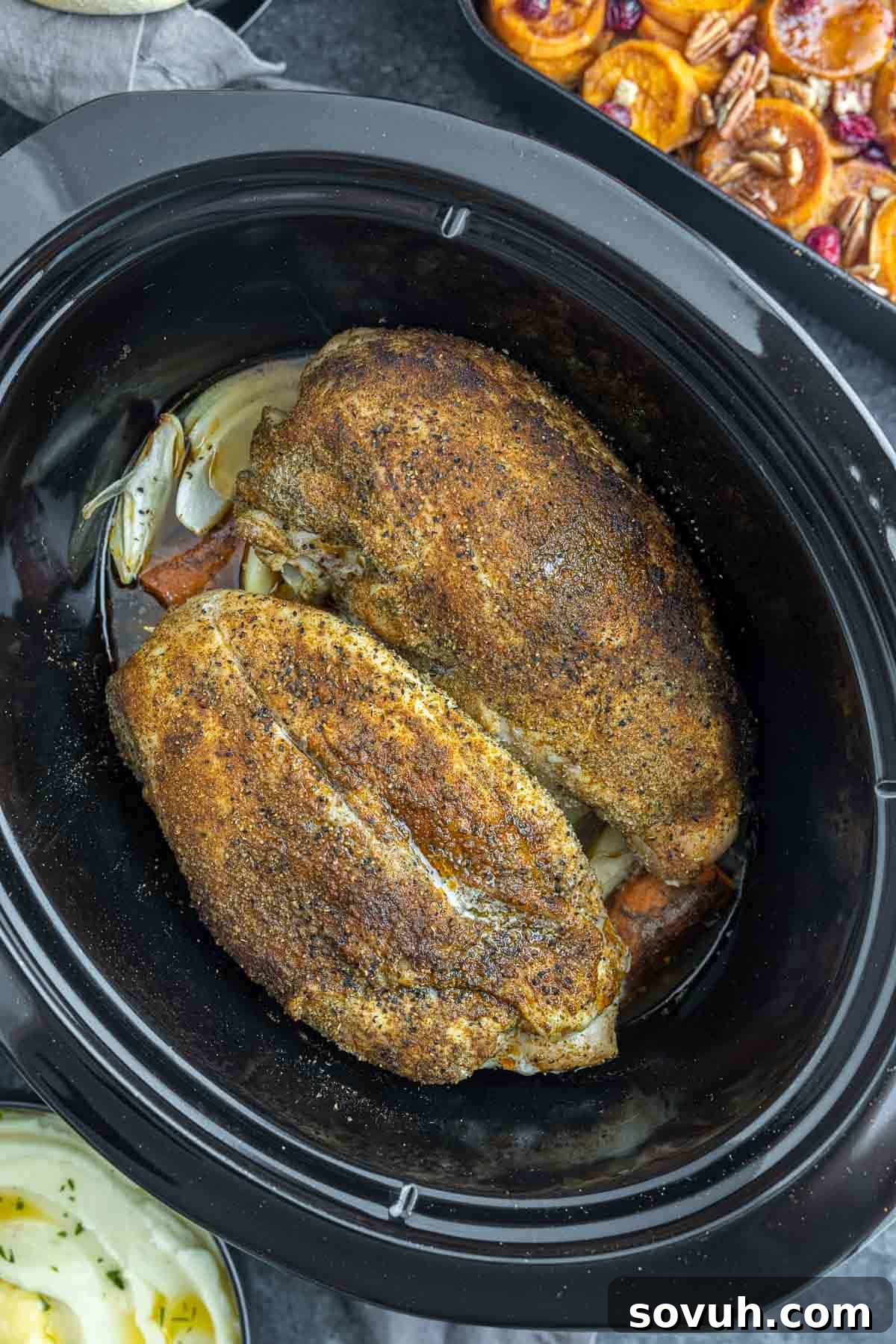
Effortless Cooking with Slow Cooker Turkey Breast
If you’re looking for a truly hands-off approach to your holiday turkey or simply want to free up valuable oven space, cooking a turkey breast in a slow cooker (Crock-Pot) is an excellent, no-fuss method. This technique guarantees a super moist and tender turkey with minimal effort, making it ideal for busy hosts or those juggling multiple dishes.
The slow cooker creates a moist, consistent cooking environment that is perfect for turkey breast, virtually eliminating the risk of drying it out. While the skin won’t get crispy in a slow cooker, the meat itself will be fall-apart tender and incredibly flavorful.
For detailed instructions and a full breakdown, check out our dedicated recipe for slow cooker turkey breast. It covers everything from seasoning to prep, ensuring perfect results.
Slow Cooker Cook Times: Cook times will vary depending on the size of your turkey breast. Remember, your turkey is fully cooked when it reaches an internal temperature of 165 degrees F (74 degrees C).
We highly recommend purchasing an instant-read thermometer to confirm doneness and avoid overcooking. It takes all the guesswork out of cooking any type of meat!
- 2 to 3 pounds: 4 to 4.5 hours on Low
- 4 to 5 pounds: 5 to 5.5 hours on Low
- 6 to 7 pounds: 6 to 6.5 hours on Low
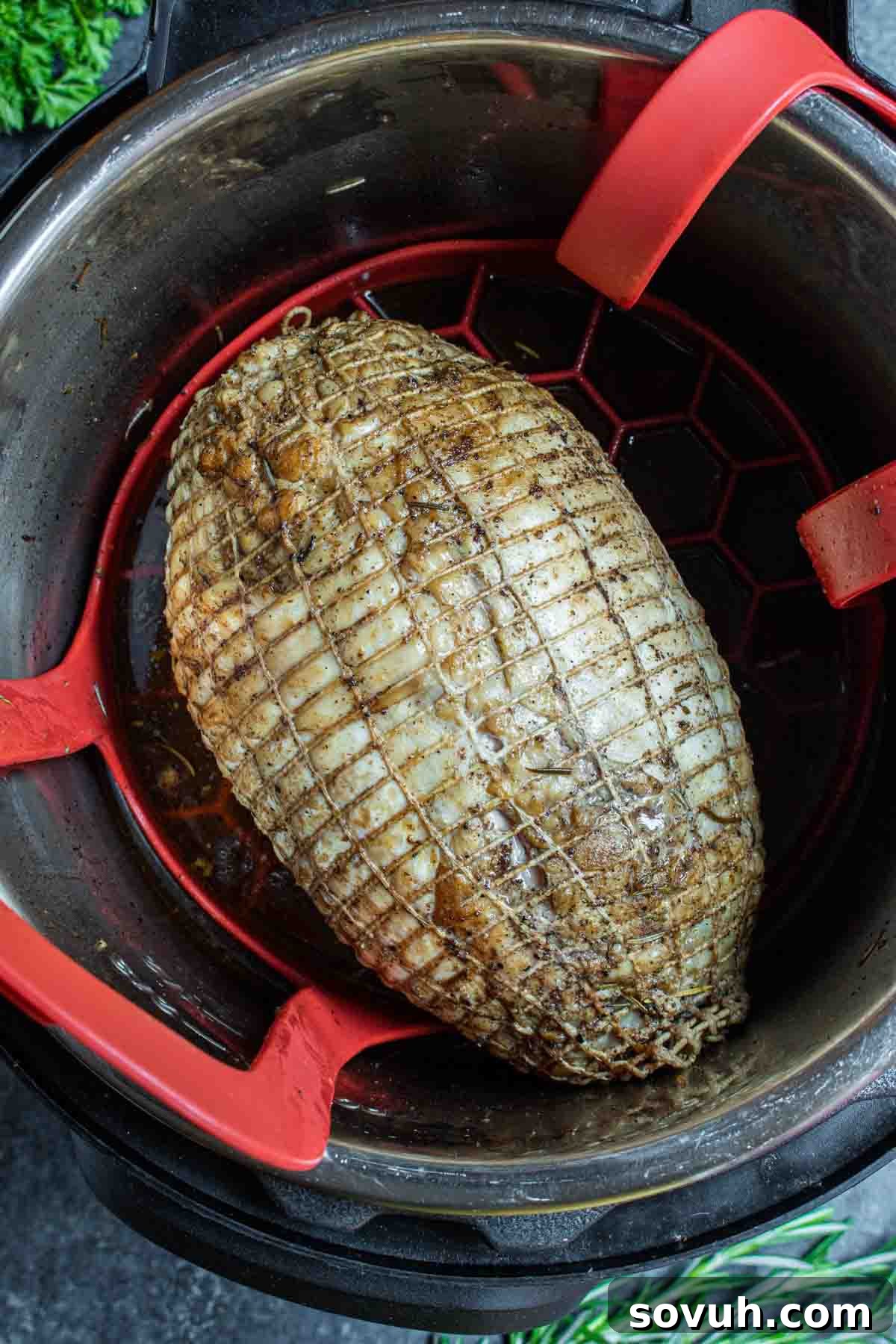
Speed and Flavor: Instant Pot Turkey Breast
For those times when you need a delicious turkey breast in a fraction of the traditional cooking time, your pressure cooker (like an Instant Pot) is an absolute game-changer. This method not only frees up oven space but also delivers incredibly tender and flavorful turkey in a quick and efficient manner, making it perfect for last-minute holiday meals or weeknight dinners.
Our simple recipe for Instant Pot turkey breast provides all the details, including easy instructions for making gravy from the drippings right in the pot, allowing you to create a complete turkey dinner with minimal fuss.
Instant Pot Cooking Time: When using the Instant Pot, a good rule of thumb is to cook the turkey breast for 6 minutes per pound. This ensures thorough cooking while keeping the meat juicy under high pressure.
Regardless of the size, we always recommend adding an additional 15 minutes of natural release time after the cooking cycle is complete. This natural release allows the internal temperature to equalize and the muscle fibers to relax, resulting in an exceptionally tender turkey breast. Once the natural release is complete, you can manually release any remaining pressure before opening the lid.
To ensure food safety and perfect doneness, always verify the internal temperature with an instant-read meat thermometer inserted into the thickest part of the breast. The target temperature is 165 degrees F (74 degrees C). If it hasn’t reached the proper temperature, simply cook for another 1 to 2 minutes on high pressure, then allow for another natural release. This brief additional cooking time should bring it right up to temperature.
Frequently Asked Questions About Cooking Turkey Breast
At What Temperature Should I Cook a Turkey Breast?
For oven roasting, we highly recommend cooking turkey breast at a steady temperature of 325 degrees F (160 degrees C). This moderate, consistent heat is key to achieving a moist and tender result. Cooking at too high a temperature can cause the exterior to cook too quickly, drying out the delicate breast meat before the interior is fully done. A lower temperature allows the meat to cook more evenly, maintaining its natural juices throughout the roasting process.
When Cooking a Turkey, Does the Breast Go Up or Down?
You can achieve delicious results whether you cook a turkey breast side up or breast side down. Both methods have their proponents. However, we generally suggest cooking it breast side up, especially if your turkey breast has skin. This orientation allows the skin to crisp up beautifully as it roasts, providing that desirable golden-brown finish. If you’re using a roasting rack, cooking breast up also prevents the delicate skin from sticking to the rack. When cooking in a slow cooker or Instant Pot, always place the breast side up to ensure it doesn’t sit submerged in the juices, which could make the meat soggy.
Should a Turkey Breast be Cooked Covered or Uncovered?
To achieve a truly tender and juicy turkey breast, we find that covering it for the majority of the cooking time is essential. This method helps to trap steam and moisture, creating a moist cooking environment that prevents the meat from drying out. A covered turkey breast will be significantly more tender and succulent, making it perfect for Thanksgiving dinner or any special meal.
If you are cooking a skin-on turkey breast and want to achieve a crispy skin, you’ll need to make a slight adjustment: remove the lid or aluminum foil during the last 10-20 minutes of cooking. This allows the direct heat to brown and crisp the skin to perfection, providing a delightful textural contrast to the moist meat.
Why is My Turkey Breast Dry?
A dry turkey breast is almost always a sign of overcooking. Turkey breast meat is lean and can quickly lose its moisture if cooked beyond its ideal internal temperature. To prevent dryness, it’s crucial to cook the breast meat at a low, slow temperature and keep it covered for most of the cooking duration to help retain moisture. Always use an instant-read meat thermometer to monitor the internal temperature. Remove the turkey breast from the oven when it reaches 160 degrees F, and allow it to rest. The carryover cooking will bring it up to the safe 165 degrees F, ensuring it stays juicy. If using skin-on turkey, uncover it only during the final 20 minutes to crisp the skin, not to cook it further.
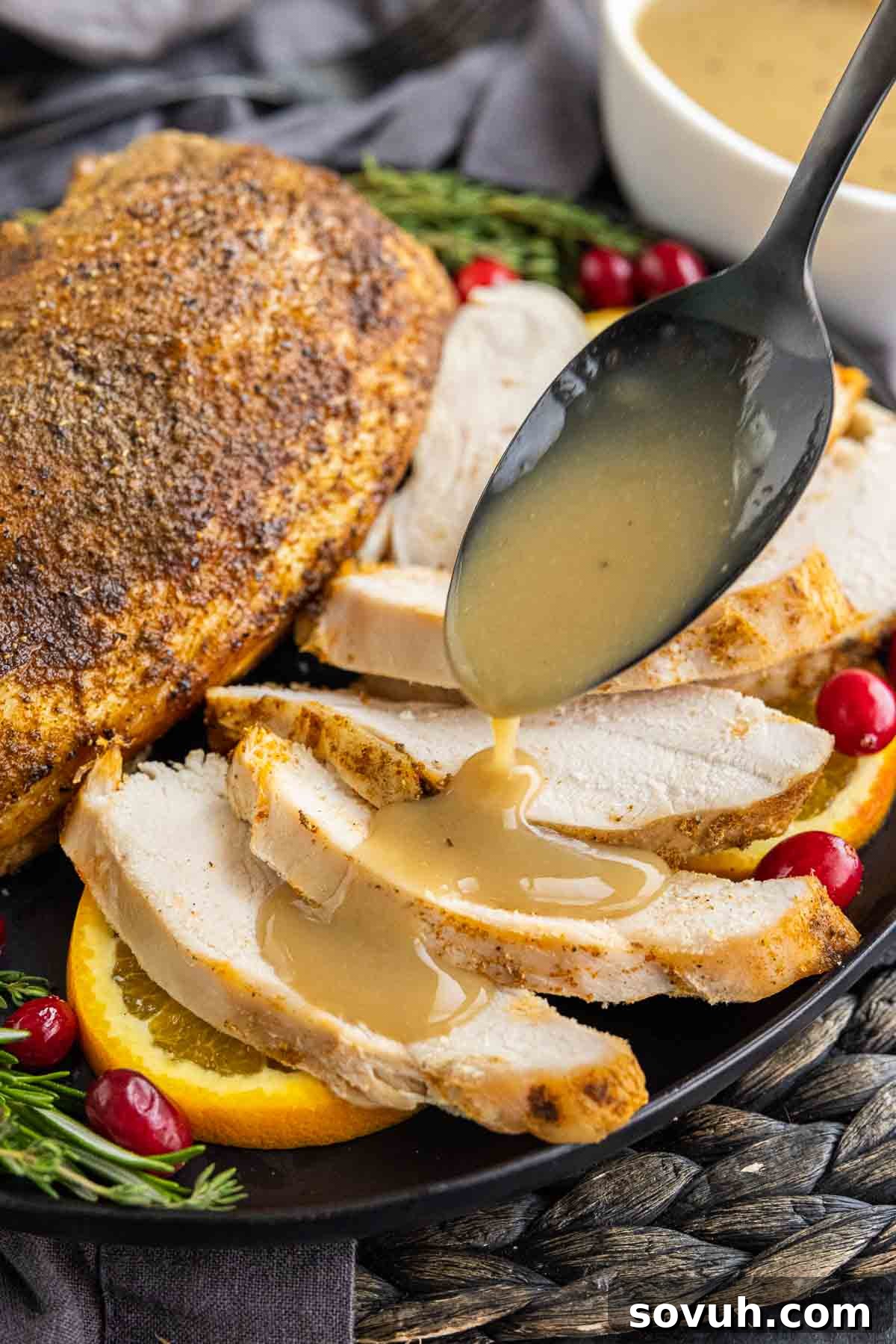
Don’t Forget the Gravy! Elevate Your Meal
The flavorful pan drippings from your roasted turkey breast are a goldmine for creating an incredibly rich and savory turkey gravy. Don’t let those delicious juices go to waste!
To prepare your drippings for gravy, first, remove the cooked vegetables from the roasting pan and discard them. Next, place a fine mesh strainer over a large bowl and carefully pour all the pan drippings through it. This step removes any small bits of debris or lumps, leaving you with a smooth, flavorful liquid. Allow the drippings to cool completely, then skim off any excess fat that has risen to the top. These strained and skimmed drippings can be stored in the refrigerator for up to 5 days or frozen for up to 3 months, ready to be transformed into the best homemade turkey gravy you’ve ever tasted!
The Perfect Companions: What to Serve With Turkey Breast
Every delicious turkey breast deserves an array of spectacular side dishes to complete the meal. Here are some of our family’s favorite recipes that perfectly complement a tender turkey breast:
- Sweet Potato Casserole with Marshmallows
- Not Your Mom’s Mashed Potatoes
- Instant Pot Mashed Potatoes
- Cranberry Sweet Potato Casserole
- Cranberry Jello Salad
- Apple Pecan Stuffing
- Southern Cornbread Dressing
- Creamed Corn Casserole {Corn Pudding}
- Duchess Potatoes
- The BEST Cauliflower Mash {Keto}
- Stovetop Creamed Corn
Making the Most of Turkey Leftovers
For many, turkey leftovers are just as exciting as the main holiday meal! The versatility of cooked turkey means you can transform it into countless delicious dishes for days to come. The day after Thanksgiving, we often whip up a big batch of Thanksgiving Leftovers Sliders – they’re always a crowd-pleaser. If it’s just a solo craving, a hearty Thanksgiving Leftovers Sandwich is pure comfort. You might also try a gourmet panini featuring our cranberry salsa – it’s an incredibly tasty combination!
For a complete dinner recipe, consider turning your leftover turkey into a comforting Turkey Shepherd’s Pie or an elegant Turkey with Marsala Sauce. The possibilities are endless for enjoying your delicious turkey long after the initial feast.
Like this recipe and want more culinary inspiration?
Make sure to follow us on Instagram and Pinterest for a continuous stream of delicious recipes and helpful cooking tips.
Servings: 6
Prep Time: 20 mins
Cook Time: 2 hrs
Resting Time: 15 mins
Total Time: 2 hrs 35 mins
Turkey Breast in the Oven
Created By: Kat Jeter & Melinda Machado
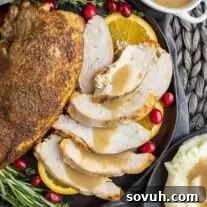
This simple recipe for oven-roasted turkey breast is the perfect choice for a moist and delicious turkey dinner.
Ingredients
- 6 pounds Turkey breast, bone-in and skin on for best flavor
- 2 tablespoons Butter, softened
- 2 teaspoons Kosher salt
- 2 teaspoons Poultry seasoning
- 1 teaspoon Paprika
- 1 teaspoon Garlic powder
- 1 teaspoon Onion powder
- 1/2 teaspoon Pepper
- 4 cloves Garlic, peeled and crushed
- 2 stalks Celery, chopped in half
- 2 Carrots, chopped in half
- ½ cup Chicken broth
Instructions
- Preheat oven to 325 degrees F (160 degrees C).
- Chop the celery and carrots in half. Cut the onion into six wedges, and peel and crush the garlic.
- Place the celery, carrots, onion, and garlic in the bottom of your roasting pan and pour in the chicken broth.
- Pat your turkey breast dry with a paper towel.
- In a small bowl, combine the butter, salt, poultry seasoning, paprika, garlic powder, onion powder, and pepper. Mix well to make a paste.
- Rub the seasoned butter mixture generously over the turkey breast.
- Lay the turkey breast on top of the vegetables, breast side up.
- Cover the roasting pan tightly with its lid or aluminum foil.
- Place the turkey breast in the oven and bake for approximately 20 minutes per pound or until a meat thermometer shows the internal temperature is 160 degrees F (71 degrees C). See note 1 below.
- If you are cooking a turkey breast with the skin on, remove the lid in the last 20-30 minutes of baking. This will allow the skin to crisp up beautifully.
- Remove the roasting pan from the oven and carefully transfer the turkey breast to a cutting board. Loosely tent with foil. Let the turkey breast rest for an additional 10-15 minutes, until the internal temperature reaches 165 degrees F (74 degrees C).
- When ready to serve, carve the turkey into slices and arrange on a platter.
Notes
- Cooking time will vary based on the turkey you chose to use. A boneless turkey breast tends to cook faster than a bone-in turkey breast. You will always want to check with an instant-read meat thermometer to ensure proper doneness.
Nutrition
Serving: 8 ounces, Calories: 515kcal, Carbohydrates: 4g, Protein: 99g, Fat: 12g, Saturated Fat: 4g, Polyunsaturated Fat: 2g, Monounsaturated Fat: 3g, Trans Fat: 0.2g, Cholesterol: 257mg, Sodium: 1804mg, Potassium: 1239mg, Fiber: 1g, Sugar: 1g, Vitamin A: 3848IU, Vitamin C: 3mg, Calcium: 91mg, Iron: 3mg
Course: Main
Cuisine: American
