
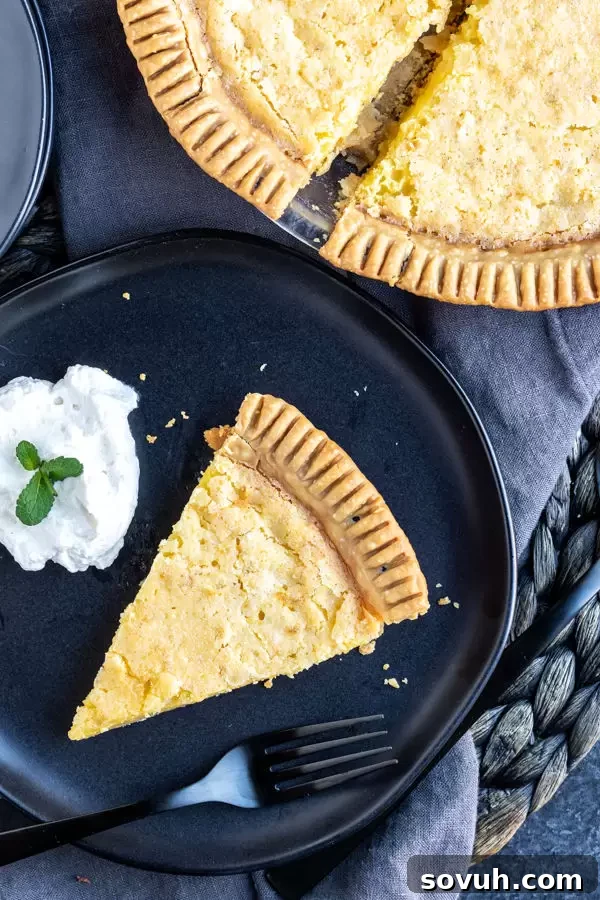
Lemon Chess Pie is an easy and delicious Southern dessert you won’t soon forget. With its vibrant lemon custard filling nestled in a buttery, flaky crust, this simple yet sophisticated pie is perfect for any occasion, from casual family dinners to festive holiday gatherings. Experience a true taste of Southern charm with every delightful slice!

Growing up in the South, chess pies were a staple at nearly every family gathering. From classic chocolate to rich coconut, I savored them all. As an adult, carrying on this delicious tradition became a joy, and my Lemon Chess Pie recipe quickly became a perennial favorite. It’s especially beloved during the warmer spring and summer months, offering a delightful lightness and refreshing tang that stands apart from heavier dessert options.
This Lemon Chess Pie requires just 9 simple and inexpensive ingredients, making it an accessible and crowd-pleasing dessert. If you’re looking to expand your chess pie repertoire, don’t miss my decadent chocolate chess pie recipe – it’s truly divine!
Note: This post may contain affiliate links. That means if you click on a link and make a purchase, we may receive a small commission. Thank you for supporting our content!

Classic Southern Lemon Chess Pie: Your Guide to a Zesty Delight
Welcome to the delightful world of Lemon Chess Pie, a quintessential Southern dessert known for its irresistible balance of sweet and tart flavors. This recipe delivers a silky-smooth, vibrant lemon custard filling baked to perfection in a golden, flaky crust. If you’re seeking a dessert that embodies both simplicity and sophistication, this Lemon Chess Pie is your answer. Its bright, refreshing taste makes it a superb choice for any season, bringing a burst of sunshine to your table. Let’s dive into creating this timeless classic.
The Enchanting History of Chess Pie
The origins of chess pie are somewhat shrouded in mystery, but its roots are firmly planted in Southern American culinary tradition. Several theories attempt to explain the charming name. Some believe it stems from “chest pie,” referring to pies stored in pie chests or cabinets common in Southern homes before refrigeration. Another popular theory suggests a cook, when asked what kind of pie she had made, replied, “It’s just pie,” which, in a Southern accent, sounded like “chess pie.” Regardless of its true etymology, chess pie typically features a simple, sweet, and rich custard filling often thickened with a bit of cornmeal or flour, ensuring a stable texture that holds up beautifully. The addition of fruit, like bright lemons, elevates this humble dessert into a truly memorable experience.
Why Lemon Chess Pie is a Southern Gem
While many variations of chess pie exist, the lemon version holds a special place in the hearts of dessert lovers. The natural acidity of fresh lemons cuts through the sweetness of the custard, creating a perfectly balanced flavor profile that is both decadent and refreshing. It’s an ideal choice for a lighter dessert after a heavy meal, or a vibrant addition to a spring brunch or summer picnic. The rich, buttery crust complements the zesty filling, providing a textural contrast that makes each bite incredibly satisfying. This pie isn’t just a dessert; it’s a celebration of simple, wholesome ingredients transformed into something extraordinary.
Mastering the Blind Bake: A Crisp Crust Every Time
Achieving a perfect Lemon Chess Pie starts with a flawlessly baked crust. For custard-based pies, blind baking (or pre-baking) the crust is a crucial step. This process prevents the bottom crust from becoming soggy once the wet filling is added, ensuring a beautifully crisp foundation for your pie. Whether you’re using a high-quality store-bought crust or a homemade one, a proper blind bake is non-negotiable for success.
To begin, roll out your pie crust (if making from scratch) and carefully place it into your pie dish. Gently press the dough down to conform to the dish’s shape, ensuring it reaches into all crevices. Use a fork to press the edge of the pie crust into the rim of the pie dish, creating a decorative fluted edge, but be careful not to press so hard that you pierce through the crust. If using a pre-made crust in a tin, you can skip some of these initial shaping steps.
Now, to prevent your pie crust from puffing up or shrinking during baking, you have two primary methods:
- Using Pie Weights: This is the most common method. Line your prepared pie crust with parchment paper or aluminum foil, ensuring it covers the bottom and extends up the sides. Fill the lined crust with ceramic pie weights, dried beans, or even uncooked rice. These weights hold the dough in place, preventing air bubbles and shrinkage. The heat will circulate around the weights, baking the crust evenly.
- Docking the Crust: If you don’t have pie weights, you can “dock” your crust. This involves pricking the bottom and sides of the pie dough generously with a fork. These small holes allow steam to escape from underneath the crust, preventing it from puffing up. For a custard pie like Lemon Chess Pie, there’s a trick to prevent the filling from seeping through these holes: after docking, blind bake the crust for approximately 7 minutes, then quickly brush the bottom and sides of the crust with an egg white egg wash (one egg white whisked until slightly foamy). This creates a protective seal. Continue baking for an additional 3 minutes.
Once your crust is prepared and weighted (or docked and sealed), place it in the refrigerator to chill for about 15-20 minutes while your oven preheats to 450 degrees F (230 degrees C). Chilling the dough helps firm up the butter, which further prevents shrinking. When the oven is ready, remove the chilled pie crust and bake for 8-10 minutes, or until it’s light golden brown. Remember, baking times can vary slightly depending on your oven and the type of crust used, so keep an eye on it.

Crafting the Luscious Lemon Filling
The heart of this Lemon Chess Pie is its remarkably simple yet profoundly flavorful custard filling. It comes together quickly with minimal effort, showcasing the bright and tangy essence of fresh lemons.
- In a large mixing bowl, combine the essential ingredients: eggs, granulated sugar, slightly cooled melted butter, fresh lemon juice, aromatic lemon zest, all-purpose flour, yellow cornmeal, and a pinch of salt. Whisk these ingredients together until the mixture is completely smooth and well combined. Ensure there are no lumps of flour or cornmeal. The lemon zest is crucial here, as it provides a concentrated burst of lemon aroma and flavor that truly elevates the pie.
- Carefully place your blind-baked pie crust (cooled) on a sturdy baking sheet. This makes it easier to transfer the pie in and out of the oven, preventing spills and providing stability. Slowly pour the prepared lemon filling into the pre-baked crust.
- Transfer the baking sheet with the pie to your preheated oven set at 325 degrees F (160 degrees C). Bake for approximately 35-45 minutes. The pie is done when the edges are set and lightly golden, but the center still has a slight jiggle. Overbaking can lead to a rubbery texture, so watch it carefully.
- Once baked, remove the pie from the oven and allow it to cool completely on a wire rack before slicing and serving. This cooling period is vital for the custard to fully set and achieve its perfect texture. Rushing this step could result in a messy, runny pie.
Preventing a Burnt Crust: Perfect Golden Edges
After all the effort of creating a beautiful blind-baked crust, the last thing you want is for its edges to burn while the filling bakes. If your blind-baked pie crust already has a lovely golden-brown hue, it’s wise to shield the edges during the second baking phase. You have a couple of easy options:
- Aluminum Foil: Simply tear off a piece of aluminum foil and create a ring that covers just the outer edges of the pie crust. Crimp it gently around the rim to secure it. This reflects heat away from the crust, allowing the filling to cook through without further browning the edges.
- Silicone Pie Crust Shield: For a reusable and convenient option, a silicone adjustable pie crust shield is an excellent investment. These flexible rings fit snugly over various pie sizes and are incredibly effective at protecting the crust from over-browning.
Applying one of these shields about halfway through the filling’s baking time, or as soon as you notice the edges are sufficiently golden, will ensure your pie comes out with a consistently beautiful finish.
Do I Need Cornmeal for Lemon Chess Pie?
Yes, for this specific recipe, cornmeal is an integral ingredient. It plays a crucial role in thickening the custard filling, giving it that characteristic dense yet smooth texture that chess pies are famous for. The cornmeal prevents the filling from being too watery and ensures it holds its shape beautifully when sliced. If you were to omit the cornmeal, the filling would likely be much runnier and wouldn’t set properly, making it difficult to cut and serve. While some chess pie recipes use only flour, the small amount of cornmeal here contributes to the unique Southern charm and texture.
Exploring Fruit Variations: Beyond Lemon
One of the many joys of chess pie is its incredible versatility. While lemon is undeniably a star, this base recipe lends itself wonderfully to other fruit variations. When experimenting, it’s best to stick with other citrus fruits as their acidity and flavor profile are most compatible with the custard base.
Consider these delightful swaps:
- Orange Chess Pie: Use the zest and juice from fresh oranges for a sweeter, sunnier flavor.
- Key Lime Chess Pie: For a tangier, slightly more tart experience, key lime juice and zest are fantastic.
- Grapefruit Chess Pie: If you enjoy a touch of bitterness with your sweet, grapefruit can create a sophisticated and intriguing pie.
The instructions for making the filling remain the same; simply substitute the lemon zest and juice with the equivalent amounts from your chosen citrus fruit. This makes it a fantastic way to introduce variety to a dessert spread, especially if you’re making multiple pies. It’s also an excellent method to utilize an abundance of homegrown fruit, transforming your harvest into a delicious family treat.
Storage Tips for Your Lemon Chess Pie
Proper storage ensures your Lemon Chess Pie remains delicious for as long as possible. Fortunately, this pie is quite forgiving.
You do not necessarily have to refrigerate this pie immediately after it cools. It can be covered loosely with plastic wrap or a pie dome and kept at cool room temperature for up to 3 days. In most households, a pie this delicious rarely lasts that long!
If you need to store it for a longer period, or if your kitchen is particularly warm, covering it tightly and refrigerating it is the best option. When refrigerated, your Lemon Chess Pie will stay fresh and flavorful for 5-7 days.
Serving temperature is a matter of personal preference. Many enjoy lemon chess pie at room temperature, which allows its flavors and aromas to fully develop. Others prefer it chilled, finding the cool custard particularly refreshing. If you prefer it at room temperature after refrigeration, simply take a slice out of the fridge and let it sit on the counter for 15-30 minutes until it reaches your desired temperature, then enjoy!
Can You Freeze Lemon Chess Pie? Yes, and Here’s How!
Yes, Lemon Chess Pie freezes exceptionally well, making it a fantastic make-ahead dessert or a way to enjoy leftovers for weeks to come. Freezing is straightforward and preserves the pie’s taste and texture beautifully.
To freeze your pie:
- Ensure the pie is completely cooled to room temperature after baking. This prevents condensation from forming and causing ice crystals once frozen.
- Wrap the entire pie (or individual slices if you prefer) tightly with at least two layers of plastic wrap. Make sure there are no exposed areas to prevent freezer burn.
- Follow the plastic wrap with a layer of heavy-duty aluminum foil. This double protection shields the pie from the harsh cold of the freezer and further prevents moisture loss.
- Label the foil with the date to keep track of its freshness.
When you’re ready to serve the frozen pie, simply transfer it to the refrigerator overnight to thaw gradually. Alternatively, you can place it on the kitchen counter for a couple of hours if you’re in a hurry, though slower thawing often yields the best texture. Once thawed, your Lemon Chess Pie will be as delicious as freshly baked and will last up to 2 months in the freezer.

Frequently Asked Questions About Lemon Chess Pie
- What is the texture of Lemon Chess Pie?
- Lemon Chess Pie boasts a unique texture. The filling is firm yet incredibly smooth and creamy, similar to a rich custard, with a slight chewiness from the cornmeal. The top often develops a thin, slightly crackled sugar crust, contrasting beautifully with the tender, flaky pie crust below.
- Can I use a store-bought pie crust?
- Absolutely! Using a good quality store-bought pie crust is a fantastic shortcut that makes this easy recipe even quicker. Just be sure to follow the blind-baking instructions carefully to ensure a crisp bottom crust.
- How do I know when my Lemon Chess Pie is done baking?
- The pie is done when the edges appear set and lightly golden, but the very center (about 1-2 inches) still has a slight, soft jiggle when gently shaken. It will continue to set as it cools. An instant-read thermometer inserted into the center should read around 170°F (77°C) for a perfectly set custard.
- What are some serving suggestions?
- Lemon Chess Pie is delightful on its own, but it pairs wonderfully with a dollop of fresh whipped cream, a scoop of vanilla bean ice cream, or a handful of fresh berries like raspberries or blueberries. A dusting of powdered sugar can also add a touch of elegance.
More Zesty Lemon Dessert Recipes to Explore
- 7UP Lemon Tart
- Lemon Icebox Pie
- No Bake Lemon Meringue Dip
- Lemon Thyme Shortbread Cookies
- Lemon Curd Tartlets
- Lemon Berry Napoleon
- Lemon Pound Cake
Like this recipe?
Make sure to follow us on Instagram and Pinterest for more delicious recipes like this, and share your culinary creations with us!
Lemon Chess Pie

Print Recipe
Ingredients
- 1 Pie crust
- 5 large Eggs
- 1 1/2 cups Granulated sugar
- 1/2 cup Unsalted butter, melted and cooled slightly
- 4 tablespoons Lemon juice, fresh squeezed
- 2 tablespoons Lemon zest
- 1 tablespoon All-purpose flour
- 1 tablespoon Yellow cornmeal
- 1/4 teaspoon Salt
Instructions
Blind bake pie crust:
-
If you are using a prepared pie crust in your own dish or a homemade pie crust you’ll want to start by rolling out the crust (if needed) and then placing it in your pie dish. Press the dough down firmly but gently, into the pie dish and use a fork to press the pie crust into the the rim of the pie dish making sure not to press all the way through the crust. You can skip this step if you are using a prepared pie crust in a tin.
-
Place the pie crust back in the refrigerator while you preheat the oven to 450 degrees F.
-
When the oven is ready remove the pie crust from the refrigerator.
-
Cut a piece of parchment paper slightly bigger than the pie and place it in the pie crust. Pour in pie weights or dried beans to fill the pie crust. This will keep the crust weighed down as it bakes so you don’t get bubbles. (See note 2 below if you do not have pie weights)
-
Place the pie in the oven and bake at 450 degrees F for 8-10 minutes. Note: We used a prepared Pillsbury pie crust. Times and temperature may vary for other crusts. Please follow the instructions for the pie crust you use.
-
When the time is up remove the crust from the oven and let cool completely before removing the pie weights/beans.
Pie:
-
Preheat oven to 325 degrees F.
-
In a large bowl whisk together the eggs, sugar, melted butter, lemon juice, lemon zest, all-purpose flour, yellow cornmeal, and salt.
-
Place the cooked pie crust on a baking sheet and then pour the filling into it.
-
Bake at 325 degrees F for 35-45 minutes. (See note 3)
-
When the pie comes out of the oven let it cool completely before serving.
Notes
- Don’t stretch the crust larger in the pan or it may shrink while baking.
- If you do not have pie weights or dried beans you can prick the bottom and sides of the crust with a fork to keep it from forming bubbles as it bakes. To keep the filling from seeping through later blind bake your crust for 7 minutes and then seal the holes by brushing an egg wash (1 egg white whisked until foamy) over the inside of the pie and up the sides. Continue baking for 3 more minutes.
- If your blind-baked pie crust is already a nice golden brown you should consider covering the edges of the pie to keep them from getting too dark. You can use aluminum foil to cover just the edges of the pie crust, or use a silicone adjustable pie crust shield to cover the edges.
Nutrition
