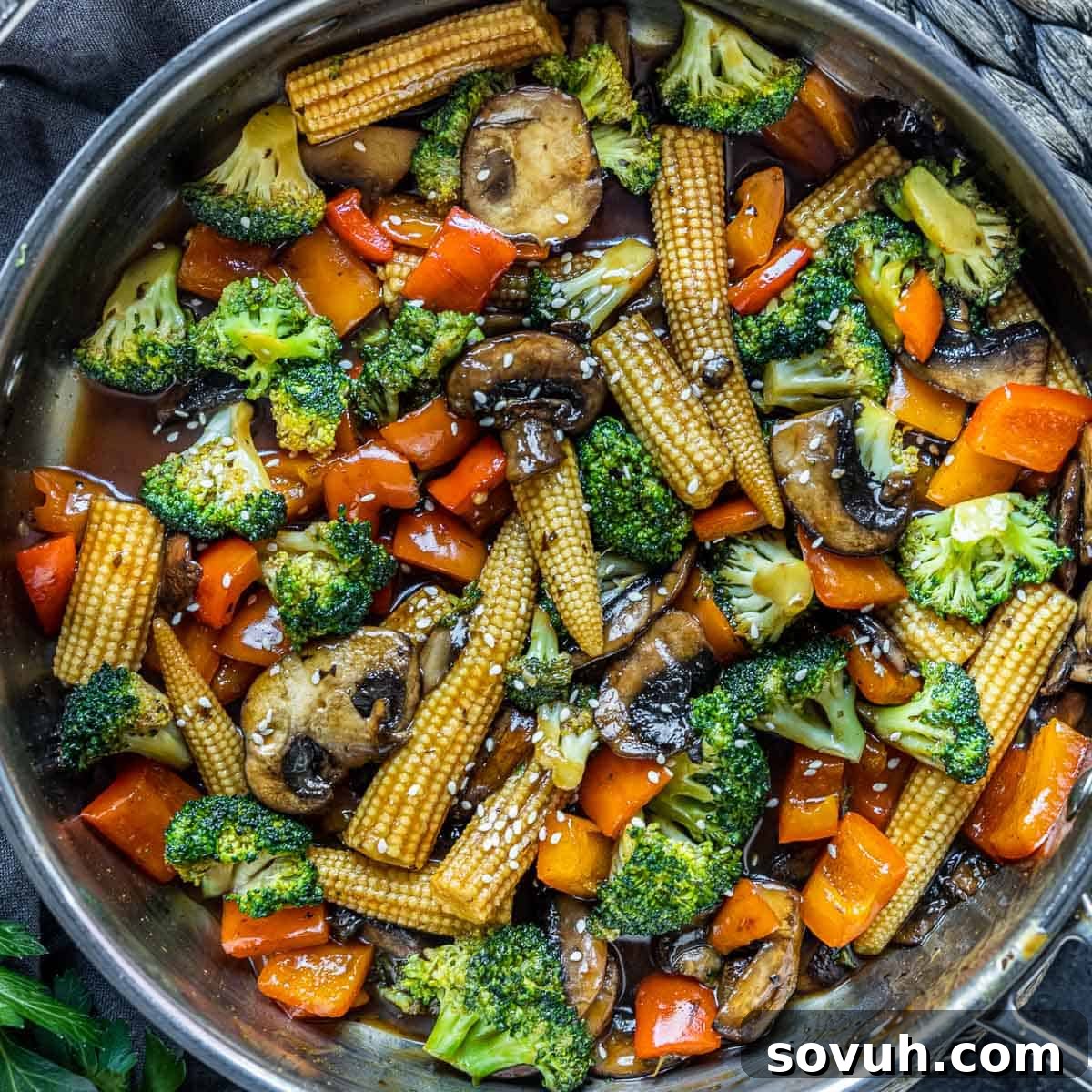
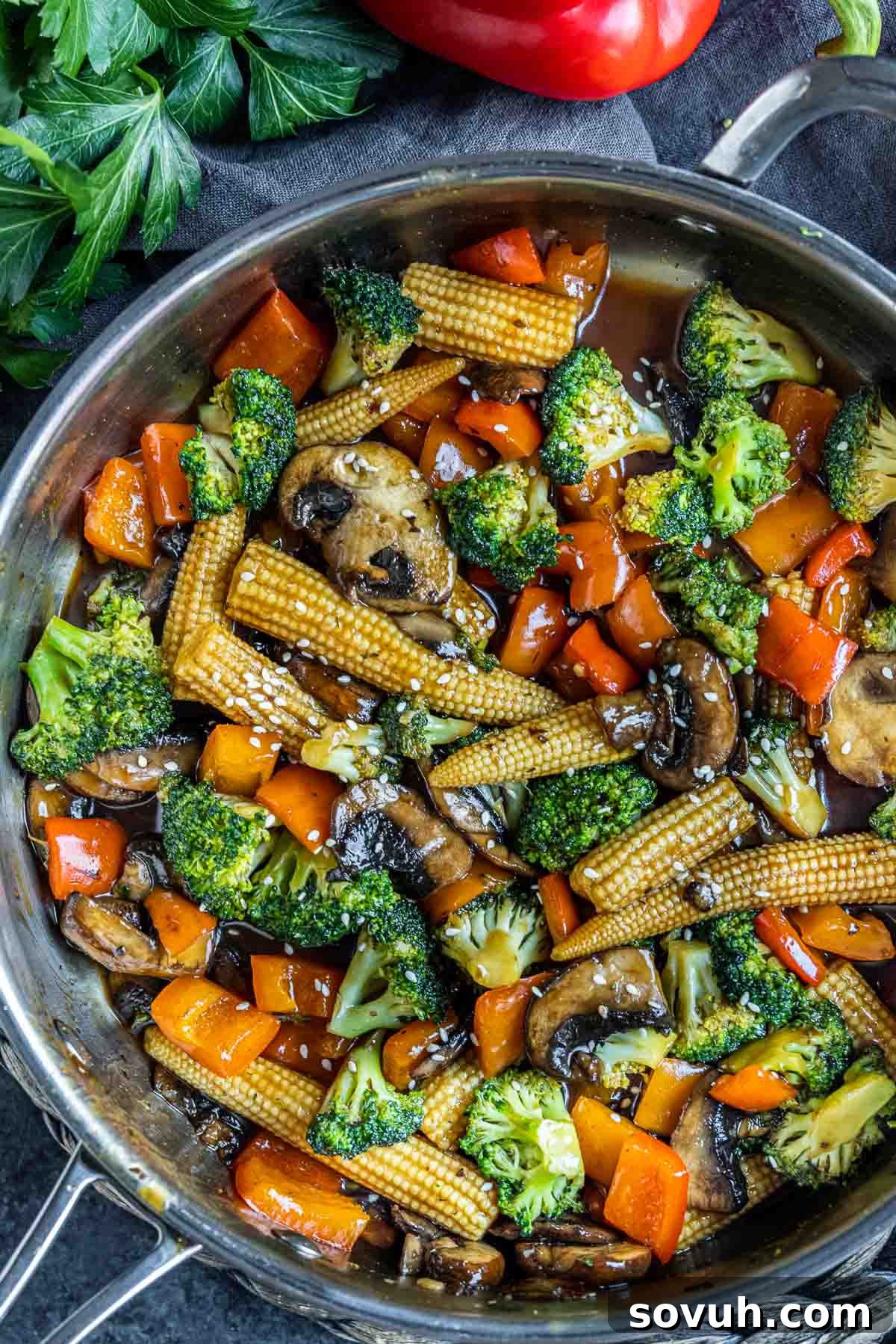
Unlock the secret to vibrant, flavorful, and incredibly healthy takeout-style vegetables right in your own kitchen with our incredibly simple and fast stir fry recipe. This dish isn’t just a side; it’s a culinary experience that perfectly complements any Chinese-inspired main course or stands deliciously on its own. Imagine crisp-tender vegetables coated in a rich, sweet, and savory sauce – all ready in minutes. Say goodbye to greasy takeout and hello to a homemade delight that’s both nutritious and utterly satisfying.
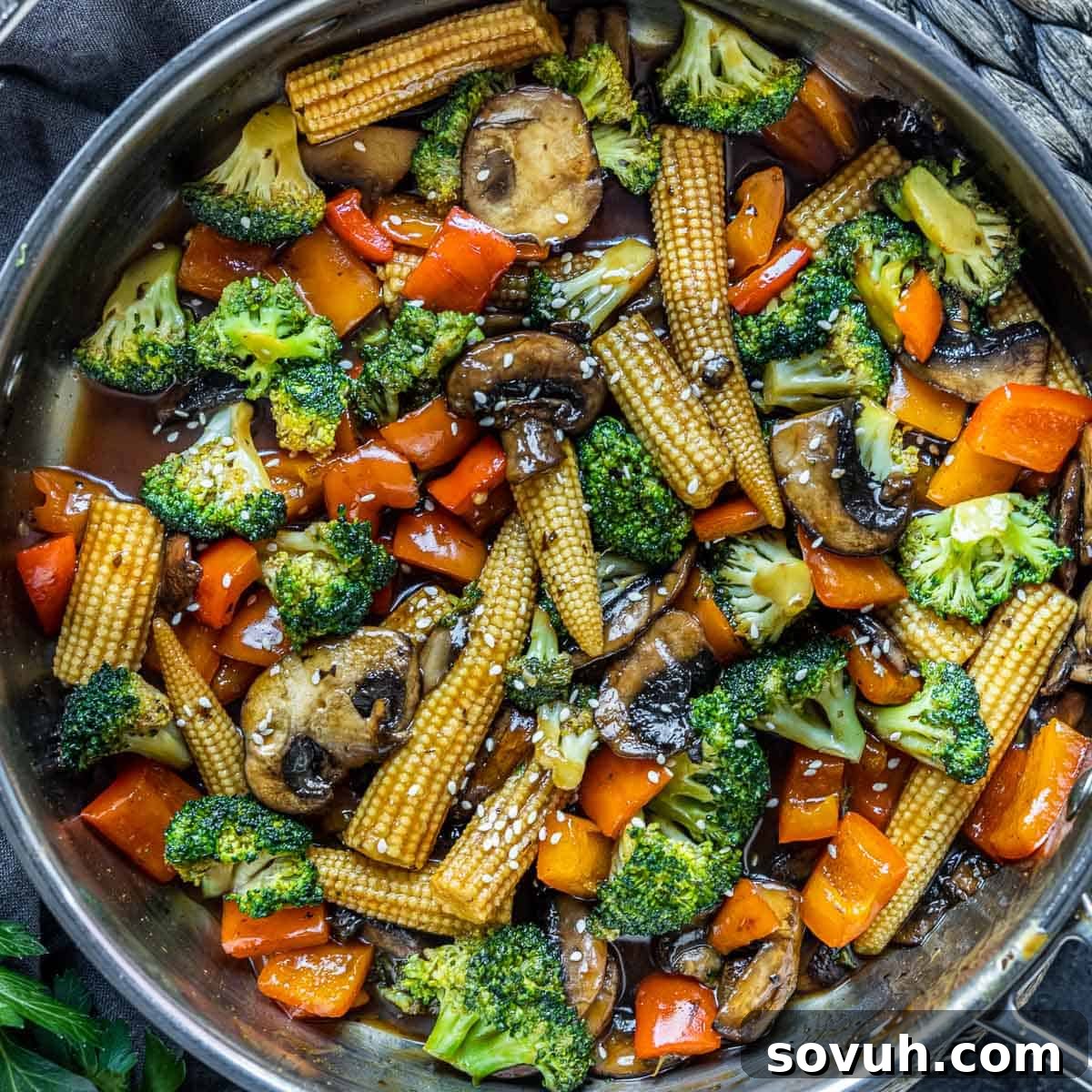
Embrace the Ease of Homemade Vegetable Stir Fry
Creating delicious stir fry vegetables at home is surprisingly effortless and incredibly rewarding. The magic begins with a medley of your favorite fresh vegetables, swiftly chopped and tossed into a sizzling hot pan. The transformation happens as they soften just enough to retain a delightful crunch, then get bathed in a homemade sweet and savory teriyaki-style sauce. This luscious sauce, thickened to perfection, clings to every piece, ensuring a burst of flavor in every bite. It’s a versatile dish that promises a healthy and quick meal solution, proving that wholesome eating doesn’t have to compromise on taste or convenience.
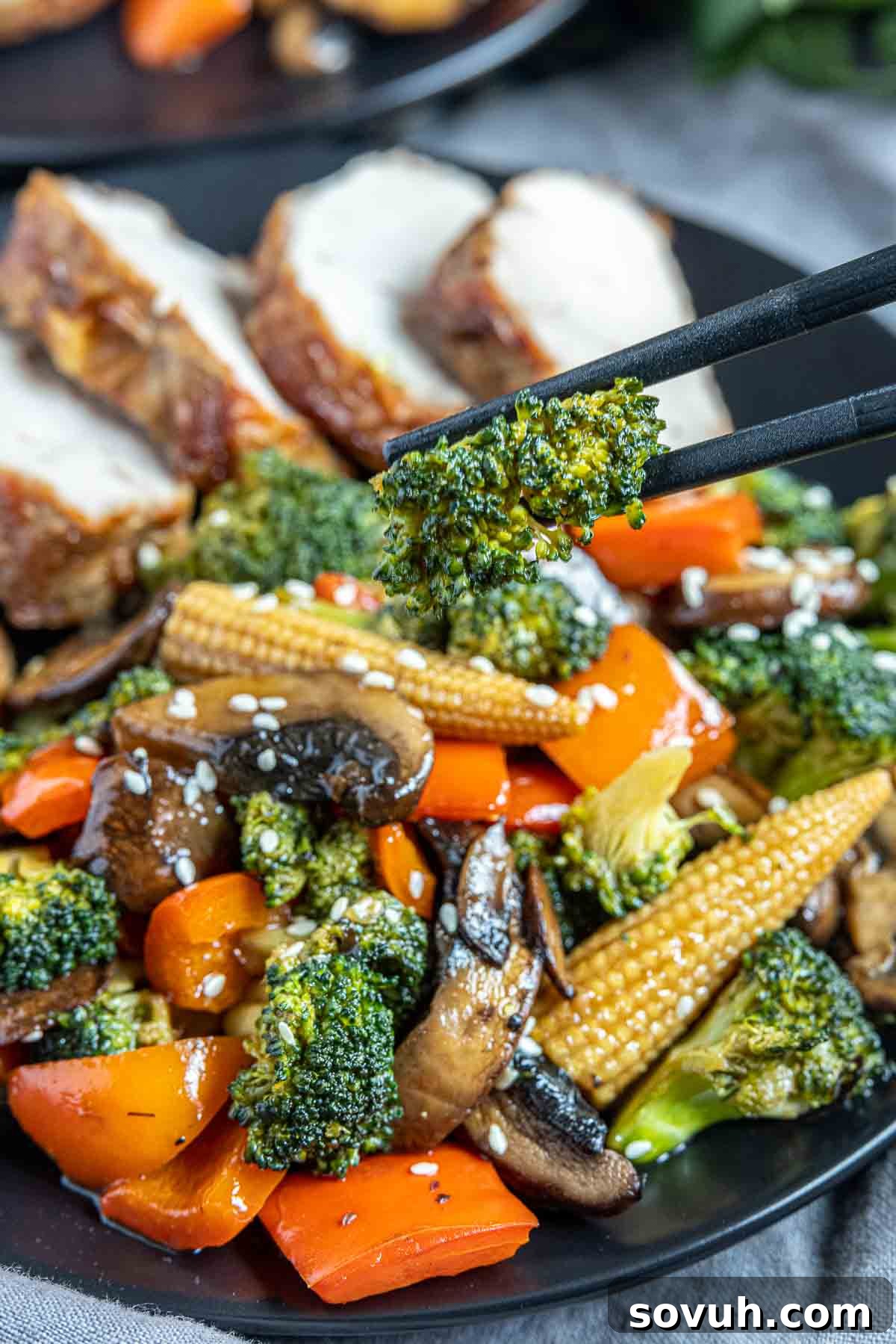
We frequently turn to this vegetable stir fry as a wholesome and vibrant side dish, pairing it with everything from succulent beef and juicy chicken to tender pork. It’s an excellent way to elevate weeknight dinners with minimal fuss. For those busy evenings, we’ve even discovered a time-saving hack: picking up a pre-marinated teriyaki pork tenderloin from the grocery store. Cooked quickly in an air fryer, it becomes the perfect protein partner for our flavorful stir fry, making for an incredibly simple yet gourmet-tasting meal.
Beyond being a fantastic side, these stir fry vegetables shine as a main course too. Serve them generously over a bed of fluffy white rice for a classic Asian-inspired meal. For those looking to increase their vegetable intake or reduce carb consumption, consider serving them over nutrient-rich cauliflower rice. The subtle nutty flavor of cauliflower rice makes it an ideal canvas for the bold flavors of the stir fry sauce, adding another layer of health benefits without sacrificing satisfaction.
If the irresistible allure of teriyaki sauce has captured your palate as much as it has ours, then you absolutely must explore some of our other favorite teriyaki-infused recipes. Dive into the savory goodness of our sheet pan beef teriyaki for another easy weeknight meal, or fire up the grill for our delightful grilled teriyaki chicken and pineapples, perfect for a summer gathering. Each recipe showcases the incredible depth and versatility of this beloved sauce.
Note: This post may contain affiliate links. That means if you click on a link and make a purchase we may receive a small commission. Thank you for supporting our culinary adventures!
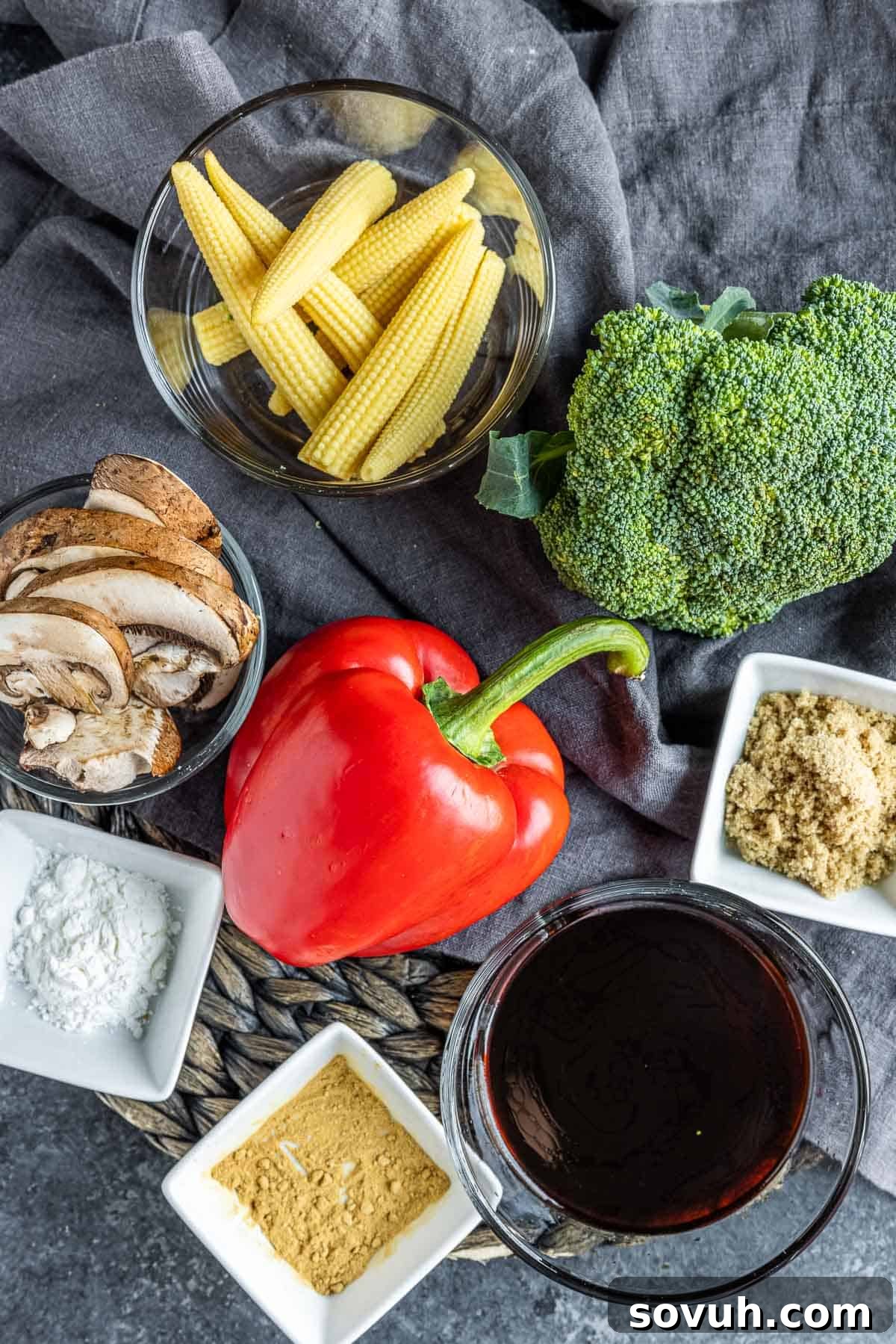
Essential Ingredients for Your Perfect Stir Fry
Crafting a truly exceptional vegetable stir fry requires a thoughtful selection of ingredients, each playing a crucial role in achieving that coveted takeout flavor and texture. Here’s what you’ll need to gather:
- Peanut Oil: This is our top recommendation for stir-frying. When selecting an oil for stir fry, the most important factor is its smoke point. Since stir-frying involves high heat, you need an oil that can withstand it without burning and imparting a bitter taste. Peanut oil offers a high smoke point and a subtle nutty flavor that complements Asian cuisine beautifully. Excellent alternatives include soybean oil, canola oil, or grapeseed oil. While olive oil can be used, opt for the lightest variety, and be mindful that it has a lower smoke point and may smoke up more easily at high stir-fry temperatures.
- Veggies: The heart of any stir fry! Our go-to combination includes crisp broccoli florets, savory mushrooms (feel free to use your favorite type, from cremini to shiitake), and vibrant red bell peppers (though any color bell pepper will work and add a slightly different flavor profile). The beauty of stir fry is its adaptability, so don’t hesitate to incorporate additional vegetables based on your preferences or what’s in season. Thinly sliced carrots add a touch of sweetness and color, sugar snap peas or snow peas bring a lovely crispness, and zucchini strips can be a delightful addition. The key is to cut all vegetables into uniform, bite-sized pieces for even cooking.
- Baby Corn: These miniature ears of corn add a unique texture and a mild, slightly sweet flavor to the stir fry. You can typically find canned baby corn in the canned vegetable aisle of most grocery stores. Simply drain and rinse them before adding to your stir fry.
- Cornstarch: This humble ingredient is the secret to a perfectly thickened, glossy stir fry sauce. It helps create that desirable silky texture that coats the vegetables beautifully, ensuring every bite is infused with flavor. When mixed with liquid, cornstarch forms a slurry that thickens rapidly when heated.
- Seasoning & Sauce Components: These ingredients combine to create the irresistible sweet and savory sauce:
- Soy Sauce: The foundation of our stir fry sauce, providing a deep umami and salty base. Choose a good quality soy sauce, or opt for a low-sodium variety if you’re watching your salt intake.
- Brown Sugar: Adds a crucial sweetness that balances the saltiness of the soy sauce and helps caramelize the vegetables slightly. You can adjust the amount to your sweetness preference.
- Sesame Oil: A finishing oil that imparts a distinct nutty and aromatic flavor. A little goes a long way, so a few drops are sufficient to infuse the entire dish with its characteristic aroma.
- Ground Ginger: Offers a warm, slightly spicy, and aromatic kick that is quintessential to Asian-inspired dishes. Freshly grated ginger can also be used for an even more vibrant flavor.
- Optional Additions: Consider adding minced garlic and thinly sliced white or yellow onion at the beginning of your cooking process for an extra layer of aromatic depth. A pinch of red pepper flakes can introduce a subtle heat if you enjoy a spicy kick.
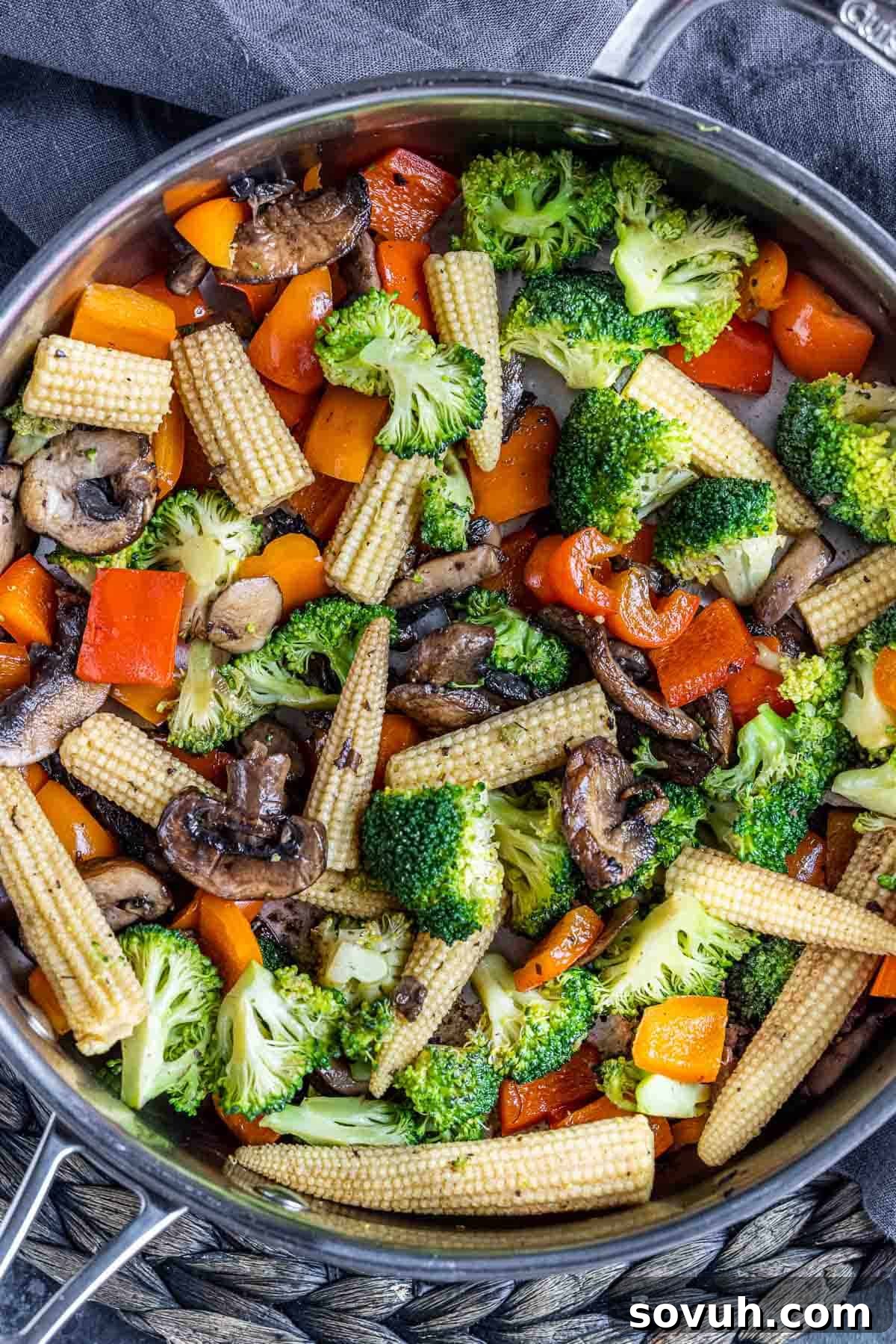
Step-by-Step Guide: Crafting Your Delicious Stir Fry
Achieving that perfect takeout-inspired vegetable stir fry is easier than you think. Follow these simple steps for a quick, flavorful, and healthy meal:
Step 1 – Prepare Your Veggies and Heat the Pan
The first crucial step to a successful stir fry is proper preparation. Ensure all your vegetables are washed, dried, and cut into uniform, bite-sized pieces. This consistency is key for even cooking. Next, heat the peanut oil in a large skillet or wok over medium-high heat. Allow the oil to get shimmering hot, but not smoking. A hot pan is essential for achieving that characteristic stir-fried crispness.
Step 2 – Sauté the Vegetables in Stages
Once your oil is hot, add the broccoli florets to the skillet. Broccoli takes a little longer to cook than other vegetables, so give it a head start. Cook for 2 to 3 minutes, stirring frequently, until it starts to turn a vibrant green and shows a slight tenderness. After the broccoli has had its initial cook time, introduce the mushrooms, bell pepper, and drained baby corn to the skillet. Continue to cook all the vegetables together for about 5 more minutes, stirring constantly. The goal here is to achieve a crisp-tender texture – cooked through but still with a pleasant bite.
Step 3 – Whisk Together the Flavorful Sauce
While your vegetables are cooking, prepare the star of the show: the stir fry sauce. In a small bowl, combine the soy sauce, brown sugar, cornstarch, sesame oil, and ground ginger. Whisk vigorously until the cornstarch is completely dissolved and all ingredients are thoroughly combined. This ensures a smooth sauce without any lumps, and the cornstarch is critical for thickening. This concoction is what will transform your simple sautéed vegetables into a gourmet experience.
Step 4 – Combine and Thicken the Sauce
Once your vegetables have reached the desired crisp-tender stage, pour the whisked sauce directly over them in the skillet. Continue to cook, stirring and tossing constantly, for approximately 5 minutes. As the sauce heats, the cornstarch will activate, causing the sauce to thicken beautifully and coat every single piece of vegetable in a rich, glossy glaze. Keep stirring to ensure even distribution and prevent the sauce from sticking. You’ll know it’s ready when the sauce has achieved a desirable thickness and coats the back of a spoon.
Step 5 – Serve Immediately and Enjoy
The moment the sauce has thickened and coated your vibrant vegetables, remove the skillet from the heat. Serve your homemade vegetable stir fry immediately, piping hot. It’s absolutely delicious served over a bed of fluffy white rice, brown rice, or a healthier alternative like cauliflower rice. Enjoy the fresh flavors and satisfying textures of your perfectly crafted, healthier-than-takeout stir fry!
What Vegetables are Best for Stir Fry? Explore Your Options!
The beauty of stir fry lies in its incredible versatility, especially when it comes to vegetable selection. While our recipe features a fantastic combination of broccoli, mushrooms, bell peppers, and baby corn, the possibilities are virtually endless. You can customize your stir fry to include your favorite seasonal produce, ensuring a fresh and exciting meal every time. Here’s an expanded list of vegetables that excel in a stir fry, along with tips for their incorporation:
- Carrots: Add a touch of sweetness, vibrant color, and a satisfying crunch. Since they are denser, slice them thinly (julienne or in small coins) and add them early in the cooking process, alongside or just after the broccoli, to ensure they soften adequately.
- Mushrooms: (Already included) Earthy and meaty, mushrooms soak up the sauce beautifully. Use cremini, shiitake, or even sliced portobello for different flavor profiles.
- Broccoli: (Already included) Offers a delightful texture and a nutritional boost. Florets work best, cut into bite-sized pieces.
- Bell Peppers: (Already included) Any color works – red, yellow, orange, or green – adding sweetness, crispness, and a rainbow of hues. Cut into large dice or strips.
- Baby Corn: (Already included) Provides a unique, slightly sweet crunch.
- Bok Choy: A classic Asian green, bok choy has tender leaves and crunchy stalks. Separate the stalks from the leaves; add the stalks earlier (similar to broccoli) and the leaves towards the end, as they cook very quickly.
- Zucchini: A quick-cooking vegetable that adds moisture and a delicate flavor. Cut into half-moons or strips and add towards the end of the cooking time to prevent it from becoming mushy.
- Onion: Sliced white or yellow onion adds a pungent sweetness. Add it with the harder vegetables like broccoli or carrots, or even earlier if you want it more caramelized.
- Garlic: Essential for aromatic depth. Mince it finely and add it to the pan just before the sauce, allowing it to cook for only about 30 seconds to prevent burning.
- Sugar Snap Peas or Snow Peas: These legumes offer a wonderful sweet crispness. Add them in the last few minutes of cooking, as they cook very quickly and are best when still vibrant and crunchy.
- English Peas: Fresh or frozen (thawed), these tiny peas add a pop of sweetness. Stir them in during the final minute or two of cooking.
- Eggplant: Creates a creamy texture when cooked. Cut into cubes or wedges. It can absorb a lot of oil, so cook it with the other vegetables and consider pre-salting it to draw out moisture if you want to reduce oil absorption.
- Asparagus: Cut into 1-inch pieces, asparagus adds a distinct flavor and tender-crisp texture. Add it along with medium-cooking vegetables like bell peppers.
- Green Beans: Trimmed fresh green beans add a pleasant snap. Cook them for slightly longer, similar to broccoli.
The key to a successful vegetable stir fry is understanding cook times. Dense, harder vegetables like broccoli, carrots, and bok choy stalks need more time and should be added first. Medium-density vegetables like bell peppers, mushrooms, and asparagus come next. Finally, quick-cooking vegetables such as zucchini, eggplant, spinach, baby corn, sugar snap peas, and bok choy leaves should be added last to ensure they remain crisp-tender and don’t overcook.
Should You Blanch or Boil Broccoli Before Stir Frying?
A common question when preparing broccoli for stir fry is whether to boil or blanch it beforehand. Our strong recommendation is: you do not need to boil the broccoli before stir frying. In fact, doing so can often lead to a less desirable outcome.
Boiling broccoli extensively before stir-frying can make it excessively soft and mushy, losing that delightful crisp-tender texture that is a hallmark of a good stir fry. Overcooked broccoli also tends to lose more of its valuable nutrients, which can leach into the boiling water.
If you prefer your broccoli exceptionally soft, you could par-boil it for just about 2-3 minutes, immediately plunging it into ice water afterward to stop the cooking process (this is called blanching). However, for the best balance of slight softness with a firm, satisfying bite, skip the pre-boiling step entirely. The high heat of the stir fry and the brief cooking time are designed to cook the broccoli perfectly while retaining its texture and nutritional integrity. By adding the broccoli first as directed in our recipe, it gets just enough time in the hot pan to become tender-crisp without becoming waterlogged or mushy.
Choosing the Right Oil for High-Heat Stir Frying
The type of oil you choose for your stir fry is not just about flavor; it’s a critical component for successful high-heat cooking. Stir-frying, by nature, involves cooking ingredients quickly at elevated temperatures, often over medium-high heat. This technique demands an oil with a high smoke point – the temperature at which an oil begins to burn and produce smoke, which can impart a bitter taste to your food and fill your kitchen with fumes.
The best oils for stir fries are those that can endure high temperatures without breaking down. Our top recommendations include:
- Peanut Oil: This is an excellent choice, as it boasts a high smoke point (around 450°F / 232°C) and a mild, slightly nutty flavor that beautifully complements Asian dishes. It’s often the preferred oil in authentic Asian cooking.
- Vegetable Oil: A general term often referring to a blend of oils like soybean, corn, or sunflower oil. These typically have a smoke point around 400-450°F (204-232°C) and are neutral in flavor, making them versatile for stir-frying.
- Soybean Oil: Similar to vegetable oil, soybean oil offers a high smoke point and neutral flavor, making it a reliable choice.
- Canola Oil: Another neutral-flavored oil with a high smoke point (around 400°F / 204°C), making it suitable for stir-frying.
- Grapeseed Oil: With a smoke point of about 420°F (215°C), grapeseed oil is another good, neutral option for high-heat cooking.
Oils to approach with caution or avoid for high-heat stir-frying include:
- Olive Oil: Especially extra virgin olive oil, which has a relatively low smoke point (around 375°F / 190°C). Cooking it over high heat can cause it to smoke excessively, burn, and develop an unpleasant flavor. If you must use olive oil, choose a light or refined olive oil, which has a slightly higher smoke point, but still be prepared for it to smoke more than other recommended oils.
- Butter: Has a very low smoke point (around 302°F / 150°C) and will burn quickly, making it unsuitable for stir-frying.
Using the right oil ensures your vegetables get that perfect sear and crispy texture without any burnt flavors, contributing significantly to a successful and delicious stir fry.
Looking for More Easy Side Dishes to Complete Your Meal?
Round out your meals with these other fantastic and easy-to-make side dishes, perfect for any occasion:
- Instant Pot Brown Rice: Perfect fluffy brown rice every time.
- Keto Cauliflower Spanish Rice: A flavorful, low-carb alternative to traditional rice.
- Instant Pot Black Beans: Quick and easy, a versatile staple.
- Instant Pot Pinto Beans {No Soak}: Delicious, tender pinto beans without the overnight soak.
- Air Fryer Zucchini: Crispy and tender zucchini, a healthy indulgence.
- Air Fryer Broccoli: Perfectly roasted broccoli with minimal effort.
- Instant Pot Spaghetti Squash: A healthy, pasta-like vegetable cooked fast.
- Discover More Side Dishes…: Explore our full collection of delectable sides!
We hope this comprehensive guide inspires you to create your most delicious and healthy vegetable stir fry yet! With its vibrant colors, satisfying textures, and irresistible flavors, it’s a dish that’s sure to become a regular in your meal rotation. Enjoy the simplicity and the incredible taste!
Like this recipe?
Make sure to follow us on Instagram and Pinterest for more recipes and culinary inspiration like this.
6
10 minutes
15 minutes
25 minutes
Stir Fry Vegetables
Kat Jeter & Melinda Machado
Print Recipe
Ingredients
- 2 tablespoons Peanut oil
- 12 ounces Broccoli, cut into bite size pieces
- 8 ounces Mushrooms
- 1 Red bell pepper, large dice
- 14 ounce Canned baby corn
- ½ cup Soy sauce
- 2 tablespoons Brown sugar
- 1 tablespoon Cornstarch
- 2 drops Sesame oil
- ¼ teaspoon Ground ginger
Instructions
-
Heat peanut oil in a large skillet over medium-high heat.
-
Add the broccoli to the skillet and cook for 2-3 minutes.
-
Add the mushrooms, bell pepper, and mini corn to the skillet and continue to cook for 5 minutes.
-
In a small bowl whisk together the soy sauce, brown sugar, cornstarch, sesame oil, and ground ginger.
-
Pour the sauce over the veggies and continue to cook for approximately 5 minutes or until the sauce thickens and coats the veggies.
-
Serve immediately.
Nutrition
Calories: 174kcal,
Carbohydrates: 26g,
Protein: 7g,
Fat: 6g,
Saturated Fat: 1g,
Sodium: 1103mg,
Potassium: 533mg,
Fiber: 4g,
Sugar: 10g,
Vitamin A: 1148IU,
Vitamin C: 80mg,
Calcium: 38mg,
Iron: 1mg
Side
American
