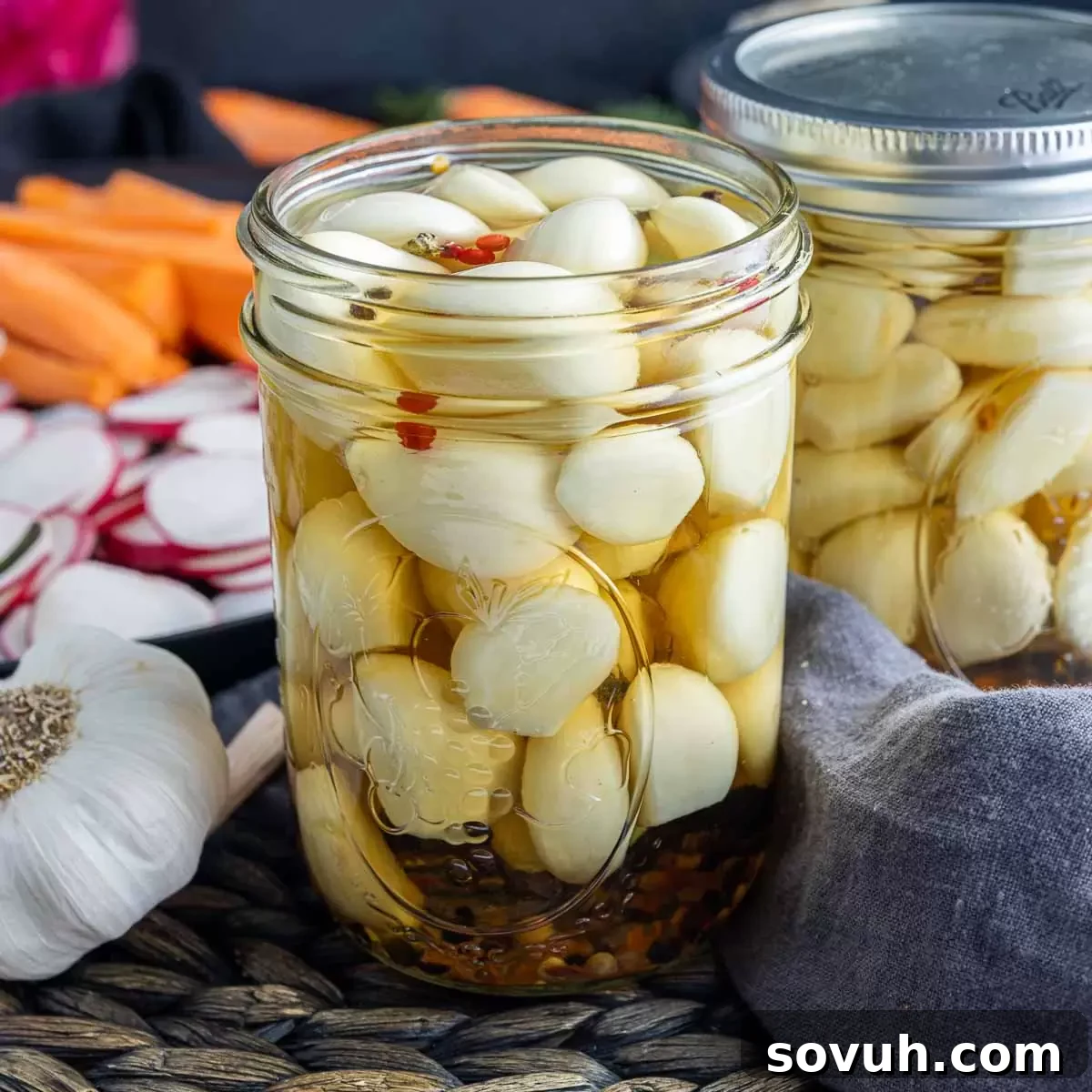
Unlock a world of tangy flavor and surprising health benefits with homemade pickled garlic! This trendy, delicious snack is incredibly simple to prepare, requiring just a handful of common ingredients and a little patience for the magic of pickling to unfold. Get ready to transform ordinary garlic into an extraordinary culinary delight that’s perfect for snacking, entertaining, or enhancing your favorite dishes.
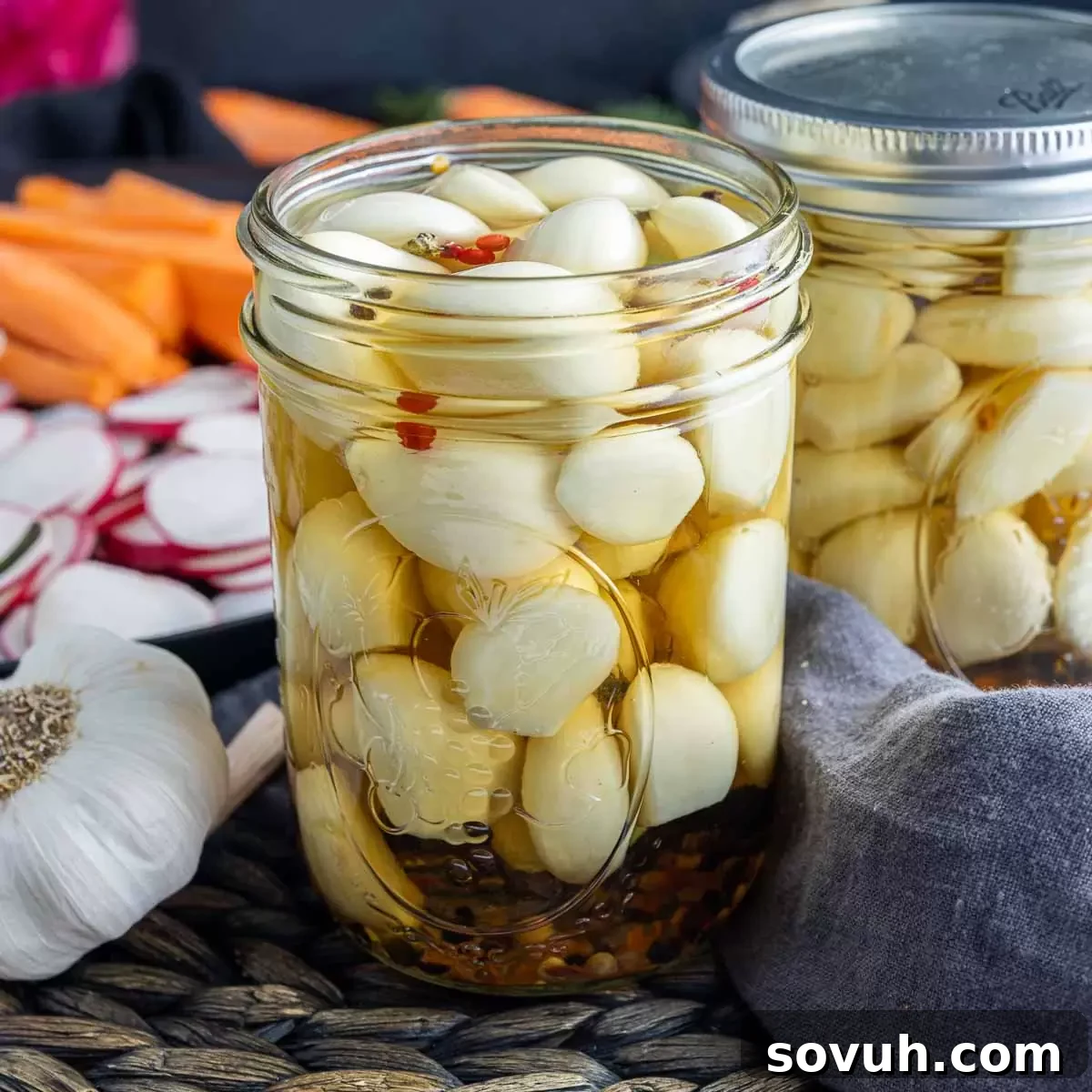
Embrace the Irresistible Charm of Pickled Garlic
Are you a devoted garlic enthusiast? Then this recipe for quick pickled garlic is tailor-made for your palate! Even if you’ve always found raw garlic a bit too intense, the pickling process mellows its sharp edge, transforming it into a surprisingly palatable and addictive snack. It’s a game-changer for anyone looking to enjoy the robust flavor of garlic without its overwhelming pungency.
The beauty of quick pickling lies in its simplicity and versatility. The fundamental element is a straightforward brine, a harmonious blend of vinegar, water, salt, and sugar. This base liquid serves as a blank canvas, allowing you to infuse your pickled creations with an endless array of flavors using different herbs and spices. Over the years, we’ve explored the delightful world of quick-pickled vegetables, perfecting recipes for pickled carrots, radishes, green beans, and even cauliflower. Each vegetable offers a unique texture and flavor profile when introduced to the tangy embrace of a pickling liquid.
For our pickled garlic recipe, we lean slightly more heavily on vinegar in our brine. This isn’t just for flavor; the increased acidity plays a crucial role in neutralizing garlic’s notorious sharp taste, making the cloves delightfully tender and wonderfully mild. This balance allows the subtle, aromatic notes of the garlic to shine through, complemented by the savory and slightly sweet brine.
Note: This post may contain affiliate links. That means if you click on a link and make a purchase we may receive a small commission. Thank you for supporting our content!
Essential Ingredients for Perfect Pickled Garlic
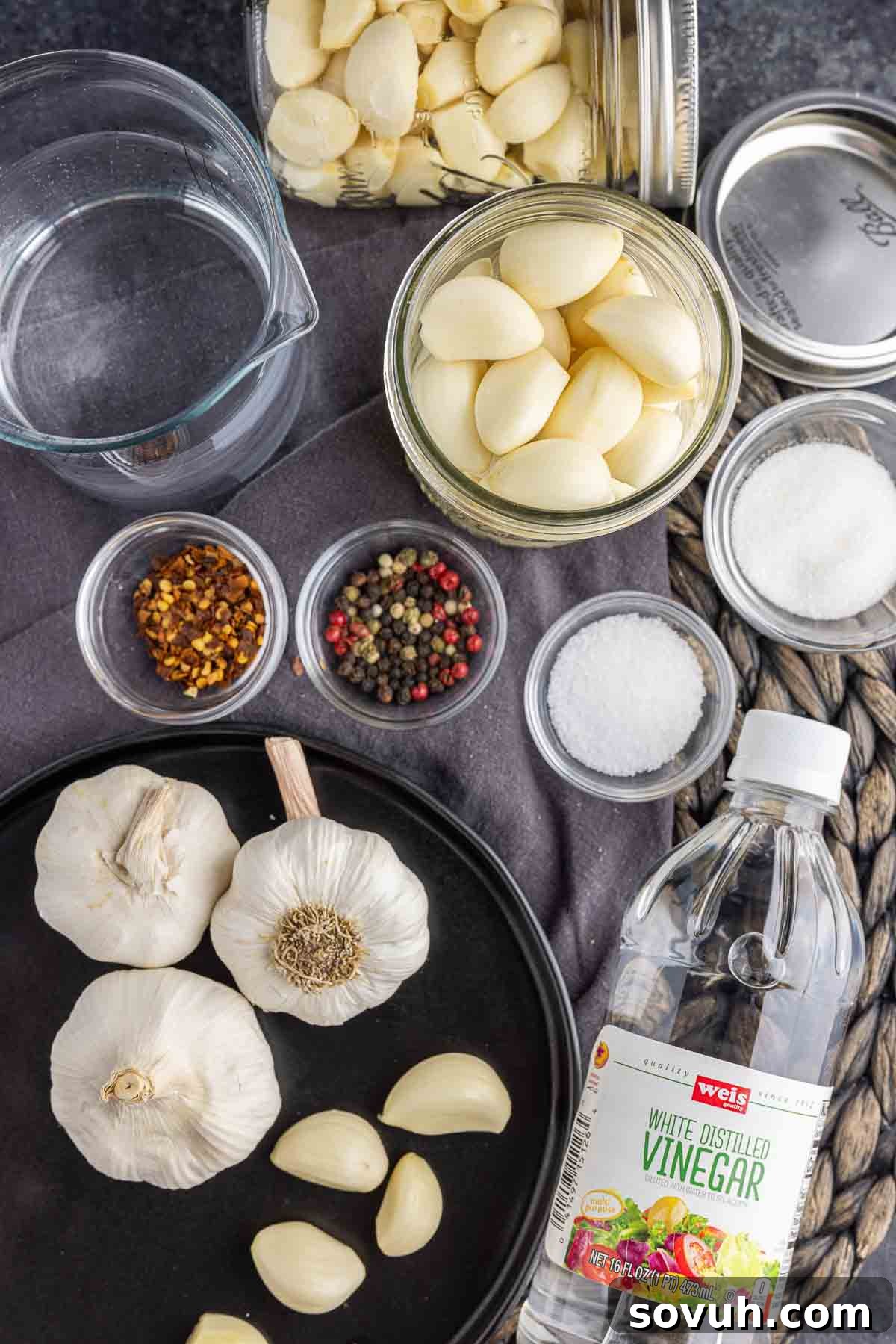
Crafting your own batch of delicious pickled garlic starts with selecting high-quality ingredients. Here’s what you’ll need for this simple yet rewarding recipe:
- Garlic: The star of our show! You’ll typically need around 6-8 heads of fresh garlic to yield enough cloves to fill two half-pint (8 oz) mason jars. Look for firm, unblemished heads.
- White Vinegar: This provides the foundational acidity for your brine. While white vinegar is our go-to for its clean flavor, feel free to experiment with other varieties like rice vinegar for a milder, slightly sweeter profile, apple cider vinegar for a fruitier tang, or white wine vinegar for a more sophisticated note. Be mindful that red wine vinegar will impart a reddish hue to your garlic cloves. The acetic acid in vinegar is essential for both flavor and preservation.
- Water: Used to dilute the vinegar, balancing the acidity of the brine.
- Kosher Salt: Critical for both flavor and texture. It’s imperative to use non-iodized salt such as kosher salt or sea salt. Iodized salt contains additives that can react with vegetables, causing them to turn a dark, unappetizing color and making your brine cloudy.
- Sugar: A touch of sweetness beautifully balances the tartness of the vinegar and the savory notes of the garlic. You can absolutely use alternatives like honey, agave nectar, maple syrup, or even artificial sweeteners such as Stevia or Splenda, adjusting the quantity to achieve your desired level of sweetness.
- Black Peppercorns: A classic choice for adding a subtle, peppery warmth and aromatic complexity to your pickled garlic.
- Crushed Red Pepper Flakes: For those who enjoy a bit of heat, these flakes introduce a delightful spicy kick that complements the garlic’s flavor. Adjust the amount to your personal preference.
Beyond these core ingredients, the fun truly begins with customization! Depending on your flavor preferences, you can elevate your pickled garlic with a variety of other herbs and spices. Consider adding bay leaves for an earthy depth, coriander seeds for a citrusy, floral note, or mustard seeds for a classic pickling zest. Don’t be afraid to experiment with different combinations to discover your signature pickled garlic flavor!
Ready to dive deeper into the world of quick pickling? Explore our comprehensive guide on How to Make Quick Pickled Vegetables!
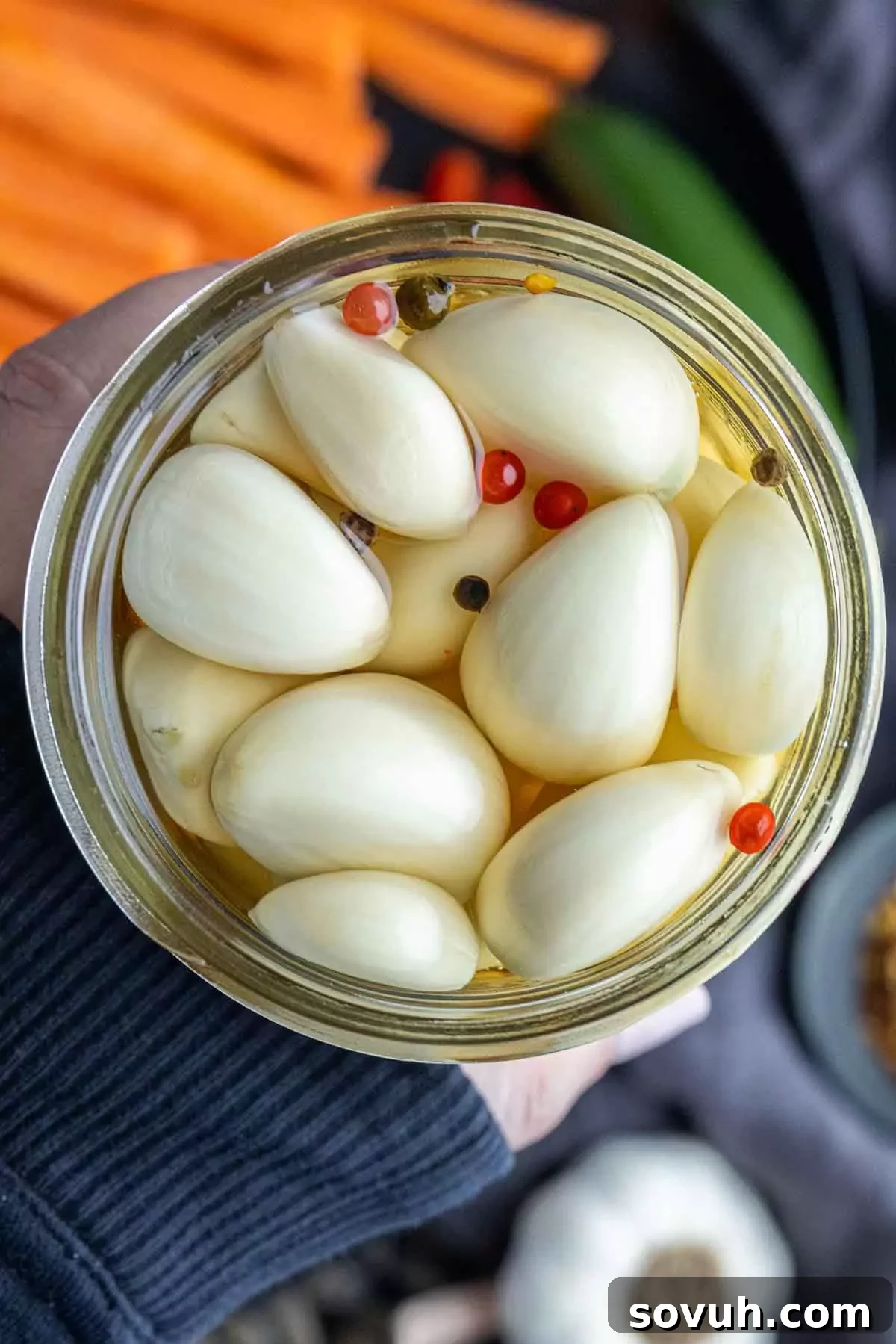
Efficient Garlic Peeling Techniques
When preparing pickled garlic, you’ll find yourself peeling a significant number of cloves. This can be the most time-consuming part of the process, but thankfully, there are several clever methods to speed it up significantly. Choose the one that best suits your comfort level and the amount of garlic you’re working with.
Method 1: The Blanching Technique
- Separate and Soak: Begin by breaking the garlic bulb into individual cloves. Place these cloves in a heat-proof bowl.
- Hot Water Bath: Pour very hot water (just off the boil) over the garlic cloves, ensuring they are fully submerged. Let them soak for exactly 1 minute. The hot water slightly softens the papery skins, making them easier to remove.
- Drain and Peel: Carefully drain the water using a strainer. Once cool enough to handle, snip off the root end of each clove with a small knife. Then, gently press on the tip of the clove. The garlic should effortlessly slip out of its peel, leaving you with perfectly naked cloves ready for pickling. This method is excellent for preserving the integrity of the cloves.
Method 2: The Shake Method
- Separate and Contain: Break your garlic bulb into individual cloves. Place all the cloves into a sturdy jar with a tight-fitting lid. A mason jar or even a Tupperware container works well.
- Shake Vigorously: Secure the lid tightly and shake the jar hard for about 1 minute. The forceful impact of the cloves against each other and the sides of the jar causes the peels to loosen and separate from the garlic.
- Collect and Trim: Open the jar, and you’ll find most of the peels have come off. Simply pick out the peeled cloves, trimming any stubborn bits of skin that remain. This method is fantastic for large quantities of garlic and can be quite fun!
Whichever method you choose, a little patience and a good technique will save you a lot of time and frustration, getting you closer to enjoying your homemade pickled garlic.
Step-by-Step Guide to Pickling Garlic
Once your garlic is peeled, the pickling process is surprisingly quick and straightforward. Follow these steps to create your perfect batch of tangy pickled garlic:
Step 1: Prepare the Garlic and Jars. After peeling, trim any remaining fibrous root ends from the garlic cloves. Ensure your mason jars are clean and sterilized. You can do this by washing them thoroughly with hot, soapy water and then either boiling them for 10 minutes, running them through a dishwasher’s sanitizing cycle, or baking them in an oven at 275°F (135°C) for 15 minutes. This is crucial for food safety. Tightly pack the peeled garlic cloves into your prepared jars, leaving about a half-inch of headspace at the top.
Step 2: Craft the Flavorful Brine. In a small, non-reactive saucepan (stainless steel or enameled cast iron works best), combine your white vinegar, water, kosher salt, sugar, black peppercorns, and crushed red pepper flakes. Stir all the ingredients together thoroughly until the salt and sugar begin to dissolve.
Step 3: Boil and Steep. Place the saucepan over medium-high heat and bring the brine mixture to a rolling boil. Allow it to boil for about 1 minute to ensure all the flavors are well integrated and the salt/sugar are fully dissolved. Once boiling, immediately remove the pot from the heat. Avoid over-boiling, as this can cause some of the volatile compounds in the spices to dissipate.
Step 4: Pour the Hot Brine. Let the hot brine cool slightly for 2-3 minutes. This brief cooling period prevents the garlic from cooking too rapidly and helps maintain its desired texture. Carefully pour the warm liquid into the jars, ensuring all the garlic cloves are completely submerged in the brine. Fill the jars up to the headspace you left earlier.
Step 5: Seal and Store for Perfection. Wipe the rims of the jars clean, then screw on the lids tightly. Allow the jars to cool completely at room temperature before transferring them to the refrigerator. This quick pickled garlic is not shelf-stable and must be stored in the refrigerator. While you can technically enjoy them right away, we highly recommend letting the garlic pickle for at least 2-3 weeks. This crucial “resting” period allows the flavors to meld and deepen, resulting in the best possible taste and texture. Stored properly in the fridge, your pickled garlic will remain delicious for 2-3 months.
Choosing the Ideal Container for Pickled Garlic
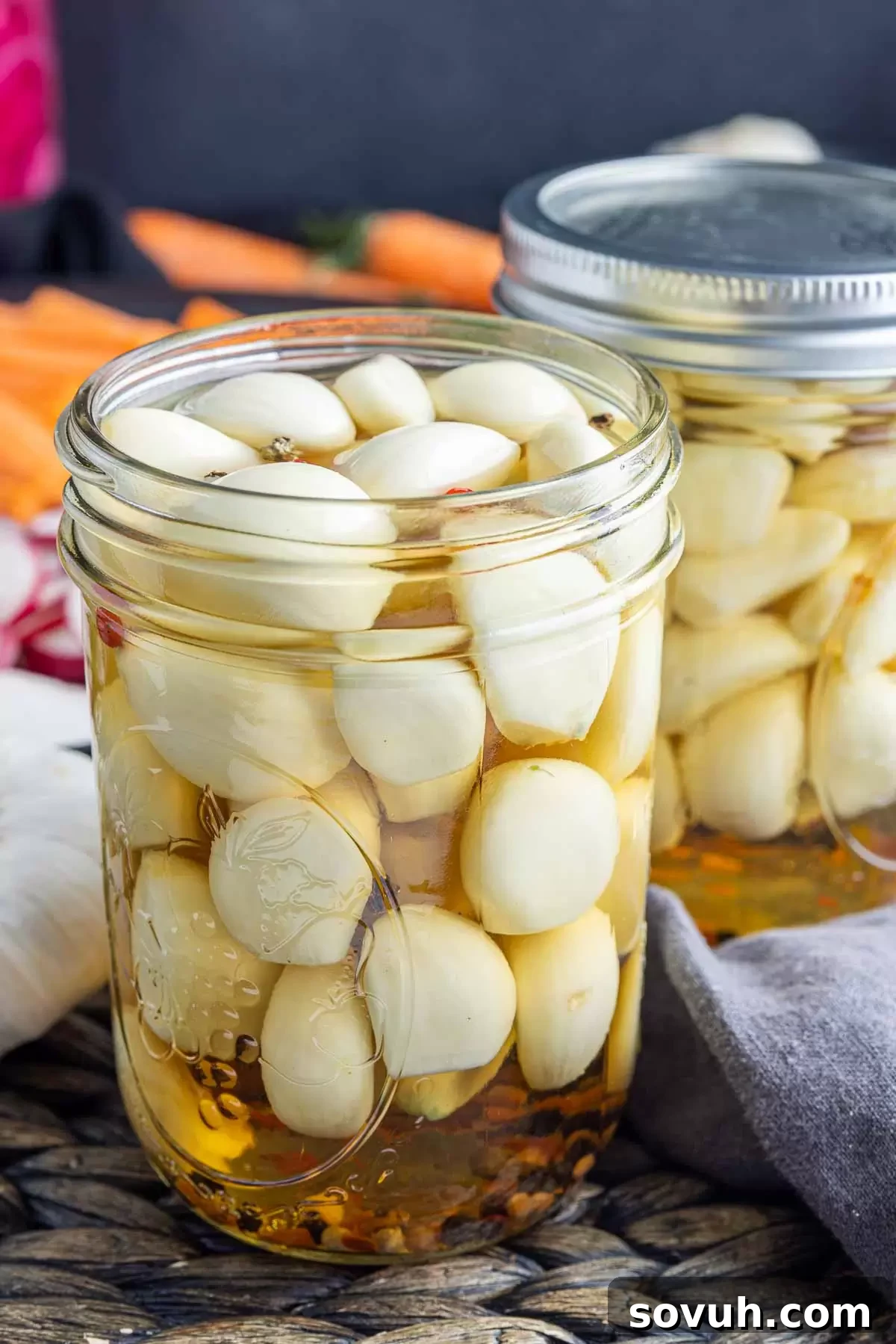
For pickling, the container you choose is just as important as the ingredients. We strongly recommend using glass wide-mouth pint jars (16 oz). Here’s why:
- Non-Reactive Material: Glass is a non-reactive material, meaning it won’t interact chemically with the acidic vinegar. This prevents any unwanted metallic tastes and ensures the purity of your pickled garlic’s flavor. Plastic containers, especially those not specifically designed for pickling, can sometimes leach chemicals or absorb odors.
- Durability and Reusability: Glass jars are incredibly durable and designed for repeated use. With proper care, they can serve your pickling needs for years, making them an eco-friendly choice.
- Airtight Seal: Quality canning jars come with two-piece lids (a flat disc and a screw band) that create an excellent airtight seal. This seal is crucial for keeping your pickled garlic fresh and preventing spoilage in the refrigerator.
- Wide Mouth Advantage: Wide-mouth jars make it significantly easier to pack the garlic cloves and pour in the brine without spillage. They also simplify the process of retrieving your delicious pickled garlic when it’s time to enjoy.
- Visibility: The transparency of glass allows you to easily monitor the pickling process and admire your beautiful, finished product.
Creative Ways to Enjoy Your Pickled Garlic
The versatility of quick pickled garlic extends far beyond a simple snack. Its tangy, mellow flavor makes it a fantastic addition to a myriad of dishes. Here are some inspiring ways to incorporate this homemade delicacy into your culinary repertoire:
- Charcuterie Boards and Appetizers: Elevate your next charcuterie board with a small bowl of pickled garlic alongside other pickled vegetables like pickled carrots, pickled radishes, and pickled red onions. They pair wonderfully with olives, an assortment of cheeses, cured meats, and crusty bread.
- Snacking Straight from the Jar: For garlic lovers, this is arguably the best way to enjoy it! Thanks to the pickling process, particularly the vinegar, the sharpness of the raw garlic is beautifully mellowed, making the cloves pop-able and incredibly satisfying.
- Salads and Dressings: Chop pickled garlic cloves finely and toss them into green salads, pasta salads, or grain bowls for an unexpected burst of flavor. You can also mince them and whisk them into homemade vinaigrettes or creamy dressings for an extra tangy kick.
- Sandwiches and Wraps: Add sliced or whole pickled garlic to your favorite sandwiches, subs, or wraps. It provides a delightful counterpoint to rich meats and cheeses, or a zesty element in vegetarian options.
- Flavor Booster in Cooked Dishes: Use pickled garlic in any recipe where you would typically use fresh garlic, especially at the end of cooking to preserve its pickled tang. Try adding it to dishes like our sheet pan honey garlic chicken, or finely chop it and stir it into restaurant-style salsa, guacamole, or hummus. It’s also excellent in stir-fries, omelets, and sautéed vegetables.
- Marinades and Sauces: The brine itself, imbued with garlic flavor, can be used as a base for marinades or added to pan sauces for a tangy finish. Mince the pickled garlic and add it to a chimichurri sauce or a garlic butter for steak.
- Pizza Topping: Roughly chop a few cloves and sprinkle them over your homemade pizza before baking for a unique, zesty topping.
Experiment and find your favorite ways to enjoy this healthy, flavorful, and incredibly versatile condiment!
Pickled garlic offers a significantly milder and more nuanced flavor compared to raw garlic. The vinegar in the brine works wonders to tame down the pungent, overwhelming taste that raw garlic is known for, making it far more palatable and enjoyable to eat on its own. The texture also softens slightly, becoming tender yet still retaining a pleasant chewiness.
The precise flavor profile will also be influenced by the herbs and spices you choose to include in your brine. For instance, adding fresh dill can give it a more traditional pickle-like taste, while incorporating extra red pepper flakes or sliced chili peppers will impart a noticeable spiciness. You can tailor the brine to be sweet, savory, herbaceous, or spicy, creating a unique pickled garlic experience every time.
Absolutely! Garlic has been revered across civilizations for centuries due to its impressive medicinal properties and numerous health benefits, and pickling does not diminish these. It is remarkably low in calories and a rich source of essential minerals and vitamins, including Vitamin C, Vitamin B6, and Manganese.
Beyond its vitamin content, garlic is packed with powerful antioxidants that protect your body’s cells from damage. It also contains prebiotic fiber, which is excellent for supporting healthy digestion and a balanced gut microbiome. Regular consumption of garlic is associated with helping to fight off common illnesses, reducing blood pressure, lowering the risk for heart disease, and may even offer protection against heavy metals in the body. Enjoying pickled garlic is a delicious way to incorporate these health-boosting properties into your diet.
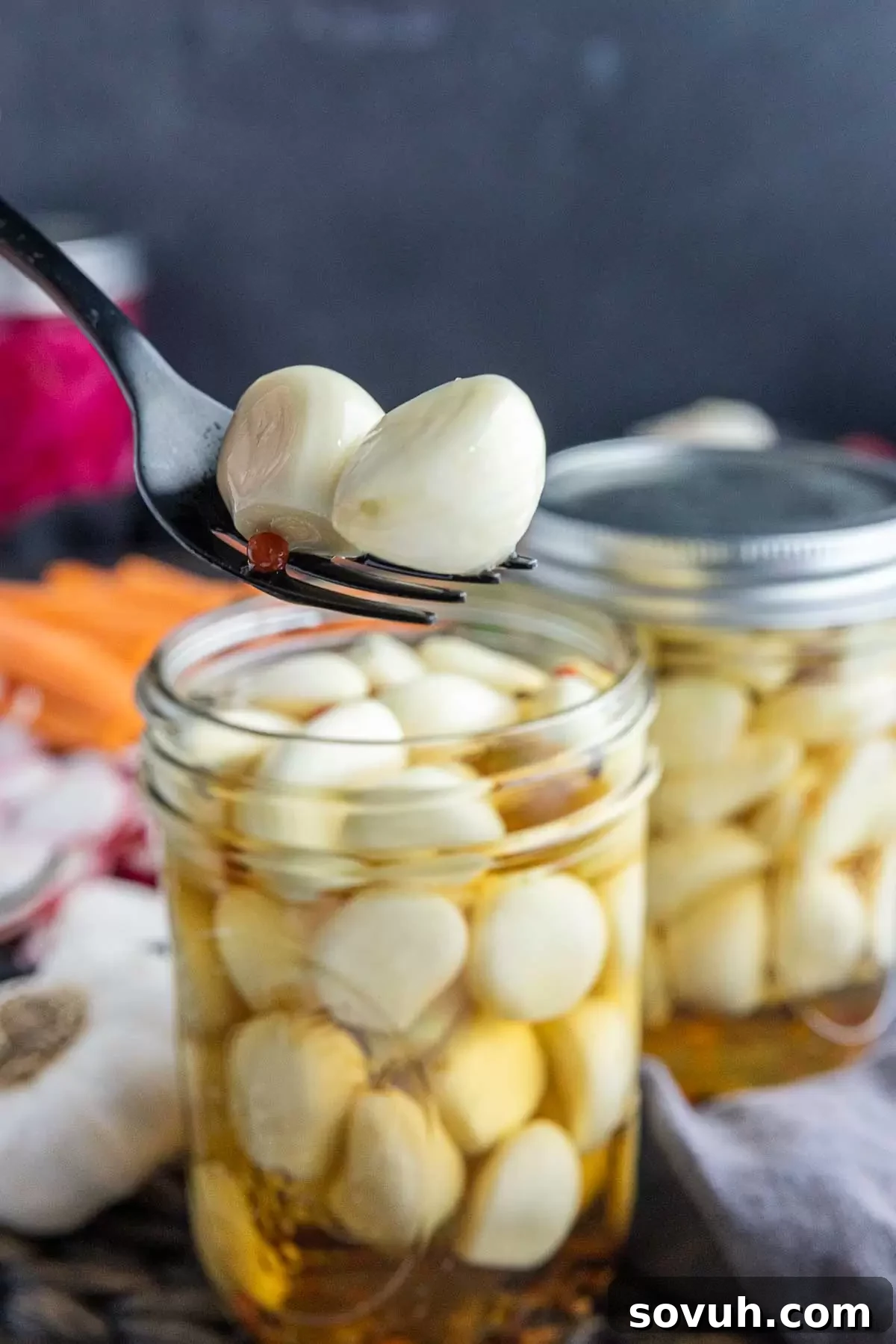
It can be alarming to open your jar of pickled garlic and find the cloves have taken on a surprising blue or greenish-blue hue. Don’t panic! This phenomenon is entirely natural and your garlic is perfectly safe to eat!
The reason for this color change lies in a natural chemical reaction. Garlic contains enzymes and sulfur-containing amino acids. When these compounds come into contact with the acidity of vinegar, especially in the presence of trace minerals (like copper, often found in water or even some stainless steel pots), they can react to form pigments called pyrroles. These pyrroles, when linked together, create the blue or green coloration. It’s similar to how an avocado turns brown when exposed to air – a harmless oxidation process. So, embrace the vibrant, unusual color of your pickled garlic!
Because this is a quick pickling recipe, which means the ingredients are not processed through a traditional canning method (like a water bath canner), your pickled garlic is not shelf-stable. It must be stored in the refrigerator to ensure its safety and maintain its quality.
When properly stored in an airtight glass jar in the refrigerator, your homemade pickled garlic will remain fresh and delicious for up to 3 months. Always ensure the garlic cloves are fully submerged in the brine, as any exposed cloves can spoil more quickly. If you notice any signs of spoilage, such as mold, off-smells, or unusual texture, discard the batch immediately.
Explore More Quick Pickled Vegetable Recipes!
The world of quick pickling is vast and exciting. If you enjoyed making and savoring this pickled garlic, we encourage you to try your hand at some of our other favorite quick pickled vegetable recipes. They’re all easy to make and offer a delightful tangy crunch:
- Quick Pickled Cucumber: Crisp, cool, and perfect for summer salads or sandwiches.
- Quick and Easy Pickled Cauliflower: A surprisingly delicious and crunchy snack.
- Easy Refrigerator Zucchini Pickles: A great way to use up abundant garden zucchini.
- Pickled Green Beans {Dilly Beans}: A savory, dilly treat that makes a great appetizer.
- Quick Pickled Carrots: Sweet and tangy, adding vibrant color to any plate.
- Quick Pickled Jalapenos: For those who crave a fiery kick!
- Pickled Red Onions: Fantastic on tacos, burgers, or salads.
- Quick Pickled Radishes: A peppery, crunchy, and beautiful addition.
- More Pickled Vegetables…: Discover even more innovative pickling ideas on our dedicated page.
Like this recipe?
Make sure to follow us on Instagram and Pinterest for more delicious recipes and kitchen tips. Happy pickling!
Quick Pickled Garlic
Print Recipe
Ingredients
- 8 heads Garlic
- 1.5 cup White vinegar
- 1/2 cup Water
- 2 teaspoons Kosher salt
- 1 tablespoon Sugar, can use sugar substitute
- 1 teaspoon Peppercorns
- 1/2 teaspoon Crushed red pepper flakes
Instructions
-
Peel the garlic cloves and trim off the hard end. Pack the cloves into the jar. See post for tips on peeling garlic.
-
In a small pot combine vinegar, water, salt, sugar, peppercorns, and red pepper flakes. Stir together.
-
Bring the mixture to a boil and then remove the pot from the heat.
-
Let the mixture cool for 2-3 minutes and then pour it into the jar until the garlic is fully covered.
-
Screw the lid on and store in the refrigerator for 2-3 months. Garlic can be used as soon as you like but we recommend letting it pickle for 2-3 weeks for the best flavor.
Nutrition
