No-Bake Jell-O Fruit Cake Recipe
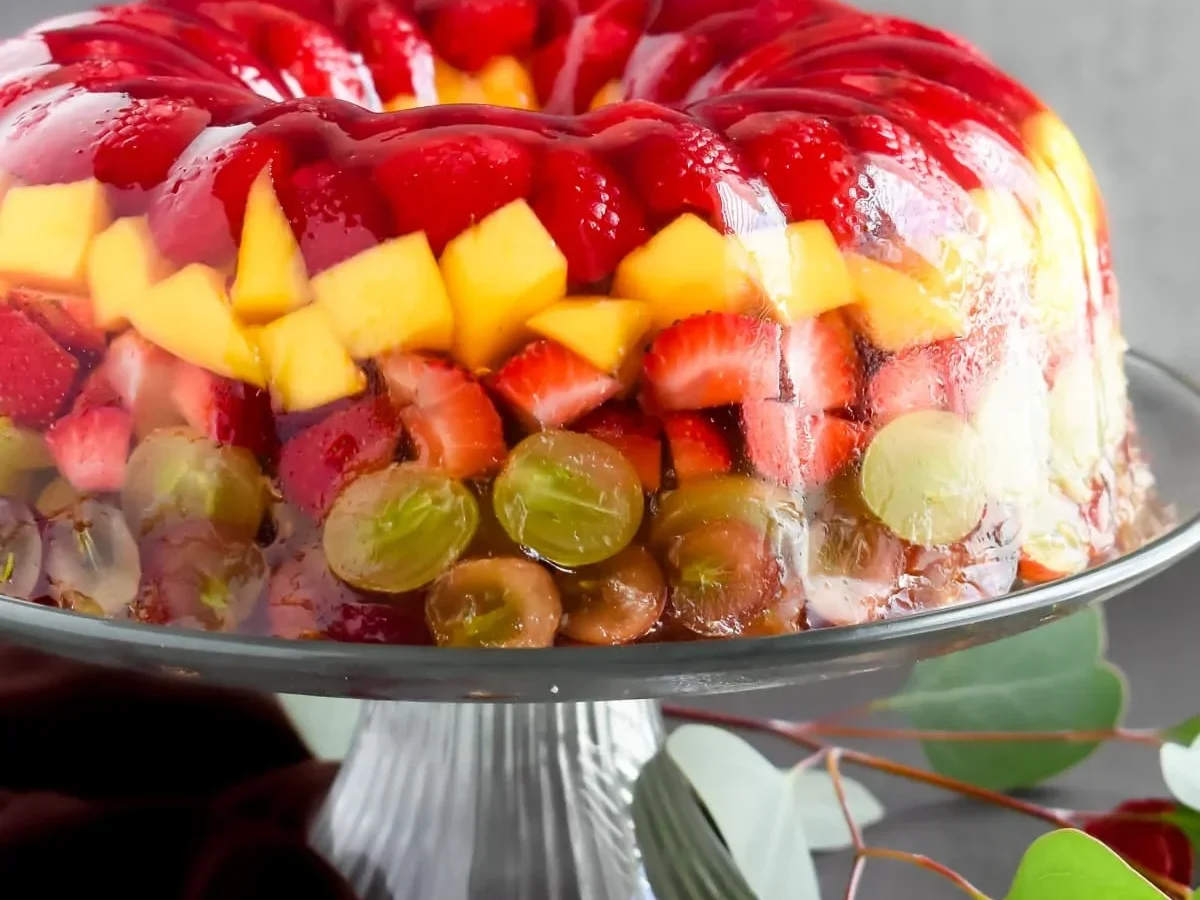
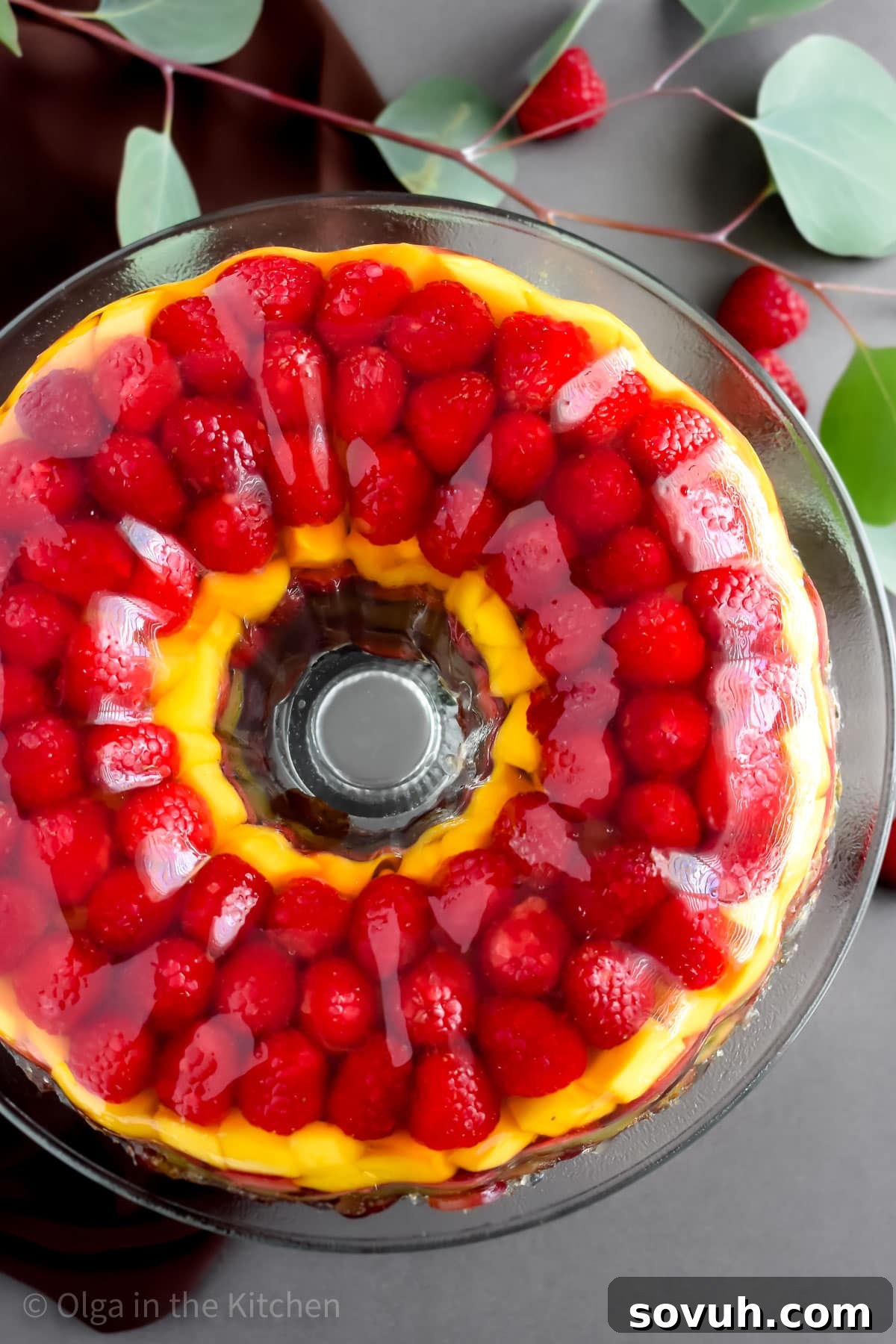
This jello fruit cake pairs fresh fruit with apple juice gelatin for a vibrant, refreshing no-bake dessert. It’s perfect for summer gatherings and holidays — serve it as a fruit platter alternative or as a light dessert. Experiment with different jello flavors and fruit combinations to suit your taste.
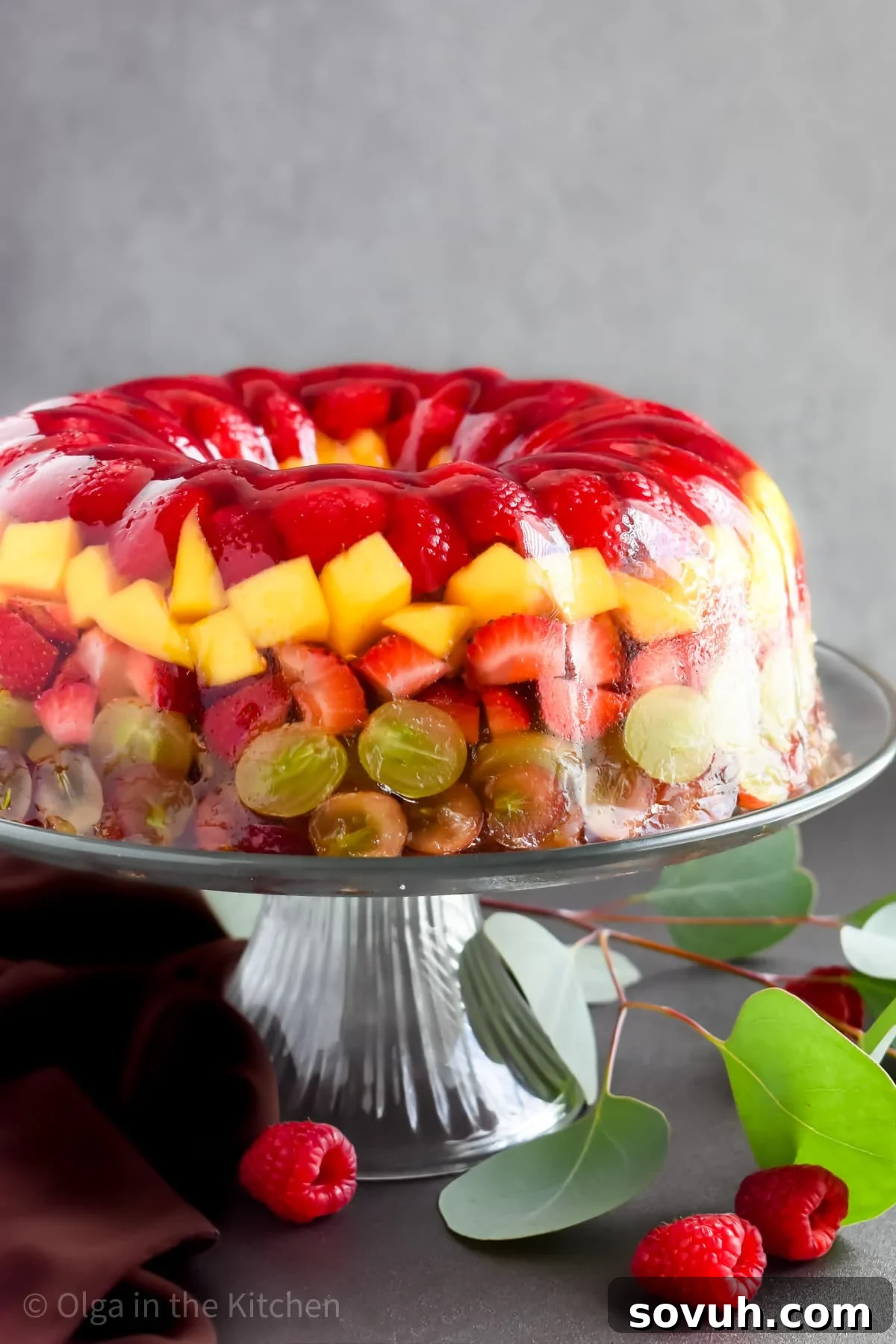
A no-bake jello fruit cake is an excellent choice when you want a colorful, easy dessert without turning on the oven. There’s no baking required: prep takes about 30 minutes and the gelatin needs a few hours to set in the refrigerator. You’ll need just a few common ingredients and a bundt pan to create an impressive, crowd-pleasing centerpiece.
Jello Fruit Cake Details
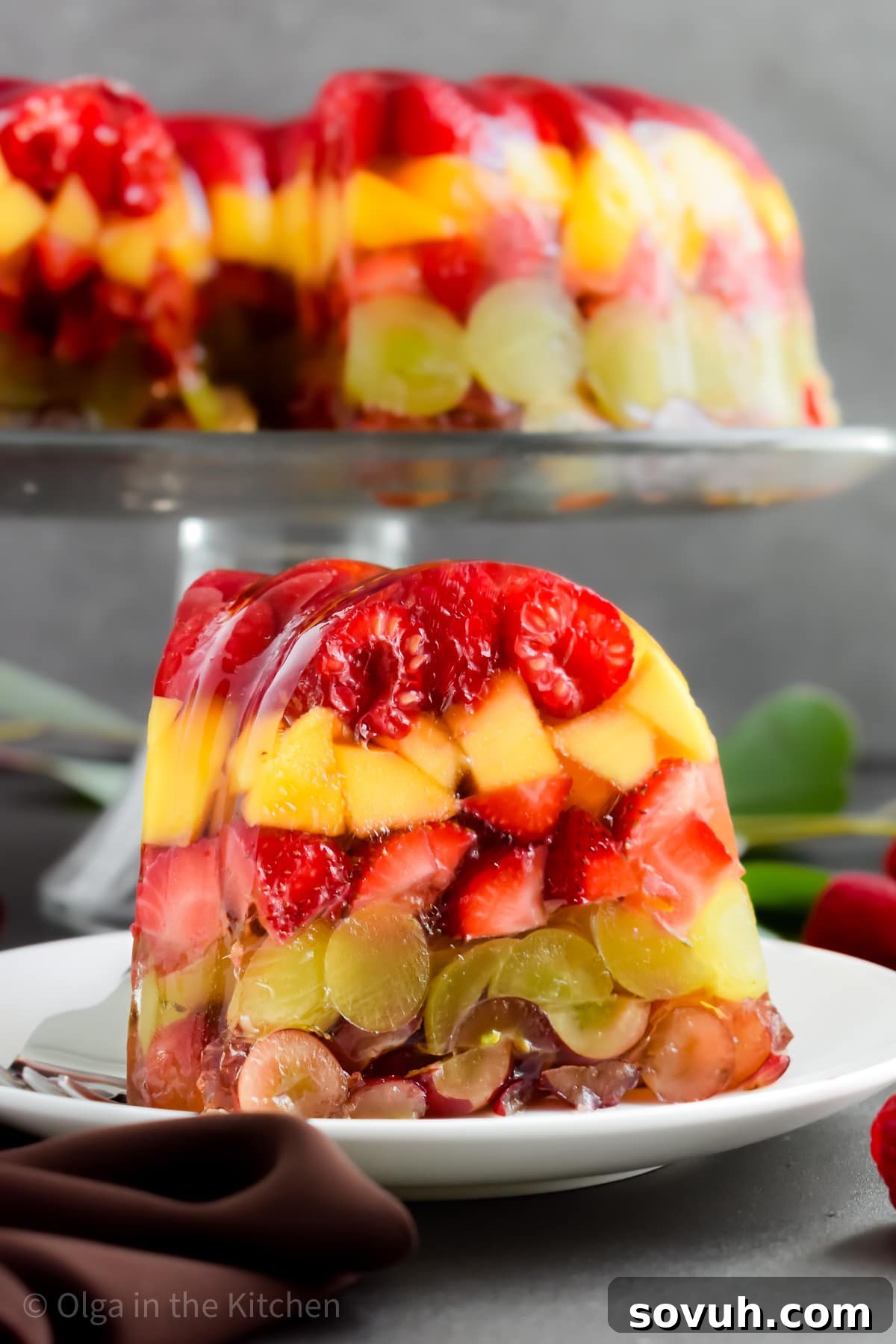
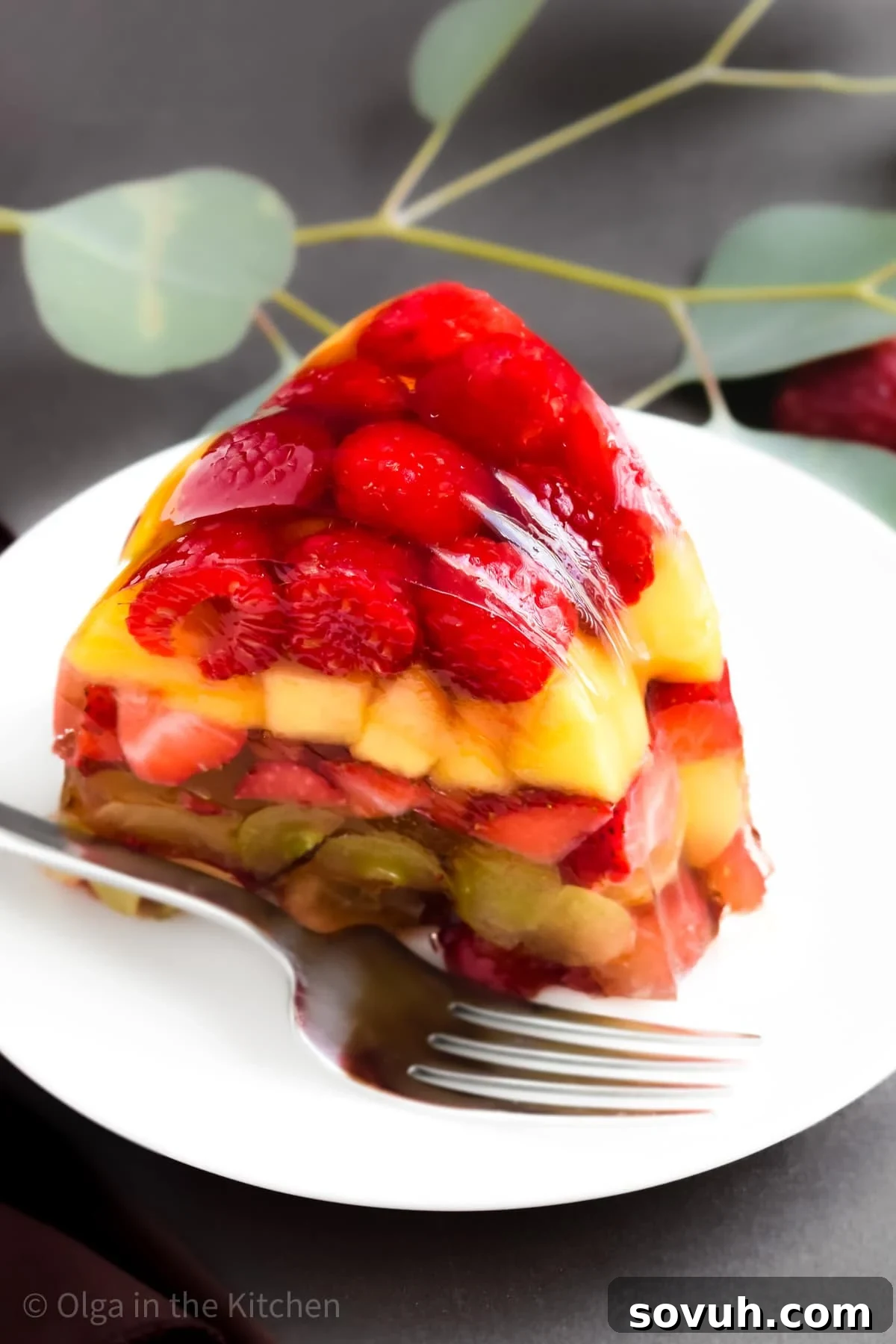
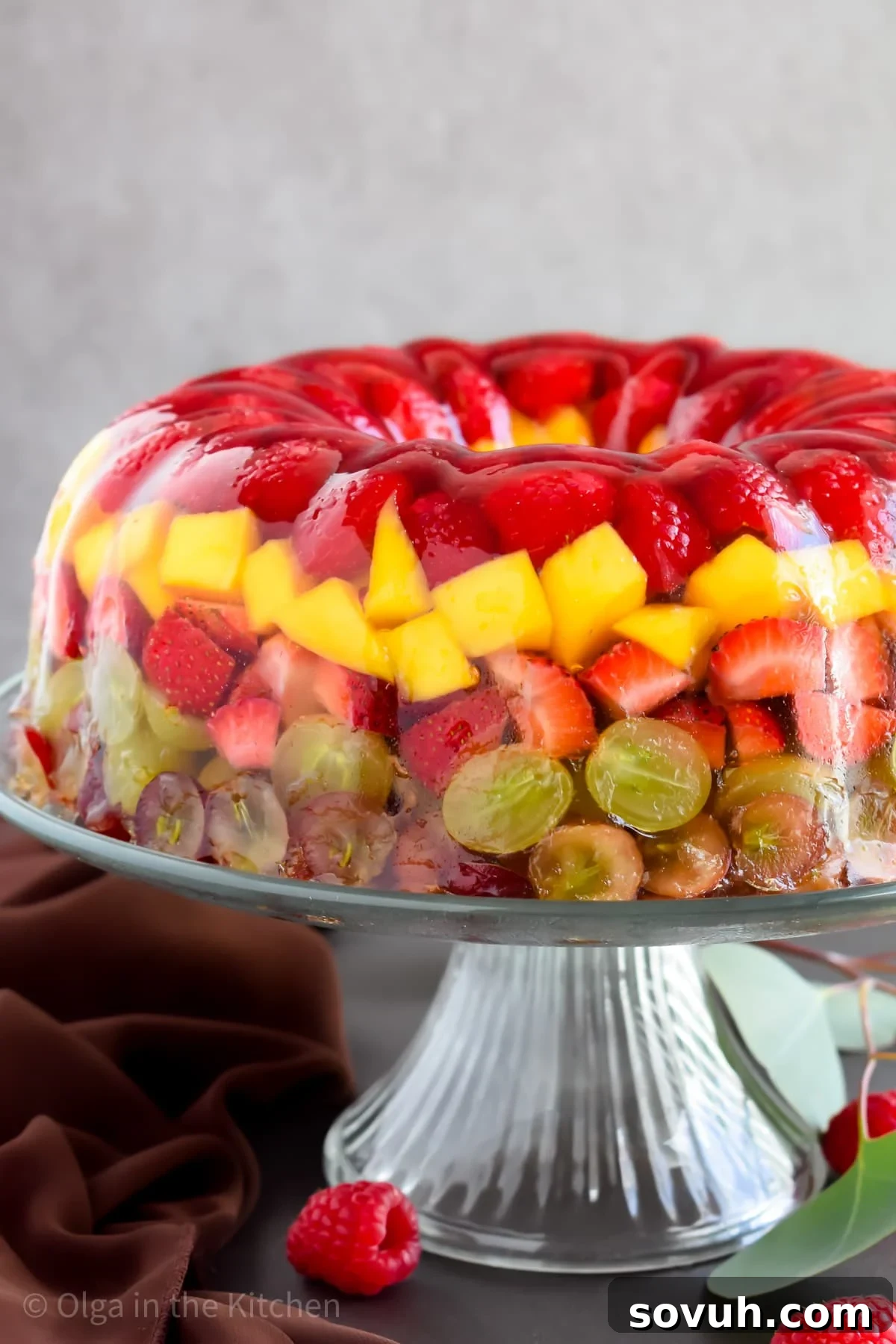
- Flavor: Fruity and lightly sweet. This version uses five fruit layers—raspberries, mango, strawberries, green grapes and red grapes—bound together by subtly sweet apple juice gelatin.
- Texture: Tender, slightly firm gelatin surrounding bite-size fruit pieces so each slice is colorful and chunky but still easy to eat.
- Ease: A straightforward, no-bake dessert that eliminates mixing, eggs, and oven time. It’s beginner-friendly and forgiving.
- Time: About 30 minutes active work plus around 4 hours chilling time for the gelatin to set. Ideal to prepare ahead of your meal or gathering.
Why You’ll Love This No-Bake Jello Fruit Cake
This dessert is simpler than a traditional baked cake but still elegant and festive. Because there’s no baking or whipped egg components to manage, it’s hard to make big mistakes. The bright, layered fruit appearance makes it feel special while the method remains simple.
Highlights:
- Quick and easy to assemble
- Bright, elegant presentation
- No mixer required—only a bundt pan and a saucepan
- Make-ahead friendly
- Flexible: swap fruit and gelatin flavors to suit your preferences
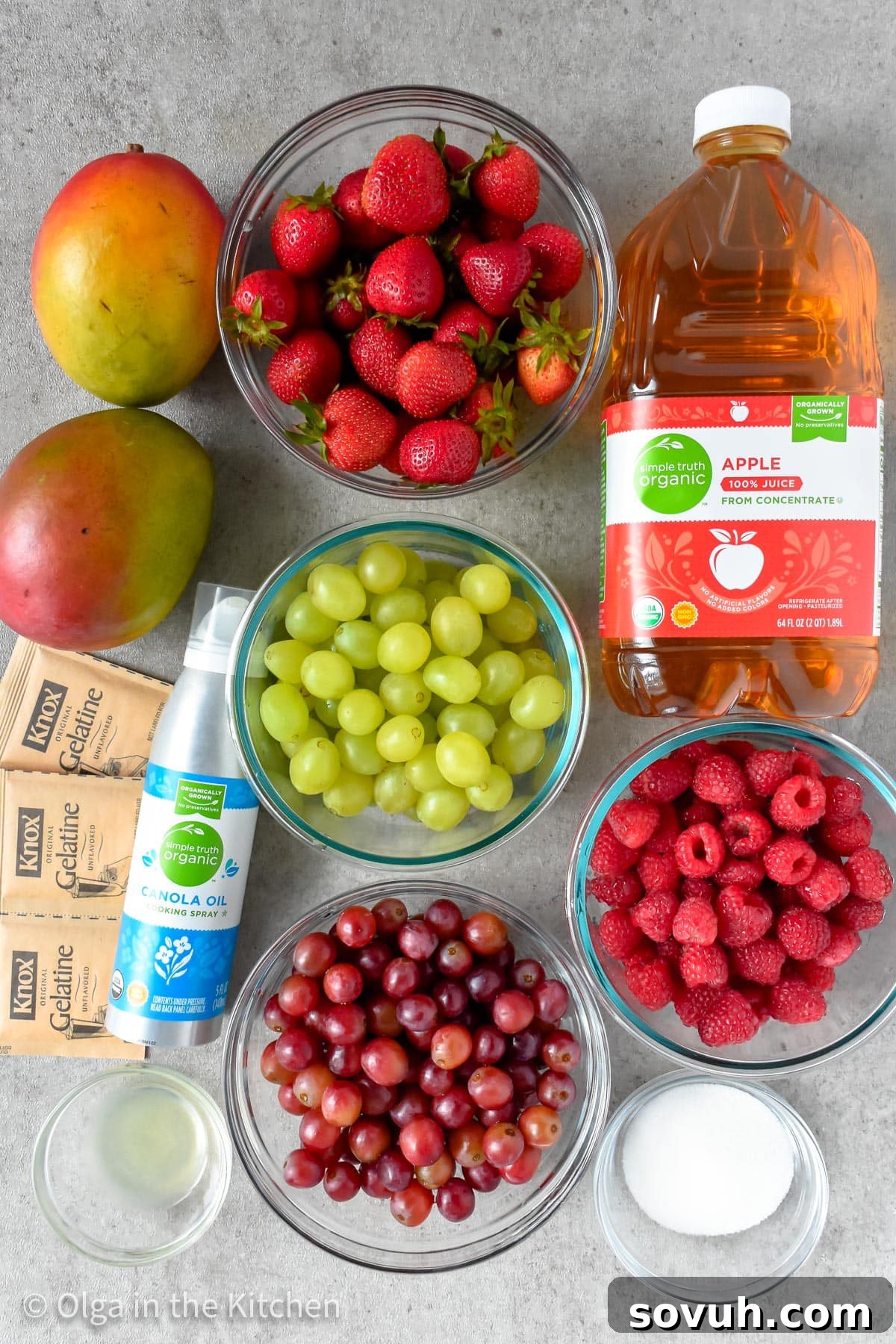
Key Ingredients
- Fresh fruit: Choose a variety of colors and textures. This recipe uses raspberries, mango, strawberries, green grapes and red grapes. Avoid very acidic fresh fruits such as kiwi or fresh pineapple because certain enzymes can prevent gelatin from setting.
- Apple juice: A light-colored juice that lets the fruit colors show through; it forms the gelatin base that holds the cake together.
- Granulated sugar: Adds a touch of sweetness to the apple juice; the cake is only lightly sweetened.
- Unflavored gelatin: Dissolved into the apple juice to form the jello; follow package instructions for best results.
- Lemon juice: A small amount brightens the flavor without overpowering the fruits.
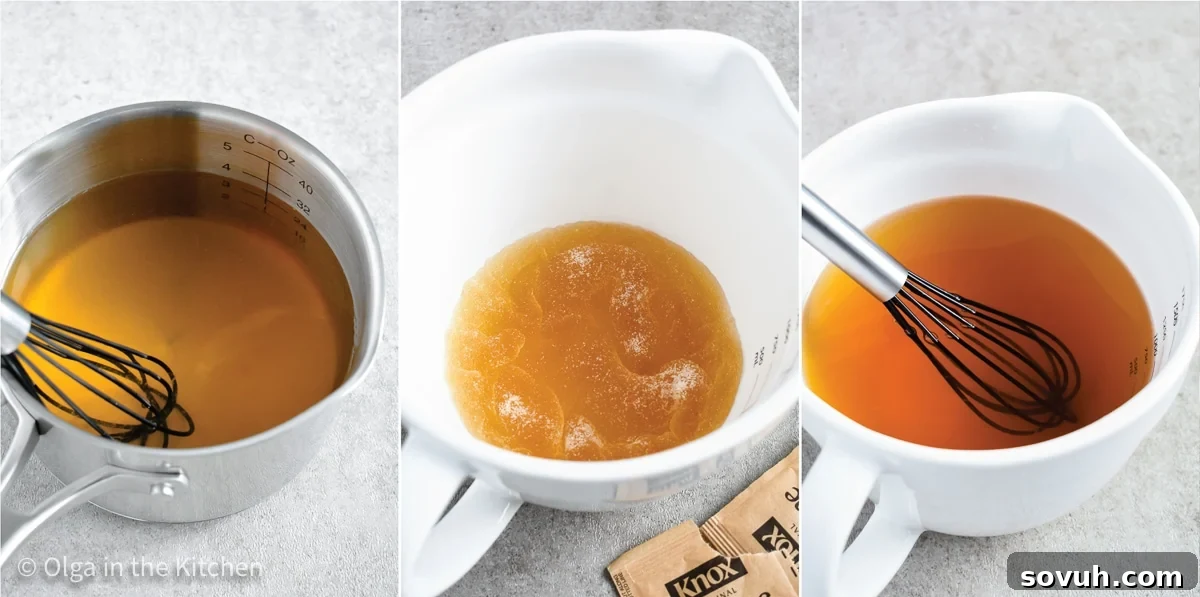
Assembling the Jello Fruit Cake
Begin by preparing the gelatin so it has time to cool to room temperature while you cut and arrange the fruit in the bundt pan.
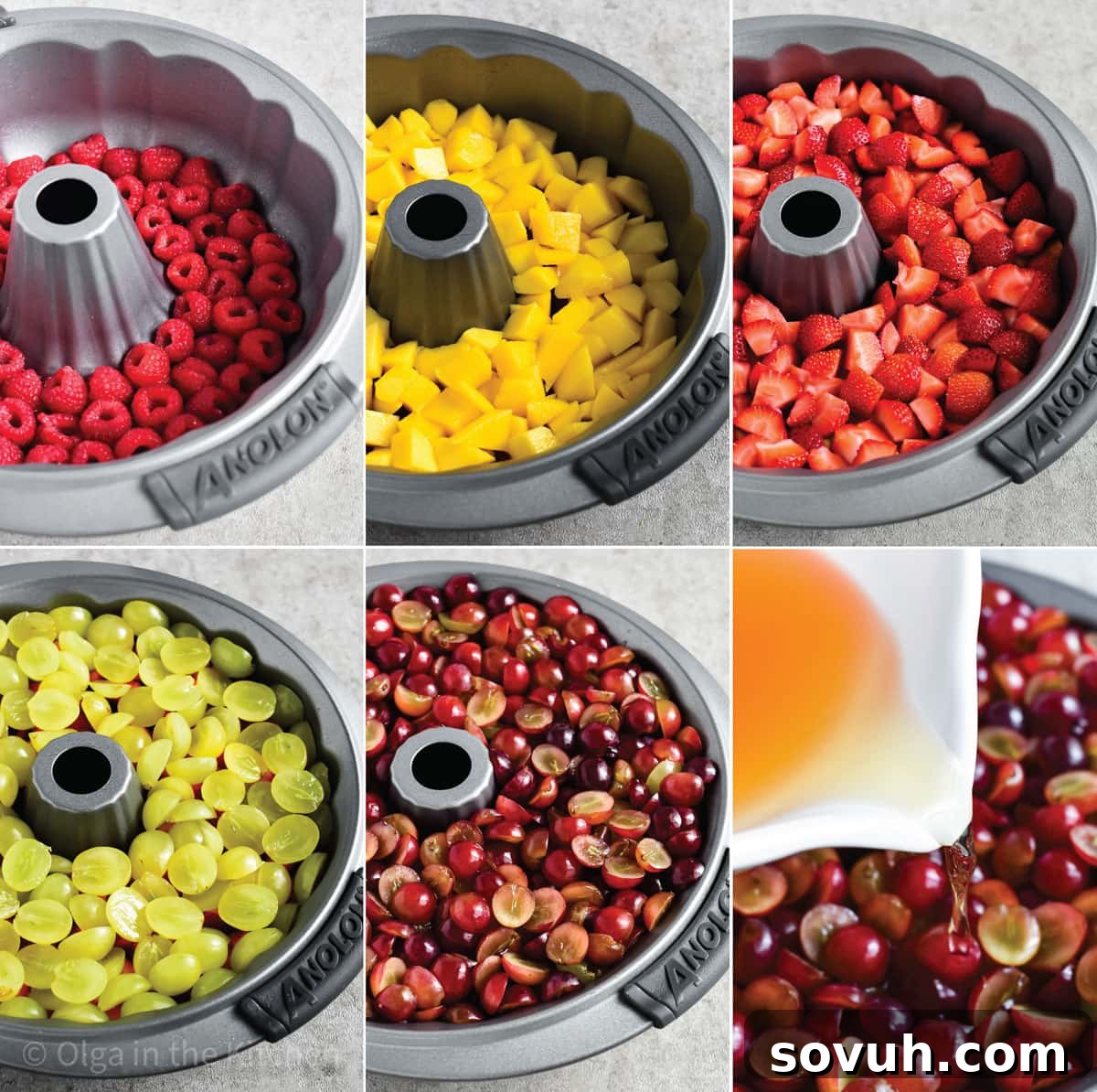
Layer the fruit in the bundt pan to create distinct color bands. A suggested order is raspberries first, followed by cubed mango, then cubed strawberries, halved green grapes, and finally halved red grapes. Distribute each fruit evenly to avoid gaps and to ensure the cake looks balanced when sliced.
Gently pour the cooled apple juice gelatin over the fruit until the pan is filled to the top. The amount of liquid provided in the recipe is matched to a standard bundt pan; if your pan is larger or smaller, adjust fruit quantities and gelatin accordingly.
Four Success Tips
- Choose the right fruits: Use fruits that hold up in gelatin and complement each other visually. Berries, grapes, mango and similarly firm fruits work well. Avoid fresh kiwi and pineapple unless you use canned/pasteurized versions that won’t interfere with setting.
- Fill the mold: Pack fruits so the bundt pan is completely filled. This prevents fruit from sinking and avoids empty gaps once the gelatin sets.
- Cool the gelatin: Make sure the gelatin mixture cools to room temperature before pouring to prevent cooking or softening the fruit pieces. Apple juice is a good choice because its pale color keeps the fruit layers visible.
- Removing from the mold: Chill until fully set (about 3–4 hours). To loosen, briefly warm the outside of the pan by placing the bottom in hot water for a few seconds, or carefully warm the pan side with a hair dryer. When you see the edges begin to release, invert onto a serving plate and lift the mold away.
Best Mold
A metal bundt pan is recommended because its rigidity helps the cake maintain shape when inverting. Some silicone molds can work, but metal offers the most reliable results for a clean release.
Ingredients
- 12 oz (about 340 g) fresh raspberries
- 2 large mangoes (about 764 g), peeled and cubed
- 1 lb (about 454 g) fresh strawberries, hulled and cubed
- 1 lb (about 454 g) green grapes, halved
- 1 lb (about 454 g) red grapes, halved
- 4 cups (960 ml) apple juice
- 4 packets (28 g total) unflavored gelatin
- 3 tablespoons (38 g) granulated sugar
- 1 tablespoon (15 ml) fresh lemon juice
- Pan spray for the bundt pan
Instructions
- Prep: Weigh and wash all fruit. Lightly spray the bundt pan and wipe the interior with a paper towel to ensure an even thin coating of spray.
- Make the gelatin: Pour 1 cup of apple juice into a medium bowl and sprinkle the gelatin packets over it; set aside to bloom. In a small saucepan, bring the remaining 3 cups apple juice, sugar and lemon juice to a gentle boil. Pour the hot juice over the bloomed gelatin and whisk until completely dissolved. Let the mixture cool to room temperature.
- Assemble fruits: Cube the mangoes and strawberries into roughly 1/2-inch pieces and halve the grapes. Arrange fruit layers in the bundt pan in this order for a colorful effect: raspberries, mango, strawberries, green grapes, red grapes. Distribute each layer evenly.
- Pour gelatin: Slowly pour the cooled apple juice gelatin over the fruit until the pan is filled to the top. Refrigerate for 3–4 hours, or until firm.
- Unmold and serve: When fully set, warm the outer bottom edge of the pan briefly by placing it in hot water or using a hair dryer for a few seconds until the edges release slightly. Invert onto a serving plate and gently lift the pan away. Garnish with extra fruit if desired and keep refrigerated until serving.
Notes
- Make-ahead: The cake can be assembled and chilled overnight. Invert onto the serving plate just before serving or the day after, as long as you plan to serve it the next day.
- Fruit substitutions: Blueberries, black currants, and honeydew are good alternatives. Avoid fresh kiwi and raw pineapple because they contain enzymes that prevent gelatin from setting. Bananas brown quickly and are best avoided unless you plan to serve the cake the same day.
- Gelatin tips: Ensure the gelatin mixture cools before pouring to prevent cooking the fruit. If you prefer a flavored gelatin mix instead of unflavored gelatin plus juice, you can adapt the recipe but keep at least 4 cups of liquid to cover the fruit.
- Unmolding options: Check firmness with a knife before flipping. Briefly warming the outside of the pan helps release the edges for a smooth unmold.
This no-bake jello fruit cake combines a variety of fresh fruits with apple juice gelatin to create a colorful, easy dessert. Read the full instructions before you begin for best results.
Prep Time: 30 minutes · Chill Time: 3–4 hours · Servings: about 10