Note: This post may contain affiliate links. If you click a link and make a purchase, we may receive a small commission. Thank you for supporting our content!
Mastering the Art of Roasting Peppers: A Comprehensive Guide to Oven & Stovetop Methods
Unlock a world of exquisite flavors and elevate your culinary creations by learning how to perfectly roast peppers. Whether you’re aiming for a smoky sweetness to enhance your salads, a rich depth for hearty soups, a vibrant base for sauces, or a delightful addition to sandwiches, homemade roasted peppers are a game-changer. This guide provides easy-to-follow instructions for achieving perfectly roasted bell peppers in your oven, and even offers an alternative stovetop method for those with gas burners.
Roasting bell peppers is a simple culinary technique that transforms their natural characteristics into something truly extraordinary. The raw crispness and sometimes sharp taste give way to a tender, silky texture and a profoundly complex flavor profile that is both sweet and subtly smoky. This unique transformation makes roasted peppers a versatile ingredient, adding a gourmet touch to a wide array of dishes from Mediterranean-inspired salads to robust pasta sauces and sophisticated appetizers.
While this guide focuses on red bell peppers due to their popularity and vibrant flavor, the principles and steps outlined here are broadly applicable to other varieties of peppers. Whether you prefer the mild sweetness of yellow or orange bell peppers, the earthy notes of poblano, or even the subtle heat of Anaheim peppers, mastering this technique will open up endless possibilities in your kitchen.
Why Roast Peppers? Unlocking Flavor and Texture
The act of roasting peppers is far more than just cooking them; it’s a process of profound transformation that significantly enhances their flavor and texture. Here’s a closer look at the key benefits:
- Intensified Sweetness: The high heat of the oven or direct flame causes the natural sugars within the pepper to caramelize. This caramelization process brings out a deep, concentrated sweetness that is absent in raw peppers, creating a more mellow and palatable taste.
- Smoky Undertones: As the skin of the pepper chars, it develops a distinct smoky flavor. This charring isn’t just for texture; it imparts a desirable depth and complexity that complements the sweetness, adding a sophisticated dimension to the pepper’s profile.
- Tender, Silky Texture: Roasting breaks down the cell walls of the pepper, transforming its firm, crunchy flesh into a wonderfully soft, almost buttery consistency. This tender texture makes roasted peppers ideal for blending into smooth sauces, spreads, or incorporating into dishes where a delicate mouthfeel is desired.
- Easier Skin Removal: One of the most practical reasons to roast peppers is that it makes their outer skin incredibly easy to remove. The skin of a raw bell pepper can be tough and fibrous, often unpleasant to eat. The charring and subsequent “sweating” process (more on this below) loosens the skin, allowing it to peel away effortlessly, revealing the tender, flavorful flesh underneath.
- Reduced Spiciness (for hot peppers): For those who enjoy spicier varieties but prefer to temper the heat, roasting can help. The high heat can break down some of the capsaicin, the compound responsible for a pepper’s spiciness, resulting in a milder, more approachable kick.
Ultimately, roasting peppers elevates them from a simple vegetable to a gourmet ingredient, making them a valuable addition to any home cook’s repertoire.
Essential Ingredients for Roasted Peppers
Making delicious oven-roasted peppers requires only a few basic ingredients, allowing the natural flavor of the peppers to shine through:
- Peppers of Choice:
- Red Bell Peppers: Our primary focus, known for their sweet flavor and beautiful color when roasted.
- Other Bell Peppers: Yellow and orange bell peppers also roast beautifully, offering slightly different sweet notes. Green bell peppers can be roasted, but their flavor remains more savory and less sweet.
- Poblano Peppers: Great for adding a mild, earthy spice and are often used in Mexican cuisine.
- Anaheim Peppers: Offer a gentle heat, perfect for those who like a little kick without overwhelming spice.
- Shishito Peppers: Best roasted whole until blistered, often served as an appetizer with a sprinkle of salt. The skin is usually kept on for these smaller peppers.
- Jalapeño Peppers: Roasting can mellow their heat and add a smoky depth, excellent for salsas or chili.
When selecting peppers, look for ones that are firm, shiny, and free of blemishes. Fresh, high-quality peppers will yield the best roasting results.
- Olive Oil: A good quality extra virgin olive oil is preferred. It serves several crucial purposes:
- Even Cooking: The oil helps the pepper skin cook evenly and prevents it from drying out, facilitating the charring process.
- Flavor Enhancement: Olive oil adds a subtle richness that complements the sweetness and smokiness of the roasted peppers.
- Moisture Retention: It helps keep the pepper flesh moist and tender during the high-heat roasting.
A light coating is all you need; too much oil can lead to frying rather than true roasting and charring.
How to Roast Peppers in the Oven: A Step-by-Step Guide
Roasting peppers in the oven, especially under the broiler, is a straightforward process that yields fantastic results. Follow these steps for perfect homemade roasted red peppers:
Making oven-roasted red peppers is super easy, requiring minimal effort for maximum flavor payoff!
Step 1: Prepare Your Oven for Broiling
Begin by adjusting your oven rack to the highest position, ensuring it’s just a few inches below the upper heating element (the broiler). This close proximity to the heat source is essential for quickly charring the pepper skins. Next, turn your oven to the “Broil” setting (usually “High,” if there are options). Allow the oven to preheat for at least 5-10 minutes while you prepare your peppers. A properly preheated broiler ensures immediate and effective charring.
Step 2: Prepare the Peppers
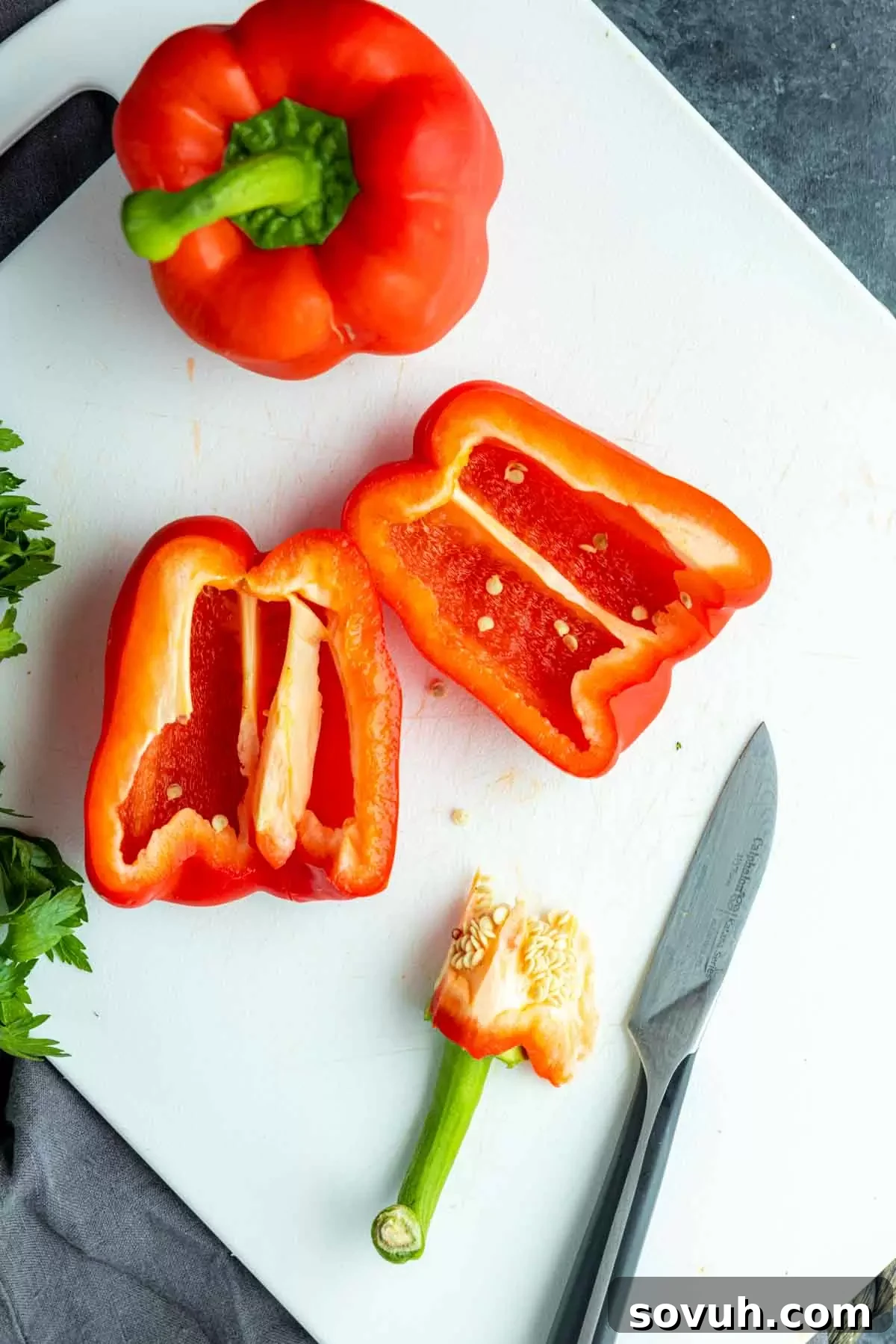
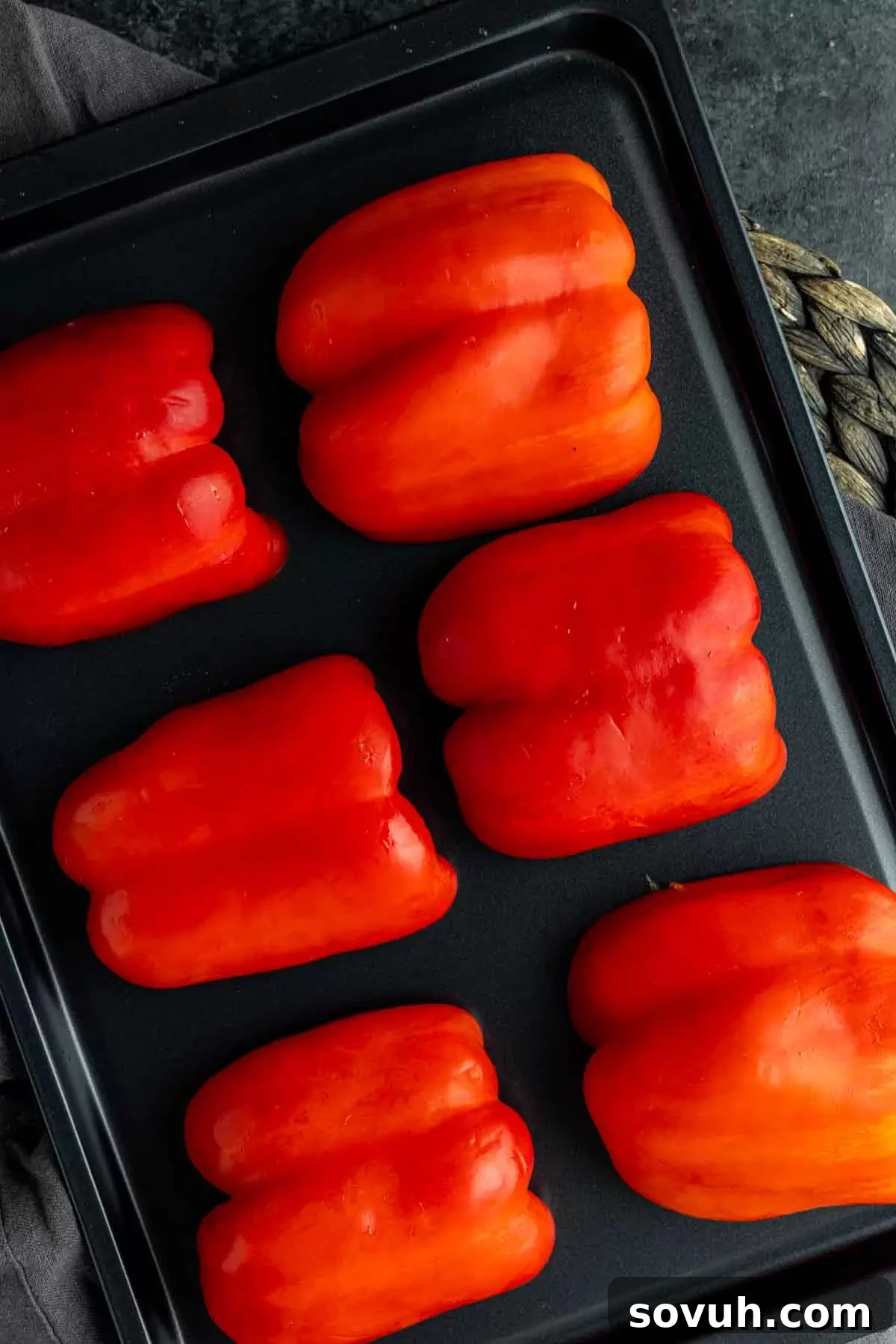
Thoroughly wash your chosen peppers. For bell peppers, cut them in half lengthwise. Carefully remove the stem, all the seeds, and the white fibrous ribs inside the pepper. These parts can be bitter and are typically discarded. Once cleaned, place the pepper halves on a sturdy baking sheet, ensuring they are cut-side down with the skin facing up. Drizzle a tablespoon of olive oil over the peppers, then use your hands to gently rub the oil evenly over both the skin and the inside flesh. This light coating helps with even charring and flavor development.
Step 3: Broil the Peppers to Perfection
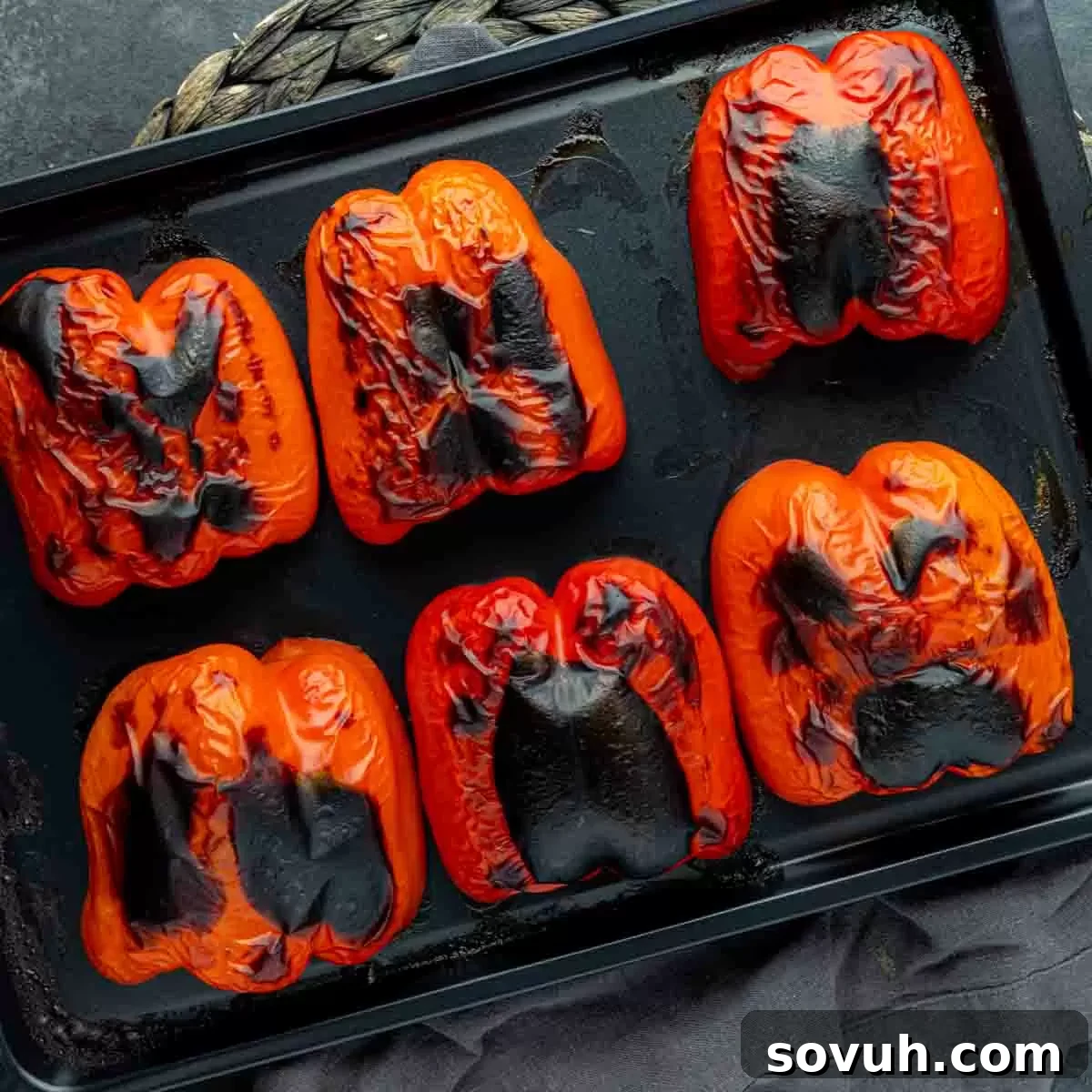
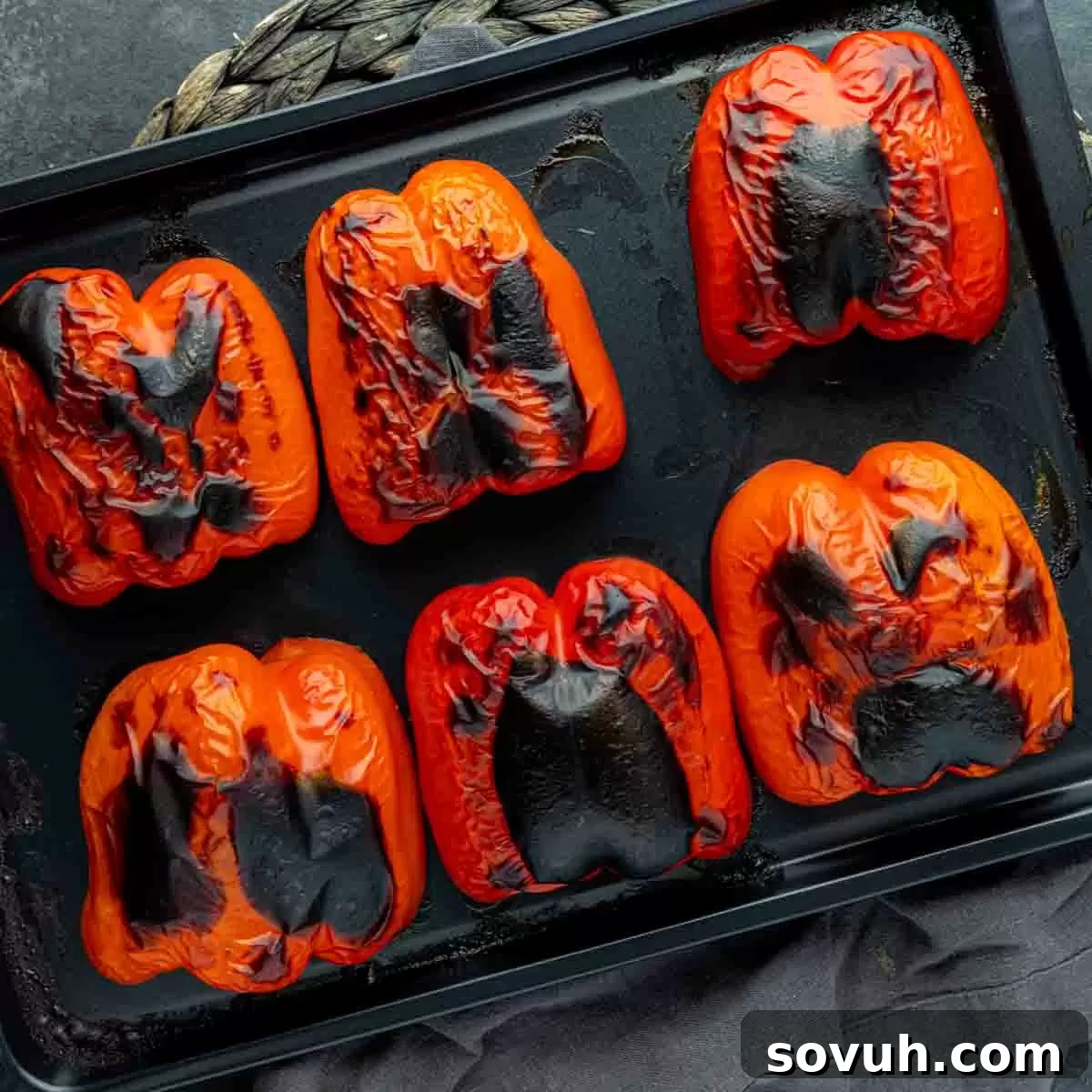
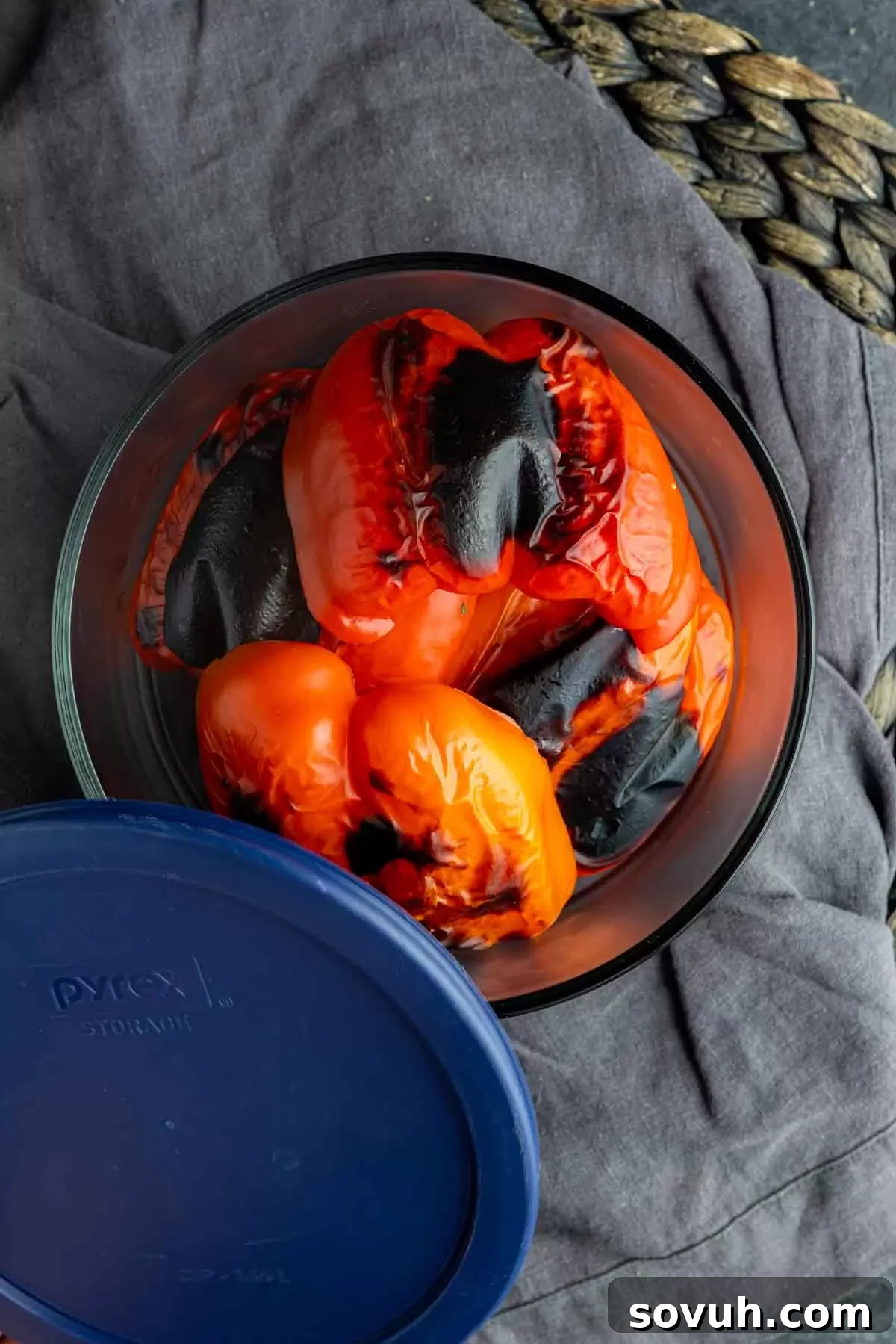
Carefully place the baking sheet with the prepared peppers onto the top oven rack, directly under the broiler. Broil for approximately 5 to 8 minutes. The exact time will vary depending on your oven and the thickness of the peppers, so watch them closely! You’re looking for the skin to visibly blister, bubble up, and blacken in significant patches. Don’t be afraid of the blackening; this is where the smoky flavor comes from. If some areas are charring faster than others, you can use tongs to slightly shift the peppers to ensure as much of the skin as possible gets that desirable char. The goal is a deeply charred, almost entirely black skin.
Step 4: Sweat the Peppers for Easy Peeling
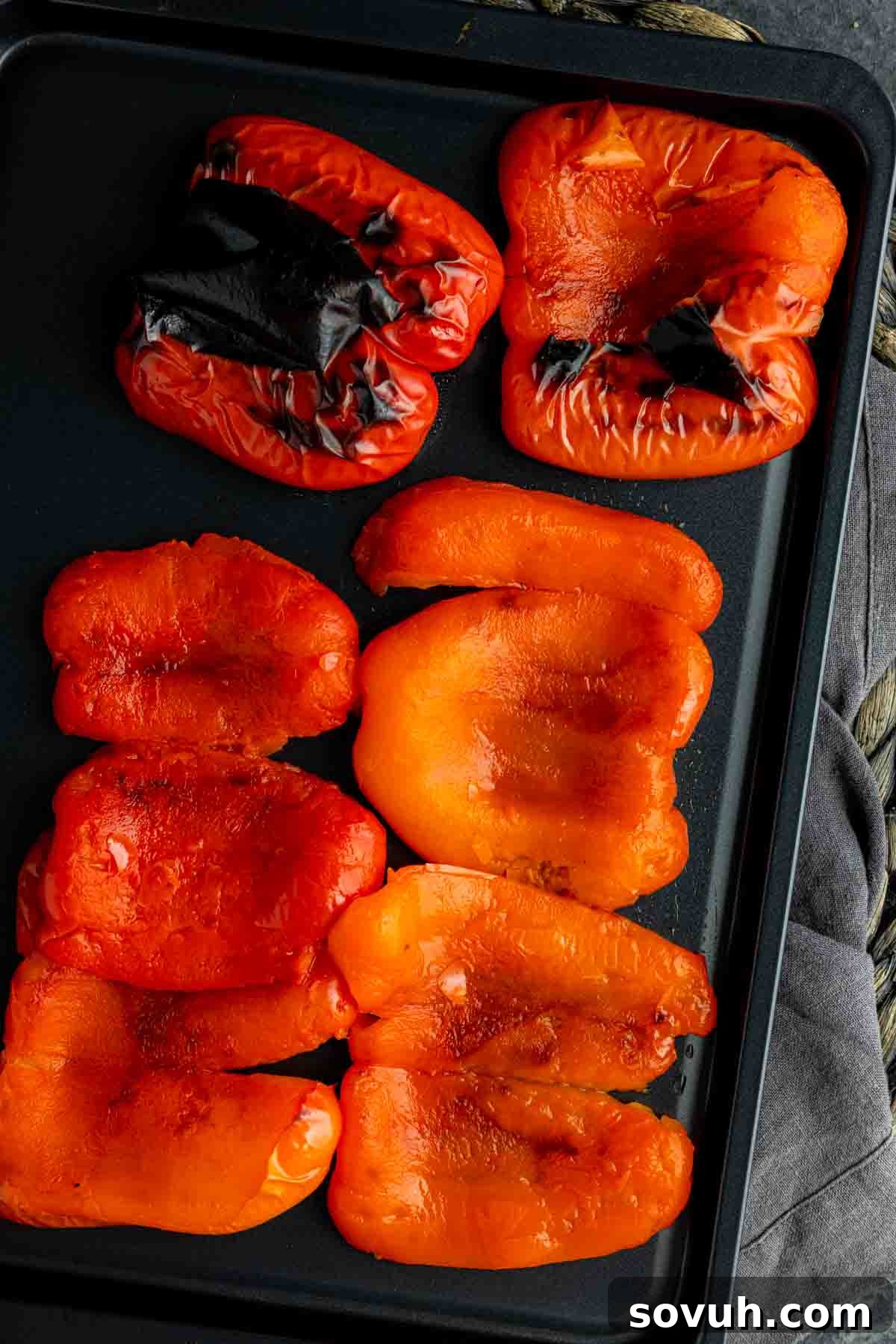
Once the pepper skins are sufficiently blackened and blistered, carefully remove the baking sheet from the oven. Immediately transfer the hot peppers into a heatproof bowl or an airtight container. Cover the bowl tightly with a lid, aluminum foil, or plastic wrap. Let the peppers sit undisturbed for at least 30 minutes, or even up to an hour. This crucial step is known as “sweating” the peppers. The residual heat and steam trapped inside the covered container will continue to cook the peppers slightly and, most importantly, loosen the charred skin, making it much easier to peel off in the next step. The steam creates a humid environment that helps the skin separate from the flesh.
Step 5: Remove the Skin (The Charred Goodness!)
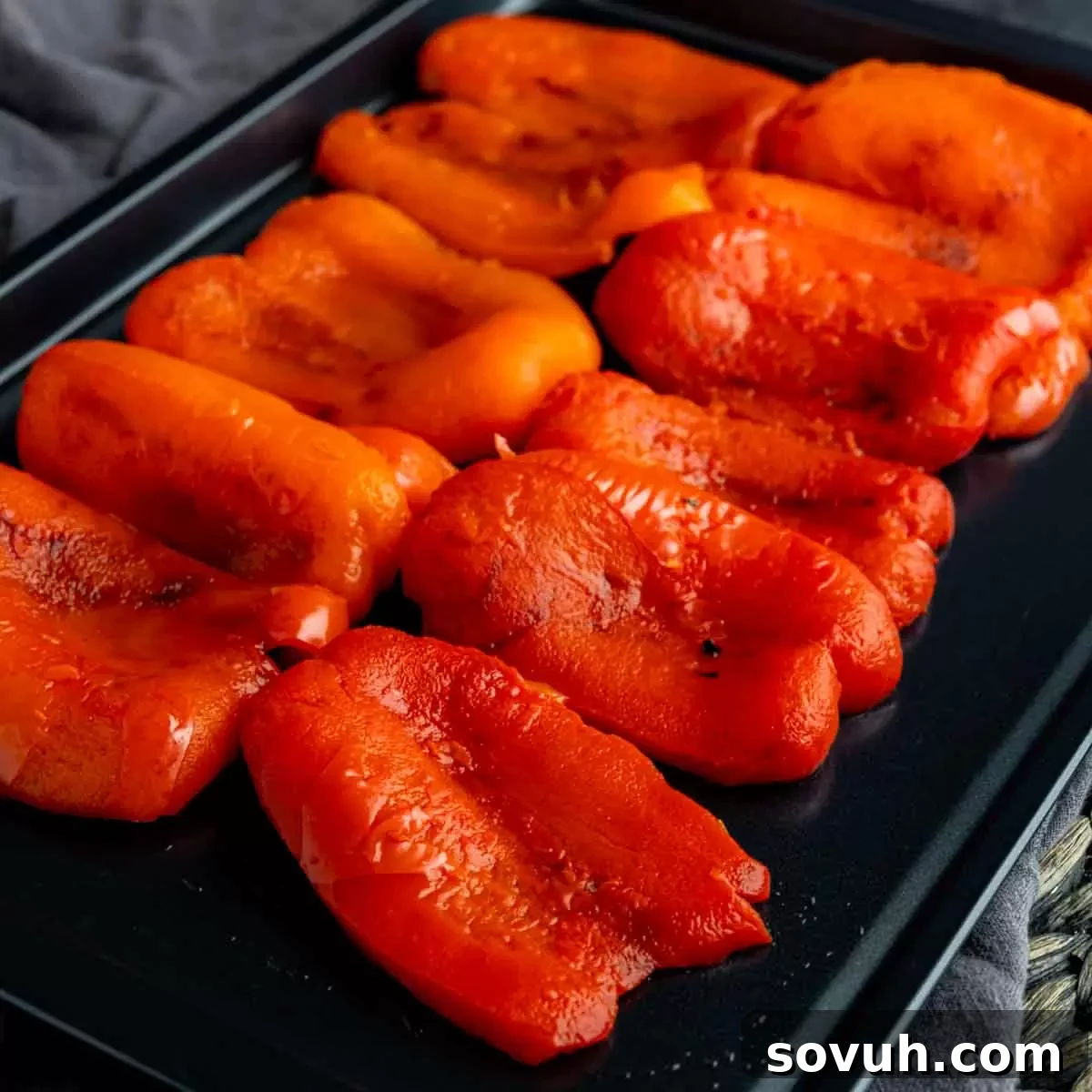
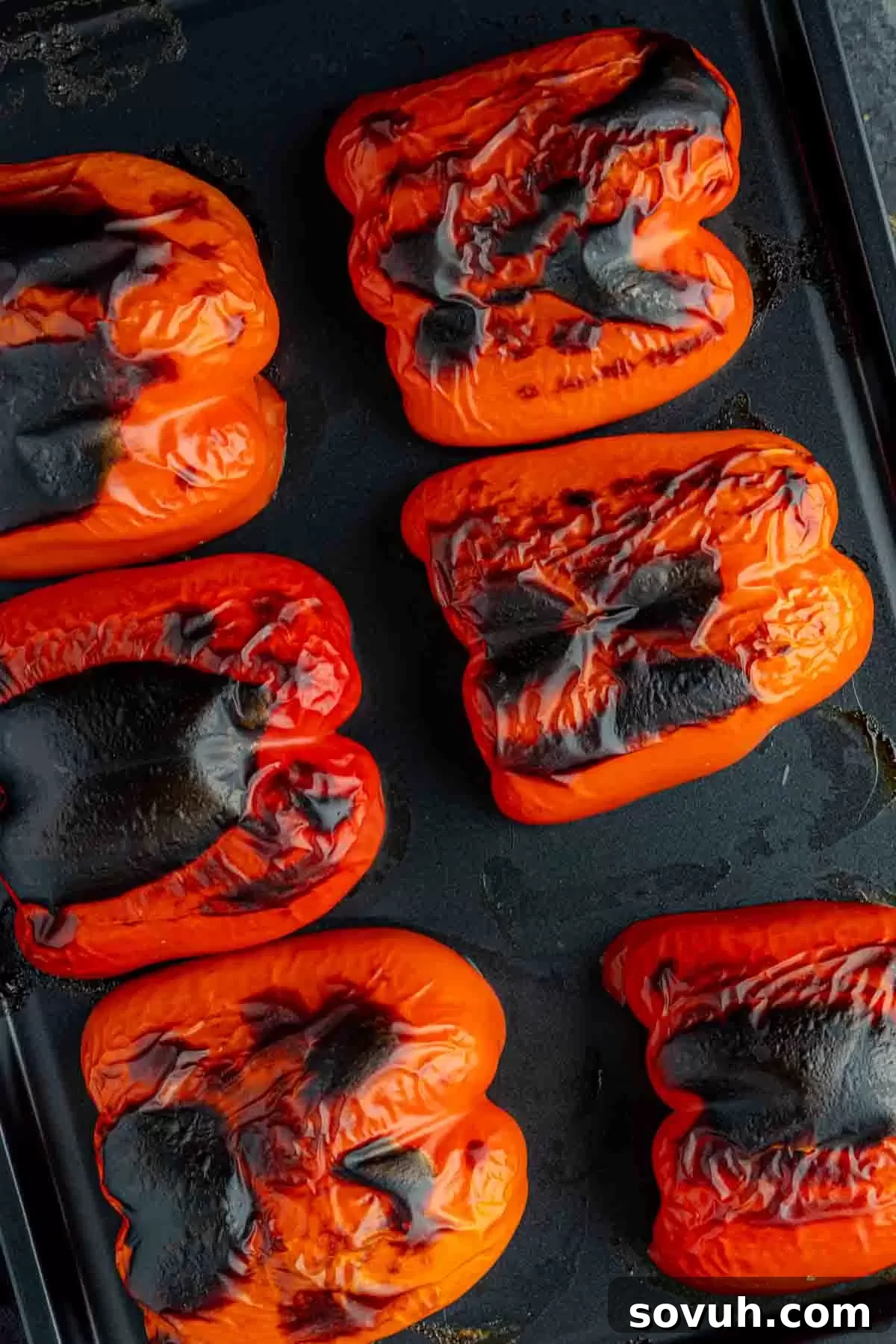
After the peppers have “sweated” for at least 30 minutes and are cool enough to handle comfortably, it’s time to remove the skin. Gently peel off the loosened skin using your fingers. It should come off quite easily. A very important tip: DO NOT rinse the peppers under water to aid in skin removal. While it might seem convenient, rinsing will wash away much of the delicious smoky flavor that developed during charring, diminishing the very essence of roasted peppers. If a few small stubborn bits of skin remain, don’t worry about getting every single piece off; a little char adds character and flavor. Once peeled, your beautiful, tender, and smoky roasted red peppers are ready to use!
Roasting Other Varieties of Peppers
The oven roasting method described above is highly versatile and can be adapted for most types of peppers. The main differences will be in roasting time and whether you choose to remove the skin.
- Larger Peppers (e.g., Ancho, Poblano): Treat these similarly to bell peppers. Halve them, remove seeds, oil, char under the broiler, and then sweat and peel. Their thicker flesh might require an extra minute or two under the broiler.
- Smaller, Thinner-Skinned Peppers (e.g., Jalapeño, Serrano, Shishito): These peppers generally don’t require skin removal. You’ll roast them whole (or halved for jalapeños) to achieve charring and soften the flesh, primarily for flavor and to mellow their heat. The skin on these varieties is thin enough to be palatable, and peeling would be tedious. Simply char them, cool slightly, and use.
- Anaheim Peppers: Depending on their size and skin thickness, you might choose to peel them after roasting and sweating, or leave the skin on for a rustic texture.
Always keep a close eye on smaller peppers under the broiler, as they will char much faster than bell peppers.
Roasting Peppers on the Stovetop: A Direct Flame Method
If you have a gas stove, roasting peppers directly over an open flame is an efficient and traditional method that imparts an even deeper smoky flavor. This technique is often faster for smaller batches.
Step 1: Prepare Your Peppers
For stovetop roasting, you’ll typically use whole peppers. There’s no need to cut them in half or add olive oil at this stage. Just ensure they are clean and dry.
Step 2: Prepare Your Stovetop
Turn a gas burner to medium-high heat. Ensure your kitchen is well-ventilated, as there will be some smoke. Place a wire rack over the burner if you have one, or you can place the pepper directly on the grates, using tongs for safety.
Step 3: Roast Over Open Flame
Using sturdy tongs, carefully place a whole pepper directly onto the open flame or over the hot grates. Allow the skin to char and blacken. This usually takes about 3-5 minutes per side. Continuously turn the pepper with the tongs, ensuring all sides are exposed to the flame and become thoroughly charred and blistered. The pepper will soften and wilt as it cooks.
Step 4: Sweat the Peppers
Once the pepper is completely charred and blackened on all sides, immediately transfer it to a bowl or airtight container. Cover it tightly with a lid, foil, or plastic wrap, just as you would with oven-roasted peppers. Let it sit for at least 30 minutes to sweat and loosen the skin.
Step 5: Clean and Peel
Once the pepper is cool enough to handle, cut it in half. Remove the stem, seeds, and any white ribs inside. Then, gently peel off the charred skin with your fingers. Remember, avoid rinsing the pepper under water to preserve its smoky flavor. Your stovetop-roasted peppers are now ready to be enjoyed!
Frequently Asked Questions About Roasting Peppers
When using the broiler method, bell peppers typically roast for approximately 5-8 minutes per side, or until their skin is significantly blistered and blackened. The total active cooking time is generally around 10-15 minutes, but this can vary based on your oven’s broiler strength and the size/thickness of your peppers. It’s more important to watch for the visual cues of charring than to strictly adhere to a timer.
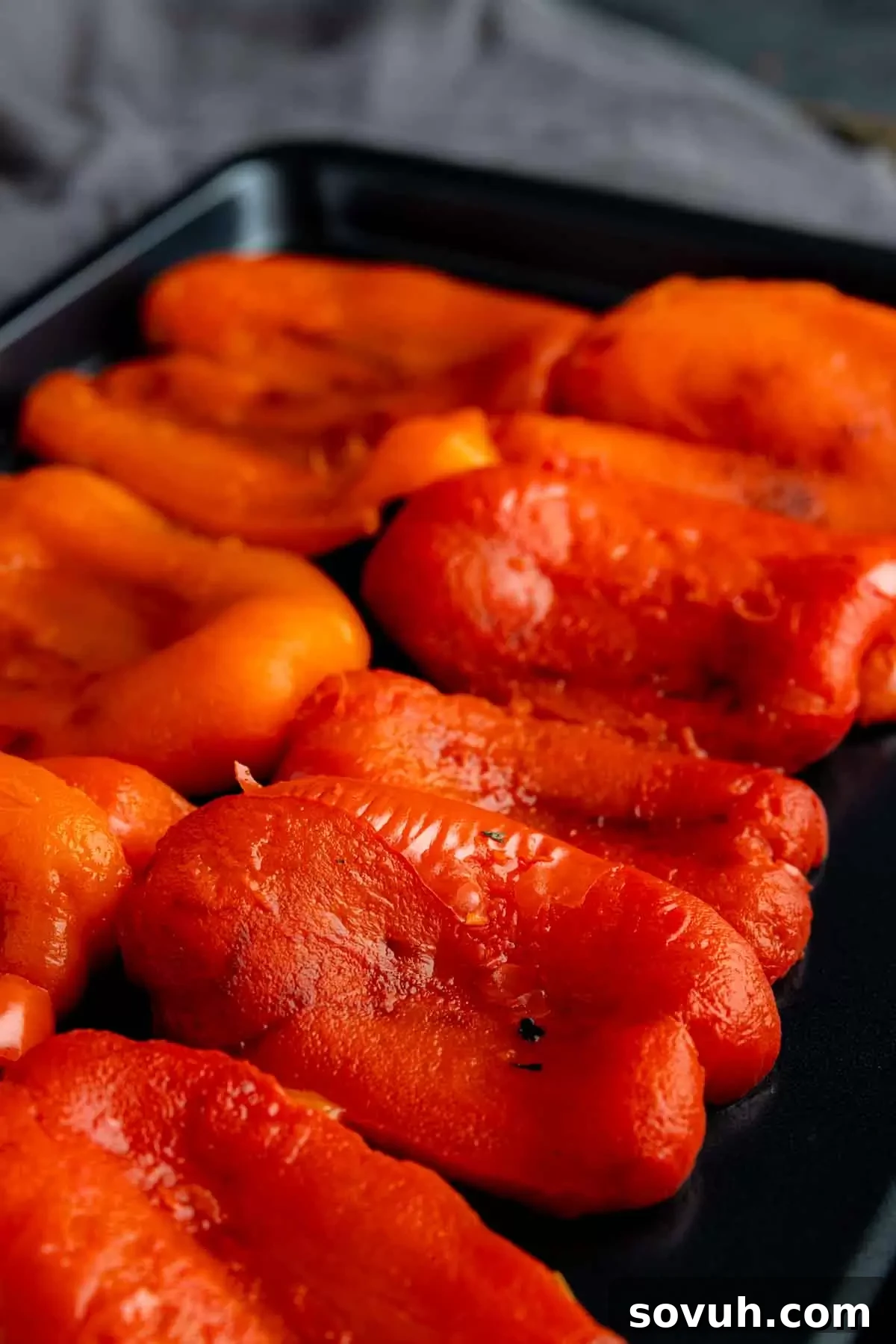
You’ll know your peppers are perfectly roasted when the majority of their outer skin is covered in deep black, charred spots. The uncharred portions of the skin should appear slightly wrinkled, indicating that the flesh underneath has softened considerably. The peppers themselves will look somewhat collapsed and tender. This level of charring is key to achieving that desirable smoky flavor and tender texture.
Roasting dramatically alters a pepper’s flavor in several appealing ways. Firstly, the intense heat caramelizes the natural sugars, bringing out a profound sweetness and mellowing any raw, sometimes sharp notes. Secondly, the charring process imparts a distinct smoky flavor that adds complexity and depth. Finally, for spicier peppers, roasting can reduce their heat level, making them more approachable. These combined effects transform the pepper into a versatile ingredient with a uniquely rich, sweet, and smoky taste, far different from its raw counterpart.
While olive oil helps with even charring and adds flavor, you can roast peppers without it, especially if you’re aiming for a very low-fat option or using the direct flame method. Without oil, the skin might dry out a bit more, and it might take a fraction longer to char, but the fundamental transformation will still occur. The “sweating” step remains crucial for easy skin removal in this case.
If you’re struggling to peel the skin, it usually means the peppers didn’t sweat long enough or weren’t charred enough initially. Try placing them back into the covered bowl for an additional 15-30 minutes. The extra steaming time often does the trick. Avoid forcing the skin off, as it can tear the tender flesh. A little bit of leftover skin is perfectly fine and adds to the rustic appeal.
Storing Your Delicious Roasted Peppers
Once you’ve gone to the effort of roasting peppers, you’ll want to ensure they last! Proper storage is key to preserving their flavor and texture. Roasted peppers can be stored in the refrigerator for up to 5 days or in the freezer for up to 2 months.
Refrigerator Storage
Allow your roasted and peeled peppers to cool completely to room temperature. You can then cut them into strips, dice them, or keep them in larger pieces, depending on your intended use. Place the peppers in a clean, airtight container. For an extra layer of flavor and preservation, you can cover them with a thin layer of olive oil within the container. Store in the refrigerator for 3-5 days. Always use clean utensils when removing peppers to prevent contamination.
Freezer Storage
Freezing roasted peppers is an excellent way to extend their shelf life and have them ready for future meals. Follow these steps:
- Cool Completely: Ensure the roasted and peeled peppers are entirely cool.
- Prepare for Freezing: Decide if you want to freeze them whole, halved, or cut into strips or dices. This makes them easier to portion later.
- Flash Freeze: Arrange the pepper pieces in a single layer on a parchment paper-lined baking sheet. Place the baking sheet in the freezer for approximately 30-60 minutes, or until the peppers are individually frozen solid. This prevents them from sticking together in a large clump.
- Package for Long-Term Storage: Once flash-frozen, transfer the peppers to a freezer-safe container or a heavy-duty freezer bag. If using a bag, press out as much air as possible before sealing to prevent freezer burn. For multiple layers in a container, you can place a piece of parchment paper between layers.
- Store: Place in the freezer and store for up to 2 months.
To use frozen roasted peppers, simply remove the desired amount and thaw them in the refrigerator overnight or on the counter for a few hours. They can also be added directly to hot dishes like soups or sauces.
Creative Culinary Uses for Roasted Red Peppers
Roasted red peppers are an incredibly versatile ingredient, adding a burst of sweet, smoky flavor and vibrant color to a multitude of dishes. Their tender texture and intense taste make them a chef’s secret weapon. Beyond simply enjoying them on their own, here are some fantastic ways to incorporate them into your cooking:
- Sauces and Dips: Blend roasted red peppers into creamy hummus for a smoky twist, create a rich and savory pasta sauce, or make a vibrant romesco or muhammara dip. They are also a key ingredient in many spicy sauces like Peri Peri.
- Soups: Add depth and sweetness to tomato-based soups, or create a show-stopping Fire Roasted Red Pepper Soup as a main course or appetizer.
- Salads: Chop and toss them into green salads, grain bowls, or pasta salads like Greek Spaghetti Salad for an extra layer of flavor and visual appeal.
- Sandwiches and Burgers: Layer them onto sandwiches, wraps, paninis, or burgers to add moisture, sweetness, and a gourmet touch. They pair wonderfully with grilled chicken, mozzarella, or pesto.
- Appetizers and Platters: Feature them prominently on an Mediterranean Mezze Platter, alongside olives, cheeses, and crusty bread. They also make a colorful addition to skewers or antipasto salads like a Keto Antipasto Salad.
- Main Dishes: Incorporate them into egg dishes like frittatas or quiches, stir them into risottos, or fold them into omelets. They are a fantastic addition to savory tarts or savory muffins.
- Pestos and Spreads: Create unique pestos with roasted red peppers, walnuts, and Parmesan, or use them as a base for flavorful bruschetta toppings.
- Marinades: Puree roasted peppers with herbs, garlic, and vinegar for a flavorful marinade for chicken, fish, or vegetables.
Don’t limit yourself to just these ideas – let the unique flavor of roasted peppers inspire your next culinary adventure!
Enjoyed this recipe and guide?
Make sure to follow us on Instagram and Pinterest for more delicious recipes and cooking tips!
6
20 minutes
10 minutes
30 minutes
1 hour
How to Roast Peppers in the Oven
Kat Jeter & Melinda Machado
Print Recipe
Ingredients
-
3
Red Bell Peppers -
1
tablespoon
Olive oil
Instructions
-
Move your oven rack to the top position so it will be just below the upper heating element. Turn your oven to Broil (Hi) and let preheat while you prepare your peppers.
-
Start by preparing your peppers by cutting them in half lengthwise and then removing the stem, seeds, and ribs (the white portion inside the pepper). Pour the olive oil over the peppers and rub it over the outside and inside.
-
Place the peppers on a baking sheet so that the skin faces up. Put the baking sheet on the top rack under the broiler and let the peppers broil for approximately 5-8 minutes or until the skin begins to blister and blacken. If needed you can shift the peppers around to help blacken as much of the skin as you can.
-
When the skin of your peppers has blackened carefully remove them from the oven and place them in a bowl or airtight container together. Cover the bowl or container with a lid or a piece of aluminum foil or plastic wrap. Let the peppers sit for 30 minutes.
-
Once your peppers have been sweating for at least 30 minutes and are cool enough to handle you can remove the skin. Use your fingers to gently peel off as much of the skin as you can. DO NOT run the pepper under water as you do this because it can wash away some of that nice charred flavor it got from roasting.
-
Use immediately or store the roasted red peppers in an airtight container in the refrigerator for 3-5 days, or freeze for up to 2 months.
Nutrition
Calories:
36
kcal
,
Carbohydrates:
4
g
,
Protein:
1
g
,
Fat:
3
g
,
Saturated Fat:
0.4
g
,
Polyunsaturated Fat:
0.3
g
,
Monounsaturated Fat:
2
g
,
Sodium:
2
mg
,
Potassium:
126
mg
,
Fiber:
1
g
,
Sugar:
2
g
,
Vitamin A:
1863
IU
,
Vitamin C:
76
mg
,
Calcium:
4
mg
,
Iron:
0.3
mg
Main
American
