
How to Order Afternoon Tea: A Course-by-Course Guide
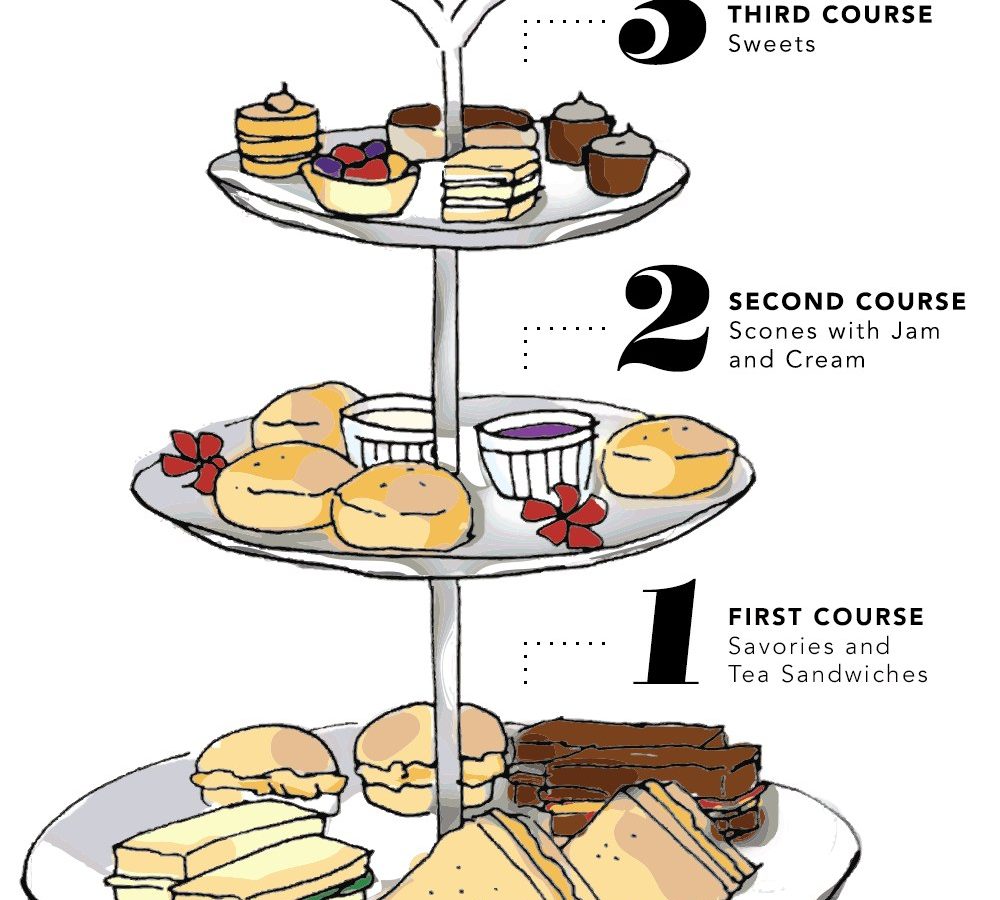
Traditional afternoon tea is served in three distinct courses, typically presented on a three-tiered stand alongside a pot of tea. This illustrated guide explains the proper order to enjoy afternoon tea and offers practical etiquette tips to help you feel confident and comfortable.
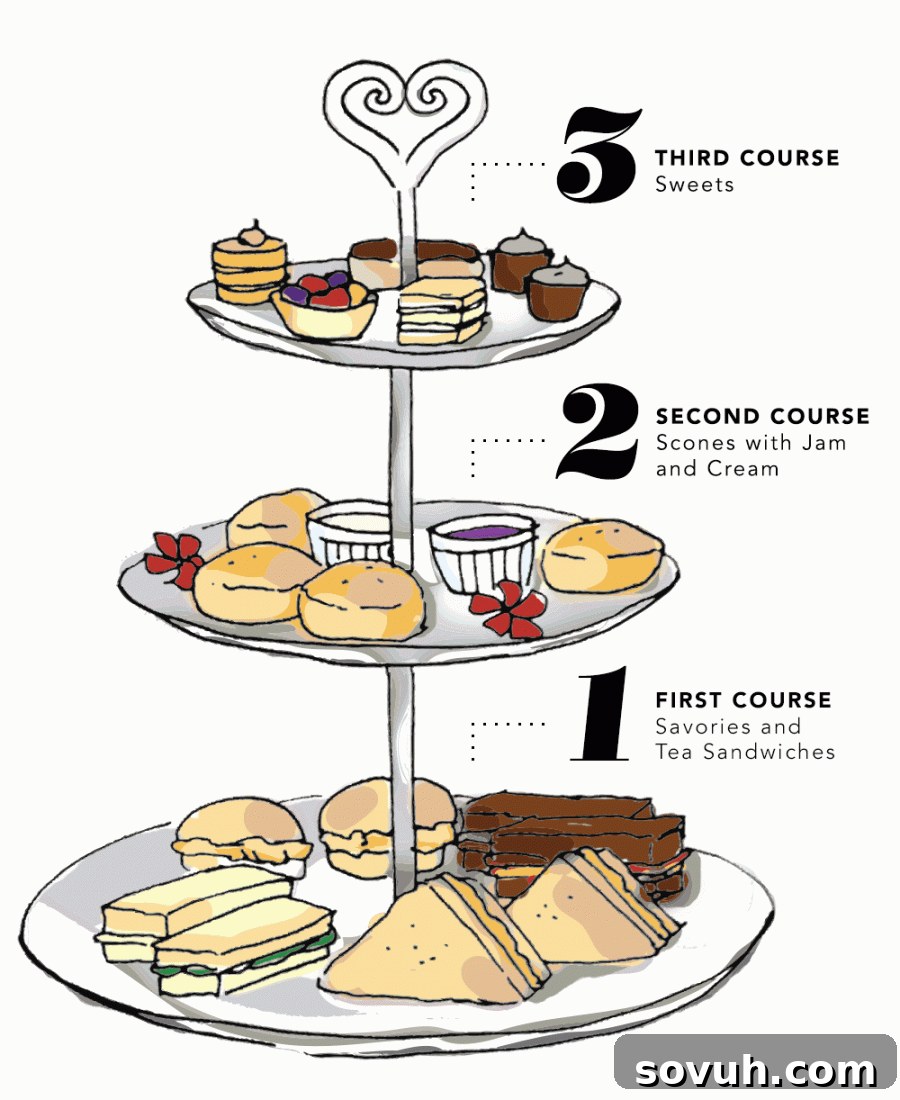
Afternoon tea can feel formal and refined, so a little knowledge of customary etiquette goes a long way. Knowing the correct sequence and a few simple manners turns a potentially intimidating experience into a relaxed, enjoyable ritual.
If you’ve ever been presented with a three-tiered tray and weren’t sure where to start, you’re not alone. Because everything is served at once, it helps to understand the traditional order so you can eat with confidence and consideration for others.
Below is a clear, practical guide to the three courses of afternoon tea, plus helpful tips about tea service, utensils and general manners to enhance your experience.
First Course
The first course consists of tea sandwiches and other savory bites. These are small, delicate items designed to be eaten in two or three bites. Common fillings include cucumber, egg mayonnaise, smoked salmon or ham, but offerings vary with the venue.
When selecting a sandwich, glance at the tray to choose the one you plan to eat and transfer it to your plate before taking a bite. Avoid handling multiple items on the shared stand. If serving tongs are provided, use them; otherwise, pick up only the piece you will eat. Never place a partially eaten item back on the communal tray.
Use your fingers for these small sandwiches unless cutlery is offered. If a knife is needed for spreading or cutting, keep any used utensils on your own plate to prevent cross-contamination on the shared stand.
Second Course
The second course features scones, typically served warm with clotted cream and jam. Scones are traditionally eaten with the fingers, though knives may be used to spread condiments onto your portion on your plate.
When serving jam and cream, use the separate spoons provided for each condiment. Scoop a small amount of jam and a small amount of clotted cream onto your plate, then use your knife to combine or spread them on your scone. Avoid using the same serving spoon for both jam and cream, and never put a serving spoon directly into your mouth or onto your scone.
There are regional preferences about whether jam or cream goes on first; personal preference applies here, and either order is acceptable. The important points are to use the serving utensils correctly, avoid touching the shared tray unnecessarily, and enjoy the scone in manageable bites.
Third Course
The final course is a selection of sweets and pastries. These are meant to be small and elegantly portioned so each can be eaten in two or three bites. Typical items include petit fours, mini tarts, macarons and small cakes.
Use fingers for many of these sweets, though a fork or dessert spoon may be appropriate for creamier or sauced desserts. Take care to be discreet and polite: avoid licking fingers, don’t call dibs, and share space on the tray considerately if passing it to others.
Savor the sweets slowly and enjoy them with your tea. A well-brewed cup complements the flavors and completes the experience.
Tea Service Tips and General Etiquette
Tea itself is central to the ritual. When a pot is brought to the table, wait for it to be placed down before pouring. If milk and sugar are provided, add sugar first if you prefer, then milk, or follow local custom—there is no universal rule, and personal preference matters most.
Hold your teacup by the handle and rest the saucer on the table when not in use. Stir gently without clinking the spoon against the cup; position the spoon on the saucer after stirring. Keep napkins on your lap and use them discreetly as needed.
Be mindful of communal items and serving utensils. Use the implements provided for shared condiments, avoid touching food on the communal tray unless you intend to eat it, and place any used cutlery on your plate rather than back on the serving stand.
Above all, the goal of afternoon tea is to enjoy a relaxed, civilized break. Follow these straightforward steps—savories first, scones second, sweets last—observe basic manners around shared dishes and tea service, and you’ll feel at ease whether at a formal hotel or a casual tea room.
Further reading: For more detailed tips on scone etiquette, tea varieties and proper handling of clotted cream, consult dedicated guides or ask your host for guidance when attending a formal tea.











