
How to Make Perfect Hard-Boiled Eggs Every Time
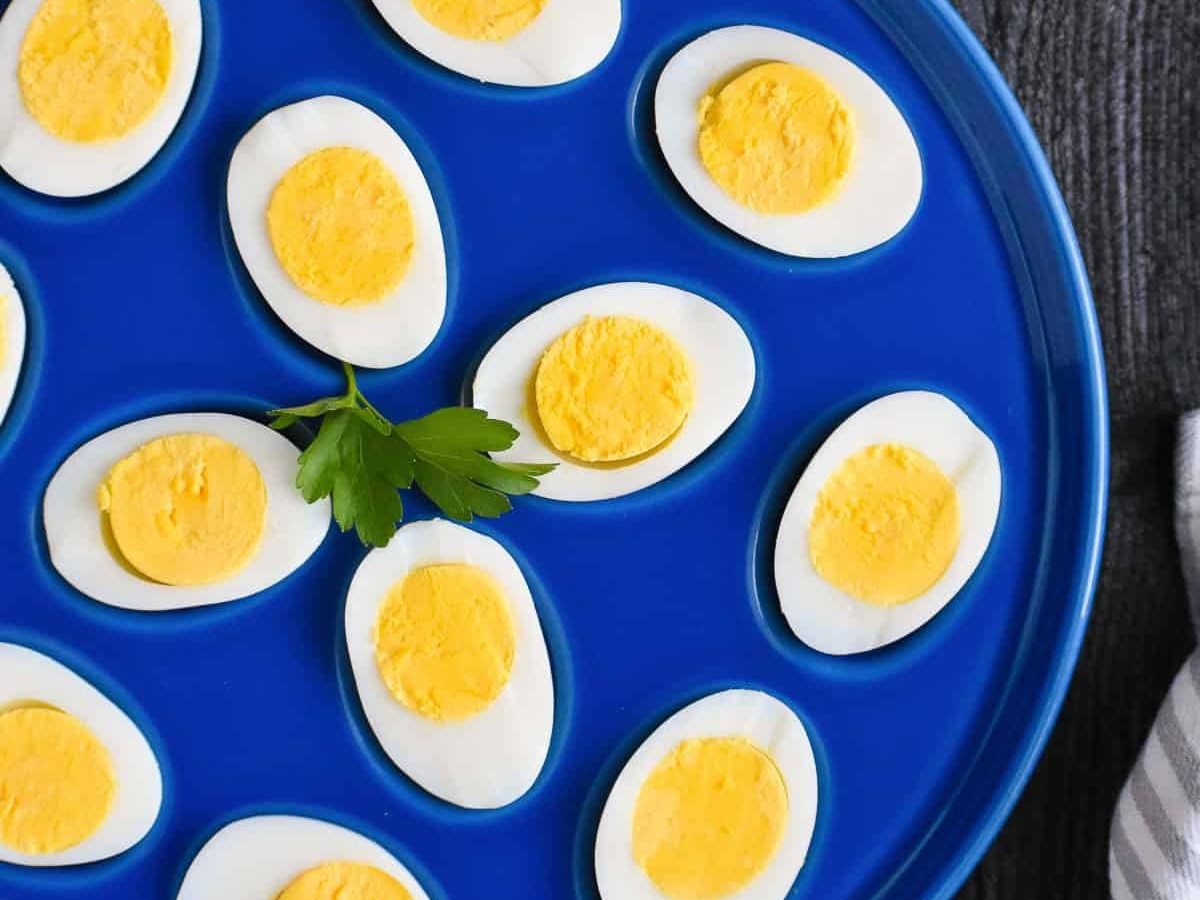
How to make the perfect hard‑boiled eggs every time. This is our family’s simple, reliable method for consistently cooking eggs that are fully set, easy to peel, and ready for snacks, salads, breakfast or appetizers.
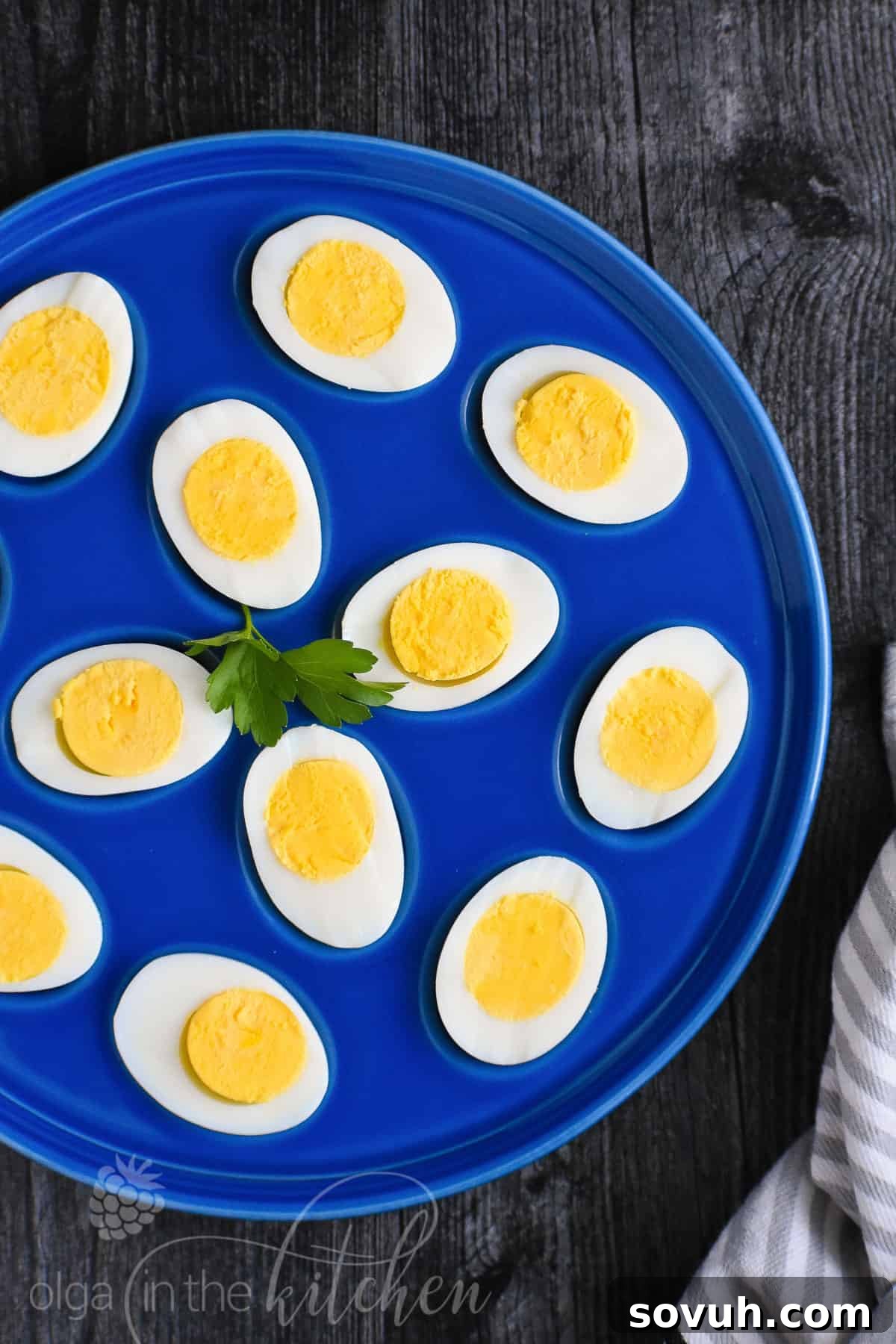
Perfect Hard‑Boiled Eggs (every time)
Do you often overcook eggs to be sure they’re done, only to end up with a green ring around the yolk? Or do you sometimes get a soft, runny yolk when you need a firm one for a salad or sandwich? This straightforward technique yields perfectly set whites and bright, yellow yolks in under 15 minutes using nothing more than a regular saucepan and a bowl of ice water.
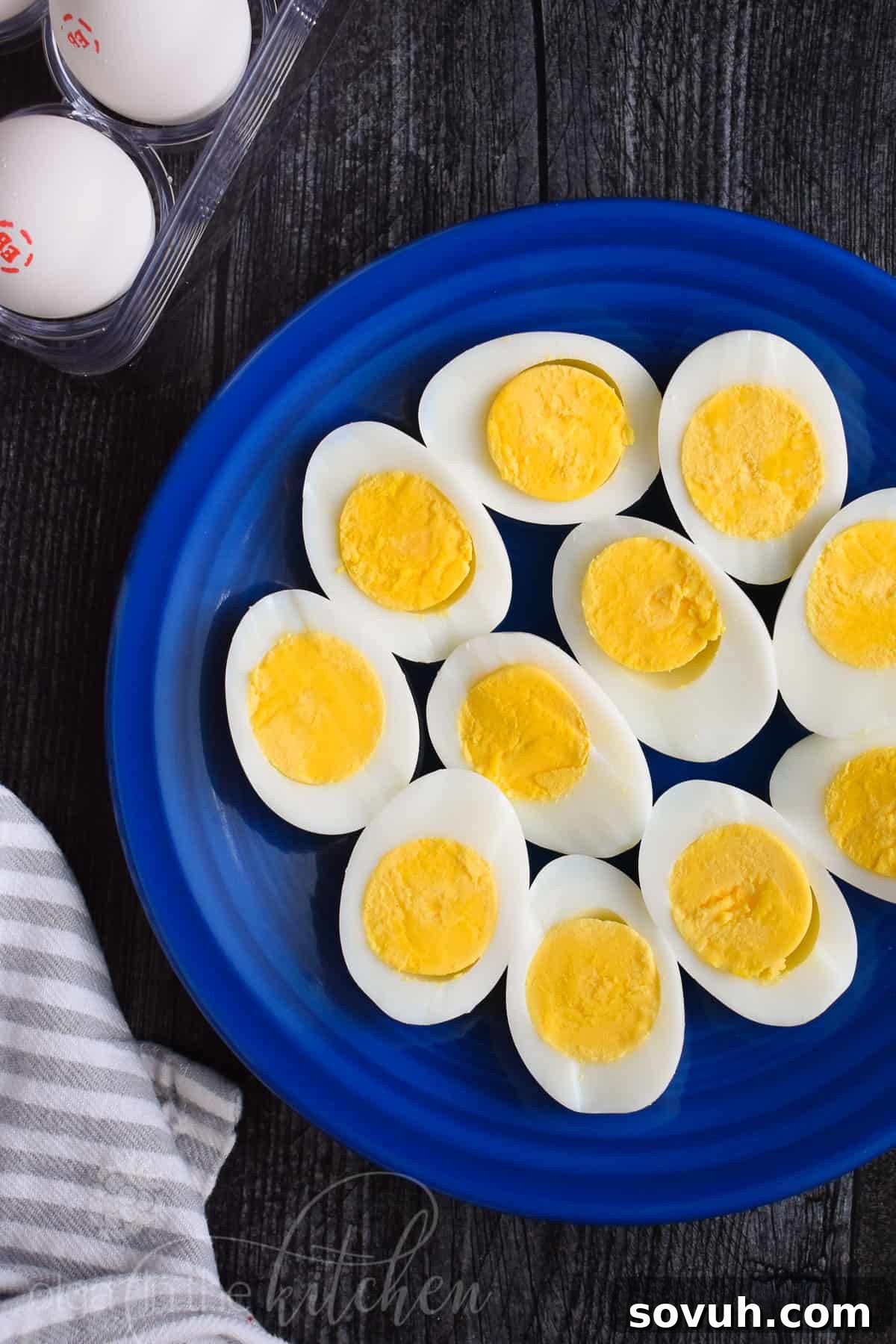
You don’t need special equipment or extra gadgets—just a medium saucepan and a lid. This method is consistent, quick, and easy to repeat.
Why Keep Boiled Eggs on Hand?
Hard‑boiled eggs are a convenient, protein-rich ingredient for quick snacks, packed lunches, and a wide range of salads and dishes. We keep a few cooked eggs in the refrigerator for a fast breakfast or to toss into salads when guests arrive.
What Are the Best Eggs for Boiling?
Eggs come in many varieties and sizes. For reliable results, pay attention to two simple factors:
- Egg freshness – Slightly older eggs are usually easier to peel than very fresh eggs. If you want easy‑peel eggs for an event, buy them several days to a week ahead.
- Size – Most recipes assume Large eggs. Medium eggs cook a bit faster; Extra Large or Jumbo will need slightly longer. We use Large Grade AA eggs for consistency.
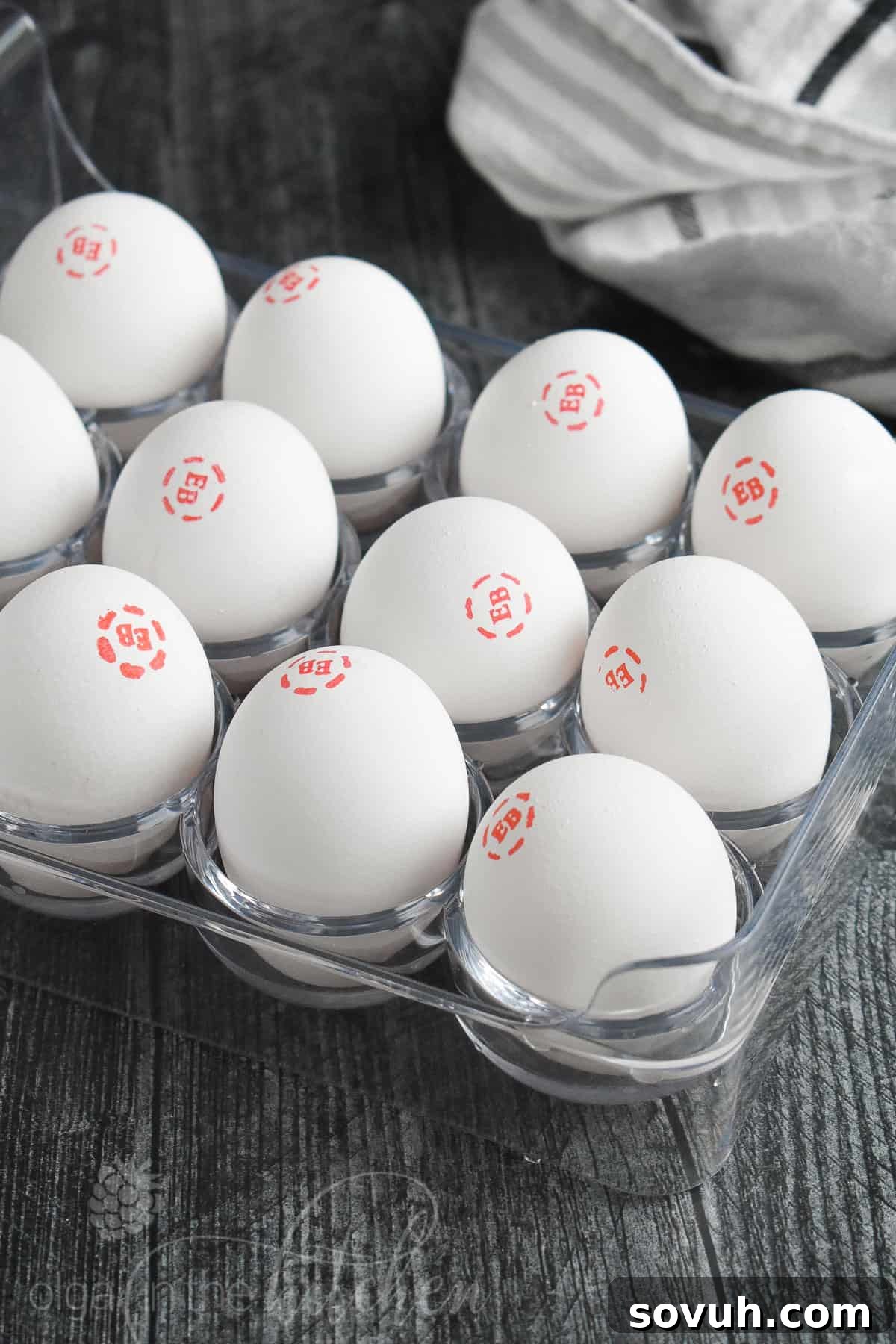
If a particular brand gives an unusual aroma when raw or cooked, choose a different carton for snacking. Store eggs in the refrigerator; using stackable containers can save space.
Tips for Perfect Hard‑Boiled Eggs
- Use the same pan each time if possible (stainless steel is ideal). A medium saucepan with a lid helps you control the boil and timing consistently.
- Keep the lid on while bringing the water to a boil. This traps steam and shortens heating time. If you prefer to leave the lid slightly ajar, expect to add 1–2 minutes to the cooking time once boiling begins.
- Do not overcrowd the pan. Eggs should sit in a single layer with about an inch of water above them to ensure even cooking and reduce the chance of cracked shells.
- Set a timer when the water first reaches a rolling boil—timing is the key to consistent yolks.
- Prepare an ice bath (a bowl of ice water) to stop the cooking immediately when the eggs are done. If you don’t have ice, drain the hot water and run cold water over the eggs for several minutes until they are cool.
How to Boil Eggs
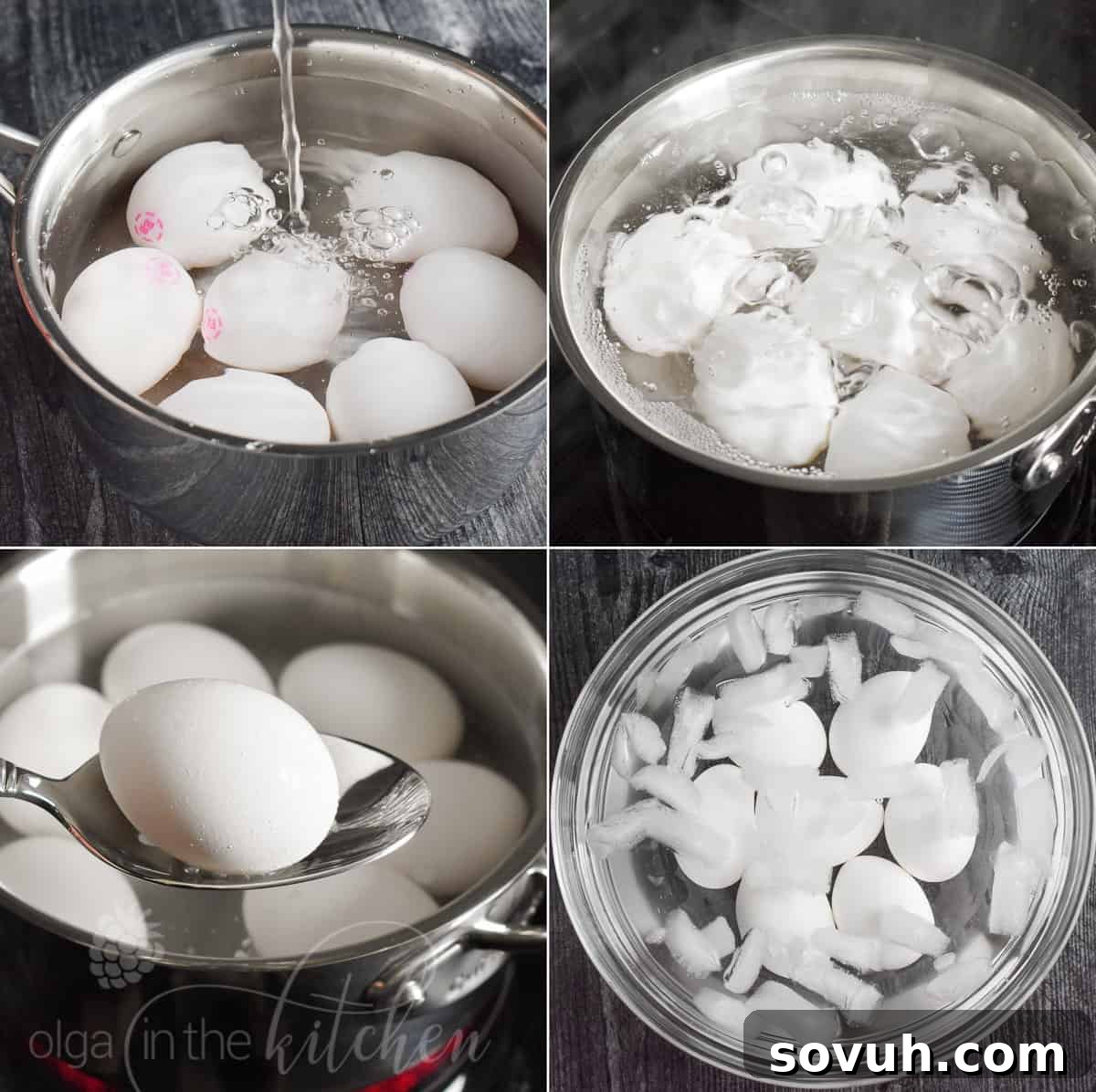
Follow these simple steps for consistently perfect hard‑boiled eggs:
- Place cold eggs in a medium saucepan in a single layer. Add cold water to cover the eggs by about 1 inch.
- Cover the pan and bring the water to a rolling boil over high heat.
- As soon as the water boils, set a timer for 7 minutes for fully set yolks. Reduce the heat slightly to maintain a gentle boil.
- While they cook, prepare a bowl of ice water. When the timer goes off, turn off the heat and transfer the eggs immediately to the ice bath to stop cooking. If you don’t have ice, drain and run cold water over the eggs until cooled.
- Leave eggs in the cold water until completely cooled, then refrigerate until ready to use.
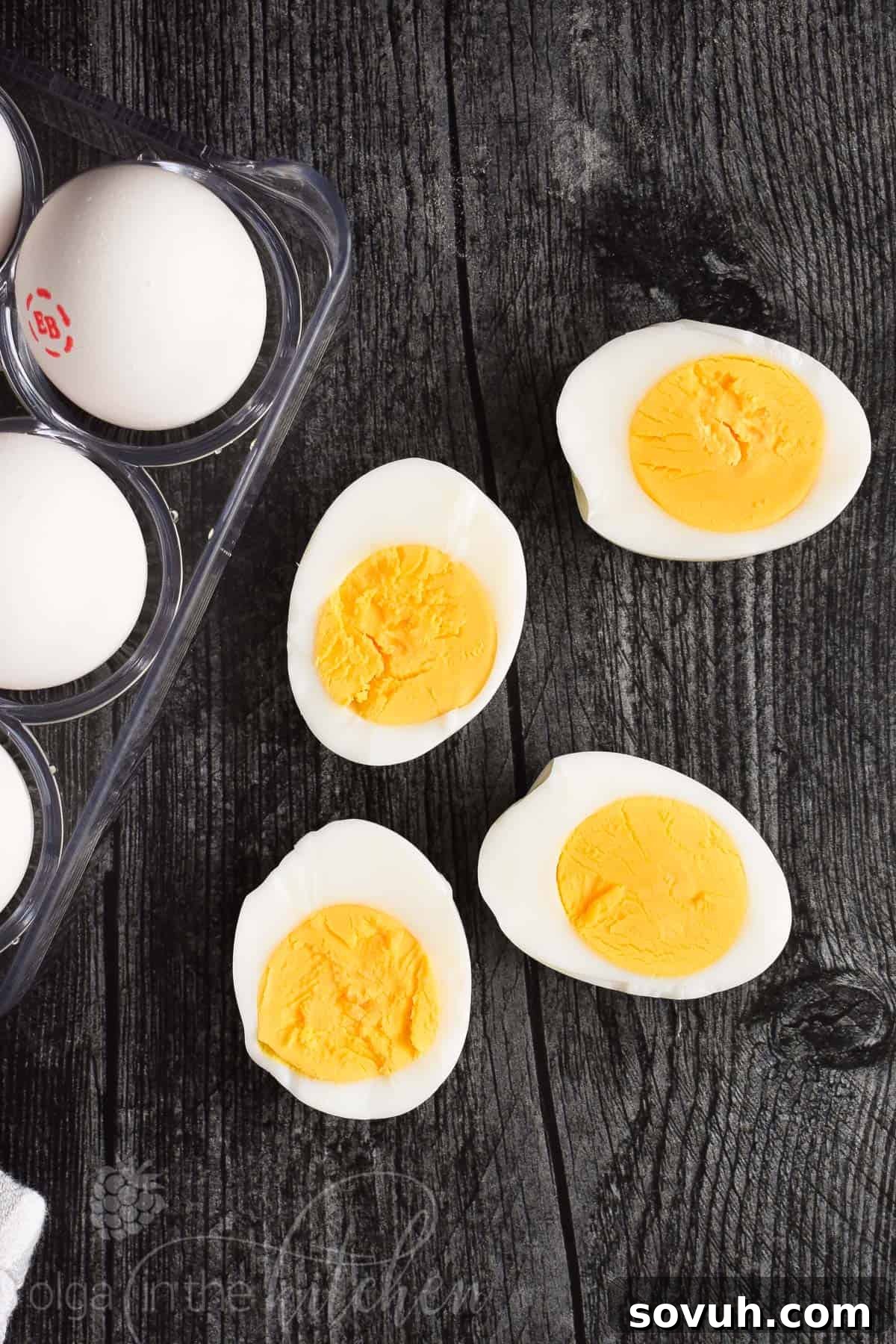
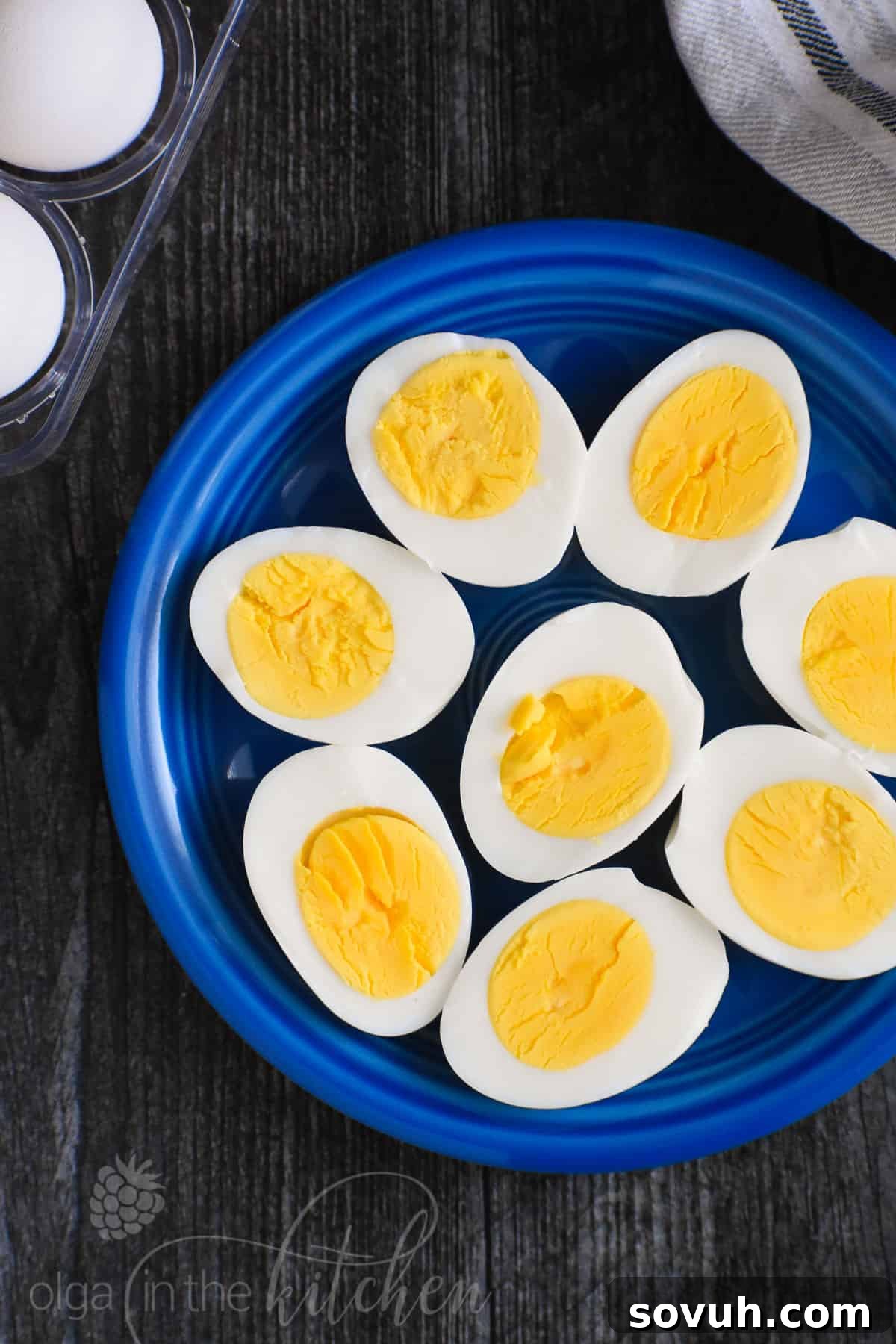
A perfectly cooked hard‑boiled egg has fully set whites and a bright yellow yolk. A green or gray ring around the yolk indicates the eggs were overcooked.
How to Peel Hard‑Boiled Eggs Easily
- Start at the thicker end—tap the egg there first and begin peeling from that end.
- Peel under cold running water when possible. The water helps slip the shell away from the thin membrane and the white.
Recipes and Uses for Hard‑Boiled Eggs
Hard‑boiled eggs are useful beyond breakfast. Here are favorite ways to use them:
- Cucumber Radish Salad — a crisp, fresh salad that pairs beautifully with sliced eggs.
- Olivye Salad (Ukrainian Potato Salad) — a classic holiday salad that relies on chopped hard‑boiled eggs.
- Cabbage and Egg Salad — simple, hearty, and full of flavor.
- Mimosa Salad (layered egg and cheese salad) — an elegant, festive presentation using grated eggs.
- Sorrel Soup (Shchavel Borscht) — perfect for summer; chopped boiled eggs make a nice garnish.
Choosing Eggs for Salads
When assembling salads, I look for eggs with bright, yellow yolks for an attractive contrast. Some brands consistently deliver vivid yolks; try different brands to find the color and flavor you prefer.
Perfect Hard‑Boiled Eggs
Prep Time: 8 minutes · Cook Time: 7 minutes · Total Time: 15 minutes
Ingredients
- 7 large eggs (you can cook up to 12 in one batch), cold
- Cold water to cover eggs by about 1 inch
Instructions
- Place cold eggs in a medium saucepan in a single layer. Add cold water to cover the eggs by about 1 inch.
- Cover and bring the water to a rolling boil over high heat.
- As soon as the water boils, set a timer for 7 minutes and reduce heat to maintain a gentle boil.
- Prepare a bowl of ice water. When the timer finishes, transfer the eggs to the ice bath to stop cooking immediately. If you lack ice, drain the hot water and run cold water over the eggs for 3–5 minutes until cooled.
- Leave eggs in the ice water until completely cool, then refrigerate. Peel when ready to use.
Notes
- Freshness: Older eggs are generally easier to peel. Buy ahead if you need easy‑peel eggs for a special occasion.
- Size: Large eggs are standard; adjust time slightly for medium or jumbo eggs.
- Pan and lid: A medium stainless steel pan with a lid is reliable. Keep the lid on to retain steam and speed the process.
- No additives needed: There’s no need to add salt, baking soda, or vinegar to the water. A rapid ice bath after cooking makes peeling straightforward.
- Peeling: Start at the thick end and peel under cold running water to help separate the shell from the white.
This tutorial was first published in June 2017 and updated with new photos and tips in January 2020.











