
How to Make Homemade Farmer’s Cheese (Tvorog)
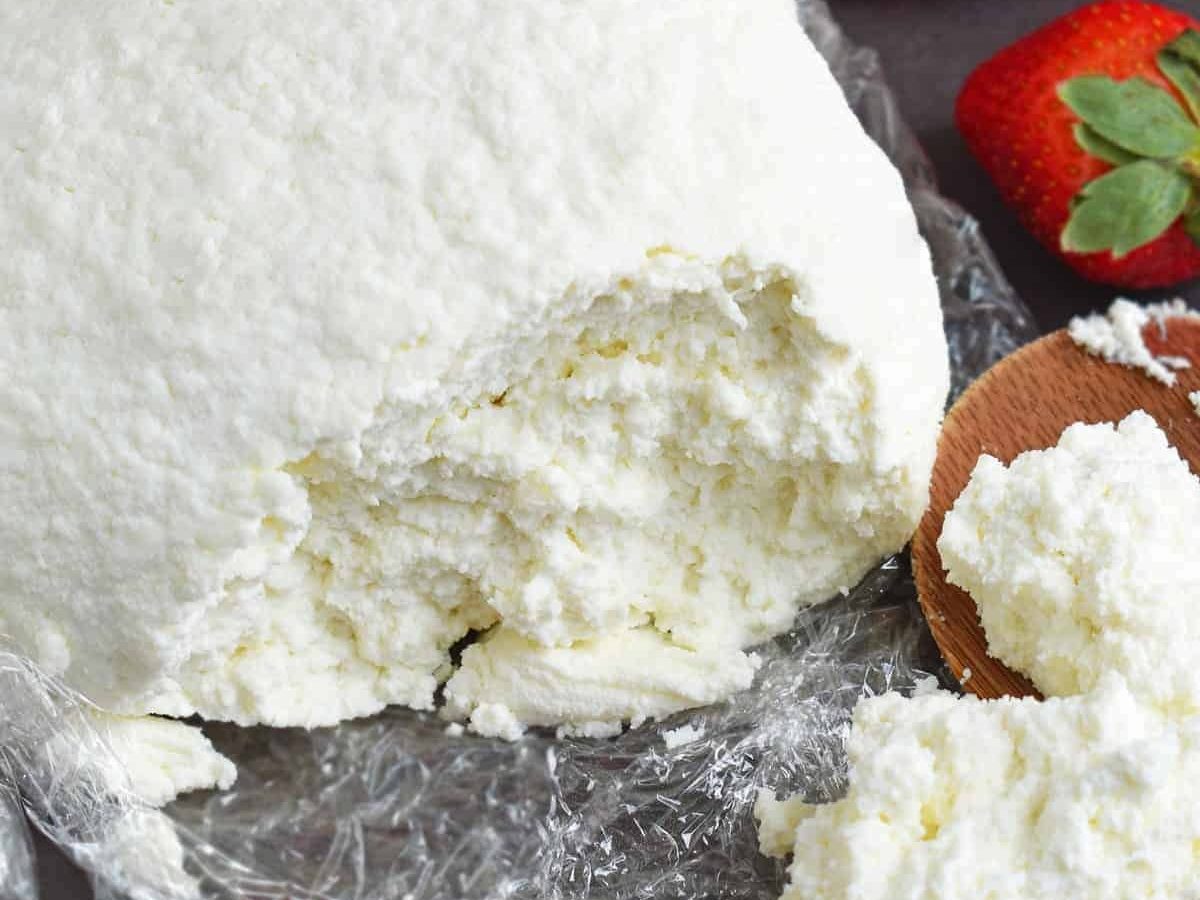
My mom’s method for Homemade Farmer’s Cheese — simple, fresh and consistently delicious. This two‑ingredient recipe takes less than an hour to prepare and is ready to enjoy after cooling and draining. Make a batch and keep it in the fridge for breakfasts, snacks and baking.
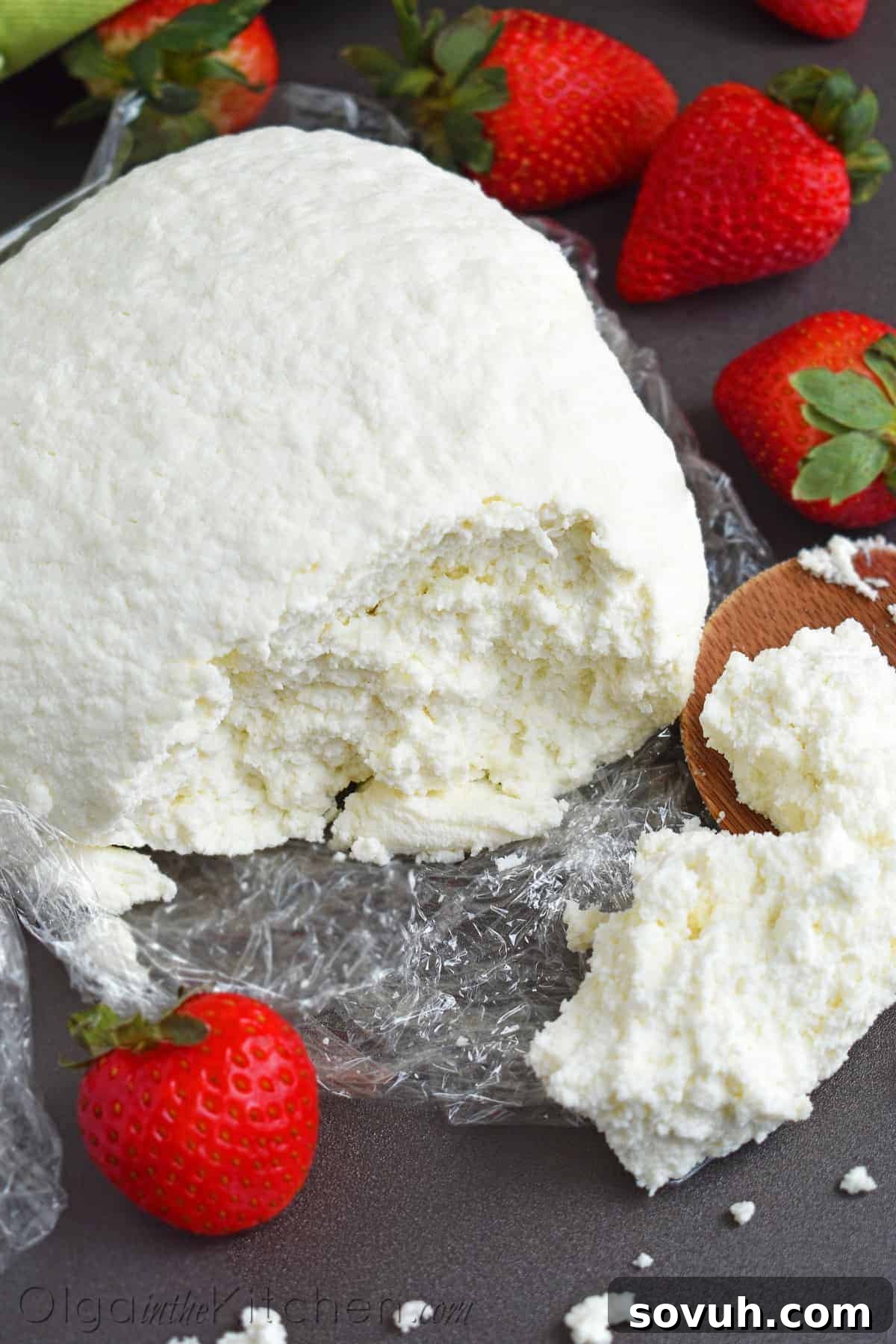
Homemade Farmer’s Cheese (also known as tvorog) is incredibly easy to make and needs only milk and distilled white vinegar. The result is a mild, slightly tangy fresh cheese that works well spread on bread, folded into pastries, used as a filling, or enjoyed on its own with a cup of tea or coffee. Because it’s so quick to prepare, I like to have a batch ready in the fridge at all times.
My mom’s method uses vinegar to separate curds from whey and has always given the best flavor and texture for our baking and everyday use. Making farmer’s cheese at home is economical: with good quality milk you can produce several cups for only a few dollars, especially when you catch milk on sale. Fresh homemade cheese also lets you control the ingredients and avoid any unwanted aromas or additives you might find in store-bought versions.
Best Milk for Homemade Farmer’s Cheese
Choose a good quality milk for the best texture and flavor. Whole milk creates the richest, creamiest curds and is my first choice. 2% milk works well too and produces a slightly lighter cheese. Avoid 1% or low‑fat milks — the curds tend to be dry and grainy and don’t hold together well for baking. Also avoid using half & half or heavy cream mixed into the milk; very high fat can make draining difficult and leave a pudding-like consistency that clogs the cloth.
Can You Freeze Homemade Farmer’s Cheese?
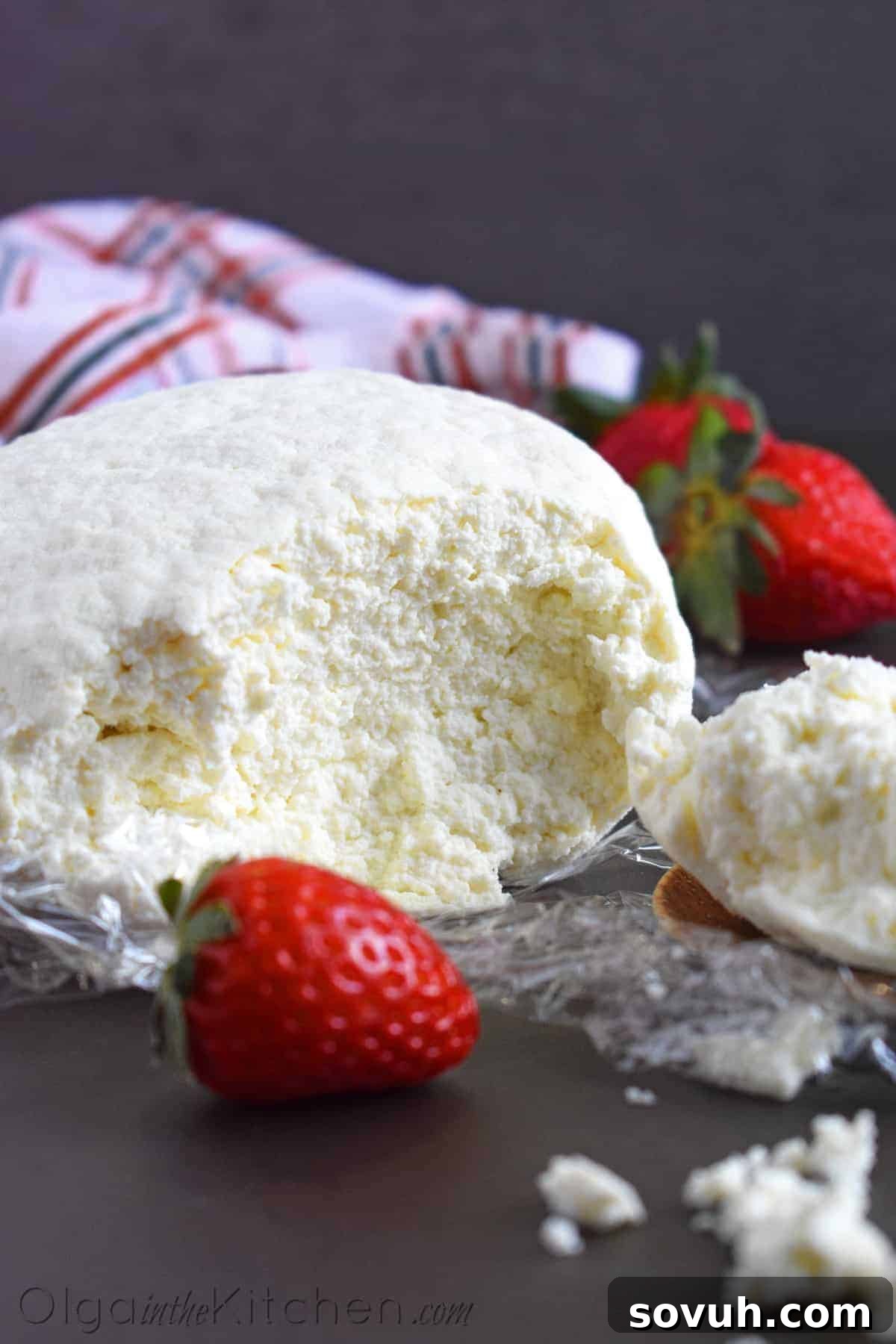
Yes. Farmer’s cheese freezes well for many cooked or baked uses. To freeze, cool the cheese completely, wrap it tightly in plastic wrap, and place it in a freezer bag. Keep up to three months. Note: thawed cheese can be a bit crumbly compared to fresh, so it’s best used in recipes such as cheese pancakes (sirniki), baked fillings or other dishes where texture is forgiving. Thaw overnight in the refrigerator or at room temperature before using.
Important Tips for Making Farmer’s Cheese
- Use distilled white vinegar for consistent curdling and a clean flavor. A full‑strength distilled vinegar gives reliable results when added gradually to hot milk.
- Heat milk slowly in a stainless steel pot over medium‑low heat. Stainless steel conducts heat evenly and helps prevent scorching on the bottom of the pan.
- Line your sieve or colander with a flour sack towel rather than a fine disposable cheesecloth. Flour sack towels are sturdy, reusable, easy to wash, and less likely to trap small curds permanently.
- Save the whey if you want—this pale, tangy liquid can be used for baking bread, in soups or as a garden fertilizer. If you plan to keep the whey, drain the curds into a bowl so the liquid can be collected separately.
Farmer’s Cheese Ingredients
- 1 gallon whole milk (or 2% milk)
- 1/2 cup distilled white vinegar
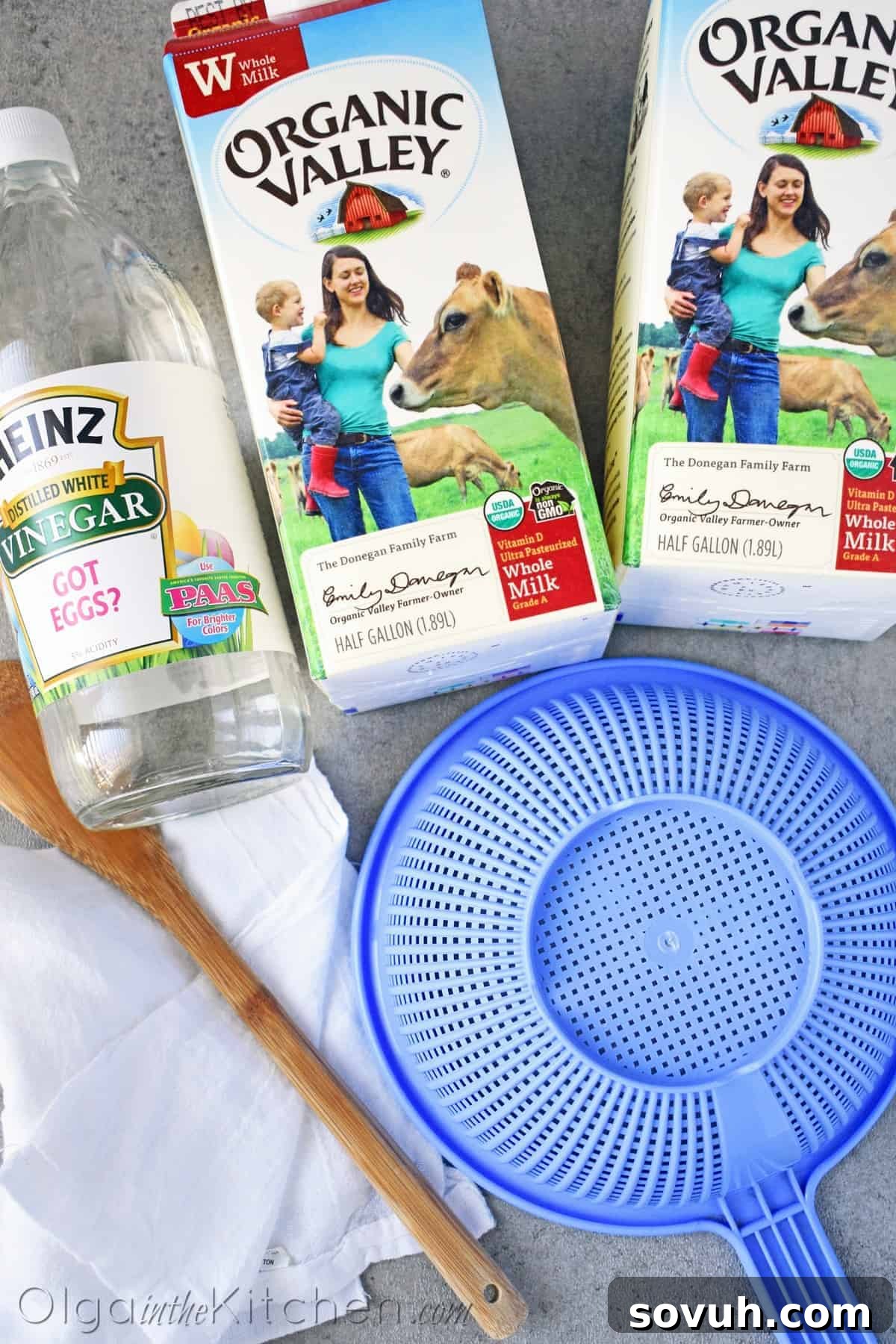
How to Make Farmer’s Cheese
- Pour the milk into a heavy stainless steel pot. Heat it over medium‑low, stirring occasionally, until you see many small bubbles forming around the edges and surface but before the milk reaches a rolling boil — about 30–40 minutes and roughly 180°F (82°C). Stir periodically to prevent scorching.
- Remove the pot briefly from the heat or lower the heat, then slowly add the distilled white vinegar while stirring gently. Wait 30–60 seconds and stir again. The milk should separate into curds (white clumps) and a pale yellowy or lime‑tinted whey liquid. If separation isn’t complete, add a little more vinegar and stir until curds form.
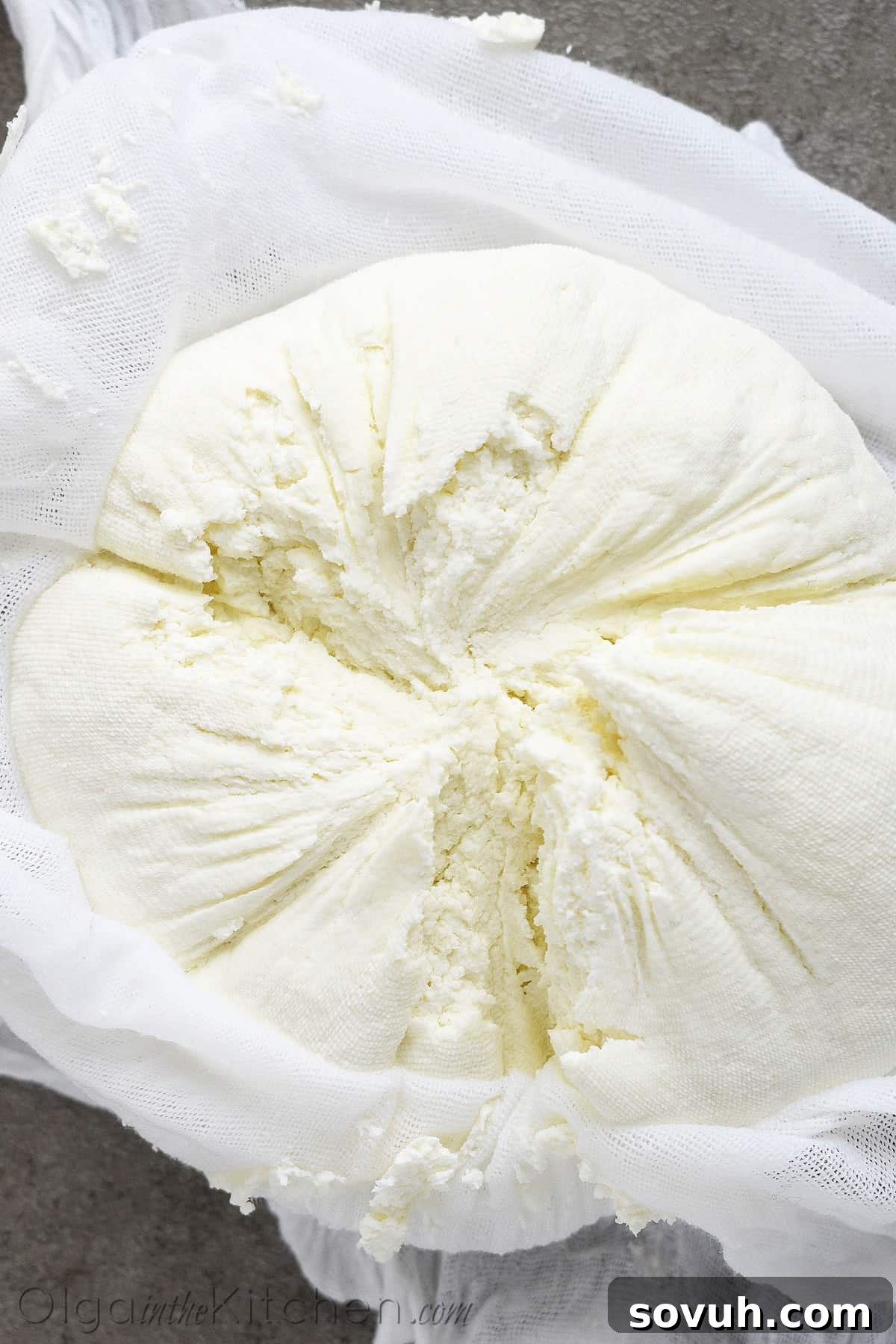
- Line a colander or sieve with a clean flour sack towel and place it over a large bowl or in the sink. Carefully pour or ladle the curds and whey into the lined colander so the curds are caught in the cloth. Gather the towel and gently squeeze to expel as much whey as you prefer — stop when the liquid running out turns from yellow to clear/white.
- Allow the curds to cool to room temperature, then transfer the farmer’s cheese to an airtight container and refrigerate. Use within about a week for best freshness.
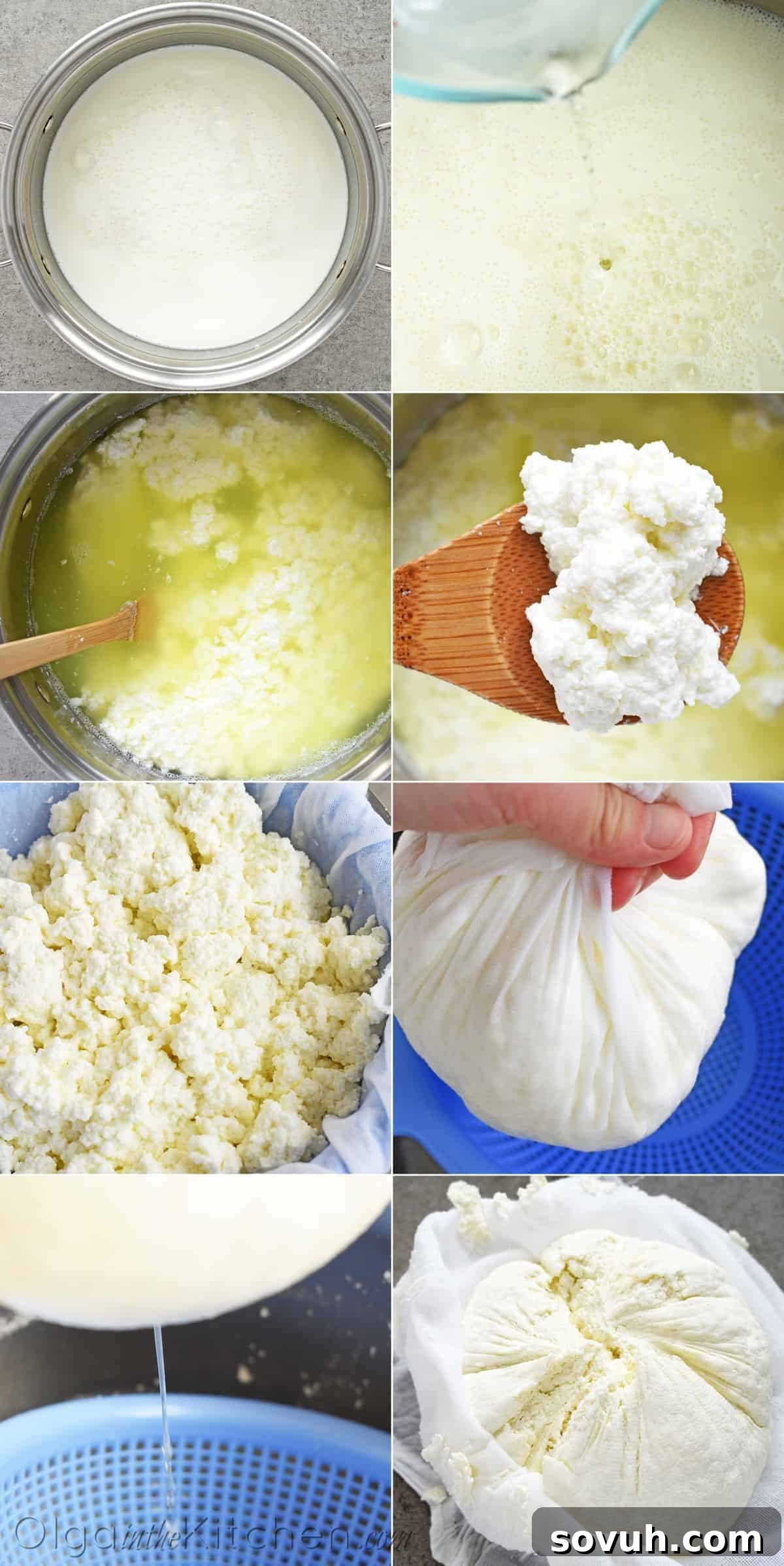
Ways to Enjoy Farmer’s Cheese
Fresh farmer’s cheese is versatile. Here are popular ways to use it:
- Cheese pancakes (sirniki) — lightly sweetened and pan‑fried for breakfast.
- Crepes with cheese filling — thin crêpes filled with a creamy cheese mixture.
- Farmer’s cheese blueberry crumb cake — a baked dessert that pairs flaky pastry with a soft cheese filling.
- Sweet rolls or pirozhki with cheese — tender yeast dough filled with a slightly sweet cheese center.
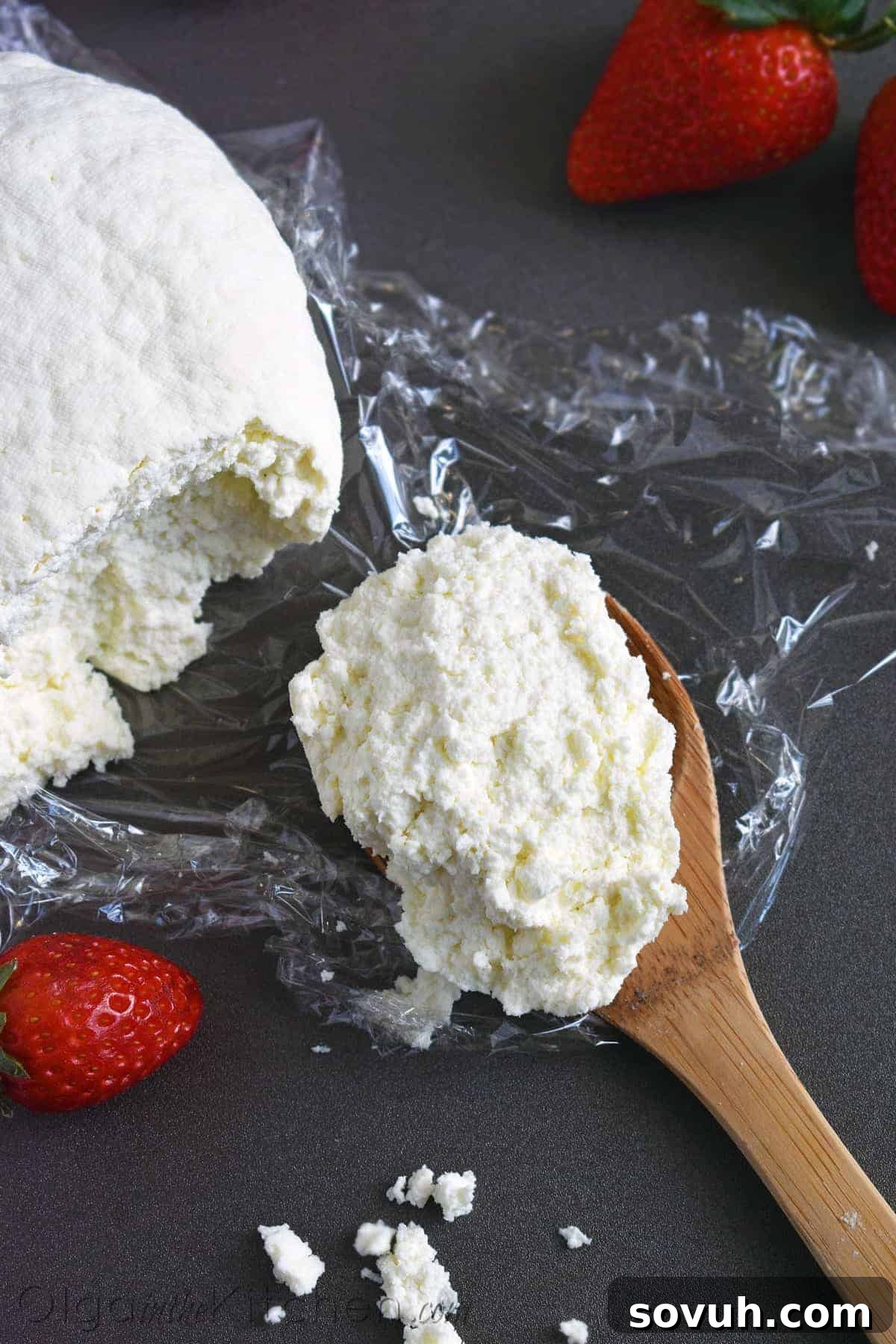
Notes and Storage
- Refrigerate farmer’s cheese in a sealed container for up to one week.
- To freeze, wrap tightly and store up to three months; thaw before using and expect a slightly crumblier texture.
- For best results, warm the milk slowly and add vinegar gradually until curds form. Overheating or rapid boiling can affect texture and flavor.











