
Fruit Pairings for Oolong Tea: Flavor Match Guide
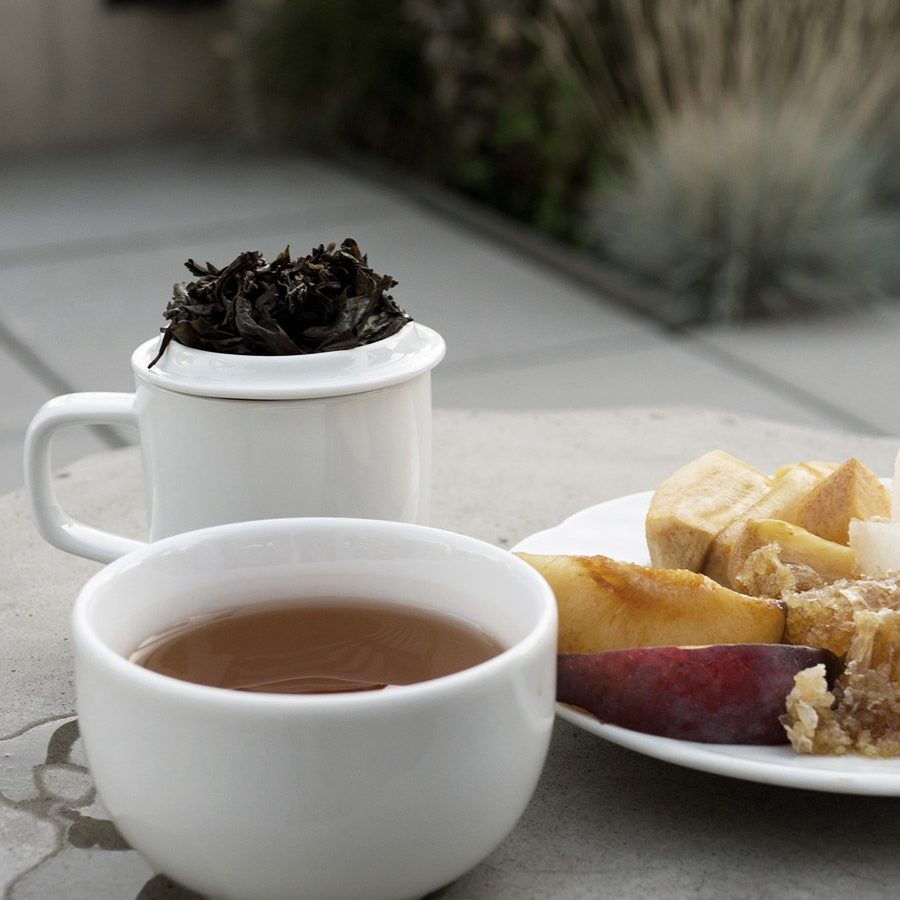
I recently sat down with my tea friends, Sara and Georgia, to test how different oolong teas pair with fresh fruit. We wanted a simple, focused tasting to discover which combinations highlight the teas’ best qualities and which fruits complement the oolongs without overwhelming them.
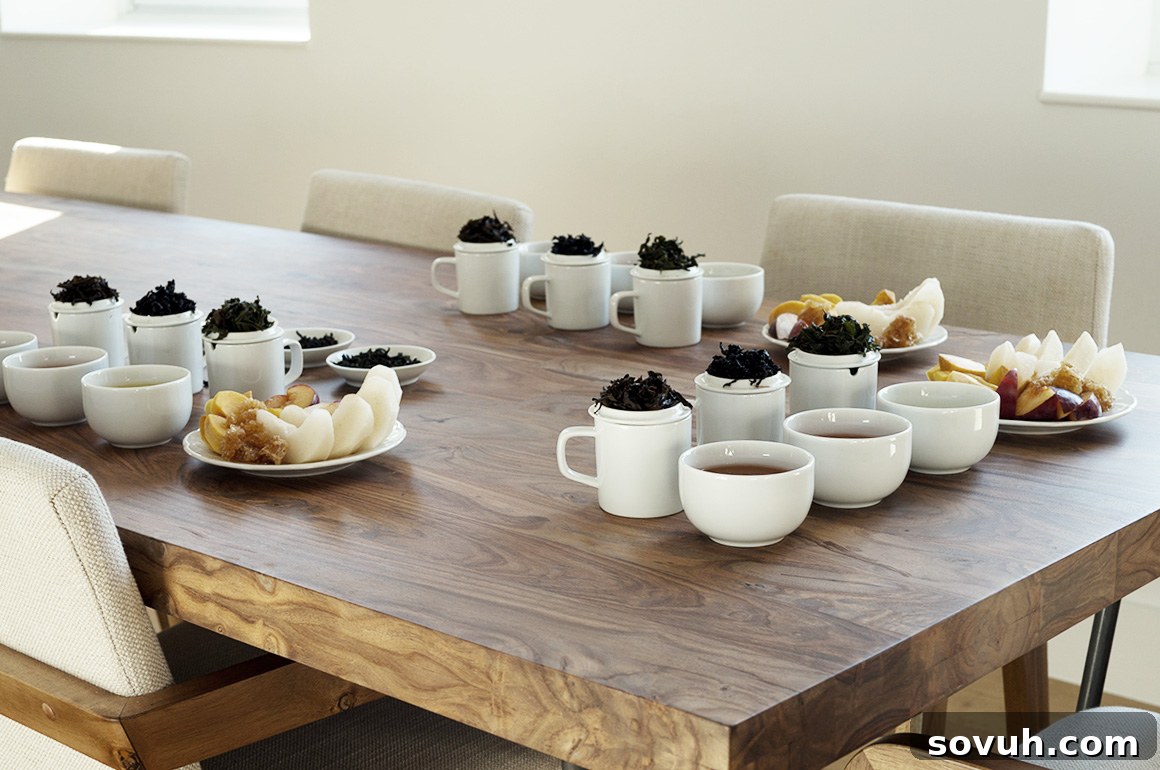
Oolong Tea Pairing
Oolong occupies a pleasant middle ground between green and black teas in processing and flavor. It’s often described as the Goldilocks of tea—neither too light nor too strong—making it especially versatile for food pairings. For this tasting we cupped three classic oolongs: Bao Zhong, Tie Guan Yin (Iron Goddess), and Xiao Hong Pao (Little Red Robe).
We arranged the tasting from the lightest to the darkest brew so we could clearly discern how each tea evolved and how different fruits interacted with each style.
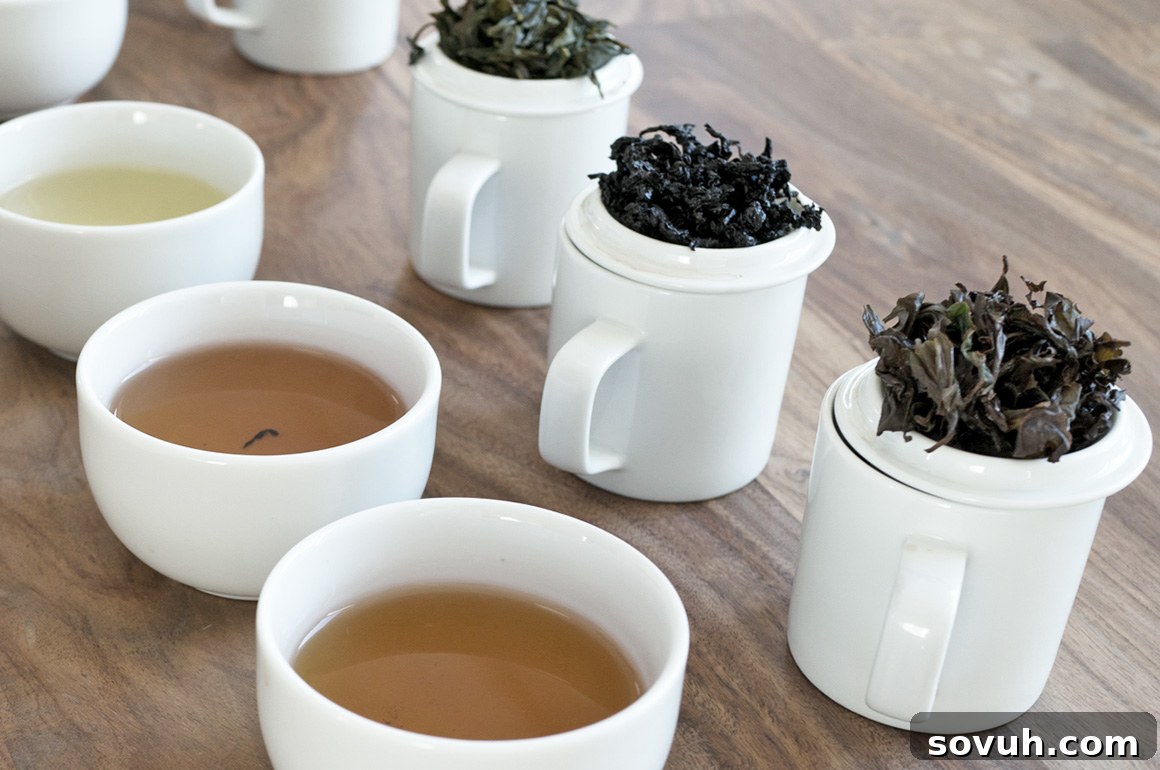
Visually, the Bao Zhong was the palest liquid of the three, reflecting its gentle character. Bao Zhong typically shows green-tea-like vegetal and floral notes with a medium body and little bitterness—qualities that guided our pairings for it.
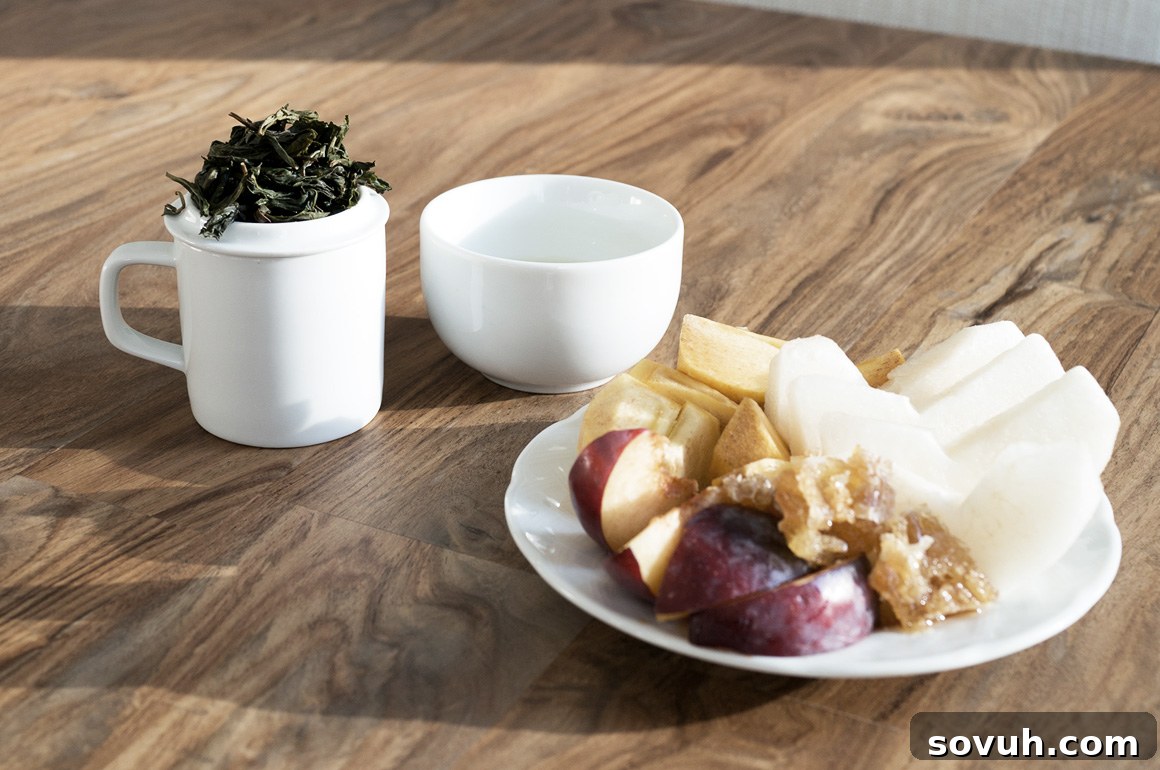
On our fruit plate we offered Asian pear, ripe plum, and sweet persimmon, along with a small dish of comb honey to taste alongside. These fruit choices covered a range of textures and sweetness levels so we could see how the teas balanced acidity, juiciness, and sugar.
Bao Zhong paired best with the Asian pear. The pear’s juicy, mild flavor didn’t compete with the tea’s delicate vegetal and floral notes; instead, it complemented them. The tea’s medium body and subtle sweetness allowed the pear to shine without masking the tea’s more nuanced aromas.
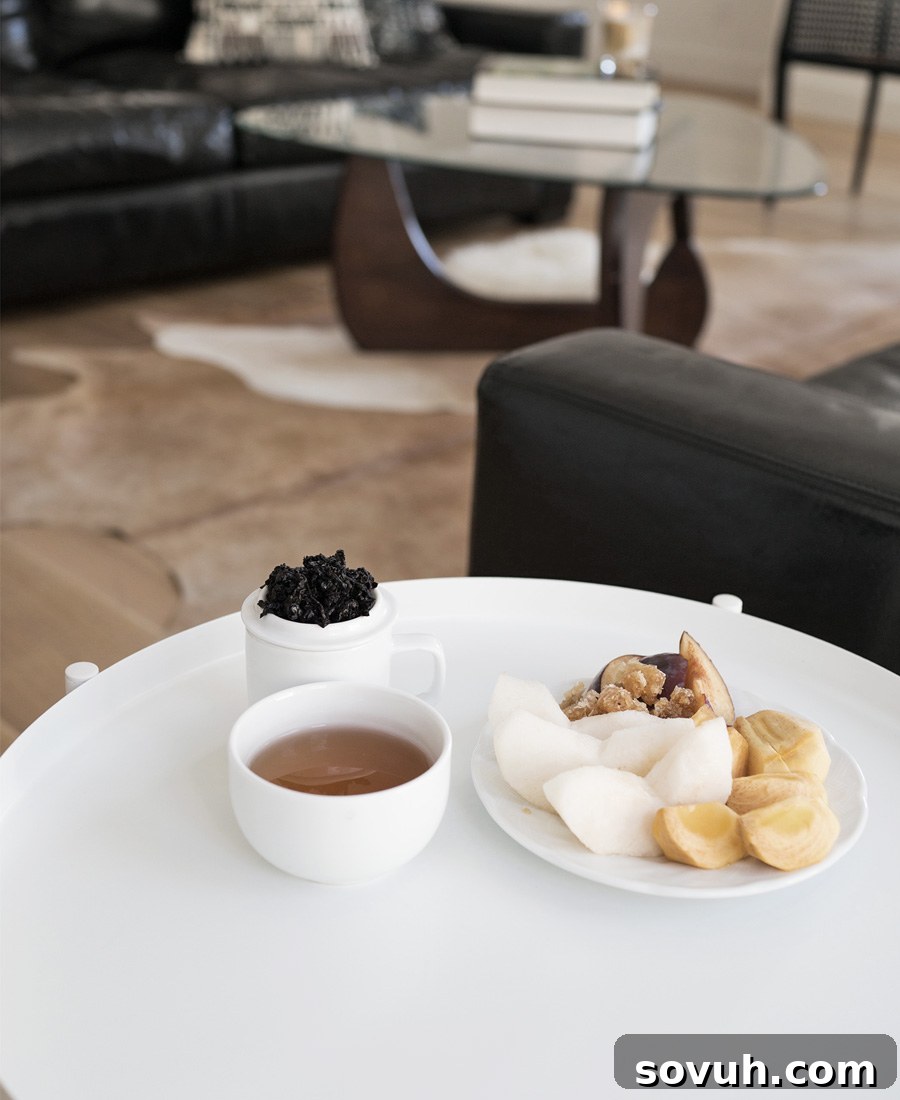
Next we steeped Tie Guan Yin, a roasted-style oolong. Its roasted, barley-like flavors were richer and more pronounced than the Bao Zhong, which changed which fruits worked best. The pear’s subtlety was overwhelmed by the Tie Guan Yin unless we added a touch of honey. With comb honey, the pear regained presence and created a pleasing contrast with the tea’s toasty notes. Persimmon, with its natural sweetness, paired especially well with Tie Guan Yin—honey intensified that synergy and brought out the tea’s deeper, sweeter finish.
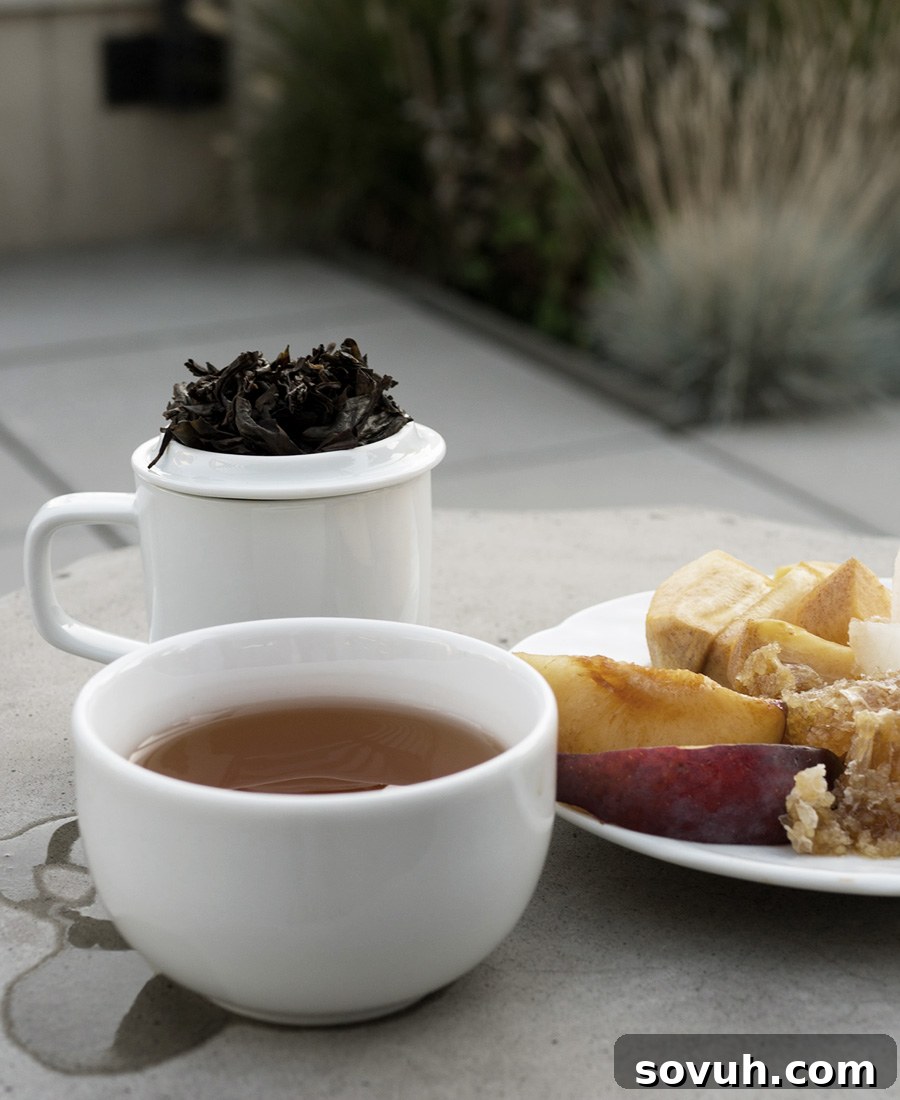
The final tea, Xiao Hong Pao (Little Red Robe), was the fullest and most intense of the three. It shared the roasted character of the Tie Guan Yin but with more body and a lingering sweet finish. That richness matched beautifully with the plums, whose acidity and juiciness balanced the tea’s roast and enhanced its fruity undertones. Persimmon was also a solid companion for Xiao Hong Pao, but the plum created a particularly harmonious contrast that highlighted the tea’s sweetest notes.
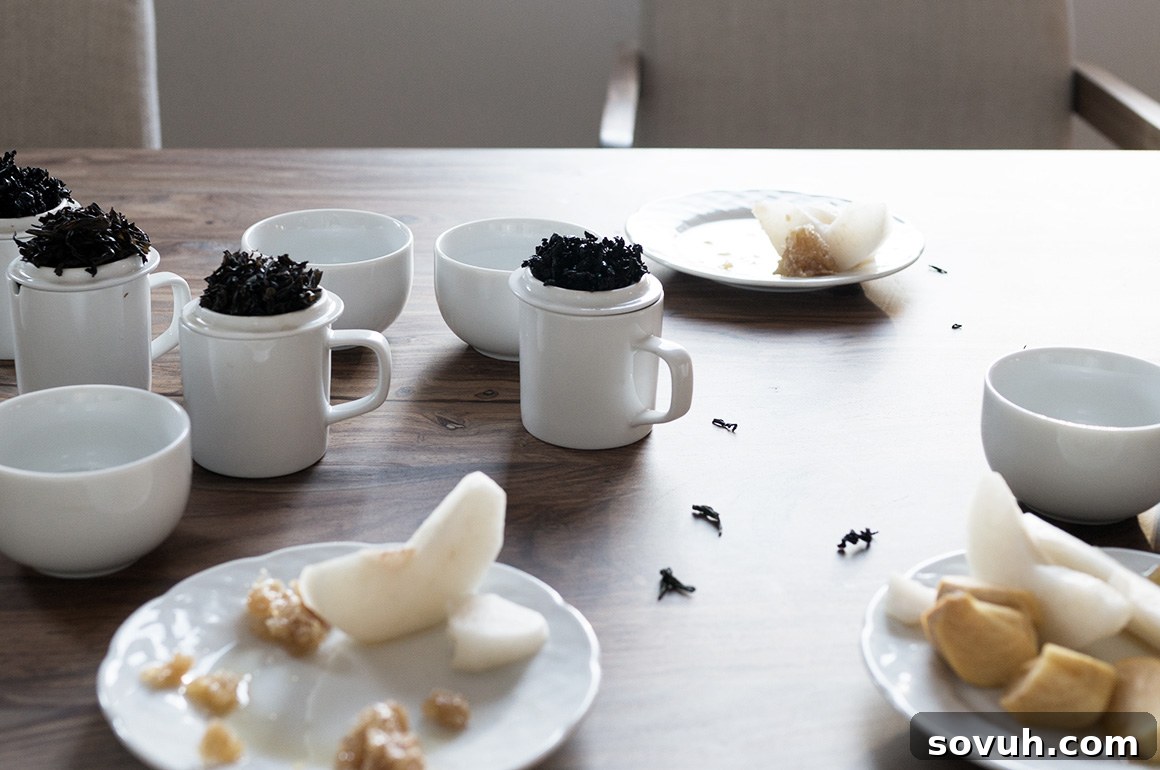
One clear takeaway from our tasting was how much a small addition like comb honey can change a pairing. A bit of honey tended to amplify the oolong’s innate sweetness and brought forward flavor elements that made the tea and fruit play off each other more effectively. In short, honey can be a useful tool when matching oolong teas with foods.
If you want to try this at home: taste from lighter to darker oolongs, offer fruits with varying sweetness and acidity, and keep a mild sweetener like comb honey on hand to bridge flavors when needed. Oolong’s flexibility makes it an excellent choice for experimenting with pairings—whether you prefer delicate, floral Bao Zhong, roasted Tie Guan Yin, or the smoky, full-bodied Xiao Hong Pao.
Related
- Pairing Green Tea with Sweets
- Pairing White Tea with Cheese
- Want to Get Into Oolong Tea? Start Here.
- Peach Cold Brew Oolong Tea
- Oolong Bubble Tea











