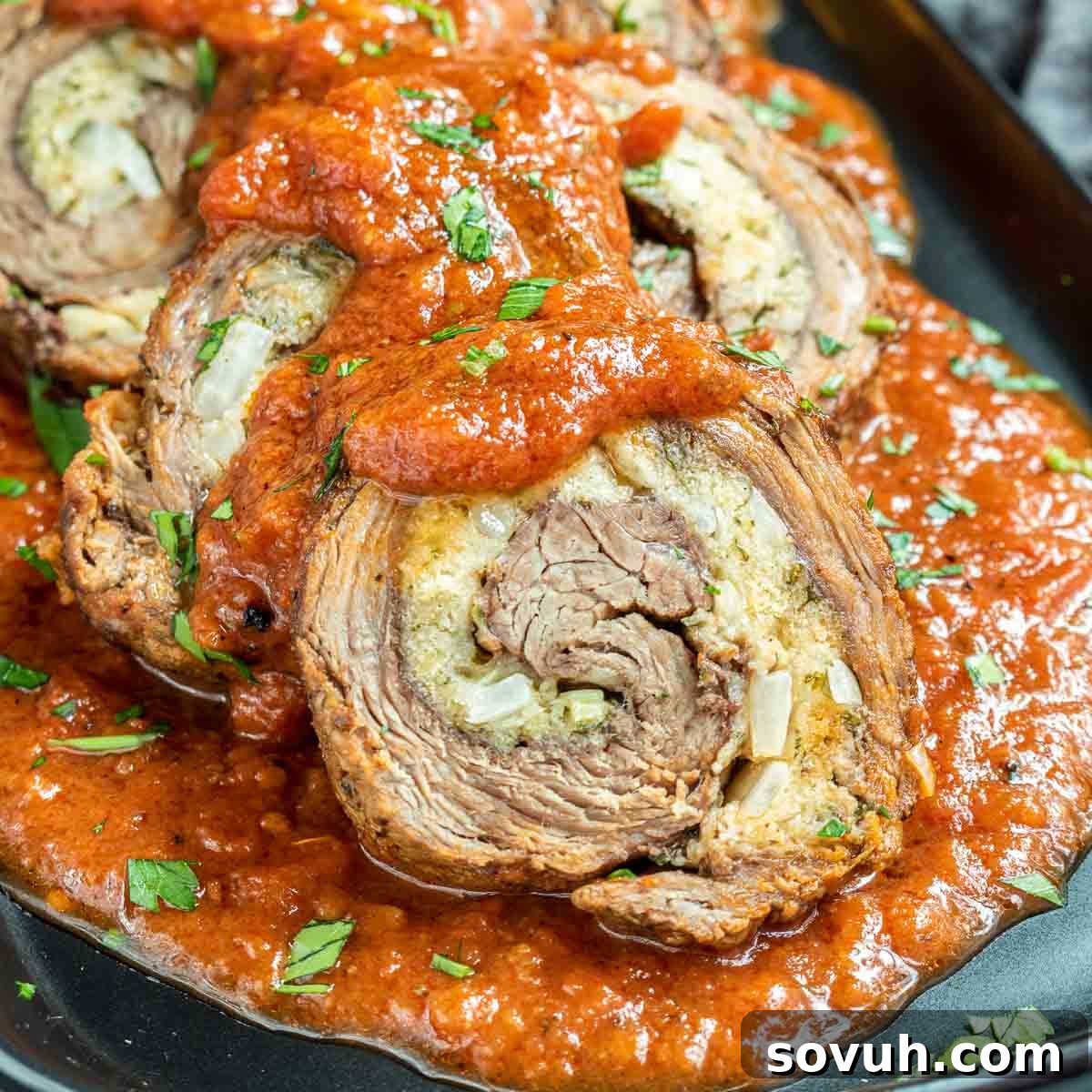
Experience the Rich Flavors of Italy with Our Classic Beef Braciole Recipe
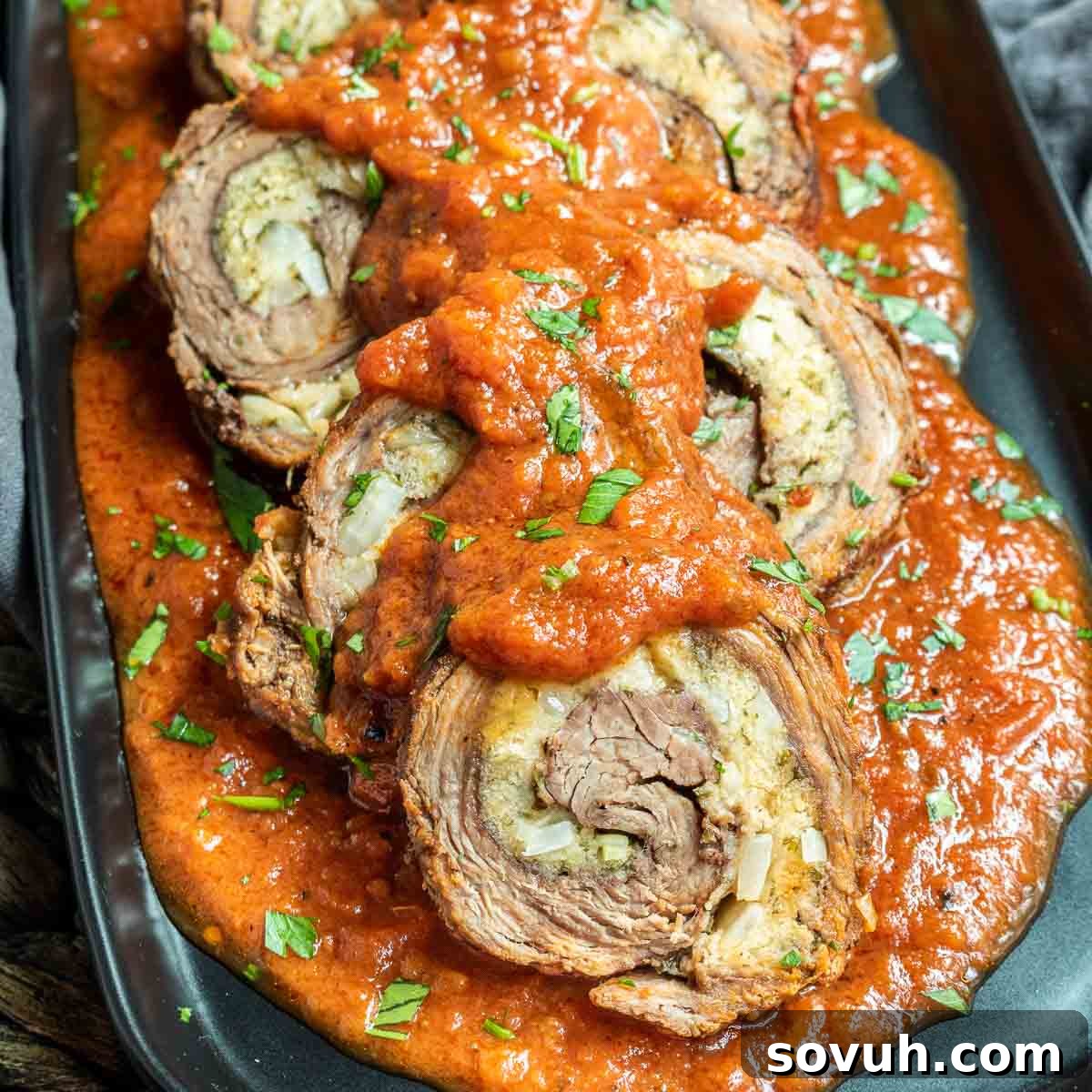
Beef Braciole is a beloved Italian classic, a hearty dish that brings the soul-satisfying warmth of Italian home cooking right to your table. Imagine tender flank steak, rolled and generously filled with a savory blend of cheeses, breadcrumbs, and aromatic herbs, then slowly simmered to perfection in a rich, flavorful marinara sauce. This dish isn’t just a meal; it’s an experience, a culinary journey that promises melt-in-your-mouth tenderness and deep, complex flavors.
There’s an undeniable comfort that comes with rustic Italian cuisine, and this beef braciole recipe embodies it perfectly. As it slowly cooks, the tantalizing aromas will fill your home, signaling that something truly special is in the making. It’s the kind of dish that warms you from the inside out, making it an ideal choice for a cozy family dinner or a festive holiday gathering.
Much like our favorite braised dishes such as Slow Cooker Chicken Cacciatore, Red Wine Braised Short Ribs, or Instant Pot Braised Short Ribs, the magic of braciole lies in its slow cooking process. The beef luxuriates in a rich, delicious sauce, absorbing every nuance of flavor until it reaches an incredible tenderness that simply melts away with each bite. This method ensures maximum flavor penetration and a truly unforgettable texture, transforming a simple cut of meat into a gourmet delight.
This recipe offers a wonderful blend of tradition and comfort, perfect for those cherished Sunday dinners or as an elegant alternative to traditional holiday roasts like honey-glazed ham or turkey breast. Give your festive table an Italian twist with this impressive yet approachable dish that’s sure to become a new family favorite.
Note: This post may contain affiliate links. If you click on a link and make a purchase, we may receive a small commission, at no extra cost to you. Thank you for supporting our blog!
What Exactly is Braciole?
Braciole, pronounced “brah-jee-OH-lay,” is a traditional Italian dish, particularly popular in Southern Italy, especially Sicily. At its heart, braciole consists of thinly sliced beef (or sometimes pork or veal) that is pounded thin, filled with a savory mixture, rolled up, browned, and then slow-cooked in a rich tomato sauce. The result is incredibly tender meat infused with the flavors of its stuffing and the simmering sauce. It’s a testament to the Italian culinary philosophy of transforming humble ingredients into extraordinary meals through patience and passion.
You might also encounter the term “involtini,” which translates to “small bundles of food.” While “involtini” can refer to any rolled and stuffed food item, braciole specifically refers to these beef rolls, often prepared as individual, smaller portions. Our balsamic steak roll-ups are a similar concept, demonstrating the versatility of this cooking method.
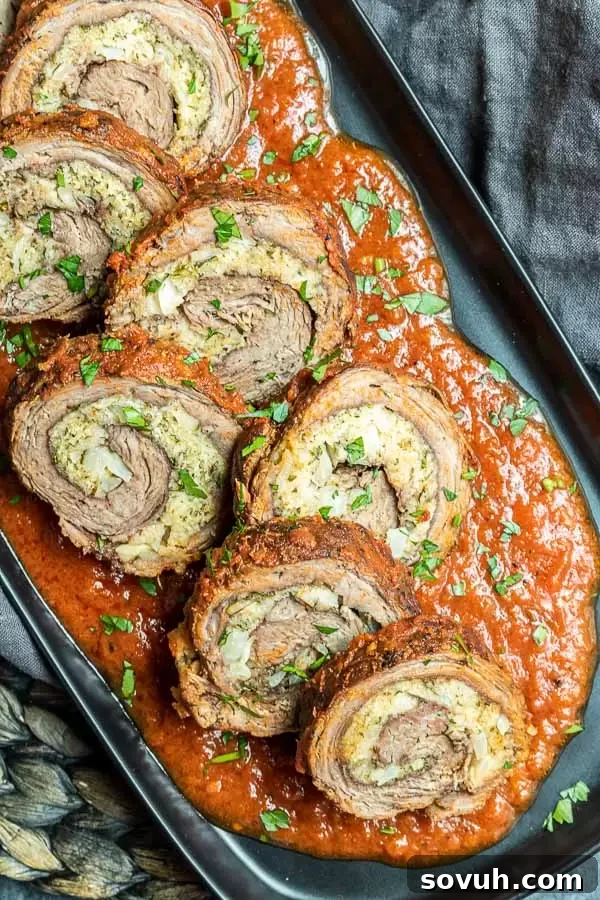
This recipe focuses on creating a larger roulade – a single, impressive rolled and stuffed piece of meat – which is then sliced for serving. This method not only simplifies the preparation but also creates beautiful, concentric spirals of meat and stuffing that are visually stunning and perfect for presentation. Whether you opt for individual involtini or a grand braciole roulade, the core principles of flavorful stuffing and slow braising remain the same, guaranteeing a mouthwatering experience every time.
Essential Ingredients for Perfect Beef Braciole
Crafting exceptional beef braciole begins with selecting the right ingredients. Here’s a detailed look at what you’ll need to create this savory masterpiece:
- Aromatics – Fresh onion (white or yellow) and garlic are the foundation of flavor for our stuffing and sauce. As they cook, they release an intoxicating aroma that builds anticipation for the delicious meal to come. Their gentle caramelization adds a subtle sweetness and depth.
- High-Quality Olive Oil – A good extra virgin olive oil is crucial for both sautéing the aromatics and searing the beef. Its rich, fruity notes complement the other ingredients beautifully and help achieve that perfect golden crust on the meat.
- Panko Breadcrumbs – We recommend Panko breadcrumbs for their superior texture and ability to absorb moisture without becoming soggy. They contribute to a lighter, crispier stuffing. If Panko is unavailable, regular breadcrumbs can be used, though the texture will be slightly denser.
Keto Adaptation: For a low-carb version, simply omit the breadcrumbs and increase the amount of grated cheese in the stuffing for an equally delicious and satisfying result. - Premium Grated Cheeses – The quality of your cheese significantly impacts the flavor. Seek out authentic Pecorino Romano and Parmesan cheese if possible. These Italian hard cheeses offer a sharp, salty, and nutty flavor profile that is indispensable for a traditional braciole. If authentic varieties are hard to find, opt for the best quality Romano or Parmesan available to you.
- Fresh Italian Parsley – A generous amount of fresh Italian parsley not only adds a vibrant green color but also a burst of fresh, herbaceous flavor that brightens the entire dish and balances the richness of the meat and cheese.
- Kosher Salt and Freshly Ground Black Pepper – These fundamental seasonings are essential for enhancing all the other flavors. Proper seasoning ensures that every component of the dish tastes its best.
- Flank Steak – Flank steak is our cut of choice for its robust flavor and fibrous structure, which becomes incredibly tender when slow-braised. Its large, flat shape is ideal for creating a single, impressive rolled braciole. For individual portions (involtini), you can request your butcher to cut sirloin or top round into very thin slices, perfect for smaller rolls.
- Dry White Wine – A dry white wine, such as Pinot Grigio or Sauvignon Blanc, is used to deglaze the pan. This step is vital for lifting all the flavorful browned bits from the bottom of the pan, adding significant depth and complexity to the sauce. Choose a wine you would genuinely enjoy drinking.
- Quality Marinara Sauce – The marinara sauce is the heart of this dish. While homemade marinara is always excellent, a high-quality store-bought sauce can be a fantastic shortcut. Look for brands with minimal added sugar and a rich, authentic tomato flavor. Your preferred brand will work wonderfully here.
Exploring Braciole Variations: Eggs, Raisins, or Pine Nuts
Braciole is a wonderful example of Italian regional cooking, where family recipes and local traditions lead to countless delicious variations. While our recipe features a classic savory stuffing, many families incorporate additional ingredients to create their unique twist. You’ll often find braciole stuffed with hard-boiled eggs, sweet raisins, crunchy pine nuts, or even a combination of these, alongside the traditional breadcrumbs, cheese, and herbs.
The beauty of this dish lies in its adaptability. Feel free to experiment with different additions to your steak roll to discover your personal favorite flavor profile. If you enjoy a touch of sweetness and texture, consider adding a handful of golden raisins. For a nutty crunch, pine nuts are an excellent choice. Some even add a thin slice of prosciutto or provolone cheese inside for extra richness. Don’t be afraid to get creative and make this classic recipe your own!
Step-by-Step Instructions for Making Flavorful Beef Braciole
While making beef braciole involves several steps, don’t be intimidated! Each stage is straightforward, and the process is incredibly rewarding. Follow these clear instructions for a truly delicious result:
1. Sauté the Aromatics. Begin by heating 2 tablespoons of olive oil in a small skillet over medium-high heat. Once the oil is shimmering, add the finely diced onions and cook for about 5 minutes until they start to soften. Then, add the minced garlic and continue cooking for another 2 minutes, or until the onions are tender and lightly caramelized, releasing their sweet aroma.
2. Prepare the Savory Stuffing. In a medium-sized bowl, combine the cooled sautéed onion and garlic with the Panko breadcrumbs, grated Pecorino Romano cheese, grated Parmesan cheese, chopped fresh Italian parsley, kosher salt, and pepper. Allowing the onions to cool slightly before mixing helps prevent the cheeses from melting too quickly and clumping. Add an additional 2 tablespoons of olive oil and toss all the ingredients together until they are well combined and the mixture is crumbly yet moist.
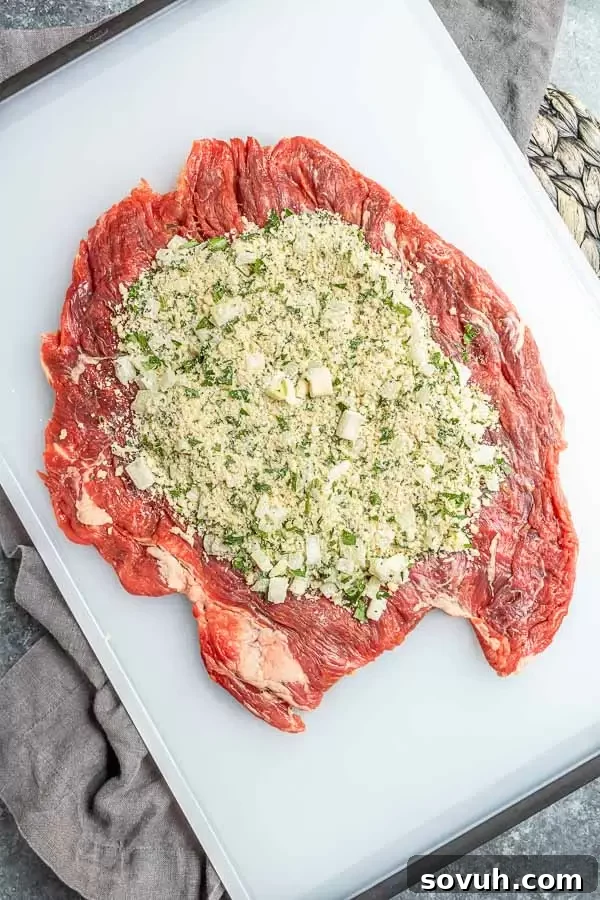
3. Tenderize and Prep the Flank Steak. Lay the flank steak on a clean, prepared surface, such as a large cutting board or a counter area covered with plastic wrap for easy cleanup and to prevent cross-contamination. Using a meat mallet, carefully pound the steak to an even 1/2-inch thickness throughout. This tenderizes the meat and creates a uniform surface for rolling. Evenly spread the breadcrumb mixture over the entire surface of the steak, making sure to leave about a 1-inch border bare around all the edges. This margin helps keep the filling contained when rolling.
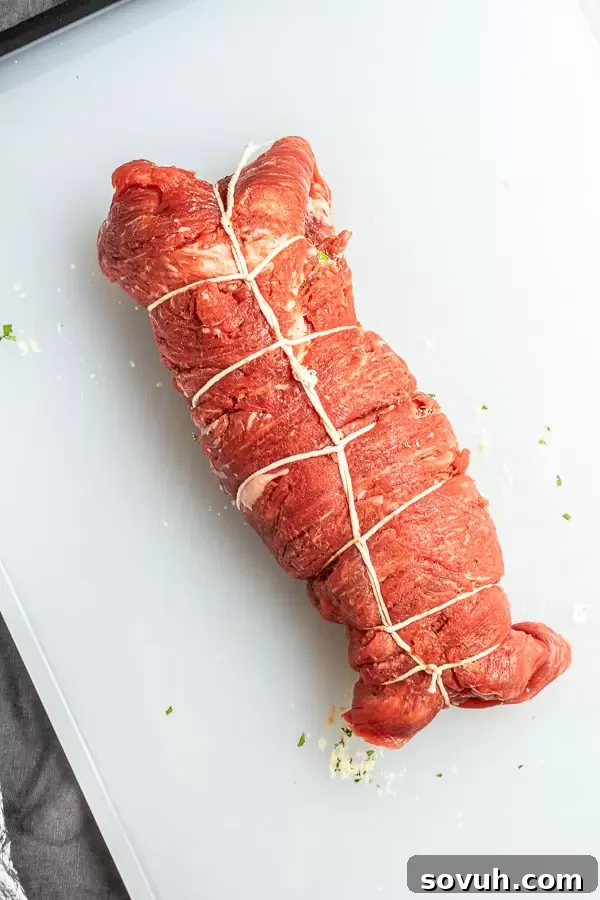
4. Secure the Steak Roll. Starting from one of the shorter ends of the steak, carefully and tightly roll the steak up into a firm log. Once rolled, use high-quality butcher’s twine to tie the roll securely. (For detailed visual instructions, please refer to our dedicated section, “How to Tie Up Flank Steak,” below.) After tying, generously sprinkle the exterior of the braciole with kosher salt and black pepper to create a flavorful crust during searing.
5. Sear for Deep Flavor. Preheat your oven to 350 degrees F (175 degrees C). In a large, heavy Dutch oven or an oven-safe skillet with a lid, heat the remaining 2 tablespoons of olive oil over medium-high heat until hot. Using tongs, carefully place the tied braciole into the hot skillet. Sear the beef for approximately 2 minutes per side, turning with tongs, until all sides have developed a beautiful brown crust. This crucial step, known as the Maillard reaction, locks in juices and builds incredible flavor. Once browned, remove the braciole from the pan and set it aside.
Next, pour the white wine into the hot Dutch oven. Use a wooden spoon to vigorously scrape up all the delicious browned bits (fond) stuck to the bottom of the pan. This process, called deglazing, incorporates those concentrated flavors into your sauce, adding depth and richness.
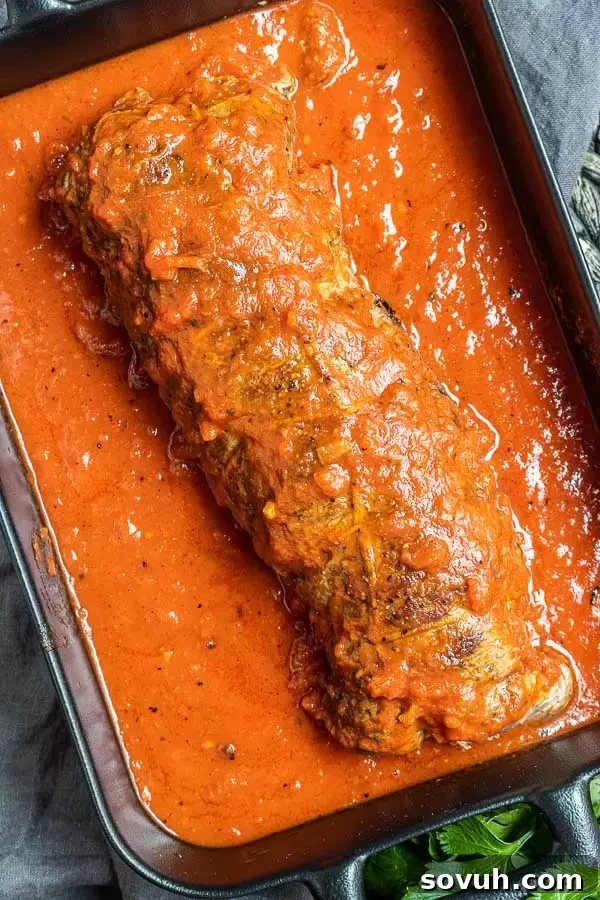
6. Simmer in Sauce and Bake. After deglazing, pour the marinara sauce into the Dutch oven and carefully return the seared beef roll to the pot, ensuring it’s nestled in the sauce. Place the lid securely on the pot.
Bake in the preheated oven for approximately 30 minutes per pound of meat. Halfway through the cooking time, carefully remove the lid and gently turn the beef braciole over in the sauce to ensure even cooking and flavor absorption. Replace the lid and continue baking for the remaining time. For the last 30 minutes of cooking, you can remove the lid to allow the sauce to thicken slightly and the top of the braciole to gain a richer color.
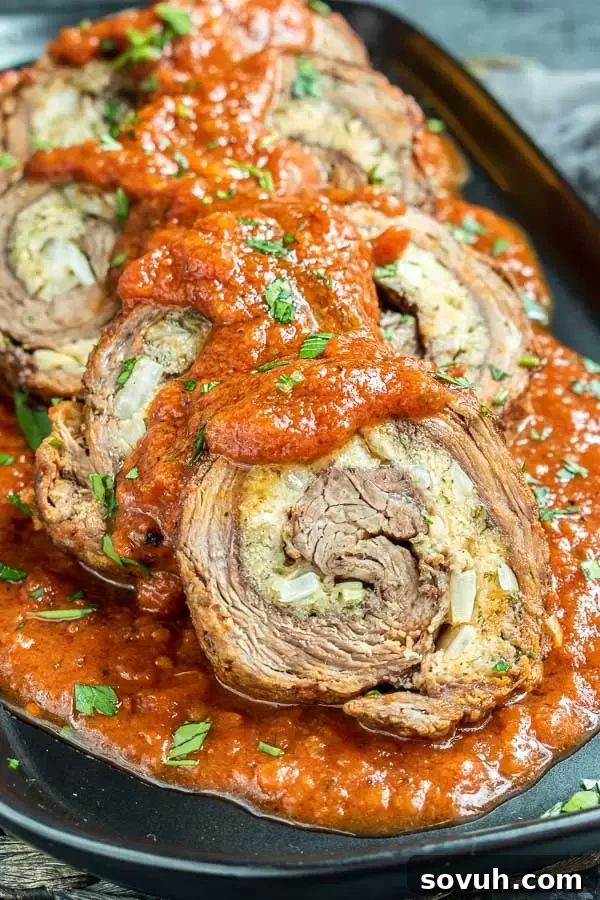
7. Rest, Slice, and Serve. Once fully cooked and fork-tender, remove the braciole from the sauce and place it on a cutting board. Allow it to rest for at least 15 minutes before attempting to slice. This resting period is crucial as it allows the juices to redistribute throughout the meat, resulting in a more tender and moist braciole. After resting, use kitchen scissors to carefully cut and remove all the butcher’s twine. With a sharp carving knife, slice the braciole into beautiful 1/2-inch thick rounds. Serve immediately, drizzling generously with the rich marinara sauce from the pot, or offer the sauce on the side for dipping.
Pro Tip for Removing Excess Fat from Sauce: After removing the braciole, you might notice a layer of fat on the surface of the sauce. You have two excellent options for managing this:
- Immediate Skimming: Use a large spoon to gently skim the top layer of fat from the hot sauce in the pot.
- Chill and Remove: If you’re preparing the braciole ahead of time, this method is ideal. Remove the meat from the sauce and allow the sauce to cool completely in the refrigerator. As it chills, the fat will solidify on the surface, making it incredibly easy to simply peel off the hardened layer before reheating.
Mastering the Art of Tying Flank Steak for Braciole
Properly tying your braciole is a crucial step to ensure the stuffing stays securely inside the flank steak during the long cooking process. This technique is similar to how we prepare our Provolone and Prosciutto Stuffed Pork Loin. While it might seem a bit daunting at first, it’s quite simple once you get the hang of it. We’ve outlined the process below, and there’s also an excellent video tutorial to guide you.
- Measure Your Twine: Cut a piece of butcher’s twine that is approximately 3 to 4 times the length of your rolled beef braciole. This ensures you have enough length to work with.
- First Loop and Knot: Start at one end of the rolled braciole. Make a secure loop around this end and tie it off with a tight knot on top of the roll. This initial knot anchors your twine.
- Create the First Cross-Section: Lay the long end of the string across the top of the beef, creating a straight line pointing towards the other short end. Measure about 1 inch from your starting knot.
- Under and Around: Use your index finger to hold the string firmly in place on top of the beef. Then, pass the long end of the string underneath the braciole and bring it back up to the top. As you bring it up, thread it under the piece of string that is currently laying on top of the beef (the piece you’re holding with your finger).
- Tighten and Repeat: Pull the string forward and tighten the loop you’ve just created, cinching it snugly around the beef roll. Stretch the string another 1 inch along the top of the braciole, then repeat the “under and around” process. Continue this method all the way to the other end of the rolled beef, creating a series of tight, evenly spaced rings of string from one end to the other.
- Final Knot: Once you reach the far end, loop the last section of string around and tie it into a final tight knot to secure everything. Trim and discard any excess string.
For a visual guide, watching a demonstration can be incredibly helpful. We highly recommend checking out this excellent video on how to tie up stuffed flank steak. While the video might start with a slightly different initial loop than described here (e.g., creating a slip knot versus directly tying around the end), the subsequent wrapping and tying technique is essentially the same and will give you a clear understanding.
Remember, there isn’t just one single “right” way to tie up beef, so feel free to use any method you’re comfortable with. The most important goal is to ensure the roll is securely tied so that the delicious filling remains intact as the braciole slowly simmers. Don’t stress over achieving perfect uniformity; practicality is key. In a pinch, if butcher’s twine isn’t available, you can even use sturdy toothpicks to secure the roll, though twine is generally preferred for its even compression.
Selecting the Perfect Marinara for Your Braciole
The marinara sauce serves as the rich, flavorful braising liquid for your beef braciole, making its quality paramount to the dish’s success. While we appreciate the charm of making everything from scratch, we’re also big proponents of smart shortcuts, especially when flavor isn’t compromised. For this recipe, a high-quality jarred marinara sauce can be a fantastic time-saver.
Our personal favorite is Rao’s Marinara, which stands out for its authentic taste and lack of added sugars. When choosing a store-bought sauce, prioritize quality over cost. Many inexpensive sauces are laden with excessive sugar and artificial flavors, which can detract from the natural richness of the braciole. Look for brands with a short ingredient list, high-quality tomatoes, and a robust, fresh flavor profile.
If you have a cherished family recipe for homemade marinara, this is the perfect opportunity to use it! The depth of flavor from a slow-simmered homemade sauce will elevate your braciole to an even higher level. Alternatively, feel free to enhance a good quality jarred sauce with a splash of red wine, a pinch of red pepper flakes, or extra fresh herbs like basil and oregano to truly make it your own.
Meal Prep: Can You Prepare Braciole Ahead of Time?
Absolutely! Braciole is an ideal make-ahead dish, which is one of the many reasons we adore it (besides its incredible taste, of course). This makes it a fantastic choice for busy weeknights, large holiday gatherings, or any occasion when you want to minimize last-minute cooking stress. Preparing it in advance also allows the flavors to meld and deepen, often making the dish even more delicious the next day.
To store cooked braciole, first allow it to cool completely to room temperature. It’s important to remove the butcher’s twine at this stage, but do not slice the beef! Keep the whole braciole intact. Place the entire piece of meat, along with all its delicious juices and sauce, into an airtight container. Refrigerate for up to 3 days. When you’re ready to serve, transfer the braciole and sauce back into a baking dish. Reheat in a preheated oven at 300 degrees F (150 degrees C) for about 30 minutes, or until thoroughly warmed through. Slice just before serving for the best texture and presentation.
Freezing Braciole for Future Enjoyment
Yes, beef braciole freezes exceptionally well, making it perfect for convenient future meals!
- Preparation for Freezing: After cooking your braciole according to the recipe, allow both the meat and the sauce to cool completely. Gently separate the braciole from the sauce.
- Freezing the Meat: Wrap the cooled braciole tightly in several layers. Start with plastic wrap, ensuring no air pockets, then follow with two layers of aluminum foil. This double wrapping helps prevent freezer burn. Place the wrapped braciole in a freezer-safe bag or an airtight container and freeze for up to 2 months.
- Preparing the Sauce for Freezing: For optimal results, place the sauce in the refrigerator for 1-2 hours after it cools. This will allow any excess fat to solidify on the surface, which can then be easily skimmed off with a spoon and discarded. Pour the defatted sauce into a separate airtight container and freeze for up to 2 months.
Reheating Frozen Braciole:
To reheat, transfer both the frozen braciole and the frozen sauce to the refrigerator and allow them to thaw completely for at least 24 hours.
Once thawed, preheat your oven to 325 degrees F (160 degrees C). Place the thawed braciole and sauce together in the same Dutch oven or oven-safe pot you originally cooked them in. Cover the pot tightly with a lid and bake for approximately 1 hour, or until the braciole and sauce are thoroughly warmed through and bubbling. Slice and serve as directed.
Discover More Italian Comfort Food Recipes
If you’ve enjoyed the rich flavors of beef braciole, you’ll love exploring other comforting Italian dishes. Here are some of our favorites to inspire your next meal:
- Turkey with Marsala Sauce
- Panzanella Salad (Italian Bread Salad)
- Baked Turkey Meatballs
- Instant Pot Spaghetti Sauce
- Keto Chicken Piccata
- Chicken Alfredo Lasagna Roll Ups
- Classic Lasagna Roll Ups
- Chicken Parmesan Bake
- One Pot Chicken Cacciatore
- Shrimp Alfredo Pasta
- Slow Cooker Sausage and Ravioli
- Lasagna French Bread Pizza
- One Pot Three Cheese and Sausage Ziti
Enjoyed this recipe?
Make sure to follow us on Instagram and Pinterest for more delicious recipes and culinary inspiration!
Servings: 6
Prep Time: 20 mins
Cook Time: 1 hr 50 mins
Total Time: 2 hrs 10 mins
Beef Braciole
Created By: Kat Jeter & Melinda Machado
Beef braciole is a hearty Italian dish of stuffed flank steak filled with a cheesy savory filling simmered in marinara sauce.
Print Recipe
No ratings yet
Ingredients
- 6 tablespoons Olive oil, divided
- 2 ounces Onion, finely diced
- 1 clove Garlic, minced
- 1/2 cup Panko bread crumbs
- 1/2 cup Grated Pecorino Romano
- 1/2 cup Grated Parmesan
- ¼ cup Chopped fresh Italian parsley
- ½ teaspoon Kosher Salt
- ¼ teaspoon Pepper
- 1.5 pounds Flank steak
- 1 cup White wine
- 28 ounces Marinara sauce
Instructions
- Heat a small skillet over medium-high heat and add 2 tablespoon of olive oil. Add the diced onions and cook for 5 minutes then add the garlic and continue cooking for 2 minutes, or until the onions are softened and lightly caramelized.
- In a medium bowl combine the cooked onion and garlic, bread crumbs, pecorino cheese, parmesan cheese, chopped parsley, kosher salt, and pepper. Add 2 tablespoons of olive oil and toss until well mixed.
- Prepare your flank steak by laying it on a prepared flat surface (I cover my counter with enough plastic wrap to cover the area the meat will touch with an extra few inches on each side). Then use a meat mallet to pound the meat to an even ½ inch thick.
- Spread the bread crumb mixture evenly over the steak leaving about an inch bare around the edges.
- Starting at 1 short end, roll up the steak.
- Use butcher’s twine to tie up the roll. (See instructions in the post above)
- Sprinkle the braciole with kosher salt and pepper.
- Preheat the oven to 350 degrees F.
- Heat the remaining 2 tablespoons of oil over medium heat in a heavy large dutch oven, or a large ovenproof skillet with a lid. Add the braciole and brown on all sides, approximately 2 minutes per side, to get a nice brown crust. Then remove the beef and set aside.
- Deglaze the pan by pouring in the white wine and using a wooden spoon to scrape up any browned bits off the bottom of the pan.
- Add the marinara sauce and the beef roll and place the lid on the pot.
- Bake for approximately 30 minutes per pound, halfway through open the lid and turn the beef braciole over in the sauce. Then leave the lid off and continue baking for the remaining time.
- Once cooked remove the braciole from the sauce and let rest for 15 minutes before using scissors to cut the twine, removing all of it.
- While the beef is out of the sauce use a spoon to skim the top layer of fat on top of the sauce. If you are making it ahead of time you can let the sauce cool in the refrigerator and then remove the solidified fat from the surface.
- Then cut the braciole into ½ inch thick slices and serve with sauce.
Nutrition
Calories: 437kcal, Carbohydrates: 14g, Protein: 33g, Fat: 25g, Saturated Fat: 7g, Cholesterol: 84mg, Sodium: 1215mg, Potassium: 911mg, Fiber: 2g, Sugar: 7g, Vitamin A: 891IU, Vitamin C: 13mg, Calcium: 242mg, Iron: 4mg
Nutrition Disclaimer: We are not certified nutritionists. Nutrition facts are an estimate and are provided as a courtesy. They are generated by an online API which recognizes ingredient names and amounts and makes calculations based on the serving size. Results may vary.
Course: Main
Cuisine: Italian
