
3-Ingredient Butterfly Pea Flower Syrup Recipe
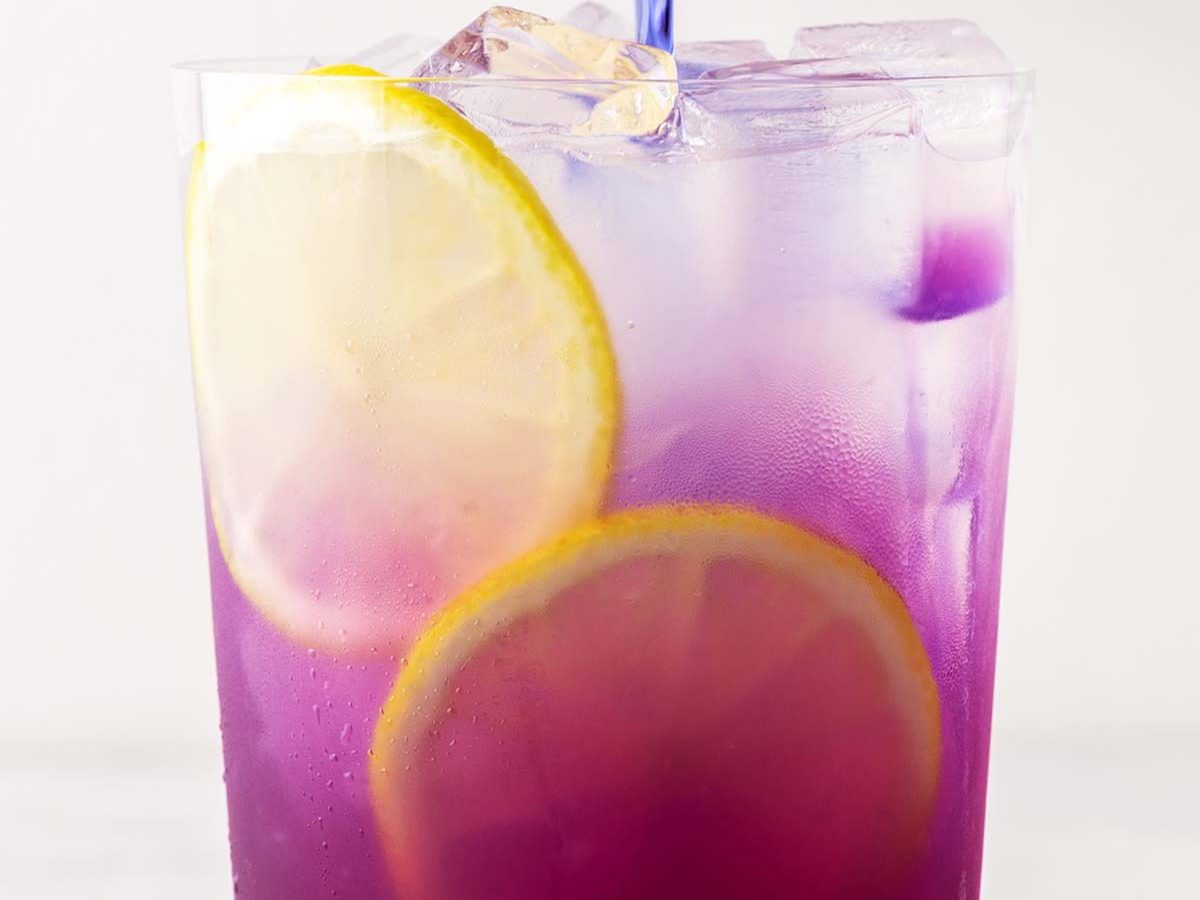
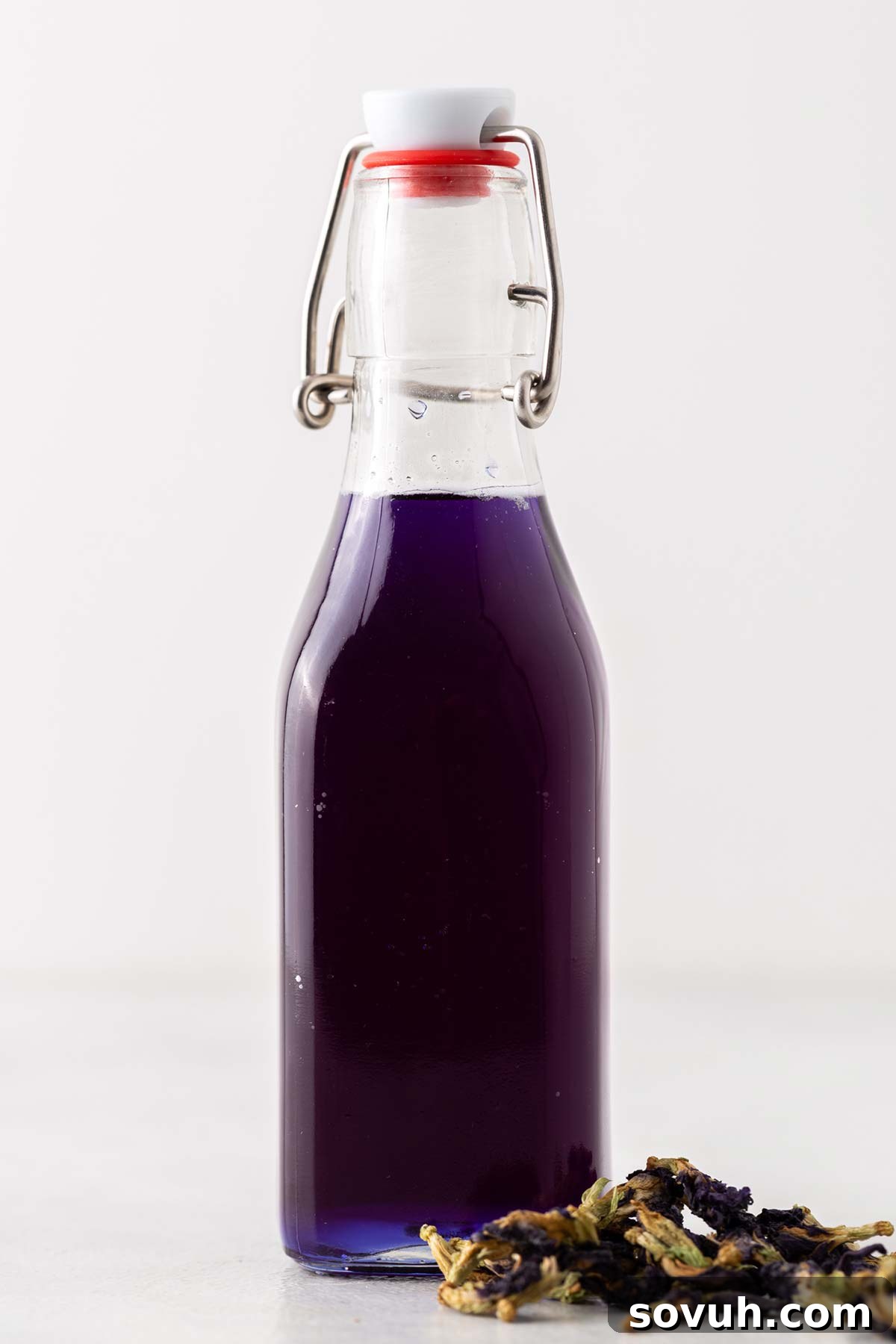
This vibrant blue syrup derives its color from caffeine-free butterfly pea flower tea and is quick and easy to make with just three ingredients. The syrup adds a striking blue hue and a mild vegetal flavor to beverages, and it naturally shifts color to purple when mixed with acidic drinks like lemonade.
Recipe Summary
- Butterfly pea flower syrup is a simple syrup (sugar dissolved in water) infused with butterfly pea flower tea. The three ingredients are water, sugar, and butterfly pea flower tea.
- Butterfly pea flower tea is naturally caffeine-free and imparts a clean, vegetal flavor along with a vivid blue color.
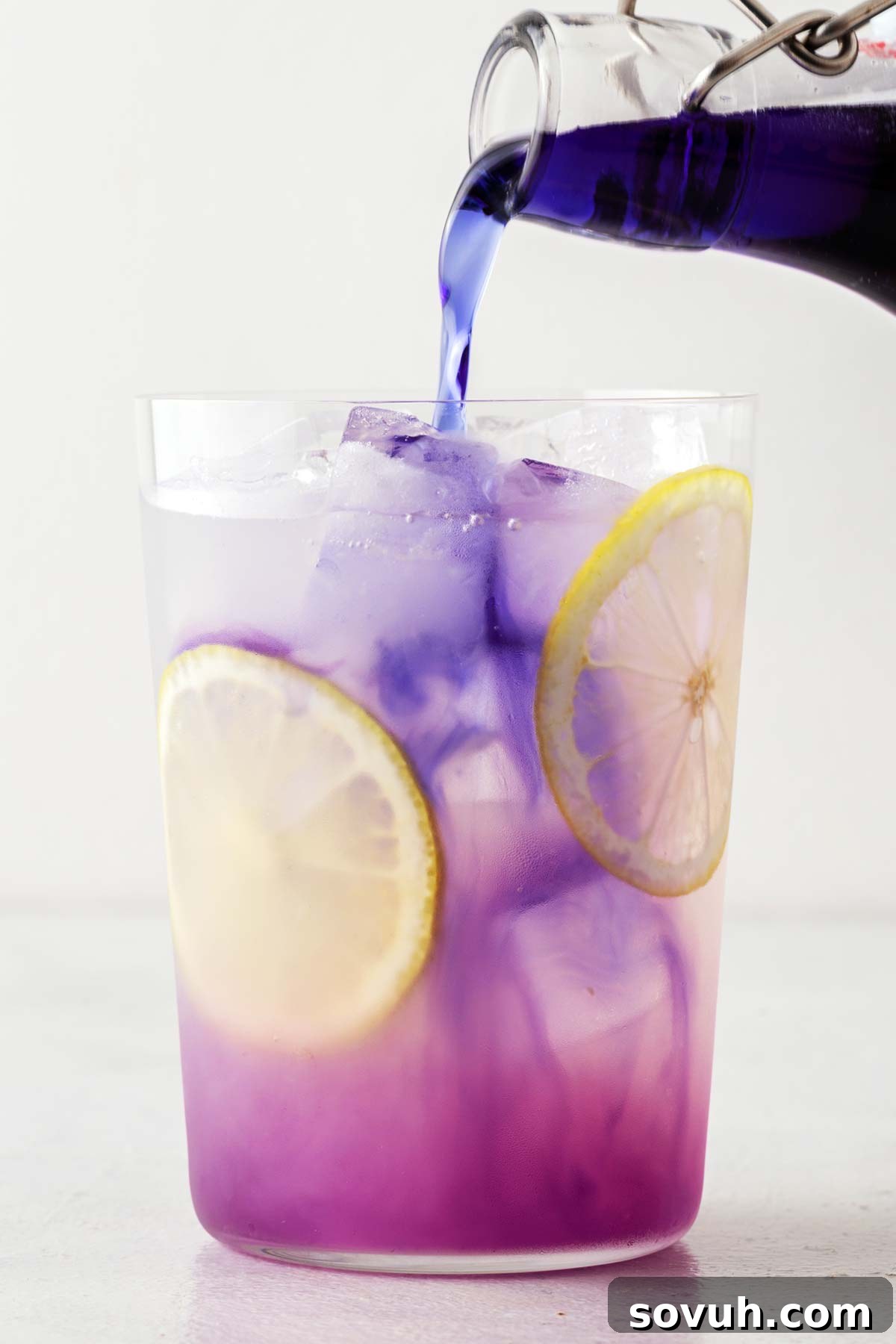
- This syrup is ideal for sweetening and coloring iced drinks such as iced tea, lemonade, and mocktails. The syrup’s blue color turns purple in acidic beverages.
- Yield: about 1 cup of syrup, which will sweeten roughly 8 drinks when using 2 tablespoons per serving.
Ingredient Notes
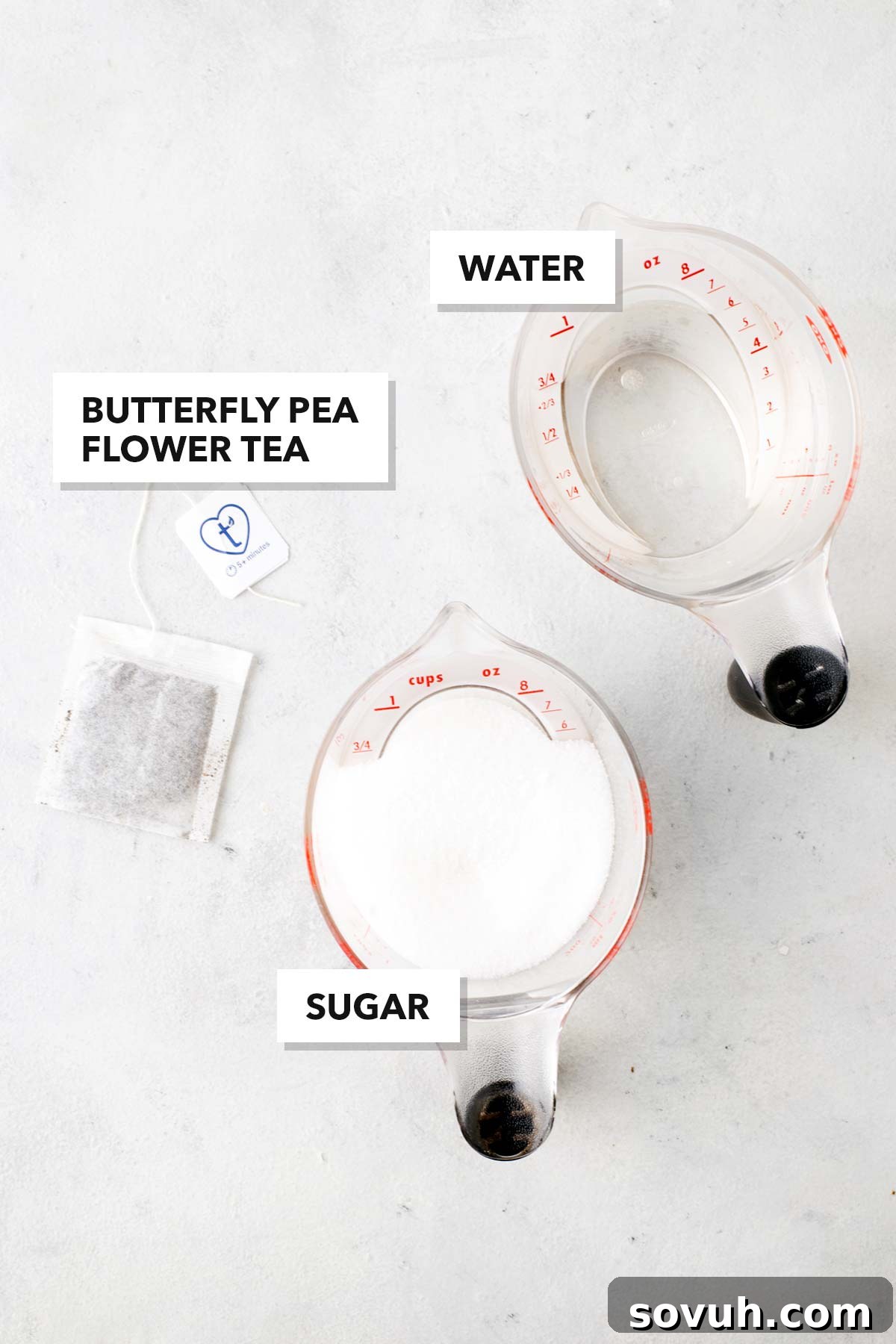
- Butterfly pea flower tea: Tea bags are recommended for convenience and easy straining. Loose flowers work too, but tea bags create less mess.
- Sugar: Use white granulated sugar to preserve the syrup’s bright blue color. Brown sugar will darken and muddy the color.
- Water: Filtered water will yield the cleanest-tasting syrup.
See the full recipe card below for exact ingredient amounts and step-by-step instructions.
Step-by-Step Instructions
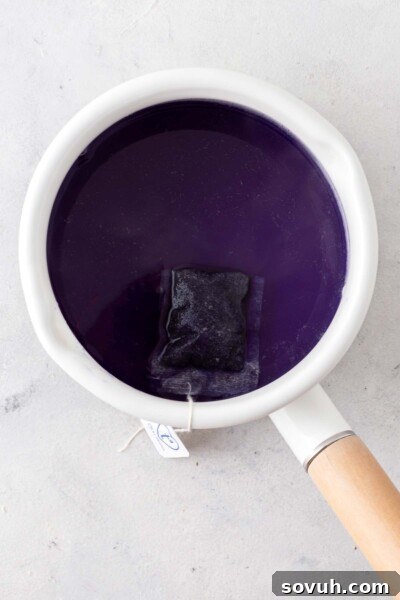
- Combine ingredients: In a small saucepan, combine water and sugar, then add one butterfly pea flower tea bag.
- Simmer: Bring the mixture to a gentle simmer for about 5 minutes, stirring occasionally to ensure the sugar dissolves completely.
- Steep and cool: Remove the pan from heat and let the tea steep in the syrup as it cools for several minutes to deepen the color and flavor.
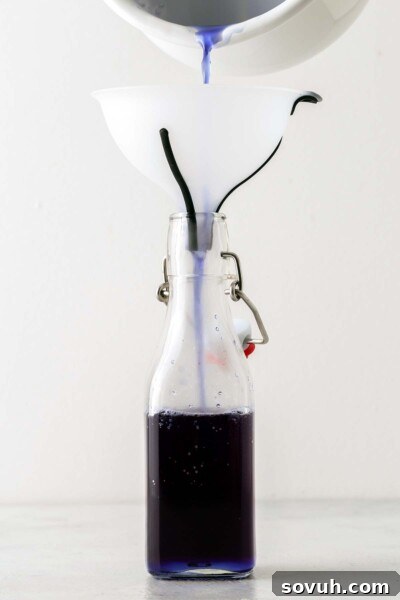
- Strain and store: Remove the tea bag and strain the syrup if needed. Pour into a clean, airtight container or bottle. A funnel helps pour neatly.
Store the syrup in the refrigerator for up to two weeks.
Serving Suggestions
- Add 1–2 tablespoons of butterfly pea flower syrup to brewed black or green iced tea for a lightly sweetened, tinted beverage.
- Mix the syrup with sparkling water for a refreshing flavored soda. Garnish with lemon or mint.
- Use the syrup to sweeten and color cocktails or mocktails; remember the color will shift toward purple when mixed with acidic juices like lemon or lime.
Expert Tips
- Color-changing property: butterfly pea flower pigments are pH-sensitive. Adding acid (lemon or lime) turns the blue syrup purple—use this to create dramatic layered or transforming drinks.
- Tea bags make simple syrups less messy and simplify straining, so they’re preferred for this recipe.
- For a clearer, brighter syrup, avoid using unrefined sugars or additional flavorings that could dull the color.
- This recipe yields about 1 cup; adjust the sugar-to-water ratio if you prefer a thicker or thinner syrup.
Related Recipes
- Iced Butterfly Pea Flower Tea Latte
- Strawberry Butterfly Pea Flower Latte Bubble Tea
- Rose Syrup
- Lavender Syrup
- Hibiscus Syrup
Recipe Card — Butterfly Pea Flower Syrup
Ingredients
- 3/4 cup (180 ml) water
- 3/4 cup (150 g) granulated white sugar
- 1 butterfly pea flower tea bag
Instructions
- Combine water, sugar, and the tea bag in a small saucepan.
- Bring to a gentle simmer and simmer for about 5 minutes, stirring to dissolve the sugar.
- Remove from heat and allow the tea to steep in the hot syrup as it cools for a few minutes for a richer color.
- Remove the tea bag, strain if necessary, and transfer the syrup to an airtight container. Refrigerate up to 2 weeks.
Yield and Time
Yield: ~1 cup (about 8 servings at 2 tablespoons each). Prep time: 2 minutes. Cook time: 5 minutes. Total time: ~7 minutes.
Notes
- White sugar preserves the bright blue color; brown sugar will alter the hue.
- Tea bags make cleanup and straining easier than loose flowers.
- Keep refrigerated in a sealed bottle or jar for up to two weeks.
Nutrition (approx. per 2 Tbsp serving)
Calories: ~72; Carbohydrates: ~19 g; Fat: ~0.1 g; Sodium: ~1 mg. Nutrition is an approximation.











