
Tea Varieties: Black, Green, Oolong, White and Herbal
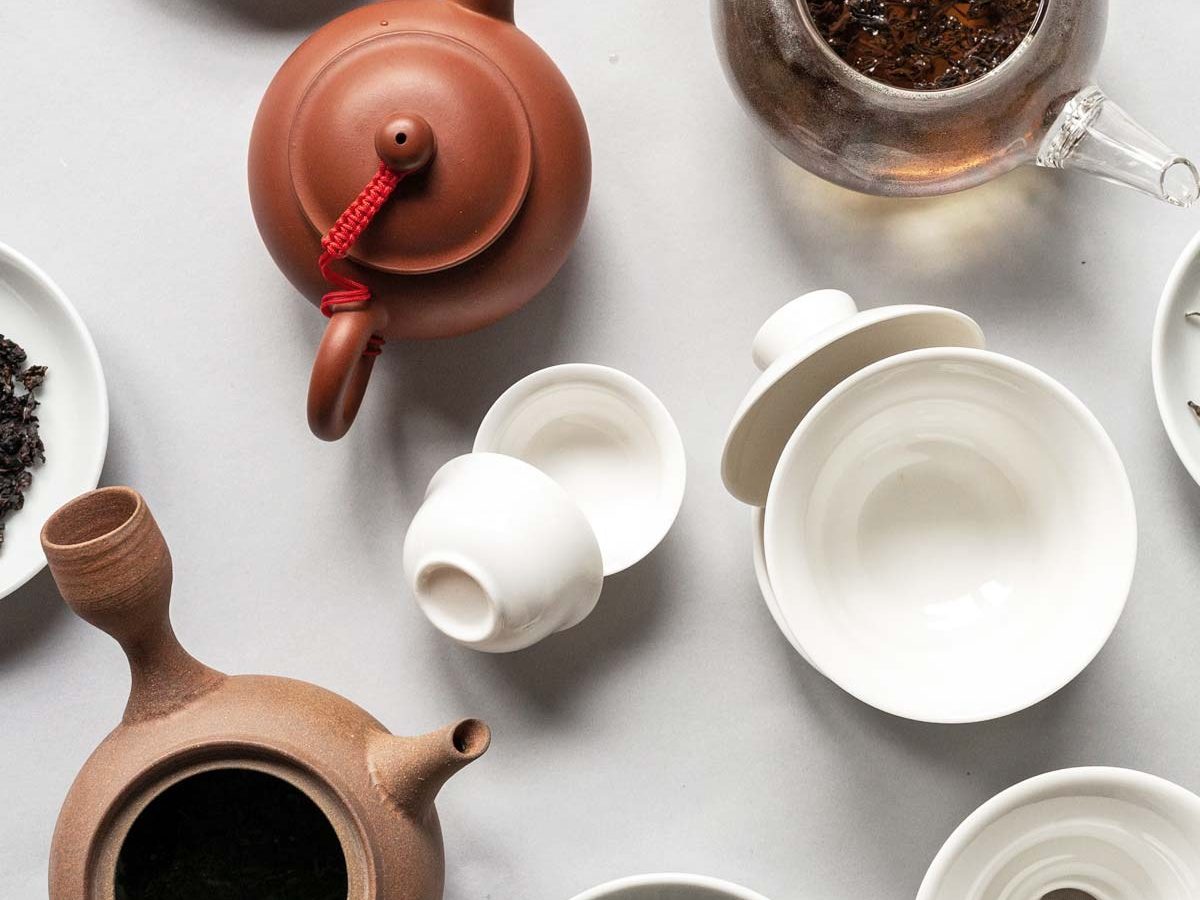
A tea sommelier’s concise, easy-to-follow guide to the six main types of true tea. Learn how black, green, oolong, yellow, white, and puerh differ, why oxidation and processing matter, and where these teas are typically produced.
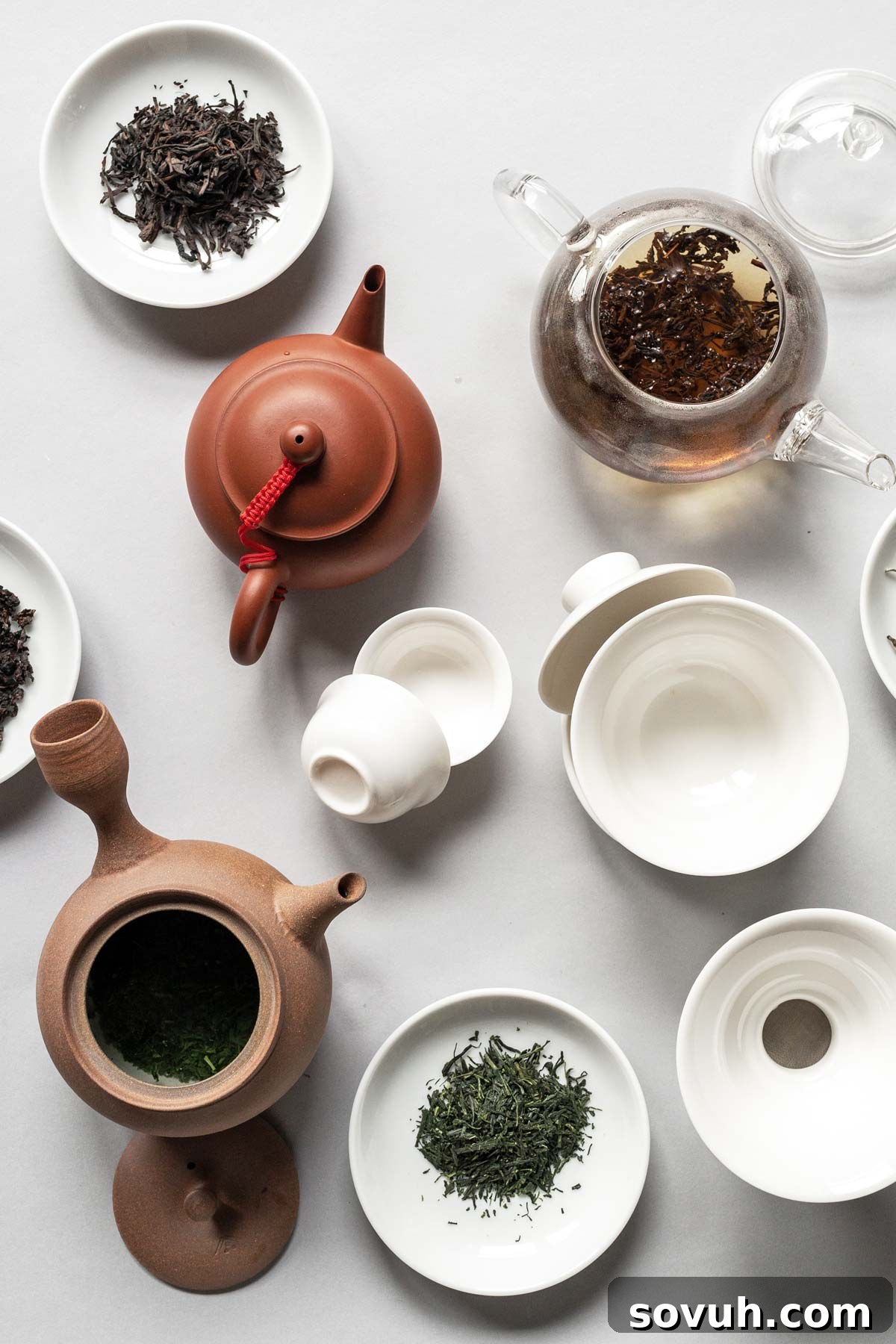
6 Types of Tea
All true tea originates from the Camellia sinensis plant. The six recognized categories—black, oolong, green, yellow, white, and puerh—are distinguished by how the leaves are handled after picking, especially their level of oxidation and the specific processing steps applied.
- Black tea
- Oolong tea
- Green tea
- Yellow tea
- White tea
- Puerh tea
Oxidation is the chemical reaction that occurs when tea leaves are exposed to air after harvesting. Lighter teas such as green and white are minimally oxidized, while black tea is fully oxidized. Beyond oxidation, teas are shaped by techniques like withering, rolling, steaming, roasting, fermenting, and drying—each step creates distinctive flavors and aromas.
Because caffeine occurs naturally in Camellia sinensis, all true teas contain some caffeine. Herbal infusions such as peppermint or chamomile are not technically teas.
Black Tea
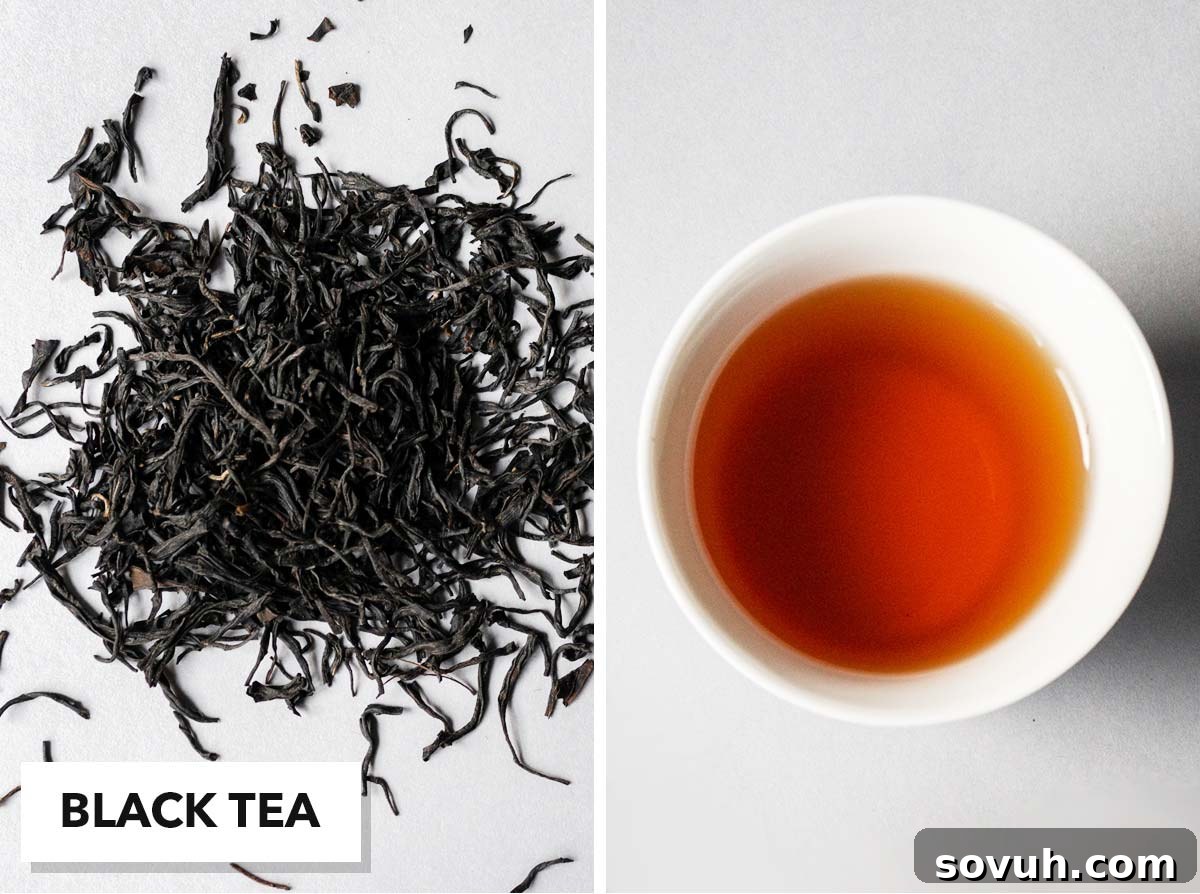
- Black tea is fully oxidized, which darkens the leaves to deep red, brown, or black hues.
- Key processing steps: withering, rolling, full oxidation, and drying.
- In China, black tea is often called “red tea” because of its reddish liquor.
- Major producing regions include China, India, Kenya, and Sri Lanka.
- Flavor profile: typically full-bodied and robust, with malty, sweet, or brisk notes depending on origin and processing.
- Common uses: classic hot teas, milk tea, chai, and bubble tea.
- Popular varieties: Assam, Ceylon, English Breakfast (a blend), and Earl Grey (bergamot-flavored).
- Caffeine: roughly 60–90 mg per cup, depending on leaf grade and brewing.
Oolong Tea
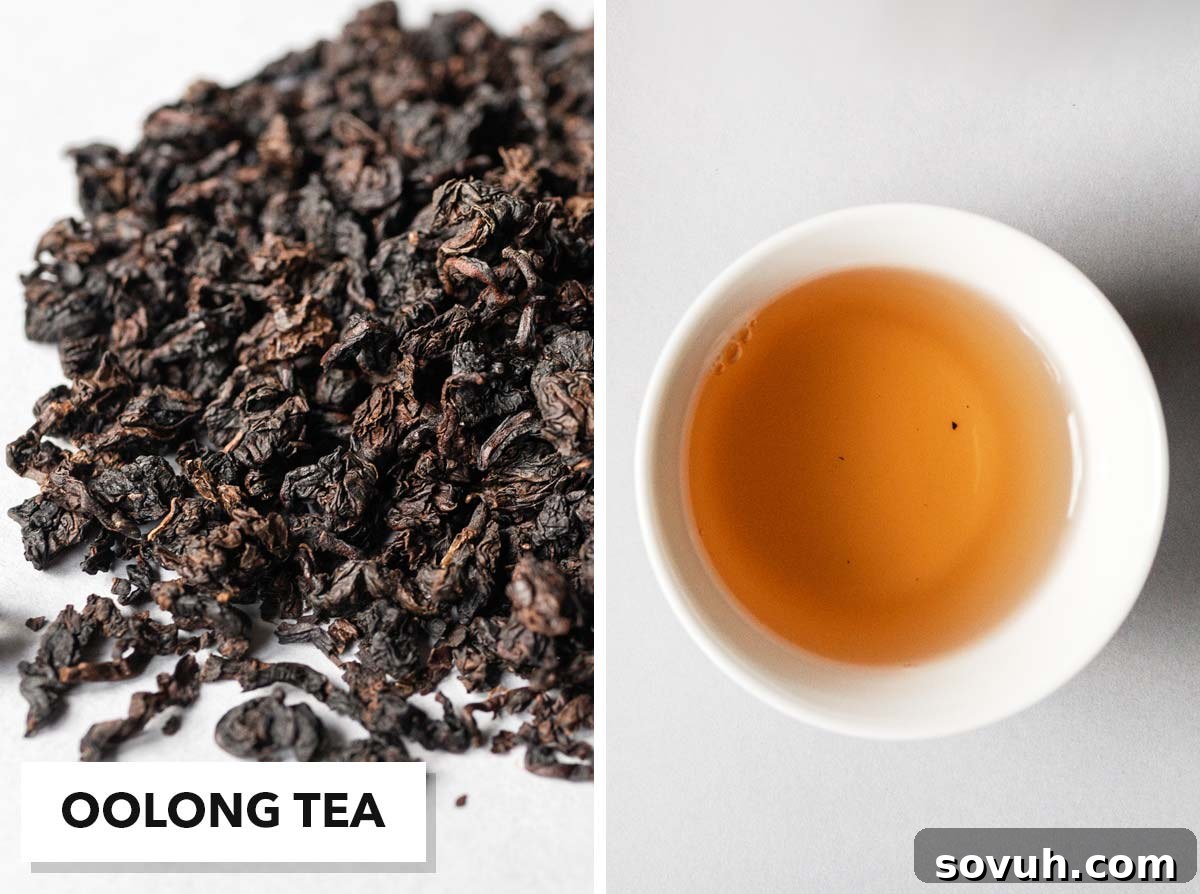
- Oolong is partially oxidized—anywhere from about 10% to 80%—sitting between green and black tea in color and character.
- Typical processing includes withering, bruising or rolling to initiate oxidation, controlled oxidizing, shaping, and firing or drying.
- Key growing regions: primarily Fujian province in China and Taiwan.
- Chinese oolongs often show woodsy, toasted, or mineral notes; Taiwanese oolongs tend to be floral and fruity.
- Roast levels and oxidation can vary widely, producing a broad spectrum of flavors from delicate and floral to rich and toasty.
- Popular oolongs: Tie Guan Yin, Baozhong, and Oriental Beauty (representative examples).
- Caffeine: approximately 50–70 mg per cup.
Related guide: Want to get into oolong tea? Start here.
Green Tea
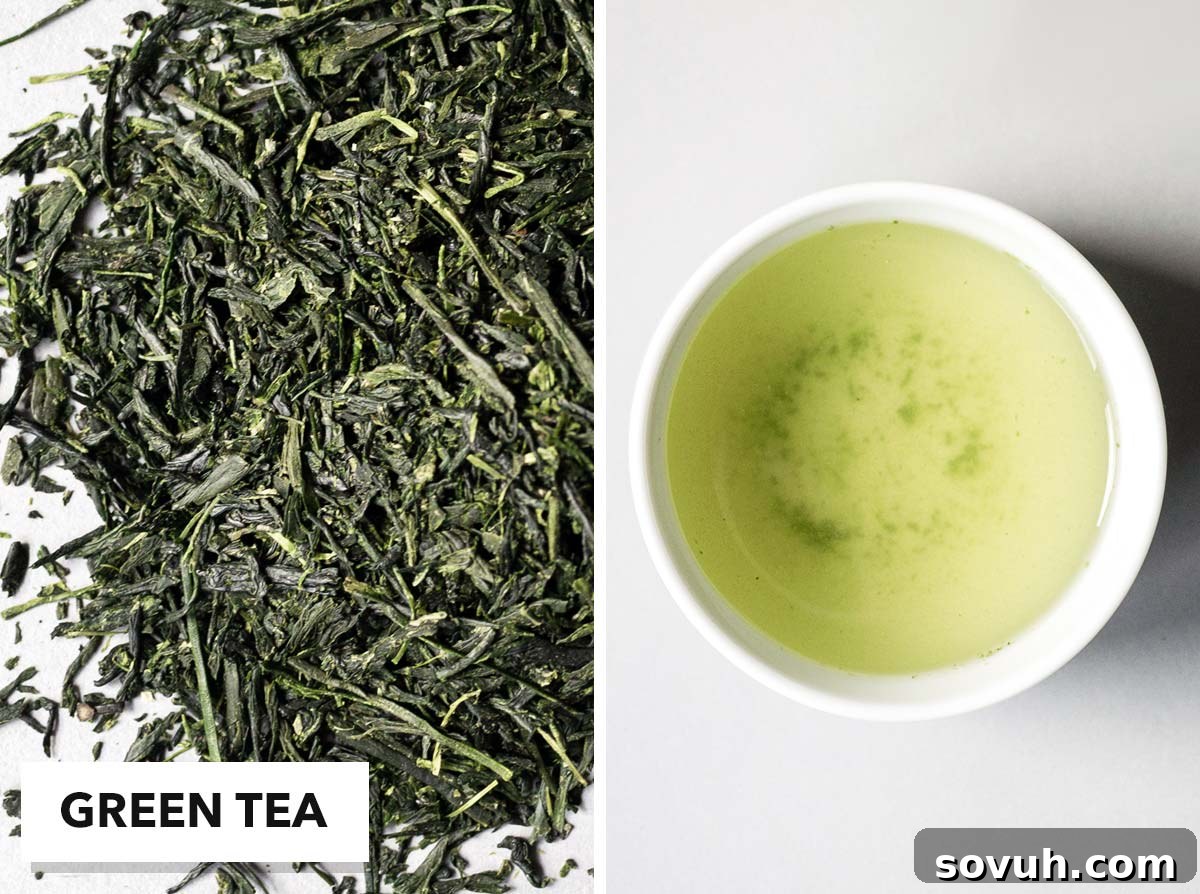
- Green tea is minimally oxidized, preserving the green color of the leaves and a fresher, vegetal character.
- Processing commonly involves quick heat-fixation—either steaming (typical in Japan) or pan-firing (typical in China)—followed by rolling and drying.
- Matcha is a powdered green tea made from shade-grown leaves that are stone-ground into a fine powder and whisked into water.
- Major producers include China, Japan, and South Korea.
- Flavor profile: bright, grassy, vegetal, and sometimes nutty; oversteeping can produce astringency or bitterness.
- Popular green teas: Matcha, Jasmine (scented green tea), Genmaicha, Sencha, and Hojicha.
- Caffeine: generally 30–50 mg per cup.
Related guide: Want to get into green tea? Start here.
Yellow Tea
- Yellow tea is uncommon outside China and is relatively rare on international markets.
- It is lightly to moderately oxidized (roughly 10–20%).
- The process resembles green tea production but adds a slow, controlled surrounding oxidation—often called “sealing”—that gently mellows the leaves over several days, producing a yellowish tone.
- Principal production areas include Hunan and Sichuan provinces in China; only modest quantities are exported.
- Because its production is labor-intensive and fewer tea masters specialize in the method, yellow tea remains limited in supply.
- Flavor profile: mild, smooth, and mellow—situated between green and white tea with reduced grassy bitterness.
- Yellow teas are uncommon in many Western markets and can be challenging to source.
- Caffeine: approximately 30–35 mg per cup.
White Tea
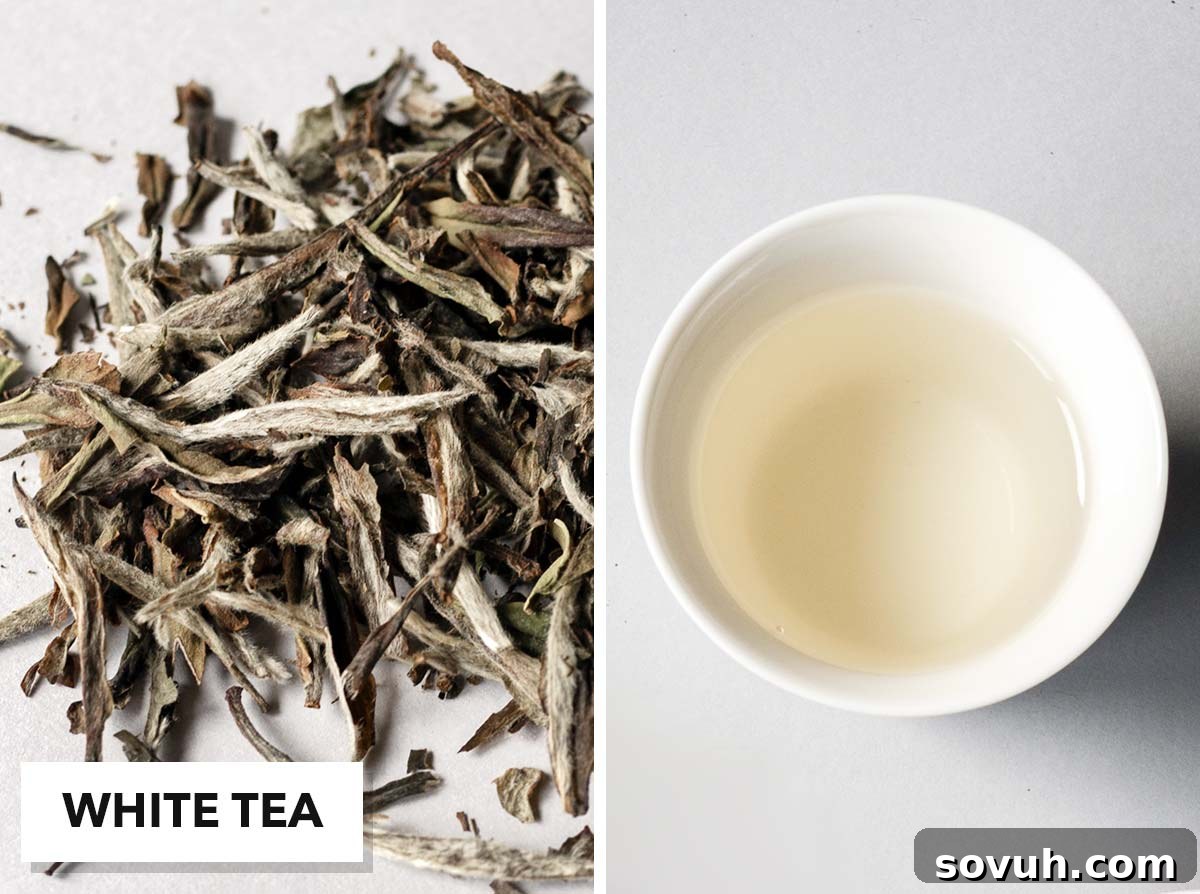
- White tea undergoes the gentlest processing: leaves are allowed to wither and dry naturally, often over two to three days, with minimal handling.
- Its light production preserves subtle aromatics and delicate flavor compounds.
- Fujian province in China is a traditional center for white tea production.
- Flavor profile: delicate, floral, and often with sweet or fruity notes.
- Common examples: Silver Needle and White Peony.
- Caffeine: typically 30–55 mg per cup, roughly comparable to green tea depending on leaf grade.
Puerh Tea
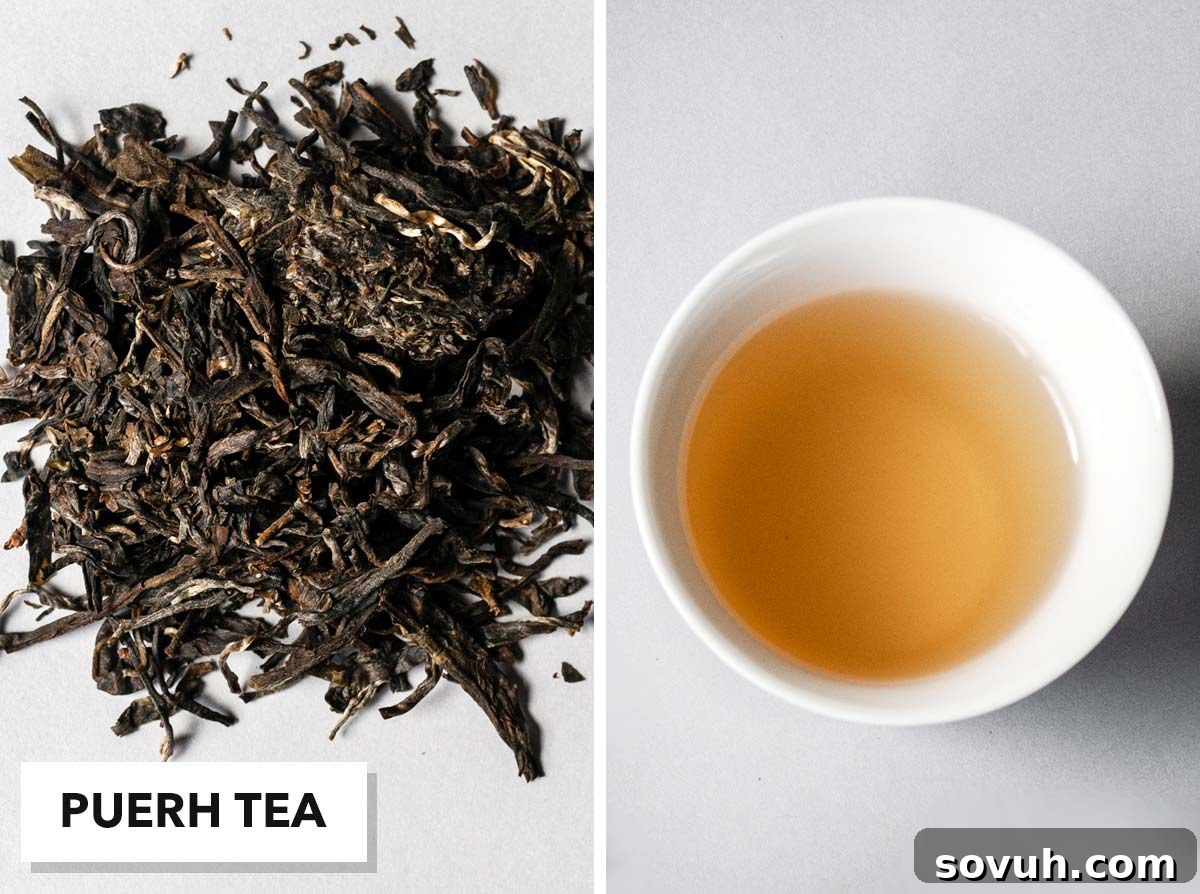
- Puerh is distinct because it is fermented and aged after drying; it is treated more like a stored, evolving product than a fresh tea.
- Puerh undergoes minimal oxidation in its initial processing but gains complexity through microbial fermentation during aging.
- Initial processing may resemble green tea methods (pan-frying or brief firing, rolling, drying), then the tea is pressed into cakes or bricks and aged.
- Two main styles: raw (sheng) puerh, which ages slowly and develops over years, and cooked (shu) puerh, which undergoes an accelerated fermentation to simulate aging.
- Puerh is traditionally produced in Yunnan province, China.
- Flavor profile evolves with age; younger puerh can be brisk and vegetal, while aged puerh often shows earthy, woody, or chocolate-like notes.
- Buying puerh requires caution because age and origin affect value and authenticity; seek reputable sources when possible.
- Caffeine: raw puerh generally 30–45 mg per cup; cooked puerh often 60–70 mg per cup, depending on processing and brew strength.
Related
- How to Make Tea Properly
- Difference Between Loose Tea, Tea Sachets, and Tea Bags
- Best Tea Canisters
- Becoming a Certified Tea Sommelier
Save this guide for later: pin the guide about the types of tea to your preferred board or save it to your collection for quick reference.











