
How to Brew Oolong Tea in a Clay Teapot
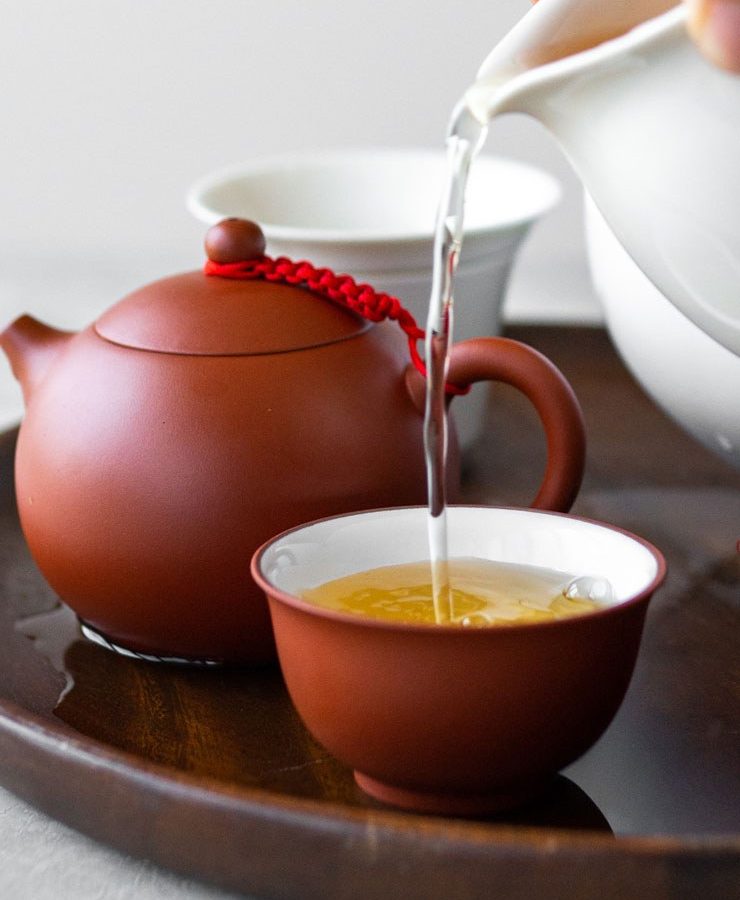
Step-by-step instructions with photos showing how to brew oolong tea in a clay teapot. This traditional method highlights the tea’s nuanced flavors and makes multiple tastings from the same leaves easy and enjoyable.
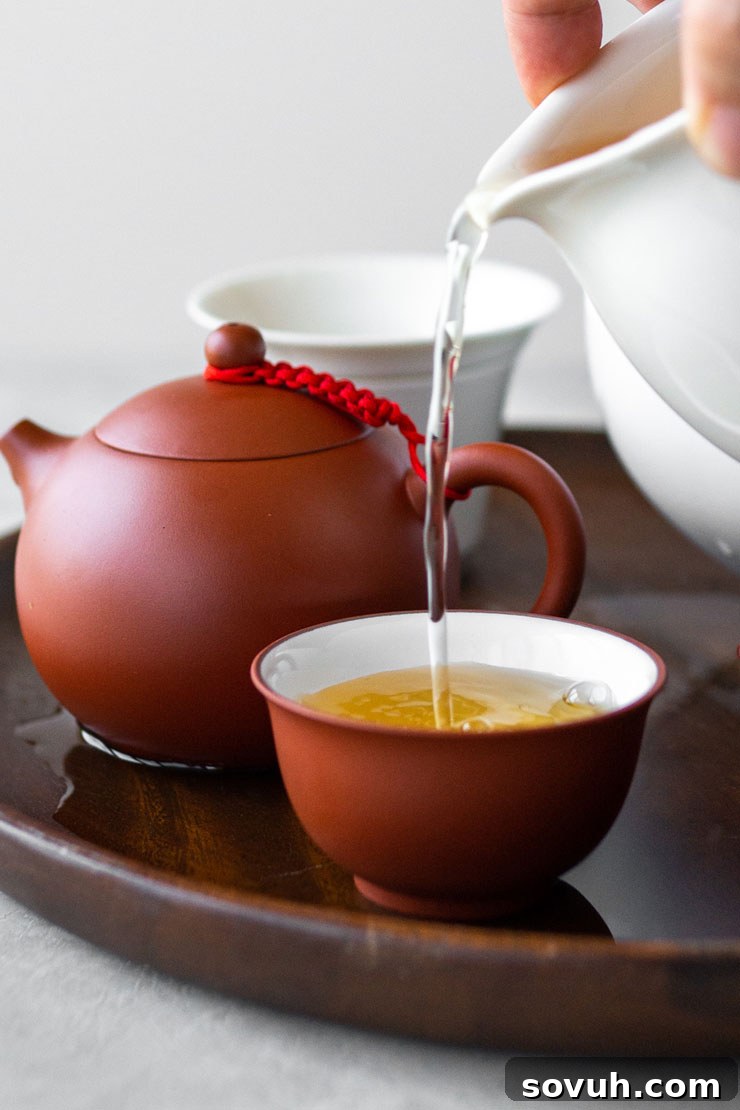
Oolong Tea
Oolong tea is a true tea made from the Camellia sinensis plant, the same plant that produces black, green, white, and puerh teas. Herbal infusions such as hibiscus or chamomile are not true teas because they do not come from camellia sinensis.
Tea types differ by how the freshly picked leaves are processed: withering, oxidation, shaping, and drying. Oolong sits between green and black tea in terms of processing and oxidation, which gives it a wide range of flavors from floral and fruity to toasty and roasted.
If you’re curious about exploring oolong further, consider starting with a few approachable varieties that showcase different styles and oxidation levels.
Brewing Oolong Tea in a Clay Teapot
A small clay teapot is a traditional vessel for brewing oolong. Another common option is a gaiwan, a lidded bowl used for single-serving brews. Clay teapots are popular because they retain heat well and can season over time as they absorb the flavors of the teas you brew in them.
Reasons to choose a clay teapot:
- Excellent heat retention helps maintain consistent steeping temperature.
- Porous clay can develop a pleasant seasoning from repeated use with the same tea type.
- Small clay pots make it easy to perform multiple short steeps from the same leaves.
Drink oolong plain—no milk or sugar—so you can appreciate its full range of flavors.
What You’ll Need
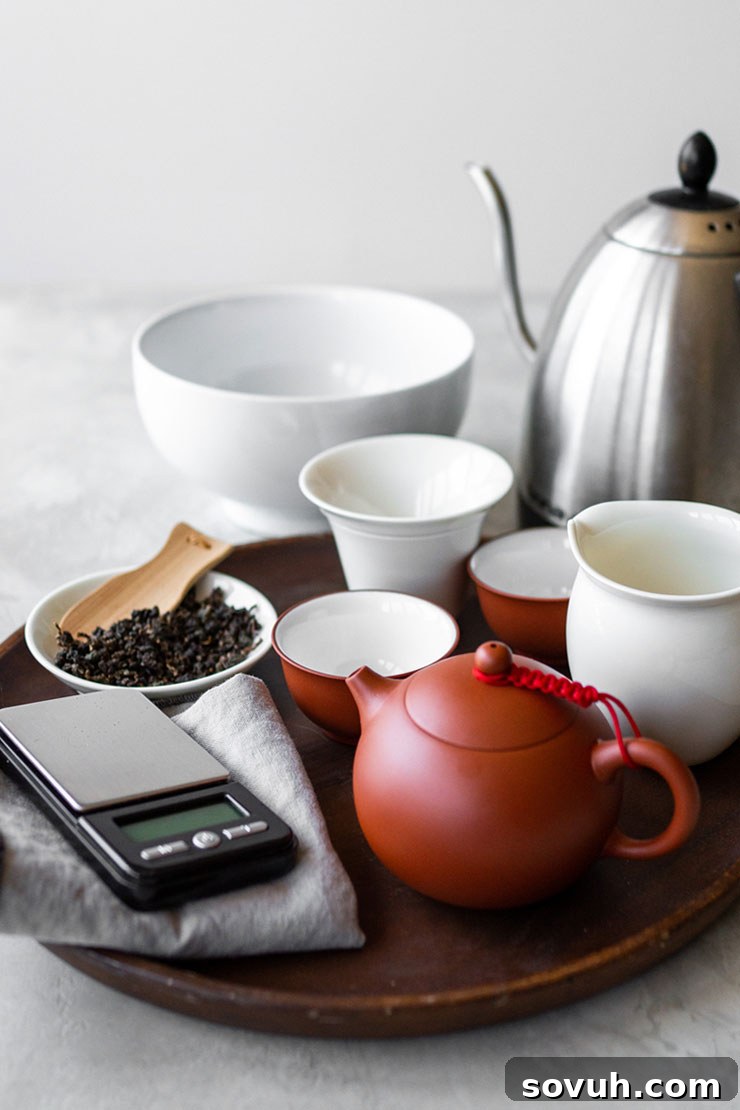
- Loose oolong tea (avoid tea bags for the best quality)
- Filtered water
- Clay teapot
- Small tasting cups
- Sharing pitcher (a fairness pitcher to distribute tea evenly)
- Tea strainer
- Tea scale for accurate measurements
- Electric or stovetop kettle with temperature control if possible
- Large bowl for discarding rinse water
- Tray or towel to catch spills
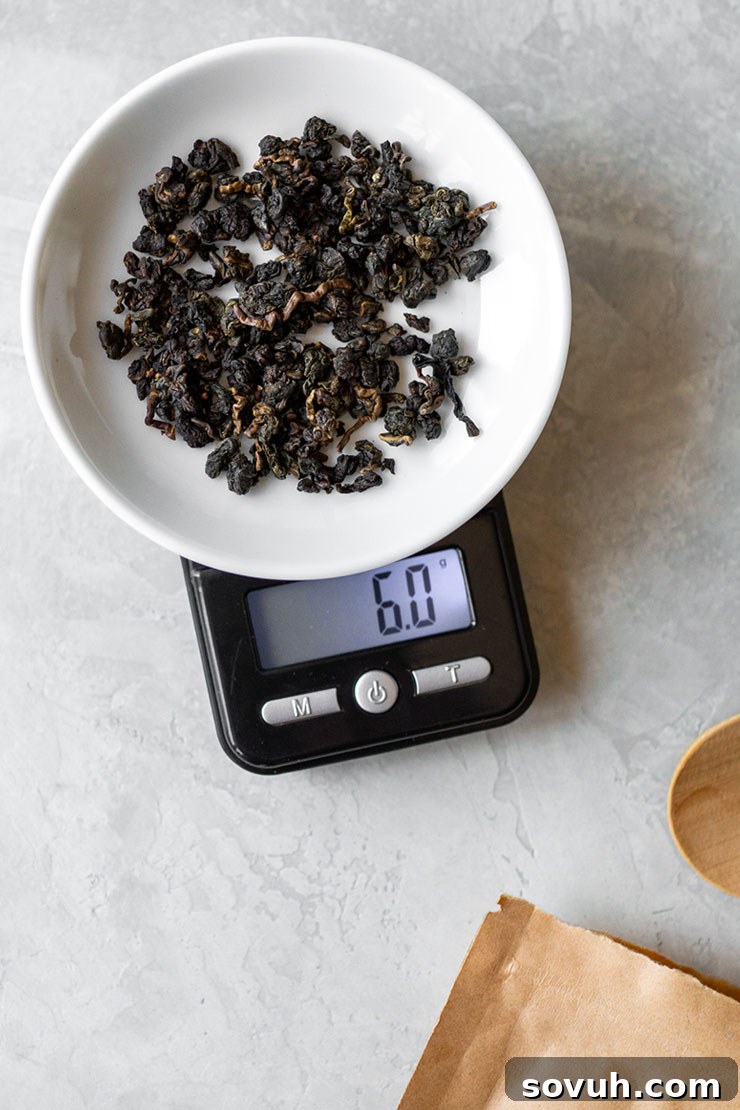
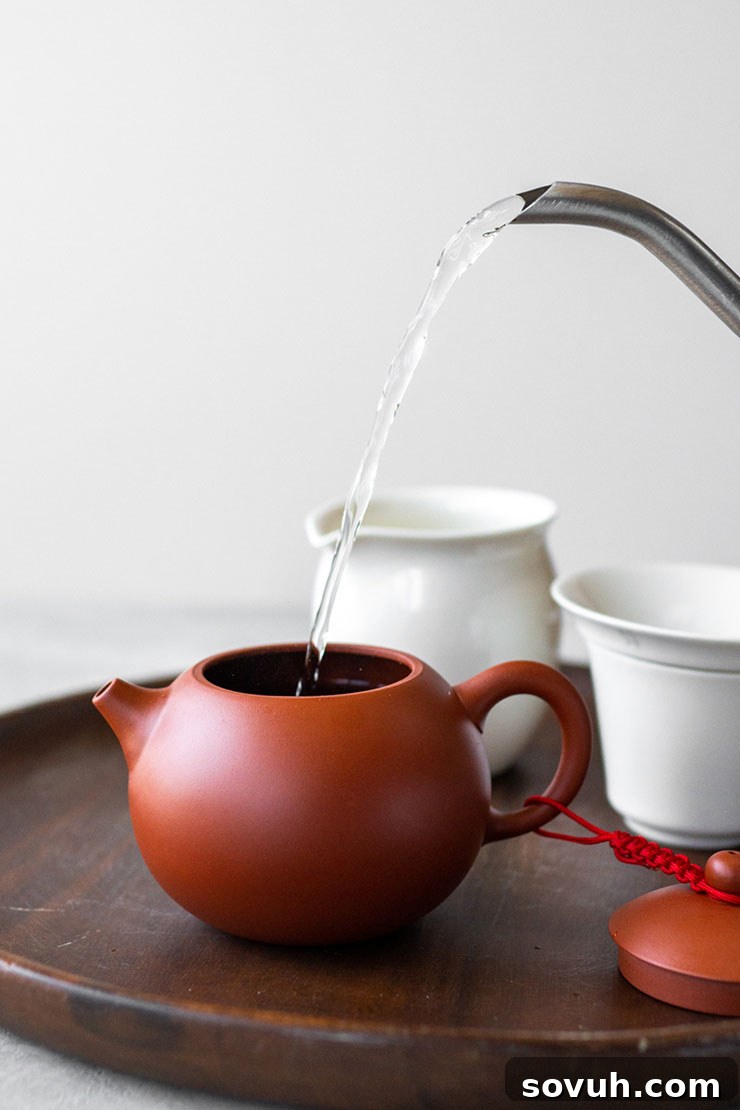
STEP 1: Measure your tea using a scale.
Always use loose-leaf oolong and measure by weight rather than volume. Tea leaf shapes vary—some are long and twisted while others are rolled into tight balls—so teaspoons are inconsistent. For a small clay teapot that holds about one cup (8 oz.), 6 grams of oolong is a reliable starting point.
STEP 2: Heat water to the right temperature.
Heat filtered water to the temperature recommended for your specific oolong—many oolong teas brew well between about 185°F and 212°F. If you have a variable-temperature kettle, set it according to the tea packaging. Use filtered water for cleaner, clearer flavors.
STEP 3: Warm the teaware.
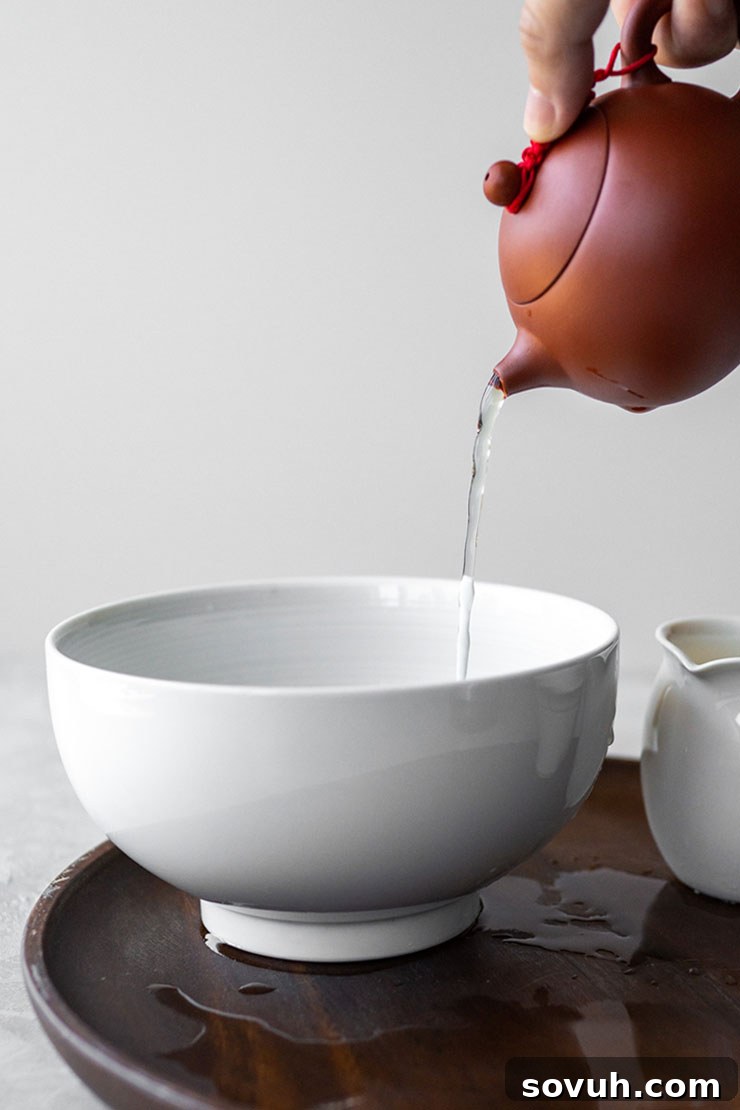
Pour hot water into the teapot, sharing pitcher, and tasting cups to warm them. Swirl briefly to heat the walls, then pour the water into the large bowl to discard. Warming teaware helps maintain proper steeping temperature and improves extraction.
Tea Sommelier’s Tip: When pouring from the teapot, keep one finger gently on the lid so it doesn’t lift and spill. Avoid blocking the vent hole on the lid as that can stop the flow of tea.
STEP 4: Add the measured tea to the teapot.
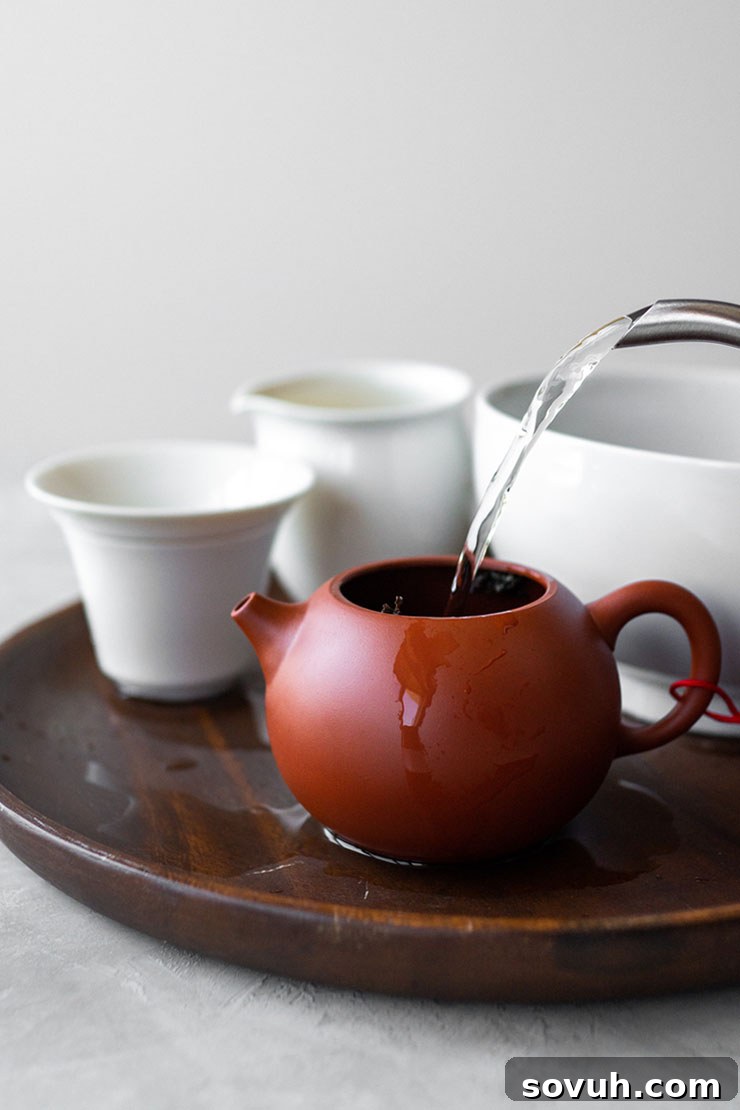
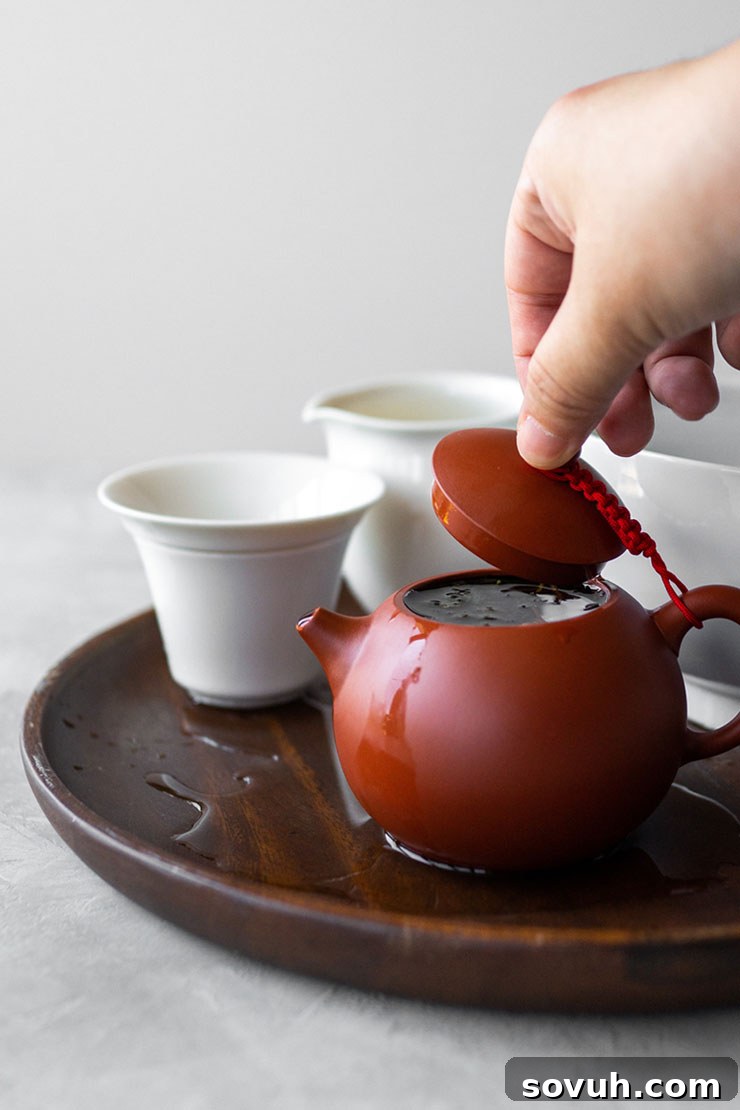
STEP 5: Fill the teapot with hot water.
Fill your clay teapot to the top with the hot water. Placing the set on a tray or towel helps contain any spills from overfill or pouring.
STEP 6: Rinse the leaves briefly.
Pour hot water into the teapot and keep it in for only a few seconds—about 5 seconds—then pour that water out into the large bowl. This quick rinse wakes the leaves and begins to unfurl them without producing much liquor.
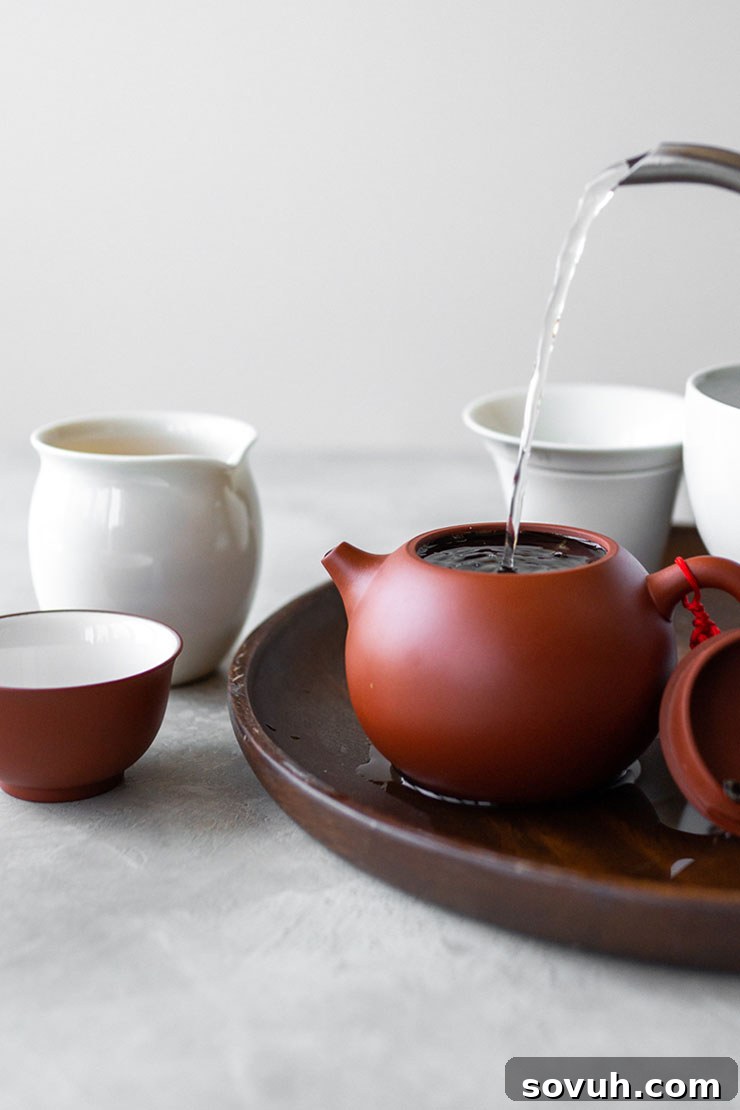
STEP 7: First steep.
Refill the teapot and steep the tea for about 45 seconds for the first drinkable infusion. Short, timed steeps help capture the tea’s delicate top notes while leaving room for multiple subsequent steeps.
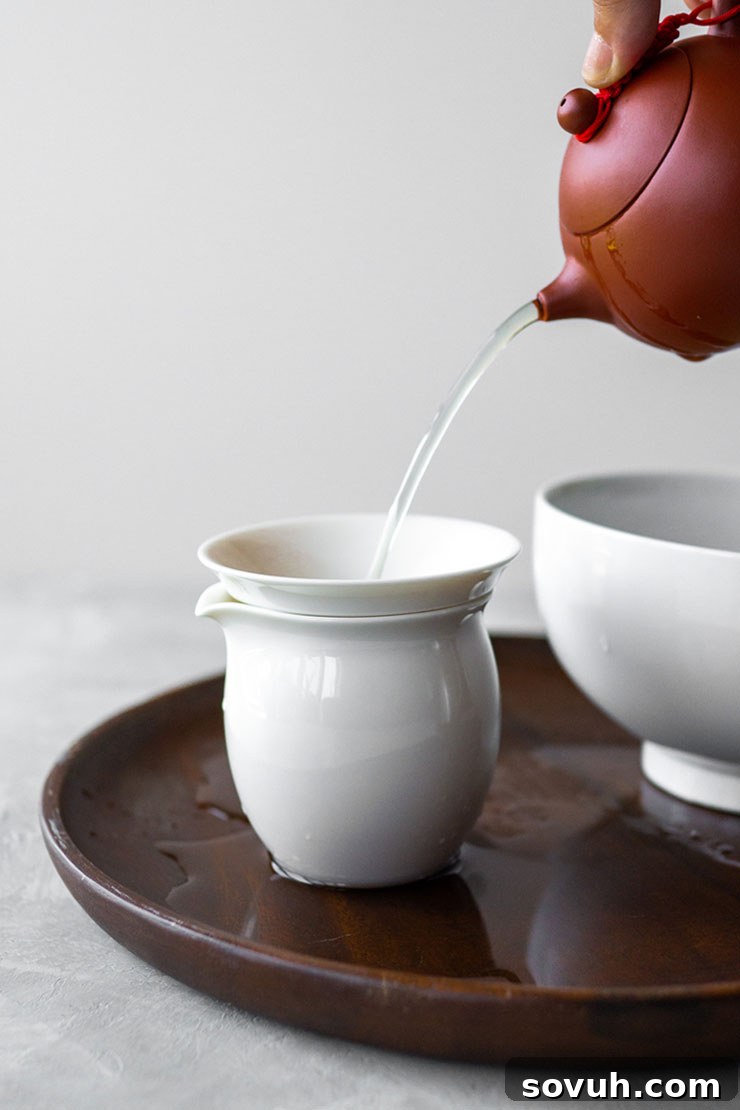
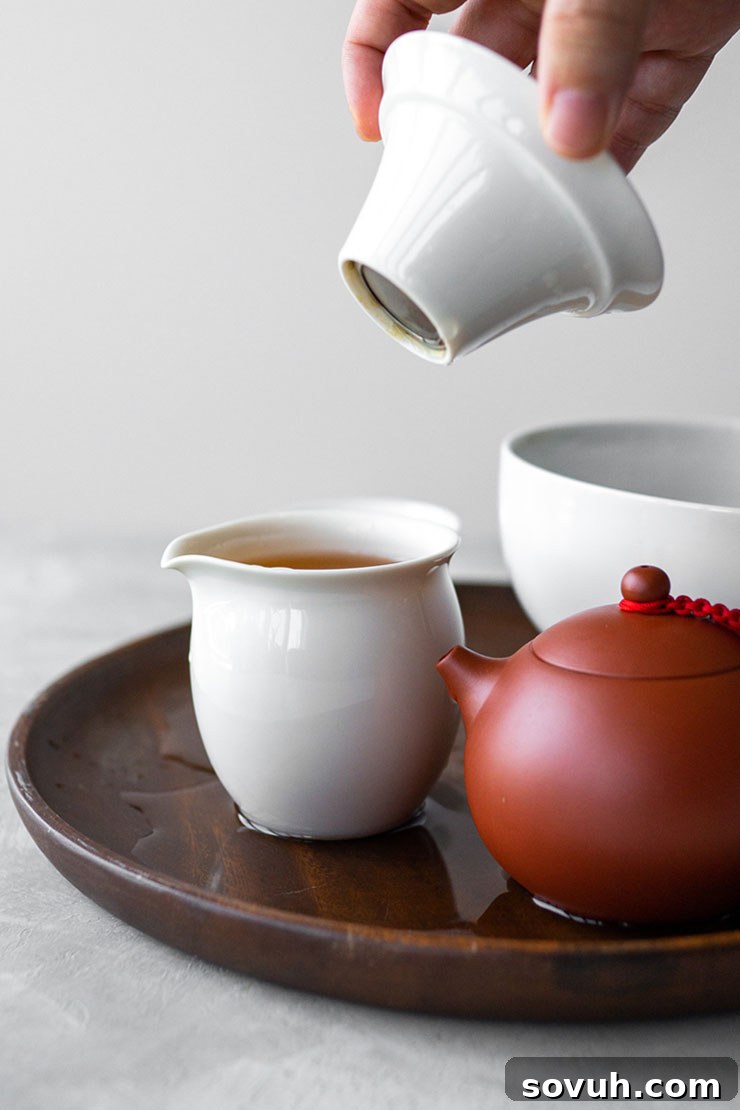
STEP 8: Pour tea through a strainer into the sharing pitcher.
Use a strainer over the sharing pitcher to catch loose leaves as you pour from the teapot. Pour all the liquid into the pitcher—don’t leave water in the teapot—because leftover hot water will continue steeping the leaves and can make subsequent pours bitter. Remove the strainer after pouring.
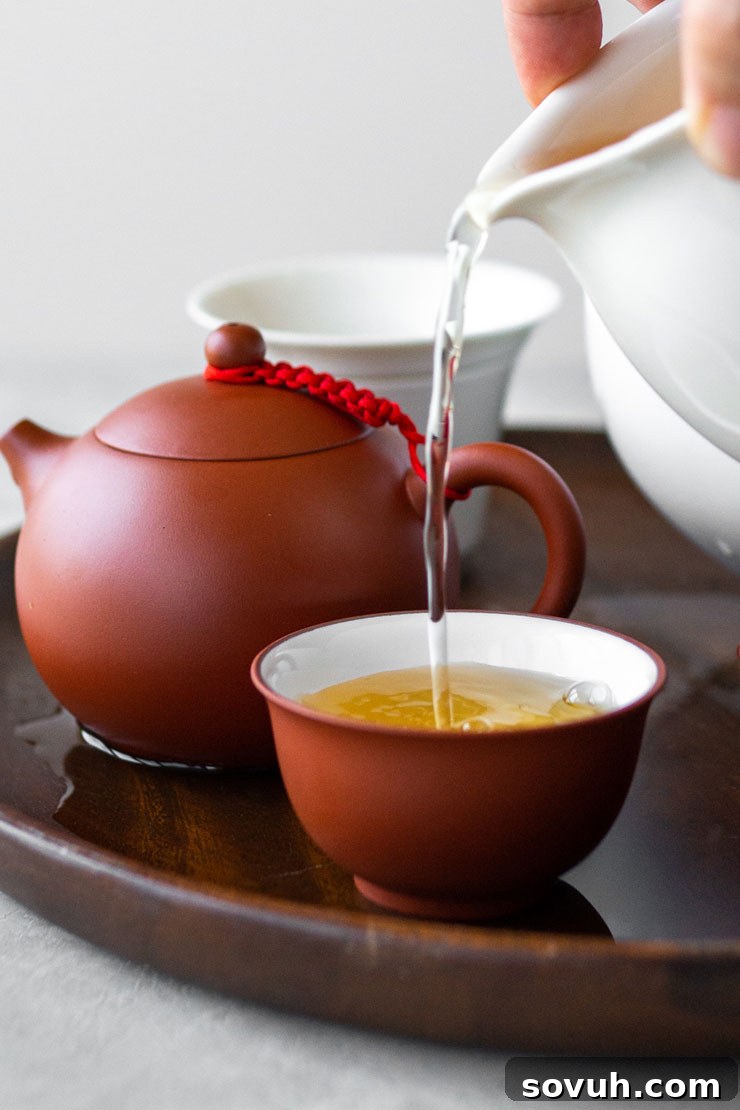
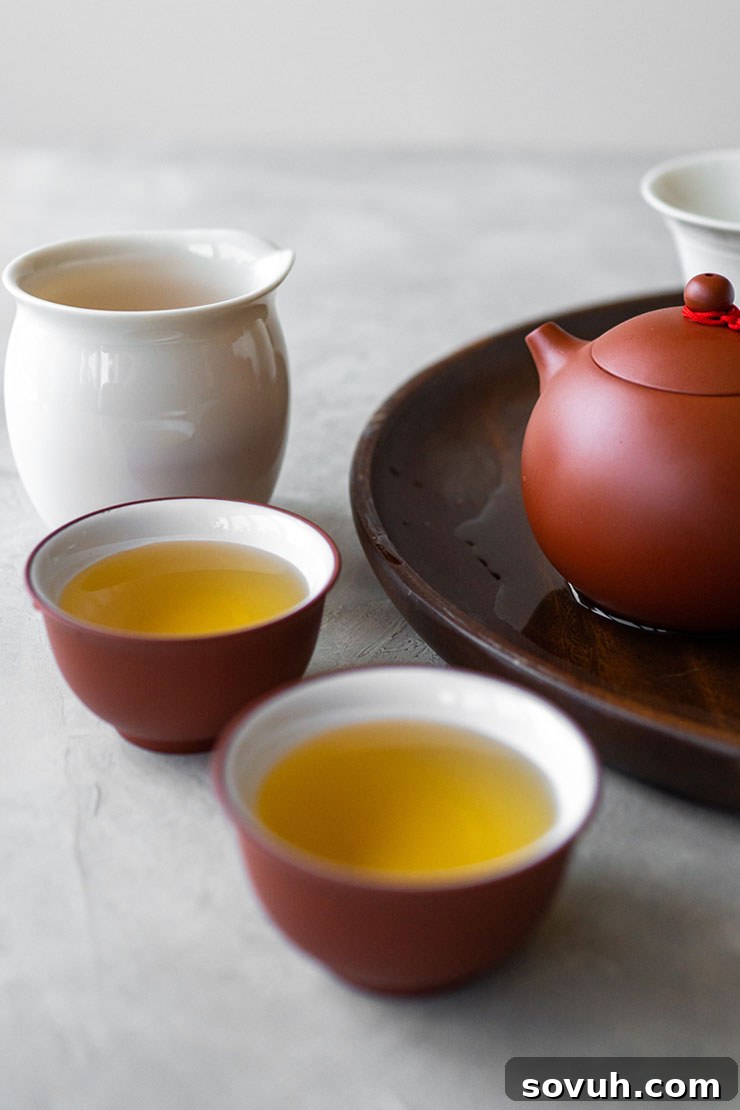
STEP 9: Serve small cups from the sharing pitcher.
Pour from the sharing pitcher into small tasting cups. These cups generally yield two or three sips each, which encourages slow, mindful tasting and lets you compare changes between steeps. Refill the cups until the pitcher is empty.
STEP 10: Second steep.
Refill the teapot and steep again, increasing the time—about 1 minute and 15 seconds is a good guideline for the second infusion. Each additional steep generally needs a bit more time to extract flavor as the leaves open.
STEP 11: Third (and further) steeps.
Continue with at least a third steep—around 2 minutes for the third infusion—and extend subsequent steeps by 30 seconds to a minute as needed. Oolong leaves often yield four or more enjoyable infusions. With each steep, observe how the leaves unfurl and note the evolving aroma and taste.
Oolong Tea Brewing Tips
- Always use quality loose oolong tea and filtered water for the cleanest flavor.
- Clay teapots are especially suited to oolong and puerh styles and can enhance the experience over time as they season.
- Multiple short steeps reveal the tea’s changing character—take notes on aroma, body, and aftertaste across steeps.
Related
- Where to Buy Tea Online
- How to Store Tea Properly
- Difference Between Loose Tea, Tea Sachets, and Tea Bags
- Oolong Tea Pairing
- Want to Get into Oolong Tea? Start Here.











