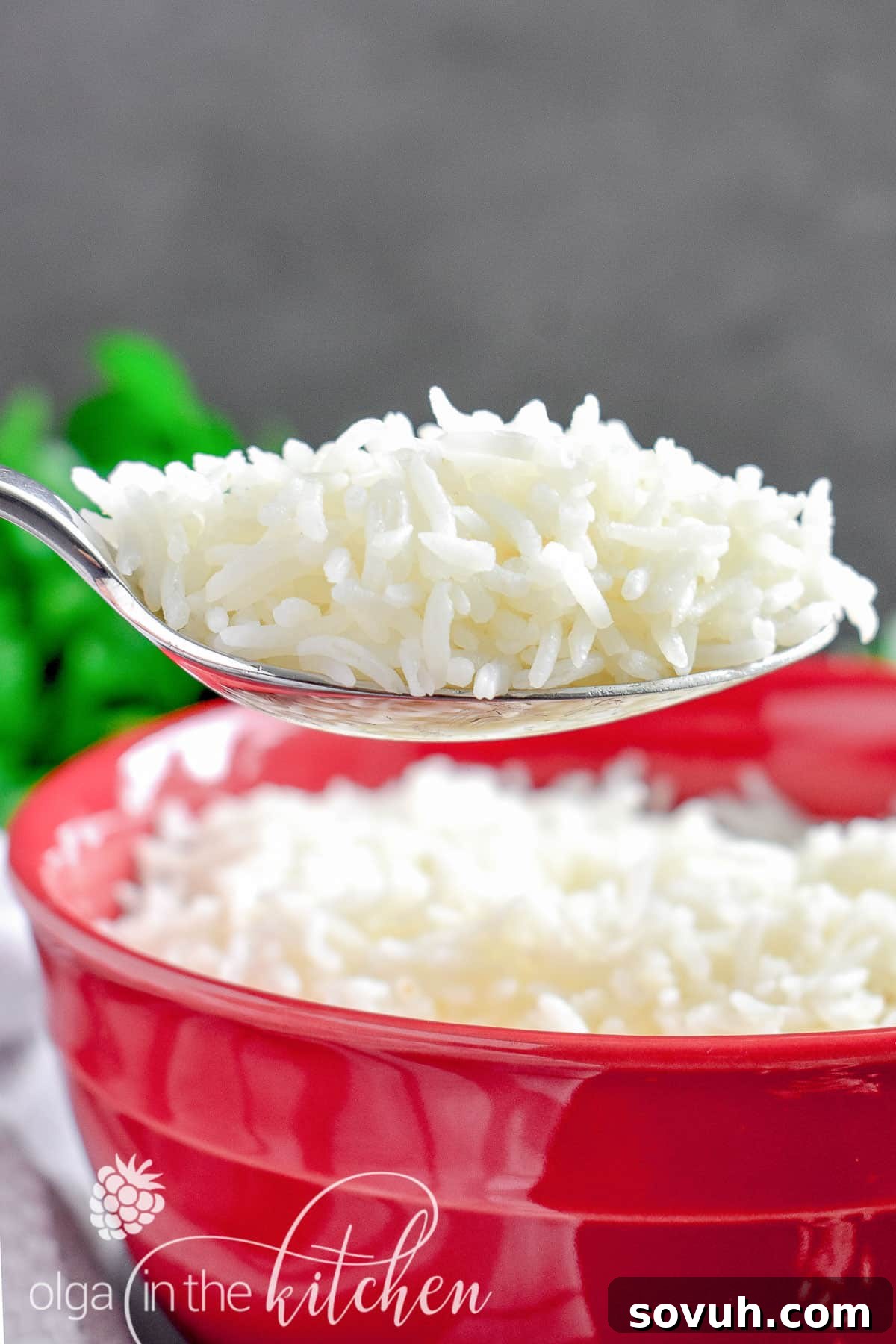
How to Cook Fluffy White Rice Every Time
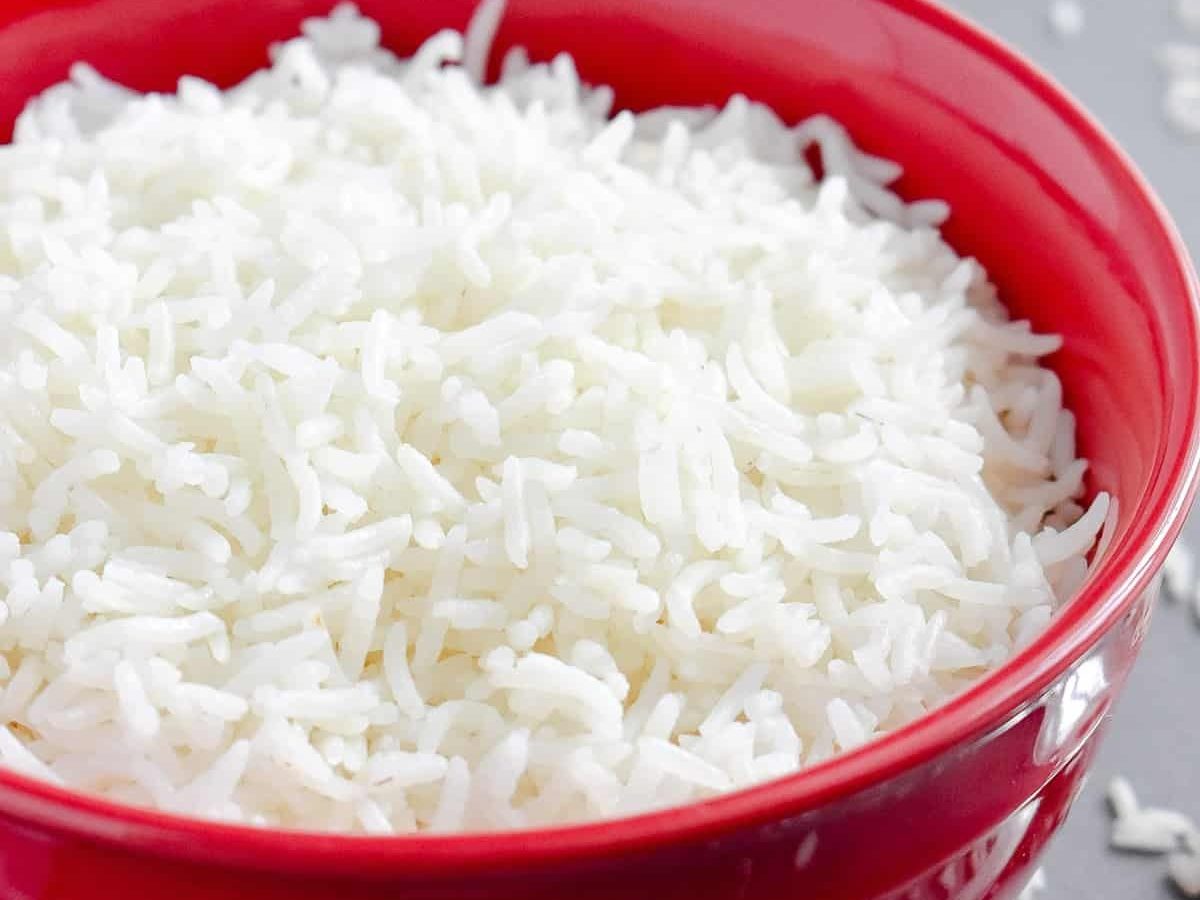
Learn how to cook perfect rice every time with a simple, reliable stovetop method. This guide shows how to make tender, fluffy white rice—no gummy or undercooked results.
Home-cooked white rice is a household staple. It pairs well with dishes such as Rice Stuffed Chicken Thighs, Baked Pork Meatballs, Baked Chicken Tenderloins, Sweet BBQ Pork Ribs, and Chicken Drumsticks. Add a fresh salad and you have a complete, easy meal.
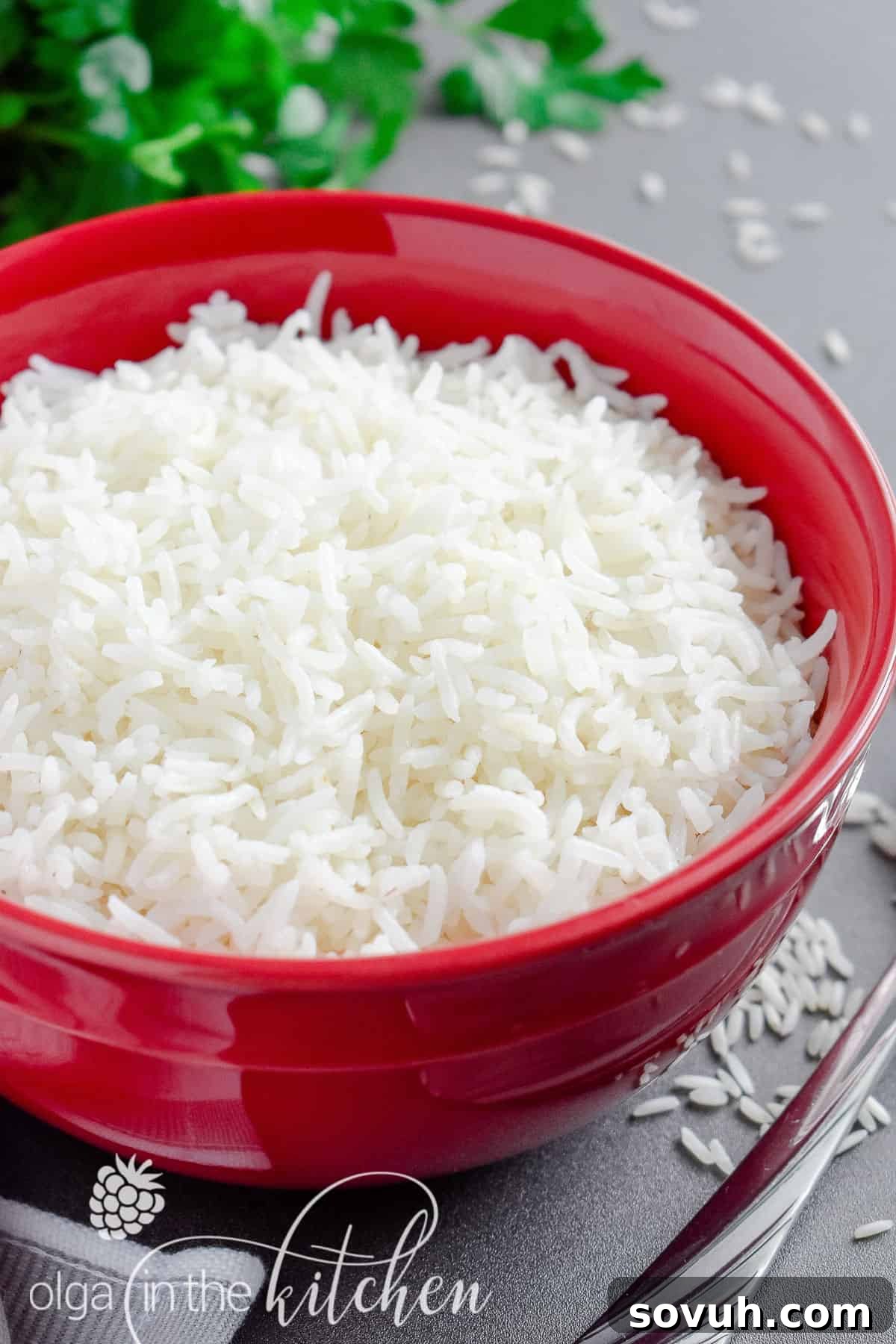
Why this method works
When rice cooks so that each grain remains separate and fluffy, you can be confident in your technique. Common problems—mushy, sticky, or unevenly cooked rice—often come from not rinsing the rice, using the wrong water ratio, or disturbing the pot while the rice is steaming. The stovetop pilaf method used here toasts the rice briefly in butter, which adds flavor and helps keep the grains separate.
Perfect Basmati Rice Recipe
Although rice cookers are convenient, a simple stovetop approach produces consistently excellent results and requires only a small saucepan and a skillet. The pilaf technique—briefly toasting rinsed rice in butter before adding boiling water—yields tender, fluffy rice with a pleasant toasted aroma.
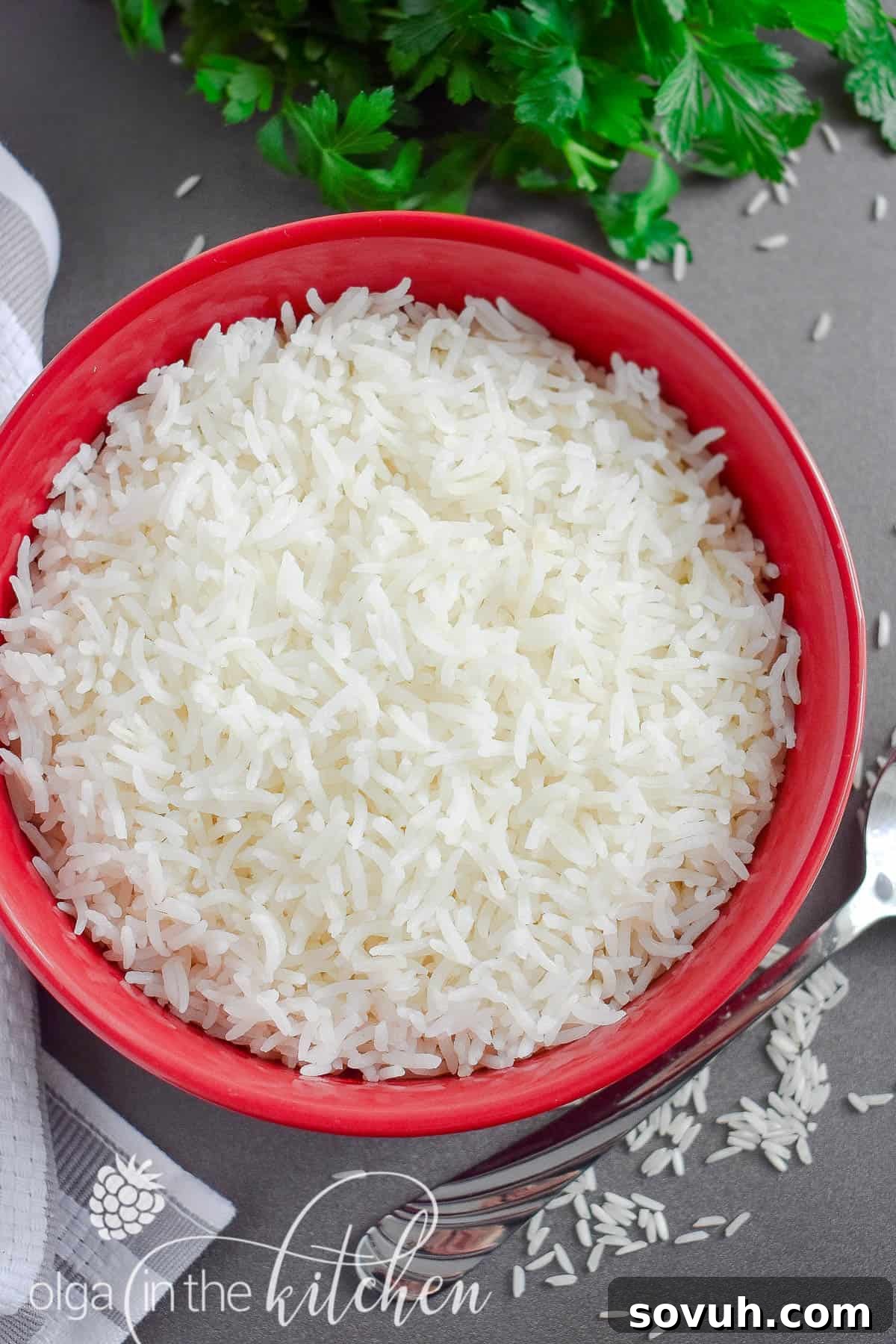
Ingredients for White Rice
- Basmati rice – our preferred long-grain white rice; jasmine or other long-grain white rice will work too.
- Cold water – bring the water to a boil before adding the rice; using already boiled water shortens the wait but keep cooking time the same.
- Unsalted butter – adds flavor and helps coat the grains; if you use salted butter, reduce the added salt.
- Fine salt – adjusted to taste.
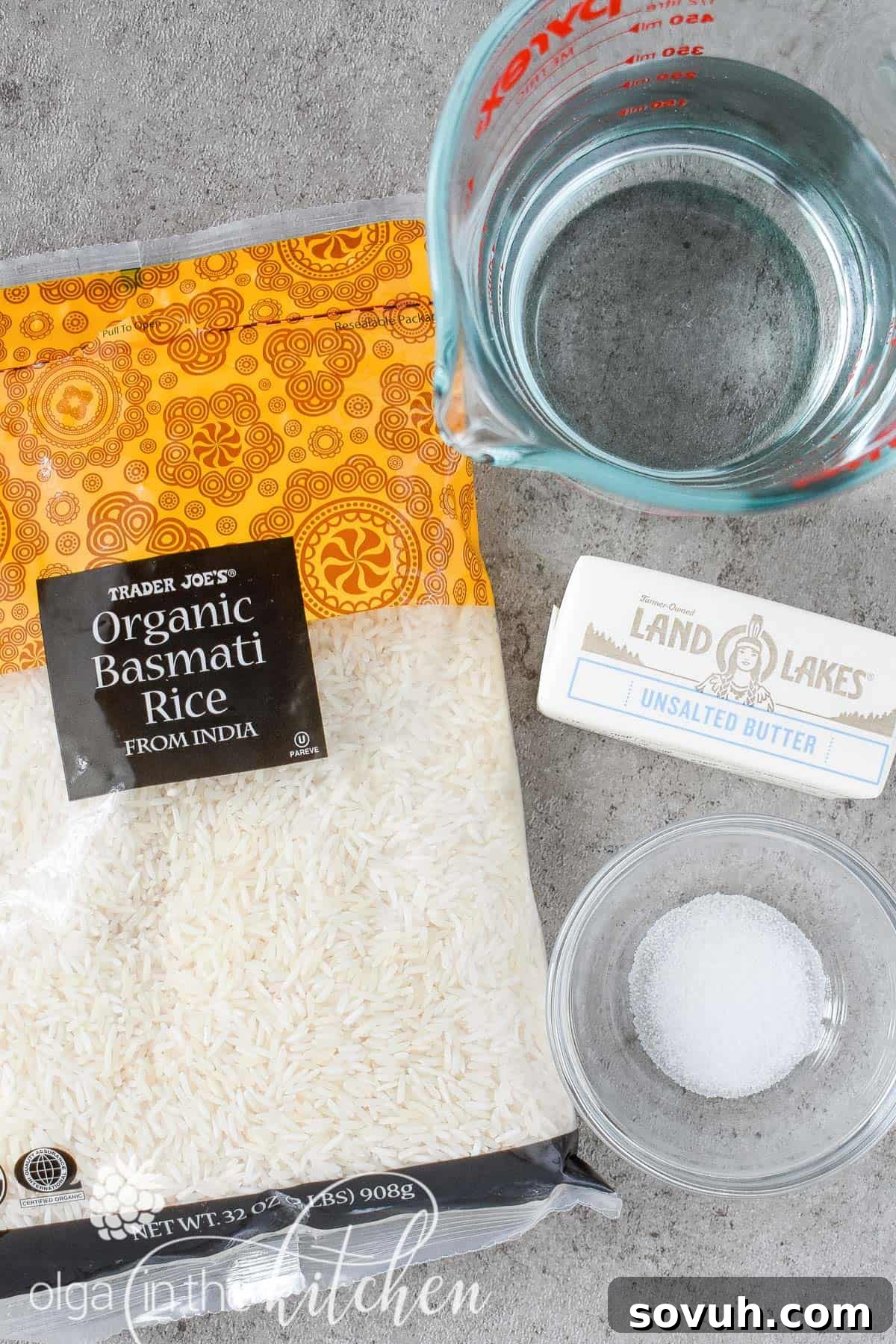
How to Cook White Rice
- Rinse the rice. Place 1 cup uncooked rice in a fine-mesh strainer and rinse under cool running water until the water runs clear. This removes dusty surface starch that can cause sticky, gummy grains.
- Bring water to a boil. In a small saucepan with a lid, bring 1 1/2 cups cold water to a boil over high heat.
- Toast the rice. While the water heats, melt 2 tablespoons unsalted butter in a small skillet. Add the rinsed rice and 1/2 teaspoon fine salt. Stir for 4–5 minutes until the rice is evenly coated and gives off a light toasted aroma.
- Simmer, covered. Add the toasted rice to the boiling water, cover with the lid, reduce heat to low and bring to a gentle simmer. Cook undisturbed until the water is absorbed, about 13–15 minutes. You may hear a soft hissing while it cooks; when it becomes quiet, the rice is usually done. (Stainless steel pans may cook slightly faster—check at 12 minutes.)
- Let rest, then fluff. Remove the saucepan from heat and let the rice rest, covered, for 10 minutes. Fluff gently with a fork before serving.
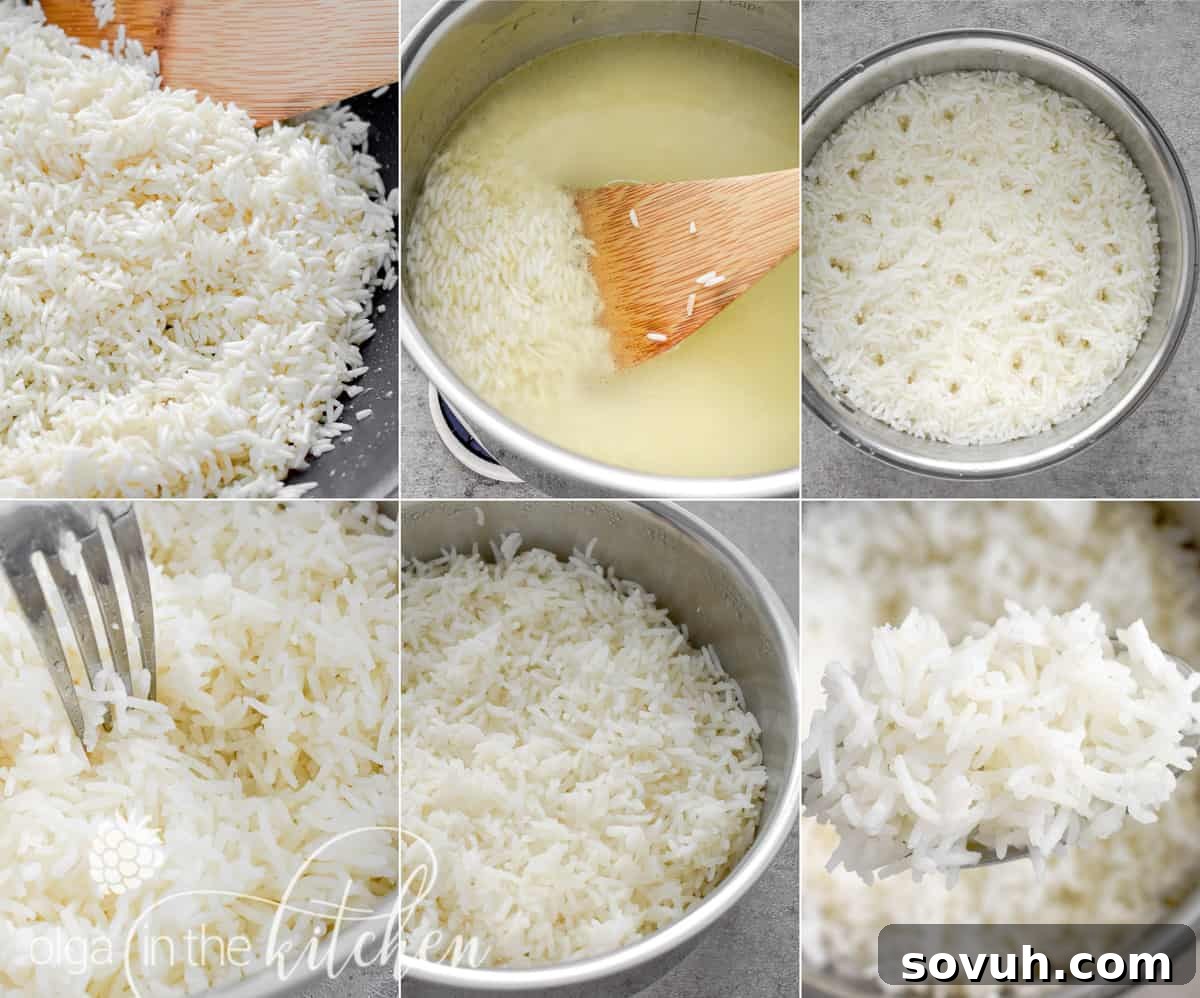
Rinsing and Soaking: What to Do
- Rinsing: Always rinse long-grain white rice before cooking. It removes surface starch that otherwise makes rice sticky.
- Soaking: Soaking is generally unnecessary for long-grain white rice and can make it too soft. Soaking is more common for some pilaf techniques or for specific rice varieties, but for this basic stovetop method you should skip soaking.
Best Rice to Use
This method is written for long-grain white rice. Basmati is our go-to because it stays light and fluffy; jasmine will also yield excellent results. Both maintain distinct grains when cooked properly.
How to Tell When Rice Is Done
- Use a timer and the suggested cook time as a guide.
- Listen for a soft hissing sound during simmering; when it fades, the water is usually absorbed.
- After resting, lift the lid and fluff with a fork. There should be no visible water at the bottom. If water remains, recover and let the rice rest off the heat for another 10 minutes.
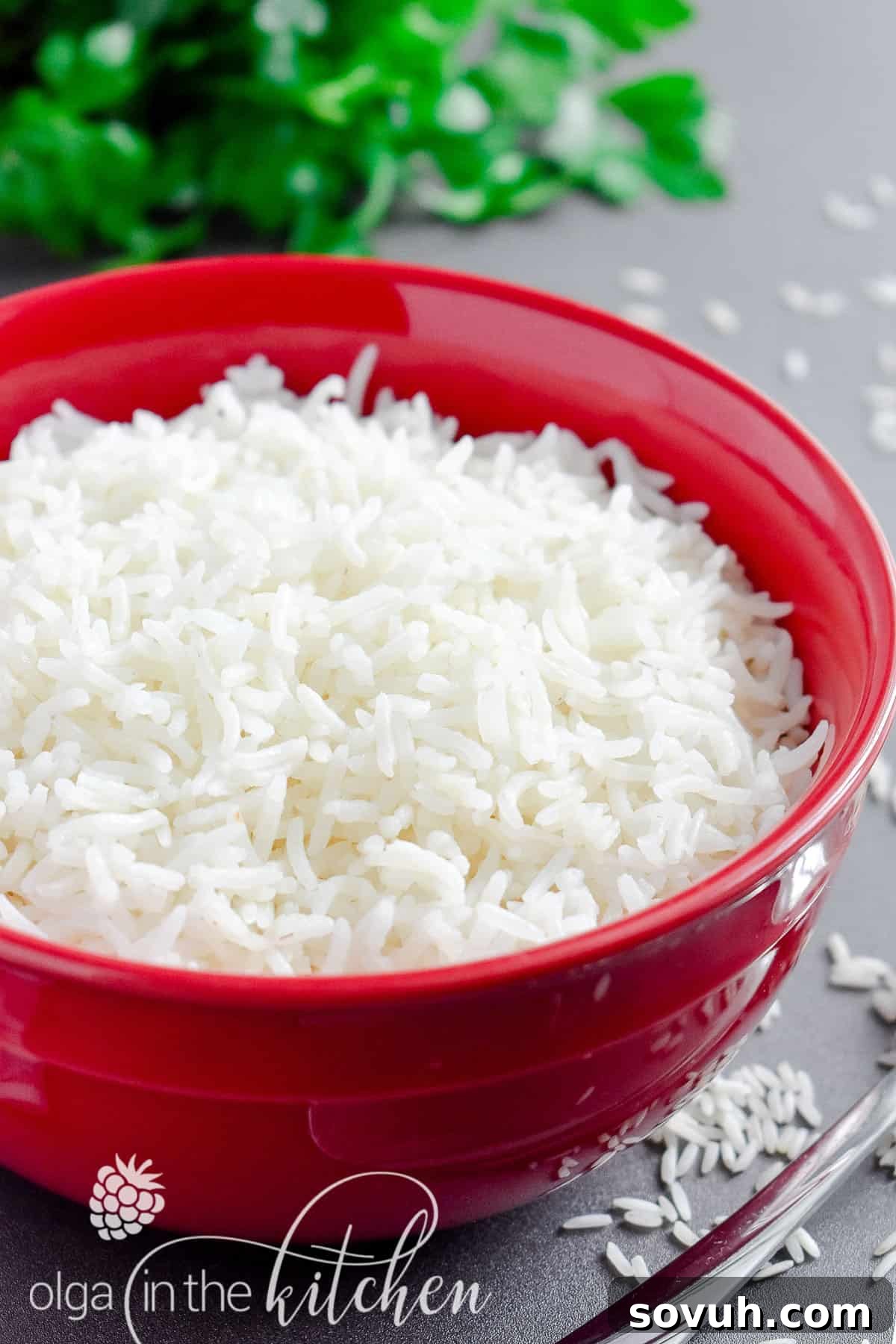
Scaling and Freezing
One cup of uncooked rice yields about three cups cooked. To double the batch, use 2 cups rice and 3 cups water; keep the rice-to-water ratio at 1:1.5. Cooked rice freezes well and is convenient for quick meals: cool the rice to room temperature, pack into freezer-safe bags with minimal air, lay flat to freeze, and store up to three months. Reheat straight from frozen in a nonstick skillet over low heat with a little butter or oil.
Flavor Variations
Substitute the cooking water with vegetable or chicken broth for more flavor. Stir in an extra pat of butter before serving for a richer finish. Steamed basmati rice works beautifully as a base for stews, grilled meats, or saucy dishes like slow-cooked pulled chicken.
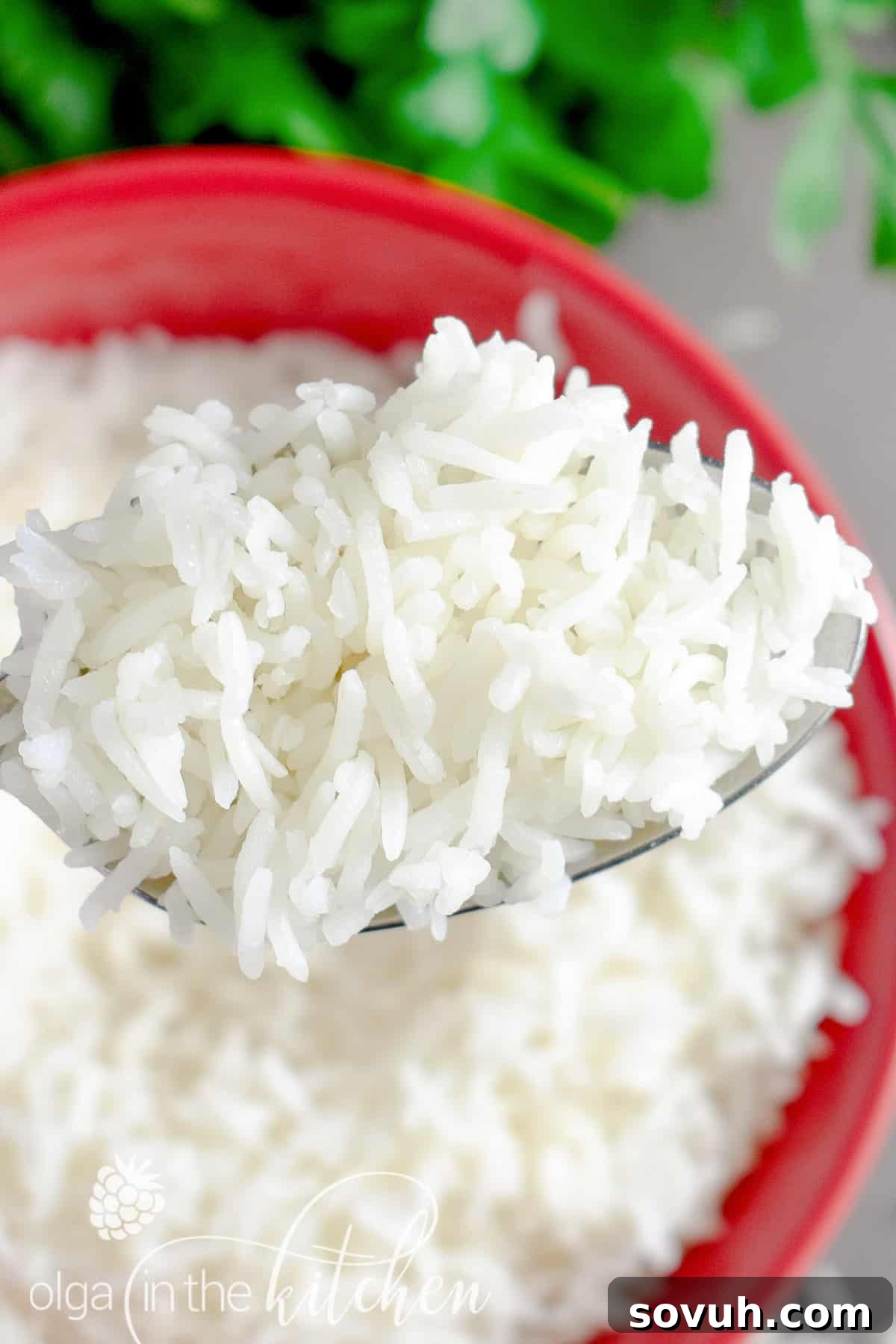
Common Uses
Rice is versatile: serve it simply as a side, use it as the base for pulled chicken or stews, or incorporate leftovers into fried rice, stuffed chicken thighs, or soups. It pairs well with pork ribs, meatballs, and many other family-friendly dishes.
Secrets to Perfect Stove-Top Rice
- Always rinse the rice under cool water.
- Add butter and salt to boost flavor.
- Keep the lid on while the rice cooks and rests—no peeking.
- Let the rice rest covered off the heat for 10 minutes before fluffing.
- Fluff gently with a fork to separate grains.
How to Cook White Rice (Quick Recipe)
Ingredients
- 1 cup uncooked basmati rice
- 1 1/2 cups cold water
- 2 tablespoons unsalted butter
- 1/2 teaspoon fine salt
Instructions
- Rinse 1 cup rice in a fine-mesh strainer under cool running water until it runs clear.
- Bring 1 1/2 cups cold water to a boil in a small saucepan with a lid.
- In a small skillet, melt 2 tablespoons butter. Add the rinsed rice and 1/2 teaspoon salt and stir 4–5 minutes until the rice smells toasted.
- Add the toasted rice to the boiling water, cover, lower the heat to maintain a gentle simmer, and cook 13–15 minutes until the water is absorbed.
- Remove from heat and let rest, covered, for 10 minutes. Fluff with a fork and serve.
Notes
- This method is for long-grain white rice such as basmati or jasmine.
- Rinsing is important to remove excess surface starch and keep grains separate.
- Soaking is not necessary for this technique and can make long-grain rice too soft.
- To freeze, cool rice to room temperature, portion into freezer bags, remove excess air, and freeze flat for up to 3 months.
- To scale, keep the 1:1.5 rice-to-water ratio (cup to cups).