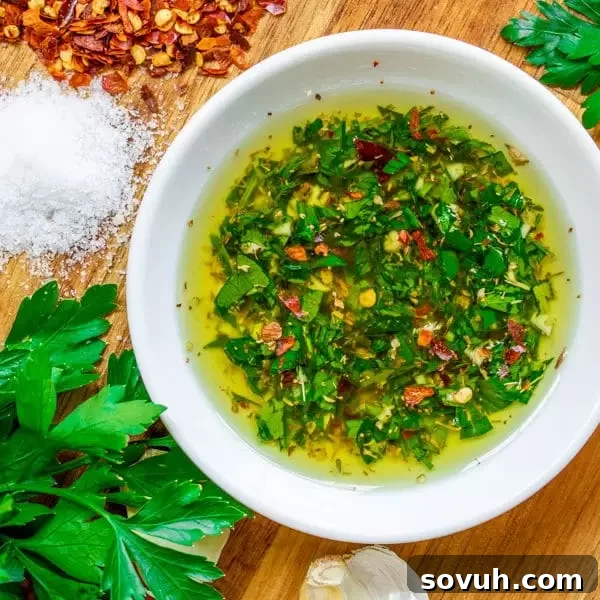
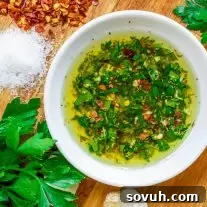
This easy Chimichurri Sauce Recipe is a simple mix of fresh herbs, spices, and olive oil that is the perfect addition to grilled steaks.
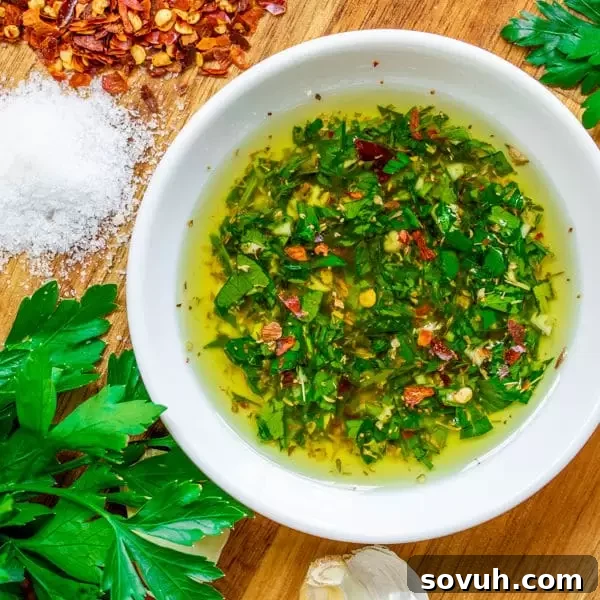
Mastering the Art of Easy Homemade Chimichurri Sauce
There are few condiments that can instantly transport your taste buds to a sun-drenched Argentinian barbecue quite like Chimichurri sauce. This vibrant, herbaceous, and intensely flavorful sauce is more than just an accompaniment; it’s a celebration of simple, fresh ingredients coming together to create something truly extraordinary. Whether you’re a seasoned grill master or just looking to elevate your everyday meals, mastering an easy homemade chimichurri recipe is a culinary skill that will serve you well.
While we’re diving into a traditional chimichurri recipe today, the beauty of this sauce lies in its adaptability. The culinary world abounds with countless variations. Some enthusiasts enjoy a lively blend of fresh cilantro and parsley, creating a brighter, slightly citrusy note that complements many dishes. Others introduce the subtle heat of finely diced red onions or shallots, adding another layer of complexity. You might even encounter versions brightened with a splash of fresh lemon juice or lime juice, each offering a unique twist on the classic.
The core philosophy of chimichurri is that there’s no single “right” or “wrong” way to prepare it. It’s an invitation to experiment, to taste, and to truly make the recipe your own. Start with this time-honored traditional base, and then feel free to infuse it with your personal preferences until you discover the chimichurri that speaks directly to your palate. This culinary journey ensures that every batch you make is perfectly tailored for your enjoyment and for delighting your guests.
What Exactly is Chimichurri Sauce? Origins, Ingredients, and Purpose
At its heart, Chimichurri is a rustic, uncooked sauce hailing from the vibrant culinary landscapes of Argentina and Uruguay. It’s deeply ingrained in the culture of the asado – the South American barbecue tradition where perfectly grilled meats are the star of the show. More than just a simple sauce, chimichurri serves as a zesty counterpoint to rich, savory cuts of beef, cutting through the fat and refreshing the palate with its herbaceous zing.
The classic chimichurri is characterized by its distinct blend of finely chopped fresh parsley leaves, dried oregano, pungent garlic, and a touch of heat from red pepper flakes. In Uruguay, the addition of red pepper flakes is a particularly common and cherished element, lending a subtle warmth that enhances the overall flavor profile without overpowering it. These aromatic ingredients are then generously bathed in a mixture of tangy vinegar – typically red wine vinegar – and high-quality olive oil. The oil not only binds the flavors but also creates a luscious texture that clings beautifully to grilled meats.
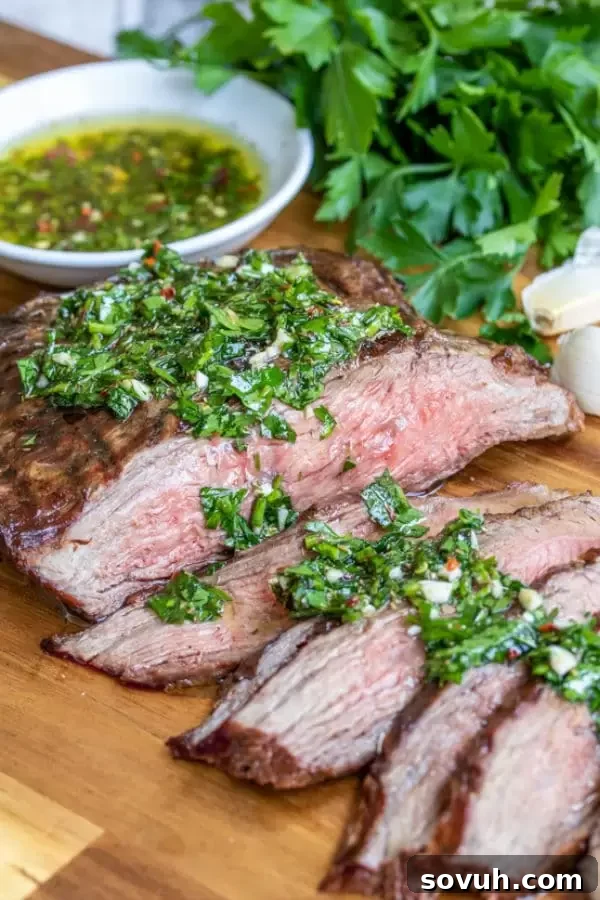
Traditionally, chimichurri is served as an “accompaniment,” meaning it’s spooned generously over cooked meats, rather than used solely as a marinade. While it can certainly function as a delicious marinade, especially for cuts like grilled flank steak, this usage is considered less traditional. The magic of chimichurri truly shines when its fresh, bright flavors hit the hot, savory surface of a perfectly grilled steak, chicken, or even fish, adding an instant burst of South American flair to every bite. It’s a versatile condiment that has earned its place as a staple in kitchens around the globe.
The Art of Crafting Chimichurri: Simple Steps for Maximum Flavor
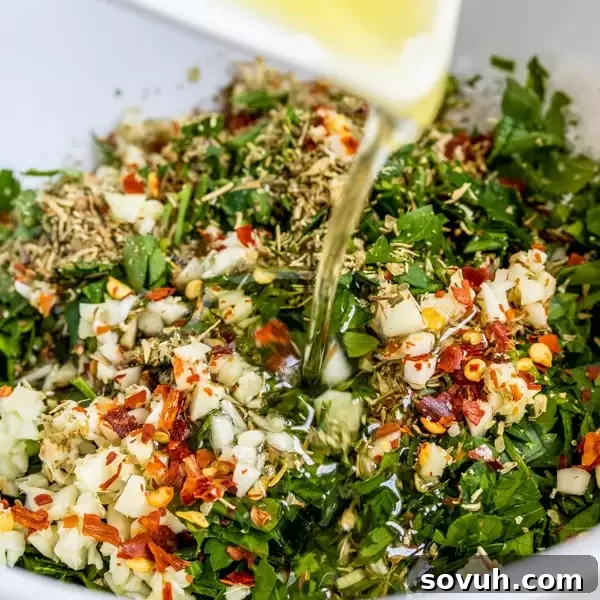
Making chimichurri is surprisingly straightforward, embodying the beauty of simplicity in cooking. The process involves gathering all your key ingredients – fresh parsley, aromatic oregano, potent garlic, fiery red pepper flakes, tangy red wine vinegar, and rich olive oil – and combining them. You simply place them in a bowl and stir them together until well combined. That’s truly all there is to the basic assembly! However, for the best results, I always recommend allowing the sauce to sit for at least 15 minutes. This crucial resting period gives the flavors ample time to meld and deepen, transforming individual ingredients into a harmonious symphony of taste. I often prepare my chimichurri just before I put the steak on the grill, allowing it to develop its full potential while the meat cooks to perfection.
While many contemporary recipes might suggest using a food processor to blend everything, I strongly advocate for adhering to the traditional method: finely chopping the parsley and garlic by hand with a sharp knife. This isn’t just about preserving tradition; it’s about achieving the ideal texture and flavor profile. Aim to chop the herbs and garlic as finely as possible. No one appreciates biting into a large, unwieldy piece of parsley! The effort of hand-chopping ensures a consistent texture where each ingredient contributes its essence without dominating.
When you opt for a food processor, the ingredients tend to get over-processed, resulting in a somewhat frothy, almost mushy consistency. Instead of a vibrant, chunky sauce brimming with distinct bits of garlic, parsley, and red pepper flakes that beautifully cling to and complement your steak, you end up with something closer to a purée. The traditional hand-chopped method preserves the integrity of each component, creating a truly delicious dipping sauce that offers both visual appeal and a delightful textural experience. Trust me on this one – the minimal extra effort of chopping by hand is immensely rewarding and will elevate your chimichurri from good to truly exceptional.
Fresh vs. Dried Herbs: A Culinary Debate for Authentic Flavor
The question of using fresh versus dried herbs in chimichurri is a topic of much discussion among culinary enthusiasts. Every authentic chimichurri sauce I’ve ever encountered has proudly featured fresh herbs, particularly parsley, for its vibrant color and bright, clean flavor. This led me to delve a little deeper into the historical context of this beloved condiment.
While fresh herbs are the gold standard today, the consensus among food historians is that the gauchos – the legendary South American cowboys who are credited with originally creating this recipe – would not have had ready access to fresh herbs while out on the range. Their culinary creations were born of necessity and whatever resources were available, which often meant dried provisions.
Therefore, you certainly have the flexibility to use either dried or fresh herbs, or even a combination of both, depending on your preference and what you have on hand. In this particular recipe, I’ve chosen a delicious and effective blend: dried oregano and fresh parsley. I genuinely believe that fresh parsley makes an undeniable difference in the overall vibrancy and freshness of the sauce. Its crisp, green notes are simply irreplaceable. I can’t help but imagine that those resourceful gauchos of old would have enthusiastically utilized fresh parsley if only it had been available to them. Dried oregano, on the other hand, brings an intense, earthy aroma that perfectly balances the brightness of the parsley, providing depth that’s harder to achieve with fresh oregano alone, which can sometimes be a bit overpowering.
Experimentation is key here. If you prefer a more robust oregano flavor, a high-quality dried variety is excellent. If you have access to fresh oregano and enjoy its distinct profile, feel free to substitute or even combine for a truly unique chimichurri. The goal is a harmonious balance of flavors that tantalizes the taste buds and elevates your dishes.
Beyond Steak: Versatile Ways to Enjoy Chimichurri Sauce
While Chimichurri sauce is famously known as the perfect partner for grilled steak, its culinary applications extend far beyond the realm of beef. This incredibly versatile, fresh, and subtly spicy (depending on your red pepper flake preference) sauce has the power to transform a multitude of dishes, adding a burst of flavor and a touch of South American vibrancy. Don’t limit yourself to just red meat; explore the exciting possibilities:
- Grilled Flank Steak, Skirt Steak, or Any Steak: This is its quintessential pairing for a reason. The bright acidity and fresh herbs cut through the richness of the beef, creating a perfectly balanced bite.
- Grilled Chicken: Spooned over grilled chicken breasts, thighs, or a whole roasted chicken, chimichurri adds moisture and an incredible depth of flavor.
- Grilled Pork or Lamb: The robust flavors of pork chops or lamb chops are beautifully complemented by the zesty freshness of chimichurri.
- Grilled Fish and Seafood: Delicate white fish like cod or halibut, salmon fillets, shrimp, or scallops all come alive with a dollop of chimichurri. It’s a fantastic alternative to lemon or butter.
- Roasted Potatoes: Drizzle chimichurri over hot, crispy roasted potatoes for an unexpected and utterly delicious side dish. Imagine it on mashed potatoes too – pure comfort!
- Summer Pasta Salad: Forget heavy dressings! Toss your favorite pasta salad with chimichurri for a light, refreshing, and intensely flavorful meal.
- Burgers and Sandwiches: Use it as a vibrant spread on burgers, hot dogs, or any sandwich for an elevated taste experience.
- Roasted or Grilled Vegetables: Asparagus, bell peppers, zucchini, corn on the cob, or even hearty mushrooms are transformed into gourmet sides with a generous coating of chimichurri.
- Eggs: A spoonful over scrambled eggs, fried eggs, or an omelet makes for a remarkably flavorful breakfast or brunch.
- Bread Dip: Serve it simply with crusty bread for an appetizer that’s sure to impress.
- As a Marinade: While less traditional for chimichurri, a quick marinade for chicken or fish can impart incredible flavor before grilling.
The list truly goes on and on. Its bright, garlicky, and herbaceous profile is incredibly adaptable. If you discover a new and exciting way to incorporate this simple chimichurri into your meals, we’d love to hear about it! Make sure to let us know in the comments below and inspire other home cooks.
Tips for Storing and Enjoying Chimichurri
To fully appreciate the vibrant flavors of your homemade chimichurri, proper storage is key. After preparing your sauce, transfer it to an airtight container. A glass jar with a tight-fitting lid works perfectly. Store the chimichurri in the refrigerator, where it will stay fresh for up to 5-7 days. Over time, the flavors will continue to meld and deepen, often tasting even better on the second and third days.
It’s natural for the olive oil to solidify slightly when chilled. Simply allow the sauce to come to room temperature for about 20-30 minutes before serving, or gently warm it by placing the container in a bowl of warm water. Give it a good stir, and it will return to its luscious, pourable consistency.
Health Benefits of this Herbaceous Sauce
Beyond its incredible taste, chimichurri offers some noteworthy health benefits, making it a wholesome addition to your diet. The star ingredient, fresh parsley, is packed with vitamins K, C, and A, as well as potent antioxidants that support overall health. Garlic is well-known for its immune-boosting and cardiovascular benefits. High-quality extra virgin olive oil, the base of the sauce, is a cornerstone of the Mediterranean diet, rich in monounsaturated fatty acids and antioxidants that contribute to heart health and reduce inflammation. So, while you’re savoring the incredible flavors, you’re also nourishing your body with fresh, natural ingredients.
Looking for More Easy Sauces and Seasonings to Elevate Your Cooking?
If you’ve enjoyed making this chimichurri and are eager to explore more homemade flavor enhancers, check out some of our other favorite easy recipes:
- How to Make Basil Pesto
- Homemade Red Enchilada Sauce
- Classic Homemade BBQ Sauce
- Simple Homemade Taco Seasoning
- Flavorful 7UP Marinade for Steaks
- Quick and Easy BBQ Dry Rub
- Versatile Homemade Ranch Seasoning
CHIMICHURRI SAUCE RECIPE
Like this recipe? Follow us on Instagram and Pinterest for more
Easy Recipes and Simple Entertaining Ideas!
Total Time: 10 mins
Chimichurri Sauce
Print Recipe
Ingredients
- 1 cup Parsley, finely chopped and packed
- 2 tablespoons Dried Oregano
- 3 cloves Garlic, finely diced
- 1/2 teaspoon Red Pepper Flakes, if you prefer less spice, you can halve this amount
- 1 teaspoon Salt
- 1/4 cup Red wine vinegar
- 3/4 cup Olive oil
Instructions
-
Add all finely chopped dry ingredients (parsley, oregano, garlic, red pepper flakes, salt), red wine vinegar, and olive oil to a bowl and whisk them together until well combined. Allow to sit for at least 15 minutes for flavors to meld before serving.
Nutrition Information (Estimate)
Calories: 188kcal,
Carbohydrates: 1g,
Fat: 20g,
Saturated Fat: 2g,
Sodium: 298mg,
Potassium: 61mg,
Vitamin A: 690IU,
Vitamin C: 10.3mg,
Calcium: 32mg,
Iron: 1.1mg
Cuisine: Latin American

This post was originally published on January 25, 2015. It was updated with new photos and an updated recipe on June 10, 2019 to provide the most current and best information for our readers.