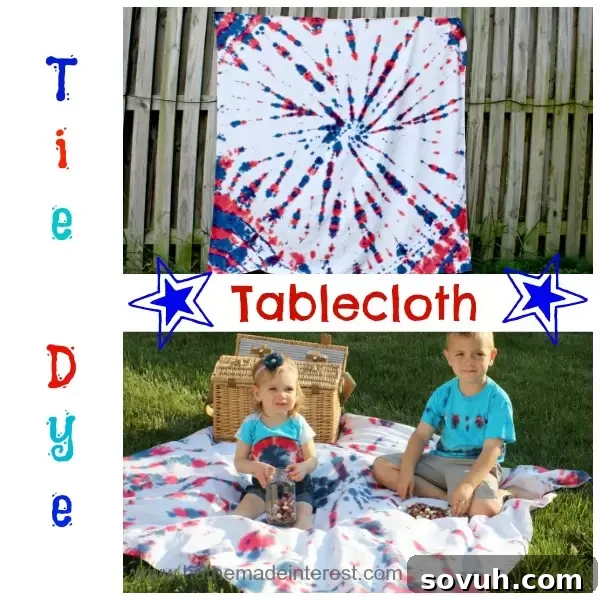
DIY Tie Dye Tablecloth: Your Ultimate Guide to a Vibrant Summer Centerpiece
Transform a simple white tablecloth into a burst of color with this fun and easy DIY tie-dye project! Whether you’re planning a lively summer picnic, a festive backyard barbecue, or celebrating patriotic holidays like the 4th of July, a custom tie-dyed tablecloth adds a unique and personal touch. Not only is it a fantastic way to refresh an old tablecloth, but it also doubles as a vibrant picnic blanket, a playful photo backdrop, or an eye-catching piece of summer party decor. Let’s dive into creating a masterpiece that will surely be a conversation starter!
Tie-dye has seen a magnificent resurgence in popularity, embracing its roots in vibrant, free-spirited design. It’s a craft that’s not only incredibly satisfying but also allows for endless creativity, making each piece truly one-of-a-kind. We recently embarked on our very first tie-dye adventure, creating a stunning red, white, and blue picnic blanket that immediately brightened our outdoor gatherings. A tablecloth is an ideal starting point for beginners due to its generous size, offering ample space to experiment with colors and patterns without the pressure of a wearable garment. Beyond its primary use as a tablecloth, imagine it as a cozy picnic blanket spread across lush green grass, a dynamic backdrop for unforgettable photos, or even a colorful wall hanging to infuse your home with summer vibes. Don’t have a plain white tablecloth lying around? No problem! A quick trip to a local thrift store can yield a perfectly suitable, inexpensive option, or simply pick up a plain white sheet. This project is also a brilliant way to give new life to an old, stained tablecloth, transforming imperfections into unique design elements.
Essential Materials for Your Tie-Dye Project
To ensure a smooth and enjoyable tie-dye experience, gathering the right supplies beforehand is crucial. While you can source individual items, a comprehensive tie-dye kit is often the most convenient choice, especially for beginners. We opted for a kit that included everything necessary to get started right away, simplifying the process considerably.
Note: This post contains affiliate links, which means we may be compensated if you click on a link and purchase something.
What to Look for in a Tie-Dye Kit:
- Dyes: High-quality, vibrant dyes in your preferred colors. For our patriotic theme, we focused on red and blue, allowing the white fabric to act as the third color.
- Dye Bottles: Squeeze bottles make applying the dye precise and less messy.
- Rubber Bands: Essential for creating various patterns by segmenting the fabric.
- Protective Gloves: While kits usually include gloves, we highly recommend purchasing a pair of sturdier, better-fitting rubber or nitrile gloves. Trust us, your hands will thank you for the extra protection against stained fingers!
- Instructions: Kits often come with guides for popular tie-dye patterns, which are incredibly helpful for visualizing your design.
Additional Supplies You’ll Need:
- Fabric: Your chosen white tablecloth, sheet, or other cotton-based fabric. Natural fibers like cotton, rayon, and hemp absorb dye best.
- Plastic Sheeting or Drop Cloth: To protect your work surface from dye spills. A large plastic tarp or even old newspapers work well.
- Plastic Bags or Plastic Wrap: To seal your dyed fabric while the colors set.
- Old Clothes/Apron: Wear something you don’t mind getting stained.
- Paper Towels: For quick cleanups.
- Sink or Outdoor Hose: For rinsing the dyed fabric.
- Washing Machine & Dryer: For the final wash and dry cycle.
Preparing Your Fabric and Workspace for Tie-Dye
Before you begin the exciting dyeing process, a little preparation goes a long way in achieving the best results and minimizing mess.
- Pre-Wash Your Fabric: Always pre-wash your tablecloth or fabric without fabric softener. This removes any sizing or finishes that might prevent the dye from absorbing evenly, ensuring more vibrant and lasting colors. Dry the fabric completely or leave it slightly damp – some prefer slightly damp fabric for easier folding and dye saturation.
- Protect Your Workspace: Tie-dyeing can be messy, so set up your workspace in an area where spills won’t be an issue, such as outdoors, in a garage, or on a surface covered with plastic sheeting or a drop cloth.
- Mix Your Dyes: Follow the instructions in your kit to mix the powdered dyes with water in the squeeze bottles. Ensure the powder is fully dissolved for even color distribution.
- Wear Protective Gear: Put on your gloves and an old apron or clothes to protect yourself from dye stains.
Tie-Dyeing Your Tablecloth: The Classic Spiral Pattern
The spiral pattern is a quintessential tie-dye design, producing a mesmerizing swirl of colors that looks fantastic on a large surface like a tablecloth. It’s surprisingly simple to create!
Step-by-Step Spiral Technique:
- Lay Fabric Flat: Spread your pre-washed, slightly damp tablecloth out smoothly on your protected work surface, ensuring there are no wrinkles.
- Pinch and Twist: Locate the center of the fabric – or any point where you want the spiral to originate. Pinch a small section of fabric with your thumb and forefinger. Begin to slowly twist the fabric in a continuous circular motion (either clockwise or counter-clockwise), keeping the fabric flat on the surface as it gathers into a neat, flat spiral disc. Aim for tight, even pleats.
- Secure with Rubber Bands: Once your entire tablecloth is gathered into a compact disc, carefully place several rubber bands around it to create wedge-shaped segments, like slices of a pie. We typically use 3-6 rubber bands, crisscrossing them over the center to create 6-12 sections. The more sections, the more distinct color divisions you’ll have.
- Apply the Dye: With your fabric secured, it’s time for color! For our red, white, and blue theme, we alternated applying red and blue dye to each segment. Squeeze the dye generously onto the fabric, ensuring it penetrates deeply into the folds. Don’t be shy with the dye – well-saturated fabric yields the best results.
- Flip and Dye Other Side: Once one side is fully saturated, carefully flip the fabric disc over. Apply the dyes to the corresponding segments on the other side, mirroring your pattern. This ensures complete color coverage.
Expanding Your Tie-Dye Creations: Onesies and T-Shirts
While the tablecloth was our main focus, Melinda’s enthusiasm for tie-dye was contagious! We couldn’t resist throwing in a few extra items – a white t-shirt and a onesie – to experiment with different patterns and extend the fun. This is a great way to use leftover dye and create matching accessories or gifts.
The Bullseye Pattern for a Onesie
For the adorable onesie, we opted for the classic bullseye pattern, which creates concentric circles of color. It’s incredibly simple and effective.
- Pinch the Center: Lay the onesie flat. Pinch the fabric at the center (or wherever you want the bullseye target to be).
- Gather Upward: Pull the pinched fabric straight up, gathering the surrounding fabric into a column.
- Band Segments: Place rubber bands around the gathered column at even intervals, creating several distinct segments. Each segment will become a ring of color.
- Apply Dye: Apply different colors to each segment. For this onesie, we added a vibrant teal to our palette, alternating between red, blue, and teal for a playful look.
Stripes or Accordion Fold for a T-Shirt
To create dynamic stripes on the t-shirt, we used the accordion fold technique, which is also sometimes referred to as the fan fold.
- Accordion Fold: Lay the t-shirt flat and begin folding it back and forth, like an accordion or a paper fan, from one side to the other. Ensure your folds are even.
- Secure with Rubber Bands: Once the entire shirt is folded into a long, compact rectangle, place rubber bands around it at intervals to create segments. These bands will define your stripes.
- Apply Dye: Apply different colors to each segment created by the rubber bands. Since the tablecloth was quite thirsty for dye, we were running a bit low on red and blue at this point, so the t-shirt ended up with a more prominent teal presence. The beauty of tie-dye is that unexpected variations often lead to delightful results!
The Critical Dye Setting Process
Once all your items are dyed, the waiting game begins! This “setting” period is crucial for the dye to chemically bond with the fabric fibers, ensuring vibrant, lasting colors that won’t simply wash out.
Carefully place each dyed item into its own individual plastic bag, or wrap them tightly in plastic wrap. Seal the bags to maintain moisture and prevent the dyes from drying out prematurely. We let our items sit for a minimum of 8 hours. While 6-8 hours is often sufficient, some enthusiasts recommend 24 hours for the most intense and fade-resistant colors. The longer the dye has to set, the more vibrant your results will typically be.
Rinsing, Washing, and Revealing Your Masterpiece
This is arguably the most exciting part – the grand reveal! After the dye has had ample time to set, it’s time to rinse and wash your creations.
- Cold Water Rinse (with rubber bands on): Still wearing your gloves, take each item to a sink or an outdoor hose. Rinse under cold running water *before* removing the rubber bands. This helps flush out excess dye and prevents colors from bleeding into unwanted areas. Continue rinsing until the water running off the fabric is mostly clear. Melinda was initially worried about how difficult this step would be, but it was surprisingly simple, taking less than five minutes per item.
- Remove Rubber Bands & Rinse Again: Once the water runs clear, you can carefully snip and remove all the rubber bands. Open up your tie-dyed fabric to admire the patterns! Continue rinsing under cold water until the water is completely clear, ensuring all loose dye is gone.
- Hot Water Wash: Place all your freshly rinsed tie-dyed items into the washing machine. Wash them on a hot water cycle with a small amount of detergent. Washing in hot water helps to set the dye even further and remove any remaining unbound dye. It’s best to wash tie-dyed items by themselves for the first few washes to avoid any potential dye transfer to other laundry.
- Dry: Once washed, dry your items as usual in a dryer or by air-drying.
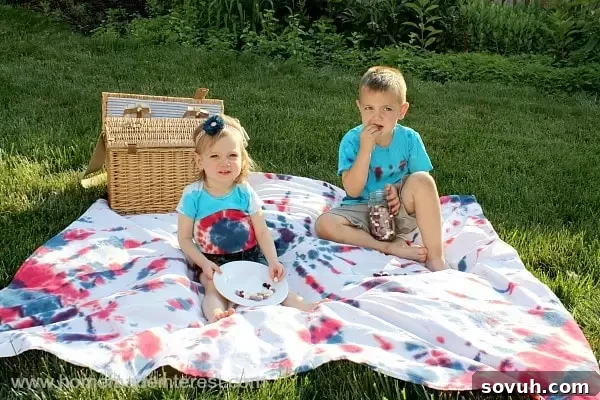
Enjoying Your Custom Tie-Dye Creations!
The next day was filled with joy as we witnessed the kids delighting in their new red, white, and blue tie-dyed picnic blanket. It truly brought an extra layer of fun and festivity to our outdoor picnic. We even had a blast tacking it up to the fence, creating a charming backdrop for some adorable photos of Sawyer, perfectly embodying the spirit of the upcoming 4th of July celebration.
Tips for Tie-Dye Success and Creative Inspiration
Achieving Vibrant Colors:
- Quality Dyes: Invest in good quality fiber reactive dyes for the brightest and most lasting results.
- Natural Fibers: Always use natural fibers like cotton, rayon, hemp, or linen, as synthetic materials do not absorb these types of dyes effectively.
- Soda Ash Pre-Soak: Many professional tie-dyers recommend pre-soaking your fabric in a soda ash solution (often included in kits) for at least 20 minutes before dyeing. This raises the pH of the fabric, helping the dye bond better and resulting in more vibrant colors. If your kit doesn’t include it, it’s a worthwhile addition.
- Saturate Thoroughly: Don’t be afraid to use enough dye! Ensure the fabric is thoroughly saturated, especially in the folds and layers, for even color distribution.
Creative Uses for Your Tie-Dye Masterpiece:
- Picnic Blanket: As demonstrated, it’s perfect for outdoor meals and lounging.
- Summer Party Tablecloth: Elevate your next gathering with a custom, festive table setting.
- Photo Backdrop: Create a fun and colorful background for portraits or event photos.
- Beach Blanket/Towel: A large, absorbent tie-dyed sheet makes a fantastic beach accessory.
- Wall Hanging: Drape it over a wall to add a bohemian or artistic touch to a room.
- Gift: Hand-dyed items make incredibly thoughtful and personalized gifts for friends and family.
Unleash Your Inner Artist!
This tie-dye project was not only immensely rewarding but also incredibly fun! The joy of seeing the colors unfold and transform a plain piece of fabric into something spectacular is truly unmatched. Melinda is already buzzing with a thousand new ideas for what we should tie-dye next, from more clothing items to home textiles. Tie-dye is a fantastic creative outlet that offers endless possibilities for personal expression. So, gather your supplies, pick your favorite colors, and get ready to unleash your inner artist. You’ll be amazed at what you can create!
