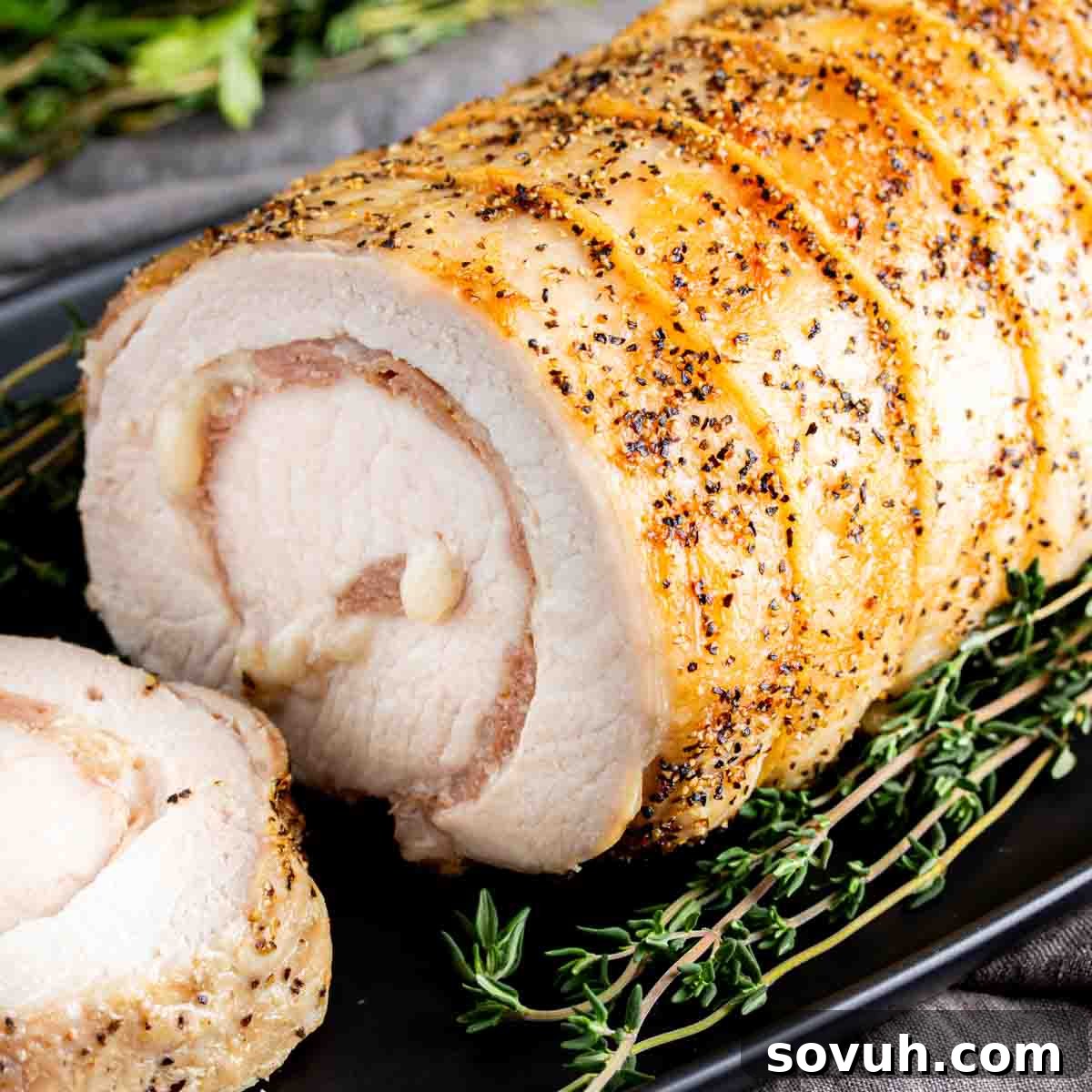
Welcome to a culinary journey that transforms a simple pork loin into a gourmet masterpiece: our easy-to-follow **Prosciutto and Provolone Stuffed Pork Loin**. This incredible dish features tender, roasted pork, generously filled with savory prosciutto and beautifully melted provolone cheese, creating an explosion of flavors and textures in every bite. Whether you’re planning an elegant dinner party or seeking a hassle-free yet impressive weeknight meal, this recipe is designed to delight.
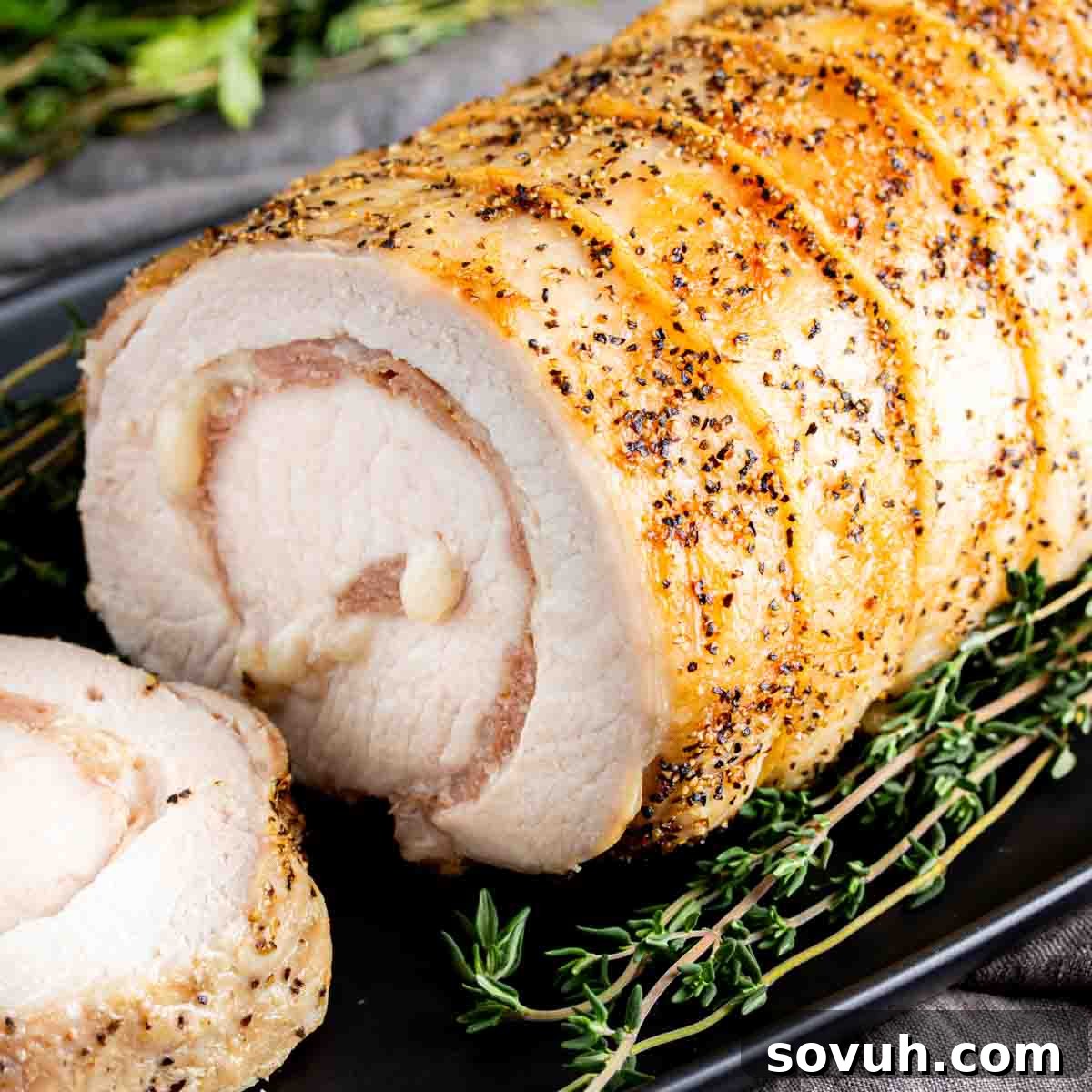
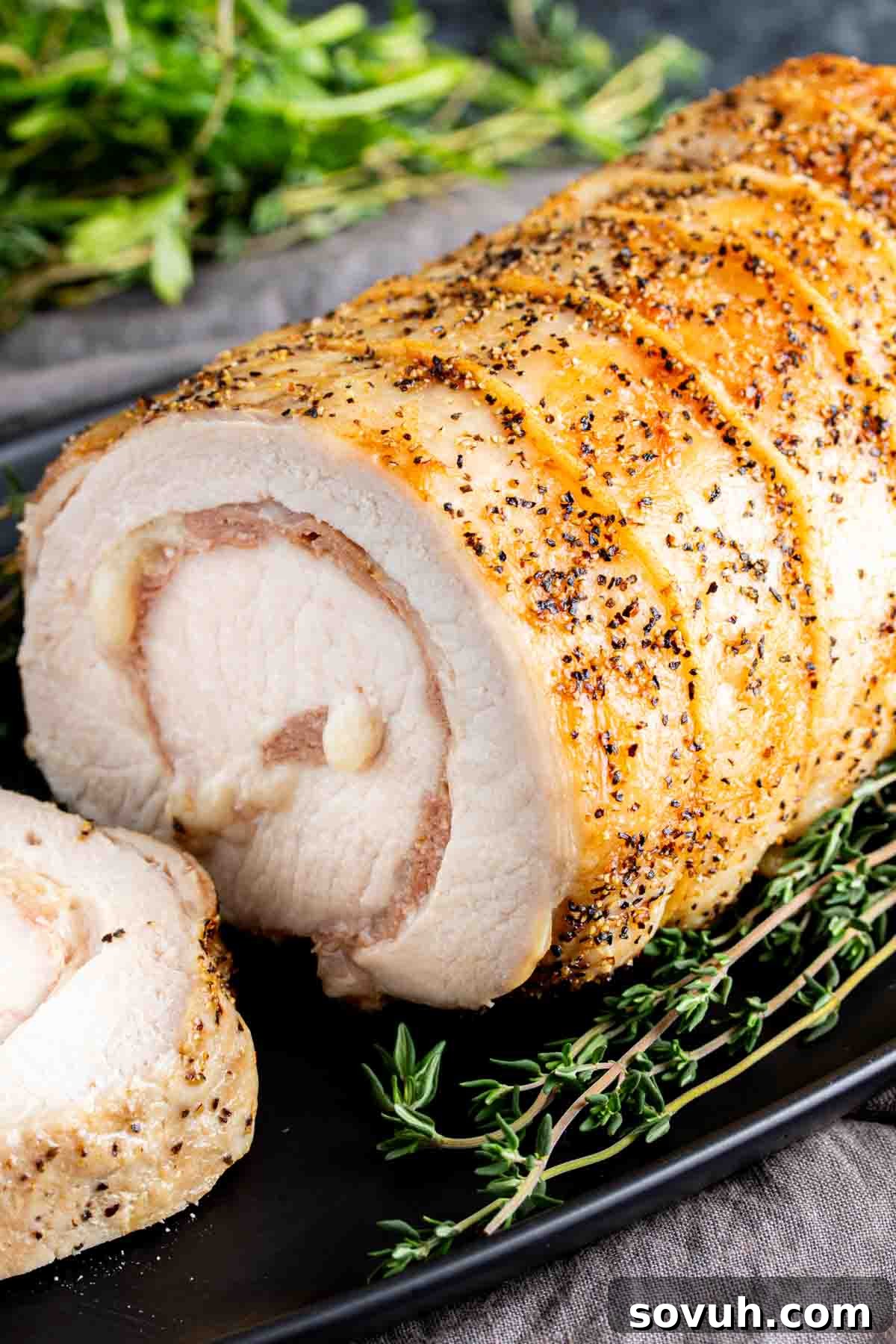
While the idea of a stuffed and rolled pork loin might seem like a task for seasoned chefs, we assure you, this **Provolone and Prosciutto Stuffed Pork Loin** is surprisingly straightforward. It strikes the perfect balance between sophisticated presentation and approachable preparation, making it an ideal choice for any occasion. The succulent, oven-roasted pork cradles layers of thinly sliced, salty Italian prosciutto and creamy provolone cheese. As you carve into the golden-brown roast, the cheese gently oozes out, creating an irresistible visual and taste experience that will have everyone asking for seconds.
Beyond its incredible taste, this versatile recipe boasts additional benefits: it’s naturally gluten-free and 100% keto-friendly, fitting seamlessly into various dietary preferences without compromising on flavor. The rich, salty notes from the prosciutto perfectly complement the mild, milky provolone, while the tender pork loin serves as the ideal canvas for these exquisite ingredients. It’s a dish that truly elevates the humble pork loin into a memorable culinary highlight, and one of our absolute favorites to share with loved ones.
Note: This post may contain affiliate links. This means that if you click on a link and make a purchase, we may receive a small commission, at no extra cost to you. Thank you for supporting our content!
Table of Contents
- Essential Ingredients for Stuffed Pork Loin
- Step-by-Step Guide to Making Stuffed Pork Loin
- Mastering the Art of Butterflying a Pork Loin
- Expert Tips on Tying a Stuffed Pork Loin
- Discover More Easy Pork Recipes
- Frequently Asked Questions about Stuffed Pork Loin
- Perfect Pairings: What to Serve with Stuffed Pork Loin
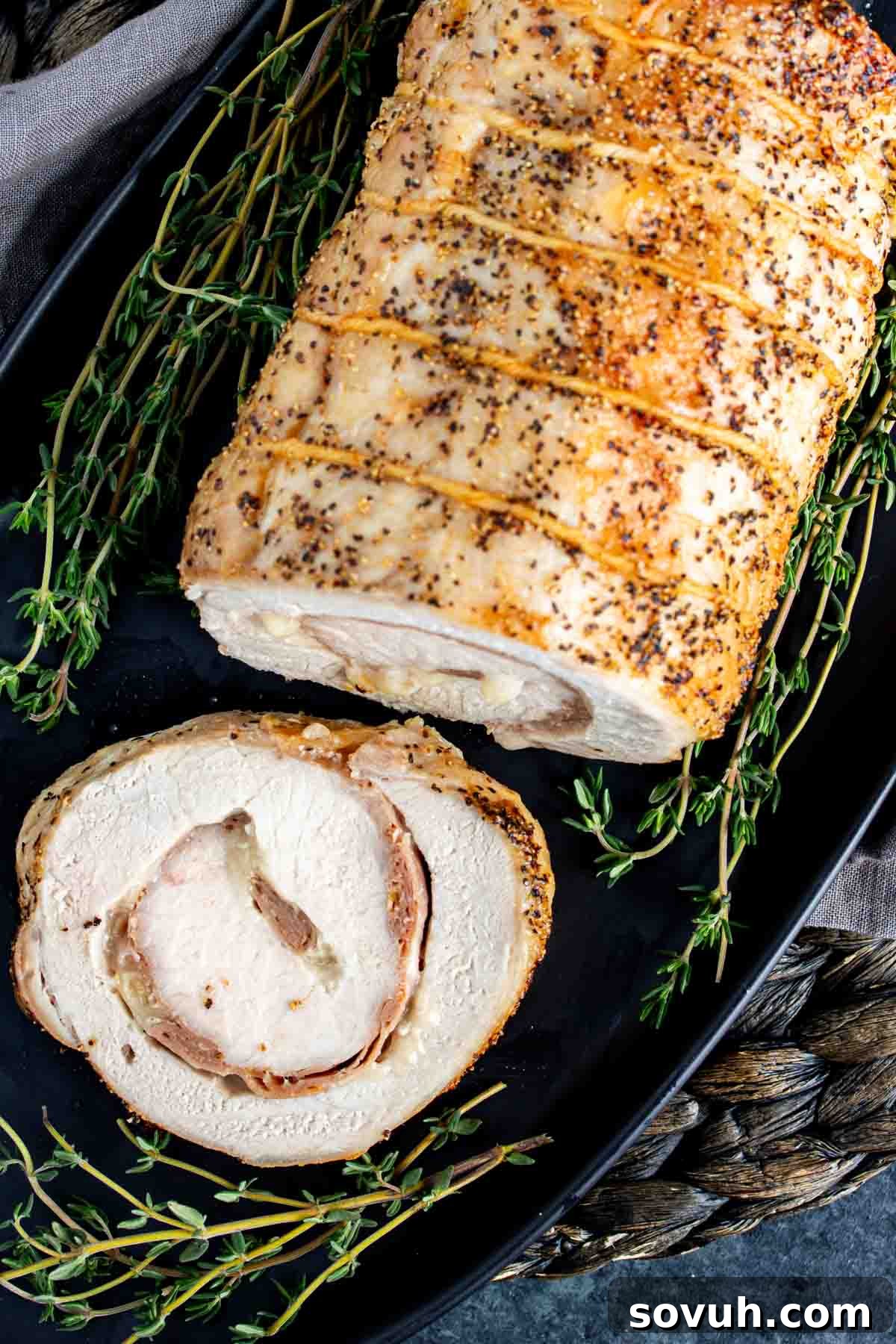
Essential Ingredients for Stuffed Pork Loin
Crafting this exquisite stuffed pork loin requires a surprisingly short list of just five core ingredients, proving that extraordinary flavor doesn’t need unnecessary complexity. Focus on quality, and these simple components will shine.
- Pork Loin: The star of our dish, a well-chosen pork loin is key. This cut, distinct from pork tenderloin, is known for its lean yet tender and juicy qualities, making it ideal for roasting and stuffing. When selecting, look for a piece with good marbling and a consistent shape for easier butterflying and rolling. A typical loin weighs around 3 pounds, yielding a generous roast perfect for family dinners or entertaining.
- Provolone Cheese: Providing that irresistible, gooey factor, provolone cheese is the perfect companion to the salty prosciutto. We recommend using pre-sliced provolone for convenience, or you can have it thinly sliced at your deli counter. Its mild, slightly nutty flavor melts beautifully without overpowering the other ingredients, creating a creamy texture within the roast.
- Prosciutto: This Italian dry-cured ham is a game-changer, infusing the pork loin with its signature salty, delicate, and slightly sweet notes. Prosciutto’s thin texture and rich flavor truly elevate the dish. If prosciutto is unavailable or you’re looking for an alternative, thinly sliced, good quality bacon can offer a similar salty crispness, though the flavor profile will differ slightly.
- Olive Oil: A drizzle of good quality olive oil serves a dual purpose. Before roasting, it helps to create a beautiful, golden-brown crust on the exterior of the pork loin, locking in moisture and adding another layer of texture. Choose an extra virgin olive oil for the best flavor.
- Salt & Pepper: These fundamental seasonings are truly all you need to bring out the natural, delicious flavors of the pork and the savory fillings. We recommend using coarse ground pepper and a good sea salt or Kosher salt to season the exterior generously. Their simplicity allows the quality of the main ingredients to truly shine.
Step-by-Step Guide to Making Stuffed Pork Loin
Creating this impressive stuffed pork loin is simpler than you might think. Follow these clear steps for a perfectly cooked, flavorful roast every time.
Step 1 – Prepare Your Oven: Begin by preheating your oven to 400 degrees Fahrenheit (200 degrees Celsius). Allowing the oven to reach the correct temperature ensures even cooking from the start.
Step 2 – Prepare the Pork Loin: Carefully trim any excessive fat from the exterior of your pork loin. While a thin layer of fat can add flavor, too much will not render properly. Next, you’ll need to butterfly the pork loin. This technique involves cutting the meat to create a large, flat surface, perfect for spreading your delicious filling. (Don’t worry, we’ll cover how to butterfly it in detail below!).
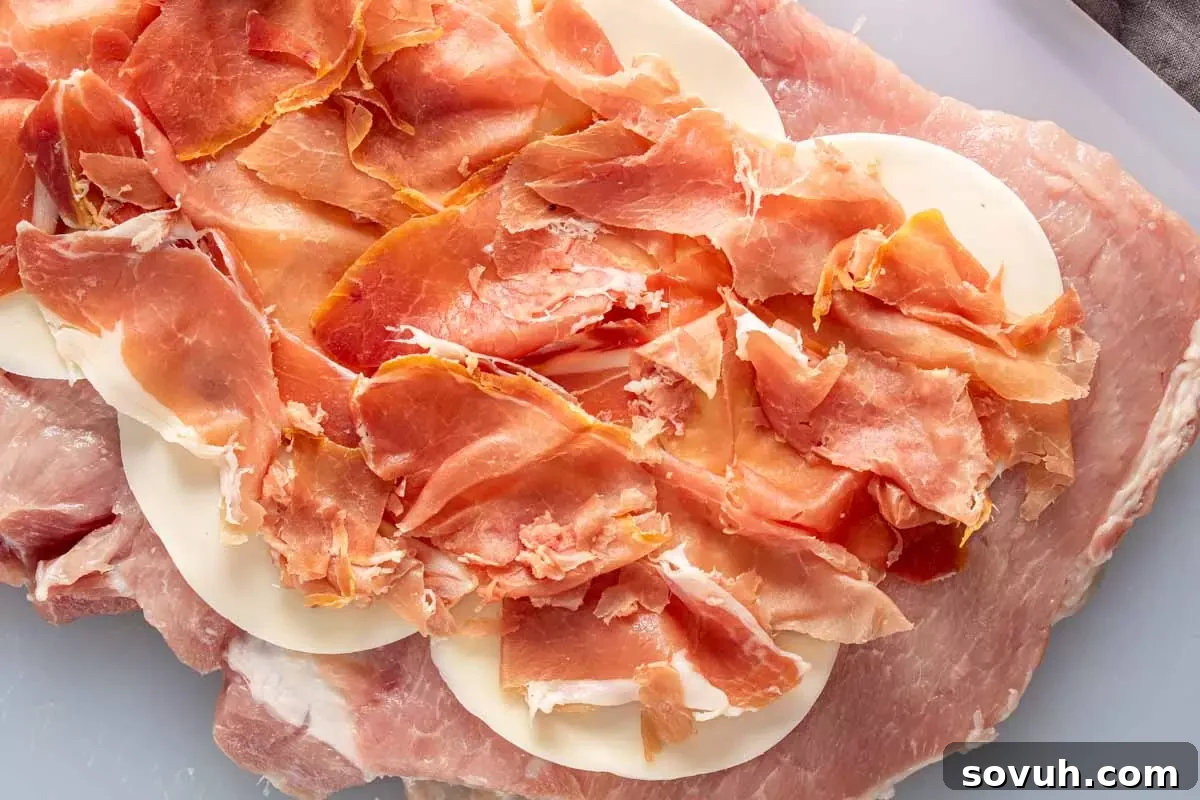
Step 3 – Stuff with Flavor: Once your pork loin is butterflied and laid flat, arrange the provolone slices evenly over the entire surface, leaving a small border around the edges. Then, layer the sliced prosciutto directly on top of the provolone. Ensure the filling is spread somewhat uniformly to guarantee cheesy, savory goodness in every slice.
Step 4 – Roll and Secure: Starting from one of the shorter ends, tightly roll the pork loin into a compact cylinder. This tight roll helps to keep the filling secure and ensures a beautiful presentation. Secure the roast firmly with butcher’s twine (also known as kitchen string). Space the twine approximately 1-2 inches apart along the length of the roast. This crucial step prevents the roast from unraveling during cooking and helps it maintain its shape.
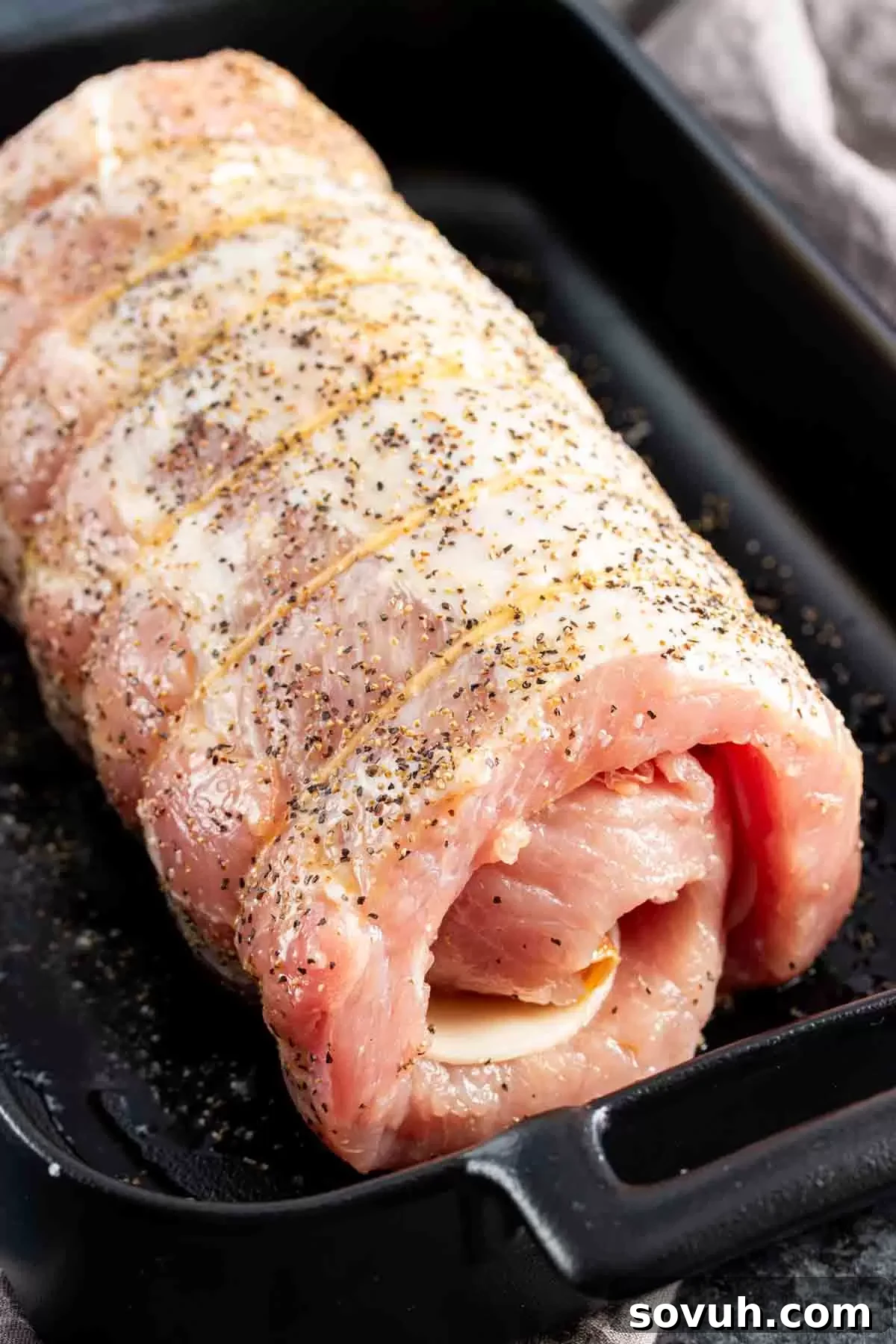
Step 5 – Season for Perfection: Lightly brush the entire surface of the rolled pork loin with olive oil. This not only aids in browning but also helps the seasonings adhere. Generously sprinkle the roast with salt and freshly coarse ground pepper. Don’t be shy with the seasoning – it forms a delicious crust and enhances the overall flavor.
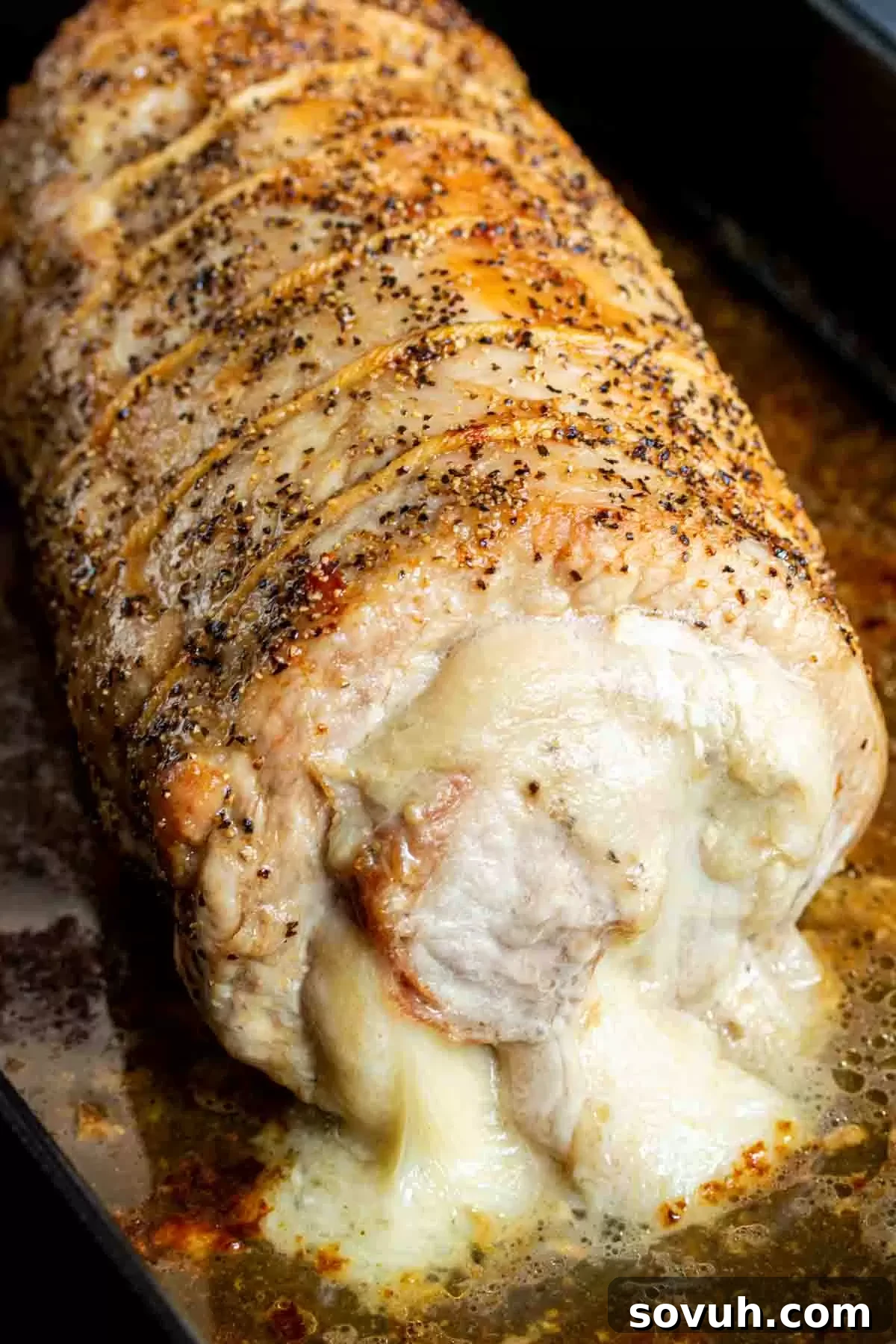
Step 6 – Roast to Tender Perfection: Place your seasoned pork roll in a suitable roasting pan. Cover the pan tightly with aluminum foil. Bake the covered roast for 45 minutes. The foil helps to steam the pork, keeping it incredibly moist and tender. After 45 minutes, remove the foil and continue to cook for an additional 10-20 minutes, or until a meat thermometer inserted into the thickest part of the roast (avoiding the filling) registers an internal temperature of 145 degrees Fahrenheit (63 degrees Celsius). This ensures the pork is perfectly cooked and safe to eat.
Step 7 – Rest and Slice: This step is vital for a juicy roast! Once the pork reaches the desired internal temperature, remove it from the oven and let it rest, uncovered, on a cutting board for at least 10 minutes. Resting allows the juices to redistribute throughout the meat, resulting in a more tender and flavorful finished product. After resting, carefully remove the butcher’s twine before slicing the roast into thick, delectable rounds. Serve immediately and enjoy!
Mastering the Art of Butterflying a Pork Loin
Many home cooks shy away from rolled stuffed pork loin recipes, also known as pork roulades, because of the perceived difficulty of butterflying and tying the meat. However, with a little guidance and practice, you’ll discover that butterflying a pork loin is a straightforward technique that opens up a world of culinary creativity. It allows you to transform a thick cut of meat into a canvas for your favorite fillings, ensuring even cooking and impressive presentation.
Step 1 – Prepare Your Work Area: Before you begin, set up a clean, stable, and spacious cutting board. Ensure your chef’s knife is sharp – a sharp knife is safer and makes cleaner cuts. Having a steady surface is crucial for precision.
Step 2 – Examine the Pork Loin: Take a moment to observe your pork loin. It’s typically a thick, somewhat cylindrical cut of meat. Identify if it has a fat cap (a layer of white fat) on one side. This can sometimes guide your initial cut, though it’s not strictly necessary.
Step 3 – Trim and Shape (Optional but Recommended): If your pork loin has a very thick fat cap, you might want to trim it down to about 1/4 inch (0.6 cm) thickness. This helps with even cooking and prevents the roast from becoming too greasy. You can also trim any silverskin (a thin, silvery membrane) if present, as it can make the meat tough. The goal here is to create a more uniform piece of meat for butterflying.
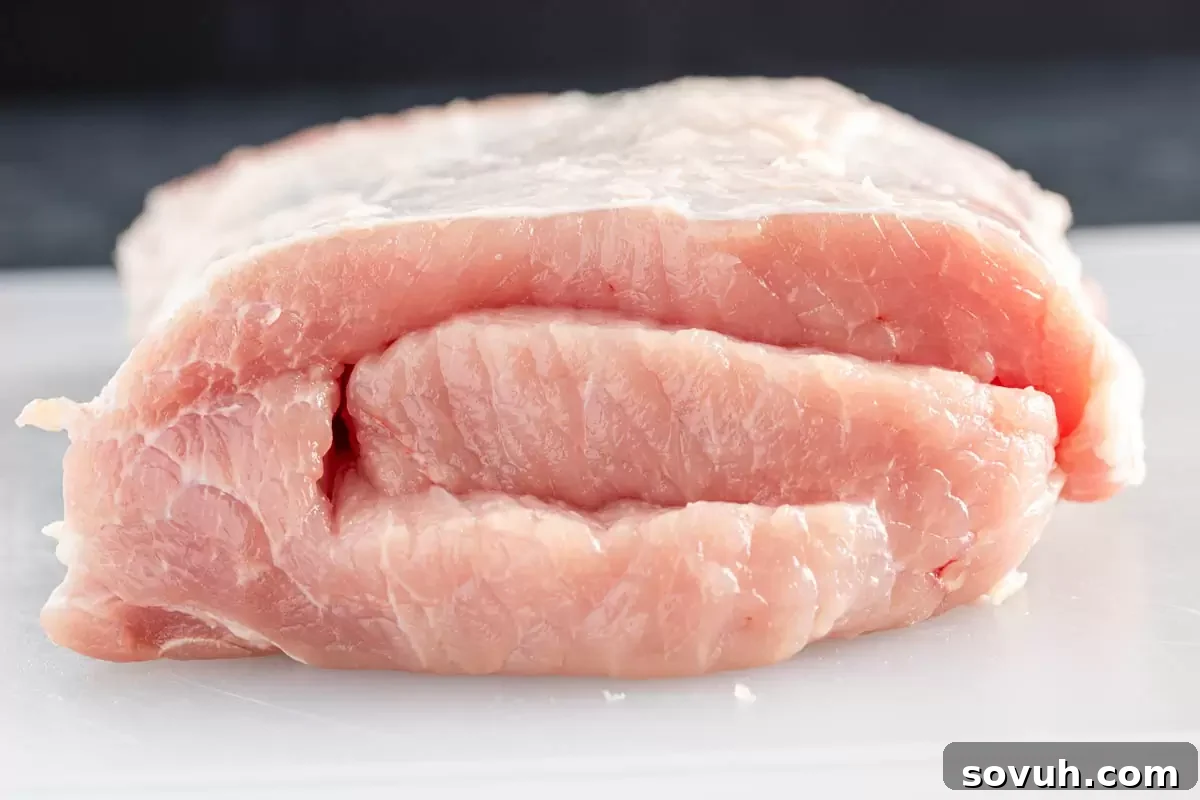
Step 4 – Make a Guiding Incision: Place the pork loin on your cutting board. If there’s a fat cap, place that side down for stability. Using your sharp chef’s knife, make a long, horizontal incision along the entire length of the pork loin, starting about one-third of the way up from the bottom edge. Crucially, do not cut all the way through the meat. You want to leave about 1/2 to 1 inch uncut, creating a “hinge” that will allow the loin to open like a book.
Step 5 – Open Like a Book: Gently open the pork loin, using the hinge you just created as the central “spine” of the book. The goal is to lay the pork loin flat on your cutting board, effectively doubling its surface area. Take your time to unfold it carefully, avoiding tearing the meat.
Step 6 – Achieve Even Thickness: At this point, your butterflied pork loin might not be perfectly uniform in thickness – and that’s completely normal for beginners! To achieve a consistent thickness, place two layers of plastic wrap over the butterflied pork. Then, use a meat mallet or the bottom of a heavy skillet or ladle to gently pound out the meat. Pound evenly until the entire piece is approximately 1/2 inch to 1 inch thick. The exact thickness depends on the initial size of your pork loin, but consistency is more important than precision here, as it ensures even cooking.
Congratulations! You’ve successfully butterflied a pork loin. This fundamental skill is incredibly rewarding and unlocks a world of possibilities for stuffing, rolling, and creating flavorful roasts. With a little practice, you’ll be butterflying like a pro, taking your pork loin dishes to an exciting new level of culinary excellence.
Expert Tips on Tying a Stuffed Pork Loin
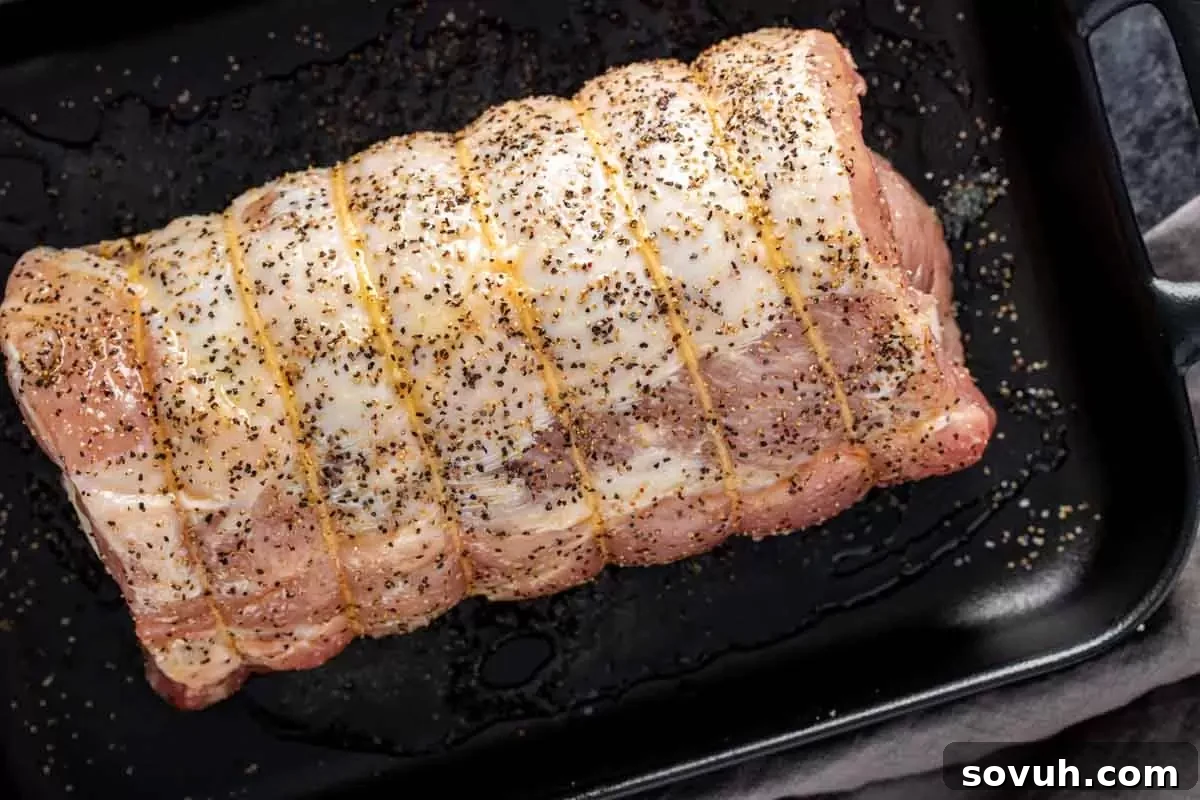
Once you’ve expertly butterflied and stuffed your pork loin, the next crucial step is to tie it securely. Tying not only helps the roast maintain its shape during cooking but also ensures that your delicious filling stays intact and cooks evenly. This technique may seem daunting at first, but with clear instructions, you’ll master it in no time.
- Measure Your String: Start by unrolling a piece of butcher’s twine (or kitchen string) that is roughly 3 to 4 times the length of your rolled pork loin. It’s always better to have a little extra than not enough.
- Start with an End Loop: Begin by creating a strong loop around one end of the rolled pork loin. Tie it off with a secure knot directly on top of the roast. This initial knot will anchor your subsequent loops.
- Create the First Cross-Section: Lay the working end of the string across the top of the pork loin, creating a straight line pointing towards the other end. This line should be about 1 to 1.5 inches long, creating the spacing for your first loop.
- Form the Running Knot: Use your index finger to hold the string in place on top of the roast. Then, pass the string *under* the pork loin and bring it back up to the top. As you bring it up, thread the string *under* the piece of string that is laying across the top of the loin (the one your finger is holding). This creates a simple, effective running knot.
- Tighten and Repeat: Pull the string forward and tighten the loop firmly around the pork loin. Ensure it’s snug but not so tight that it cuts into the meat. Once tightened, stretch the string another 1 to 1.5 inches further down the roast, parallel to the first top string, and repeat the under-and-through process. Continue this method all the way down the length of the rolled loin, maintaining consistent spacing between each loop.
- Finish with a Secure Knot: Once you reach the very end of the rolled loin, loop the final string around and tie it off into a tight, secure knot, similar to how you started. Trim any excess string close to the knot.
With your pork loin perfectly tied, you can confidently proceed to the seasoning and roasting steps, knowing that your beautiful creation will hold its shape and deliver a stunning presentation at the dinner table. This simple skill adds a professional touch to your home cooking!
Discover More Easy Pork Recipes
If you loved this stuffed pork loin, you’re in for a treat! Pork is an incredibly versatile protein that lends itself to a wide array of delicious and easy recipes. From slow-cooked classics to quick weeknight meals, there’s a pork dish for every craving. Explore our other favorite pork creations:
- Pressure Cooker Pulled Pork: Achieve tender, fall-apart pulled pork in a fraction of the time.
- Instant Pot Pork Chops with Mushroom Gravy: Juicy pork chops swimming in a rich, savory mushroom gravy, made effortlessly in your Instant Pot.
- Ranch Baked Pork Chops: A simple yet flavor-packed recipe for tender baked pork chops seasoned with classic ranch flavor.
- Slow Cooker Pork Carnitas: Crispy, juicy, and incredibly flavorful carnitas perfect for tacos, bowls, and more, all with minimal effort.
- Instant Pot Pork Belly Tacos: Indulge in succulent pork belly, made tender and delicious in the Instant Pot, served in vibrant tacos.
- Low Carb Moo Shu Pork: Enjoy the flavors of your favorite Chinese takeout dish, but with a healthy low-carb twist.
- Easy Pork Tacos: Simple and satisfying pork tacos, perfect for a quick and customizable family meal.
- Sheet Pan Spicy Pork Chops and Sweet Potatoes: A convenient and flavorful one-pan meal featuring spicy pork chops and sweet, caramelized sweet potatoes.
- BBQ Pork Quesadillas: Combine smoky BBQ pork with melty cheese in a crispy quesadilla – a crowd-pleaser!
- Apple Pecan Stuffed Pork Chops: A delightful and comforting dish where pork chops are stuffed with a sweet and nutty apple-pecan filling.
Frequently Asked Questions about Stuffed Pork Loin
Understanding the distinction between pork loin and pork tenderloin is crucial for successful cooking, as they are very different cuts of meat. Although their names sound similar, they come from different parts of the pig and require different cooking methods.
Pork Loin: This is a thicker, wider, and typically larger cut of meat that originates from the back of the pig. It can sometimes be sold with a layer of white fat, known as the fat cap, on top, which can be trimmed or left on for added flavor and moisture during cooking. Pork chops are often cut from the pork loin, showcasing its substantial size. Due to its thickness and lean nature, pork loin benefits from slower cooking methods like roasting or braising to ensure tenderness and prevent drying out. Its robust size also makes it ideal for stuffing and rolling, as demonstrated in this recipe.
Other common names for pork loin include: Center cut pork loin roast, center cut pork roast, pork center loin roast, pork center cut rib roast, pork loin center cut, pork loin center rib roast, pork loin roast center cut, and pork loin rib half.
Pork Tenderloin: In contrast, pork tenderloin is a much smaller, long, and thin cut of meat. It comes from the muscle that runs along the pig’s backbone, an area that doesn’t get much movement. This lack of use makes pork tenderloin exceptionally tender by nature, hence its name. Because it’s so lean and delicate, pork tenderloin cooks very quickly. It’s best suited for fast-cooking methods such as grilling, pan-searing, or quick roasting in the oven. Its smaller size and rapid cooking time mean it would not be suitable for this specific stuffed pork loin recipe.
No, we strongly advise against substituting pork tenderloin for pork loin in this particular stuffed roast recipe. The fundamental differences in their size, shape, and fat content mean they have vastly different cooking requirements. Pork loin is a much thicker cut that is robust enough to be butterflied, stuffed, and rolled, standing up well to the longer, slower roasting process needed to cook through without drying out. Pork tenderloin, being thin and extremely lean, would cook much too quickly for this application. It would likely become overcooked and dry before the stuffed center could properly heat through, and its delicate structure isn’t ideal for holding a generous filling or being tied securely. Stick to pork loin for optimal results with this stuffed preparation.
Absolutely! Preparing this stuffed pork loin ahead of time is a fantastic way to streamline your meal prep and reduce stress on the day you plan to serve it. You can stuff, roll, and tie the pork loin up to 2 days in advance. Once it’s fully prepped and tied with butcher’s twine, wrap the entire roast tightly in plastic wrap. Then, place it in an airtight container or a large freezer bag and store it in the refrigerator. This allows the flavors to meld beautifully and gives you more time for other preparations.
When you’re ready to cook, it’s beneficial to take the pork loin out of the refrigerator about an hour before baking. This allows the meat to come closer to room temperature, ensuring more even cooking and reducing the overall cooking time slightly. Just unwrap it, season, and proceed with roasting as directed.
To ensure a moist and tender stuffed pork loin, several key steps are essential. First, avoid overcooking; use a reliable meat thermometer to pull the roast from the oven once it reaches 145°F (63°C). The meat will continue to cook slightly as it rests, reaching a perfect medium-rare to medium. Second, the initial covered baking period (as instructed in the recipe) helps trap moisture and gently cooks the interior. Lastly, and perhaps most critically, allow the roast to rest for at least 10-15 minutes after it comes out of the oven. This resting period allows the juices to redistribute throughout the meat, resulting in a significantly juicier and more tender final product. Slicing too soon will cause those precious juices to run out.
While our Prosciutto and Provolone filling is a classic for a reason, stuffed pork loin is incredibly versatile! You can experiment with a myriad of flavor combinations to suit your taste. Consider a spinach and feta filling, mixed with sun-dried tomatoes and herbs for a Mediterranean twist. For a more autumnal feel, try a stuffing with finely diced apples, dried cranberries, pecans, and sage. Mushroom and Swiss cheese, or a mixture of seasoned breadcrumbs with herbs and sautéed onions, are also excellent choices. Always ensure your chosen fillings are finely chopped and relatively moist to prevent dryness in the center and allow for even rolling.
Perfect Pairings: What to Serve with Stuffed Pork Loin
Once your magnificent Prosciutto and Provolone Stuffed Pork Loin is out of the oven and rested, the next step is to complete the meal with complementary side dishes. The rich, savory flavors of the pork and its cheesy, salty filling pair beautifully with a variety of textures and tastes. Here are some fantastic options to create a truly balanced and satisfying spread:
- Creamy Mashed Potatoes: A timeless classic, creamy mashed potatoes offer a smooth, comforting contrast to the tender pork. Their buttery flavor and soft texture perfectly soak up any delicious pan juices, making them an ideal companion for a hearty roast.
- Fresh Green Salad: A vibrant and crisp salad provides a refreshing counterpoint to the richness of the pork. Opt for a simple mixed green salad with a light vinaigrette, or a more robust winter salad featuring seasonal greens, nuts, and a tangy dressing for added complexity.
- Fragrant Pecan Rice Pilaf: For a side with both texture and aromatic appeal, a pecan rice pilaf is an excellent choice. Cooked with broth, herbs, nuts, and sometimes dried fruit, it offers a wonderful savory-sweet balance that complements the pork beautifully.
- Crispy Roasted Brussels Sprouts: Roasted or air-fried Brussels sprouts bring a delightful bitterness and a satisfyingly crisp texture to the plate. A drizzle of balsamic glaze or a sprinkle of Parmesan cheese can elevate their flavor even further. For an indulgent twist, try our cheesy bacon Brussels sprouts recipe.
- Decadent Creamed Spinach: Creamed spinach offers a rich, creamy, and comforting vegetable side that harmonizes wonderfully with the savory notes of the pork loin. Its subtle sweetness and velvety texture make it a popular choice.
- Warm Bread Rolls: Soft, warm bread rolls or dinner rolls are perfect for mopping up any leftover juices or creating mini sandwiches with slices of the roast. They add a simple yet essential element of comfort to the meal.
- Low-Carb Cauliflower Mash: If you’re looking for a lighter or lower-carb alternative to mashed potatoes, cauliflower mash is an outstanding choice. It offers a similar creamy texture and comforting feel, making it a healthy yet satisfying accompaniment.
- Sweet Creamed Corn: A side of sweet creamed corn provides a lovely contrast to the savory pork. Its natural sweetness and creamy consistency make it a delightful addition. For a heartier option, consider our creamed corn casserole.
Loved this recipe?
Make sure to follow us on Instagram and Pinterest for more delicious and easy recipes like this one. Your culinary adventure awaits!
Prosciutto and Provolone Stuffed Pork Loin

Print Recipe
Ingredients
- 3 pounds Pork loin, trimmed
- 6 slices Provolone
- 6 ounces Prosciutto
- 1 tablespoon Olive Oil
- 3 teaspoons Salt
- 2 teaspoons Pepper
Instructions
-
Preheat oven to 400 degree F (200 degrees C).
-
Trim excess fat from the pork loin and carefully butterfly it as described in the section above.
-
Place the provolone slices evenly on the open pork loin, then layer the sliced prosciutto on top.
-
Tightly roll the meat starting from a short end and secure the roast with butcher’s twine, spaced 1-2 inches apart.
-
Brush the top of the pork loin with olive oil and generously sprinkle with salt and coarse ground pepper.
-
Place in a roasting pan and bake for 45 minutes covered with foil. Then remove foil and continue to cook for 10-20 minutes, or until a meat thermometer indicates the internal temperature has reached 145 degrees F (63 degrees C).
-
Remove from the oven and let the roast stand for 10 minutes before removing the twine and slicing.
Nutrition

This recipe was originally published on September 18, 2014. It was republished with new photos and an updated recipe on September 23, 2019, to provide even more helpful tips and details for our readers.