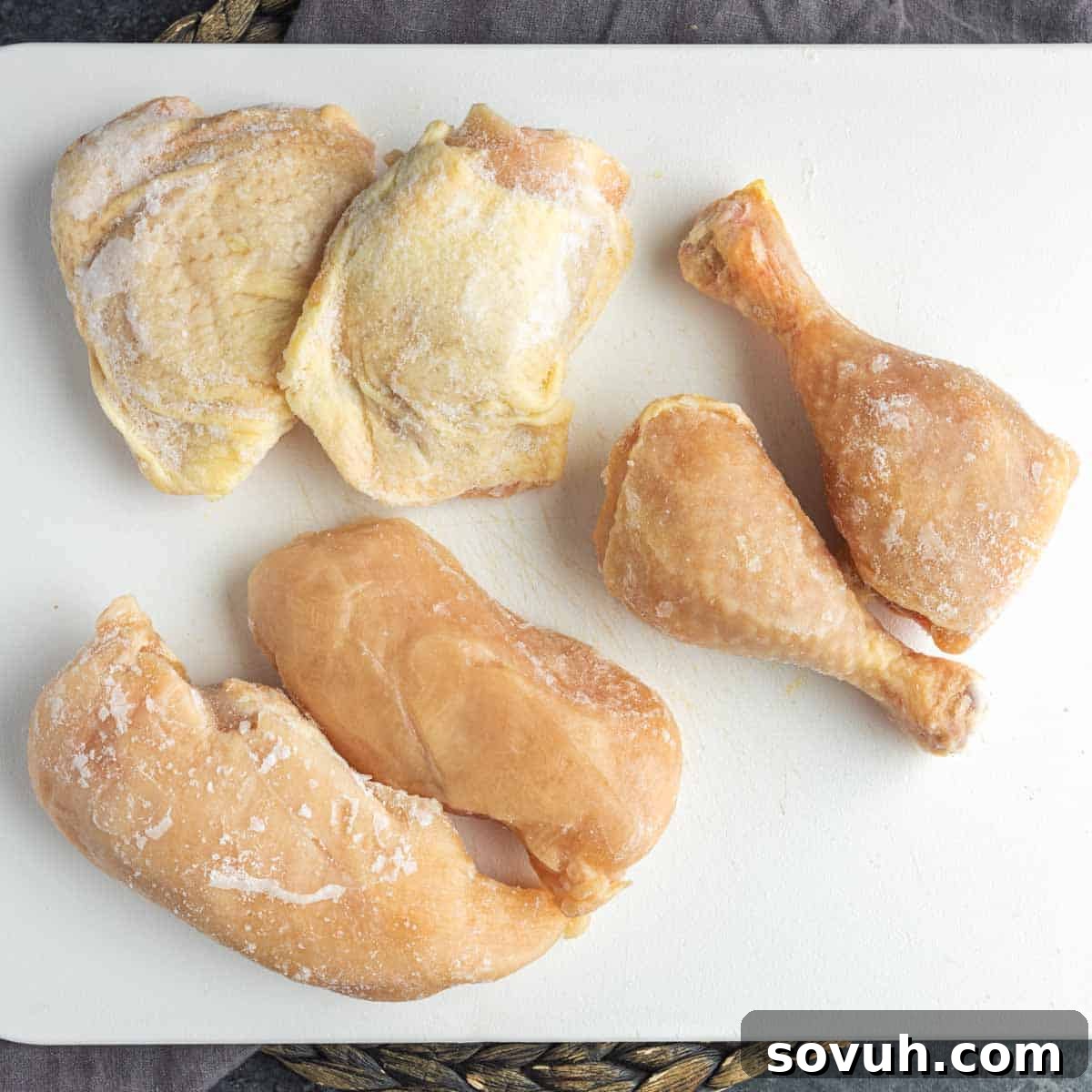
Ever found yourself staring at frozen chicken, realizing you forgot to thaw it for dinner? You’re not alone! Many home cooks face this common culinary dilemma. The good news is, you absolutely *can* boil frozen chicken, and we’re here to show you exactly how. This comprehensive guide provides step-by-step instructions, essential safety tips, and a wealth of recipe ideas to transform that frozen block into a tender, versatile ingredient for countless delicious meals.
The Universal Kitchen Dilemma: Frozen Chicken
Chicken is a cornerstone ingredient in kitchens worldwide, appreciated for its versatility and nutritional value. From quick weeknight stir-fries to elaborate Sunday roasts, chicken finds its way into an endless array of dishes. However, its popularity often comes with a minor logistical challenge: thawing. How many times have you reached into the freezer, full of dinner inspiration, only to realize the main ingredient for your meal is solid as a rock? This common scenario can lead to last-minute meal changes or frantic searches for quick thawing methods.
Fortunately, there’s a straightforward and safe solution: boiling. Boiled chicken, often underestimated, is a fantastic base for numerous recipes. It yields tender, juicy meat that’s easy to shred or dice, making it perfect for everything from comforting soups and hearty salads to flavorful casseroles and sandwiches. And yes, the answer to the pressing question, “Can you boil frozen chicken?” is a resounding YES! This method is not only safe but incredibly convenient when time slips away and pre-planning falls short.
Note: This post may contain affiliate links. That means if you click on a link and make a purchase we may receive a small commission. Thank you for supporting our content!
Why Choose Boiling for Frozen Chicken?
Boiling frozen chicken offers several compelling advantages, making it a go-to method for busy individuals or anyone who simply forgot to thaw their poultry. Firstly, it’s incredibly convenient. You bypass the several hours or overnight thawing process, allowing for spontaneous meal preparation. Secondly, boiling ensures a consistently tender and moist result. The gentle cooking in liquid prevents the chicken from drying out, which can sometimes happen with other high-heat methods when cooking from frozen. Lastly, and perhaps most beneficially, boiling frozen chicken produces a rich, flavorful broth as a byproduct. This homemade broth is a fantastic foundation for future soups, stews, and sauces, adding an extra layer of depth to your cooking without any additional effort.
Essential Ingredients You’ll Need
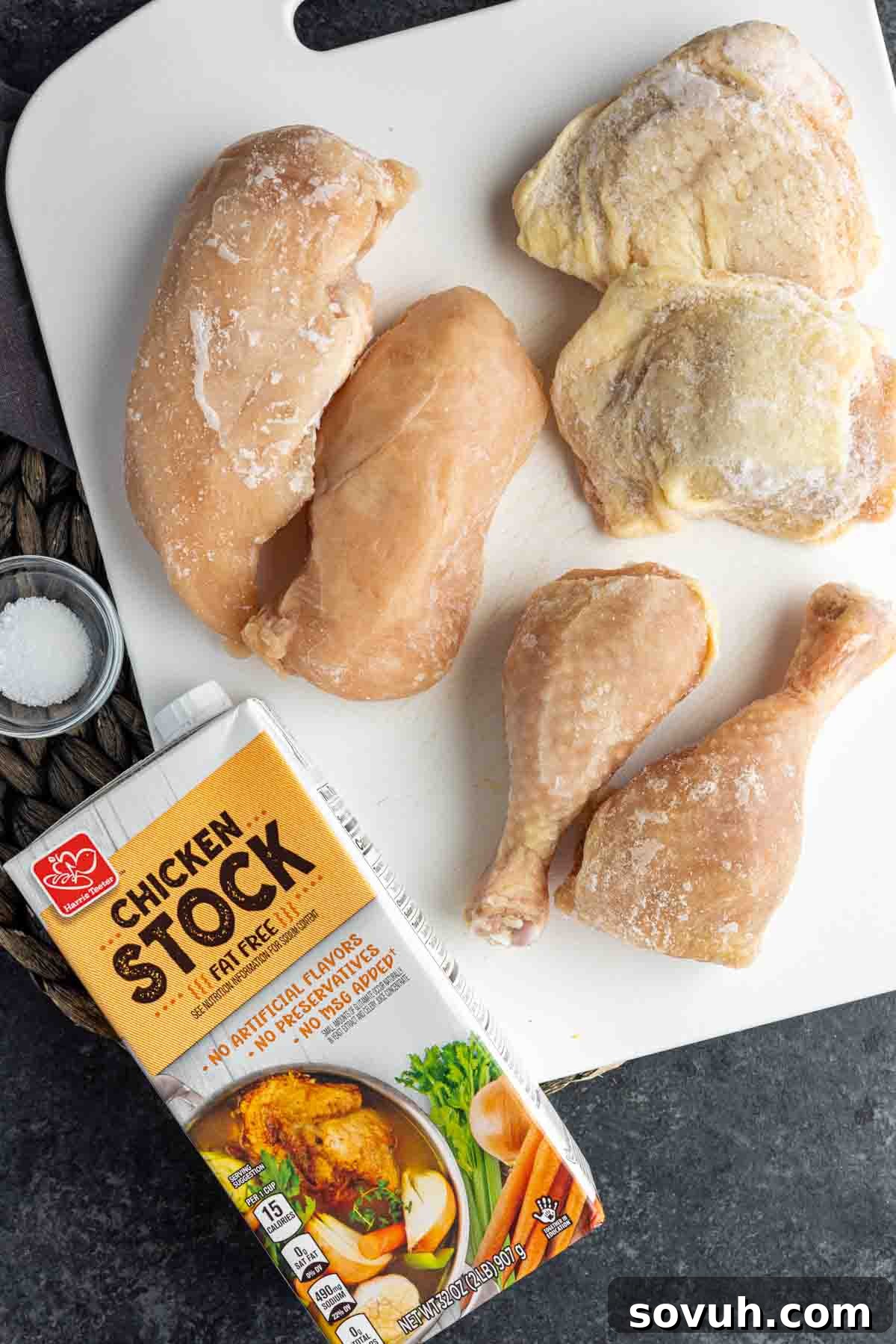
The beauty of boiling chicken, especially from frozen, lies in its simplicity and minimal ingredient list. You likely already have most of these on hand.
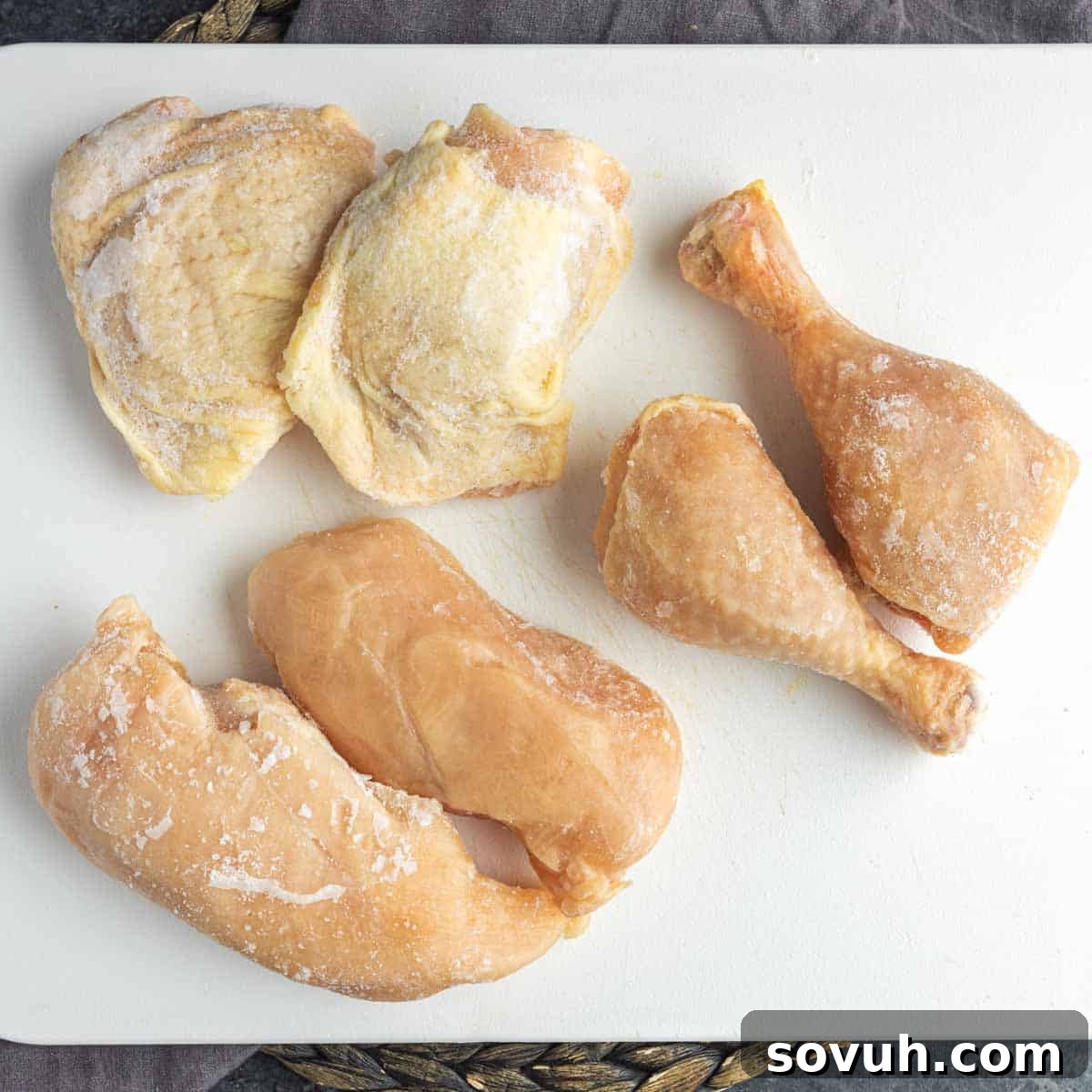
- Frozen Chicken: This method is adaptable for various cuts of frozen chicken. You can use bone-in or boneless chicken breasts, chicken thighs, or even chicken legs. Whether it’s skinless or skin-on also works. If your chicken has the skin on, be aware that it will likely have an unpleasantly rubbery texture after boiling and is generally best removed once the chicken is cooked for optimal enjoyment.
- Broth or Water: For maximum flavor, we highly recommend using low-sodium chicken broth. The broth infuses the chicken with additional savory notes as it cooks. If you don’t have broth, water works perfectly fine. You can also do a 50/50 mix of water and broth. Consider vegetable broth for a slightly different flavor profile.
- Salt: A generous pinch of kosher salt (or regular table salt) added to the cooking liquid is crucial. Salt not only seasons the chicken but also helps draw out its natural flavors, resulting in a more palatable end product.
- Optional Aromatics: Elevate your boiled chicken’s flavor profile by adding a few simple aromatics to the pot. Consider black peppercorns, whole garlic cloves (smashed), half an onion, a celery stalk, a carrot, a bay leaf, or fresh herbs like thyme and parsley. These additions will create an even more flavorful broth and subtly enhance the chicken’s taste.
How to Boil Frozen Chicken: A Step-by-Step Guide
Boiling frozen chicken is a straightforward cooking method that requires minimal fuss. Follow these simple steps for perfectly cooked, tender chicken every time.
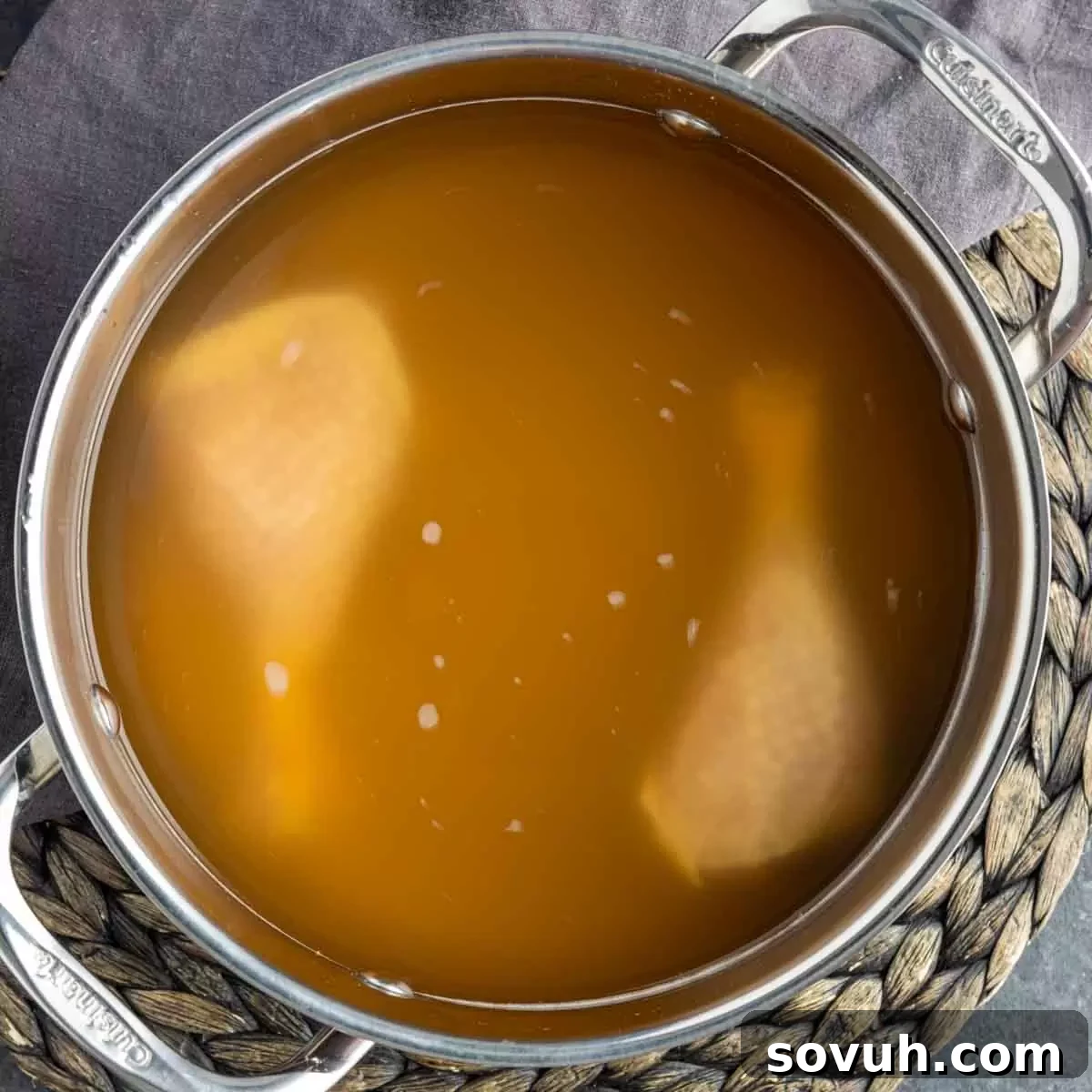
- Prepare the Pot: Choose a pot large enough to comfortably hold your chicken pieces and allow them to be fully submerged in liquid. Place the frozen chicken directly into the pot. There’s no need to thaw it beforehand.
- Cover with Liquid: Pour chicken broth or water over the chicken until it is completely covered. Ensure there’s at least an inch or two of liquid above the chicken, as some will evaporate during cooking.
- Season Generously: Add salt to the broth. This is essential for flavoring the chicken from the inside out. Now is also the time to add any optional aromatics such as pepper, garlic, onion, celery, carrots, bay leaves, thyme, or parsley to further enrich the flavor of both the chicken and the resulting broth.
- Bring to a Boil: Place the pot on your stovetop over high heat. Bring the liquid to a rolling boil. This initial high heat helps to quickly raise the temperature of the frozen chicken and the liquid, initiating the cooking process efficiently.
- Simmer to Perfection: Once the liquid reaches a vigorous boil, reduce the heat to medium-low. The goal is to maintain a gentle simmer, not a rapid boil, for the remainder of the cooking time. Let the chicken simmer for approximately 20-30 minutes, or until its internal temperature reaches 165°F (74°C) using a meat thermometer.
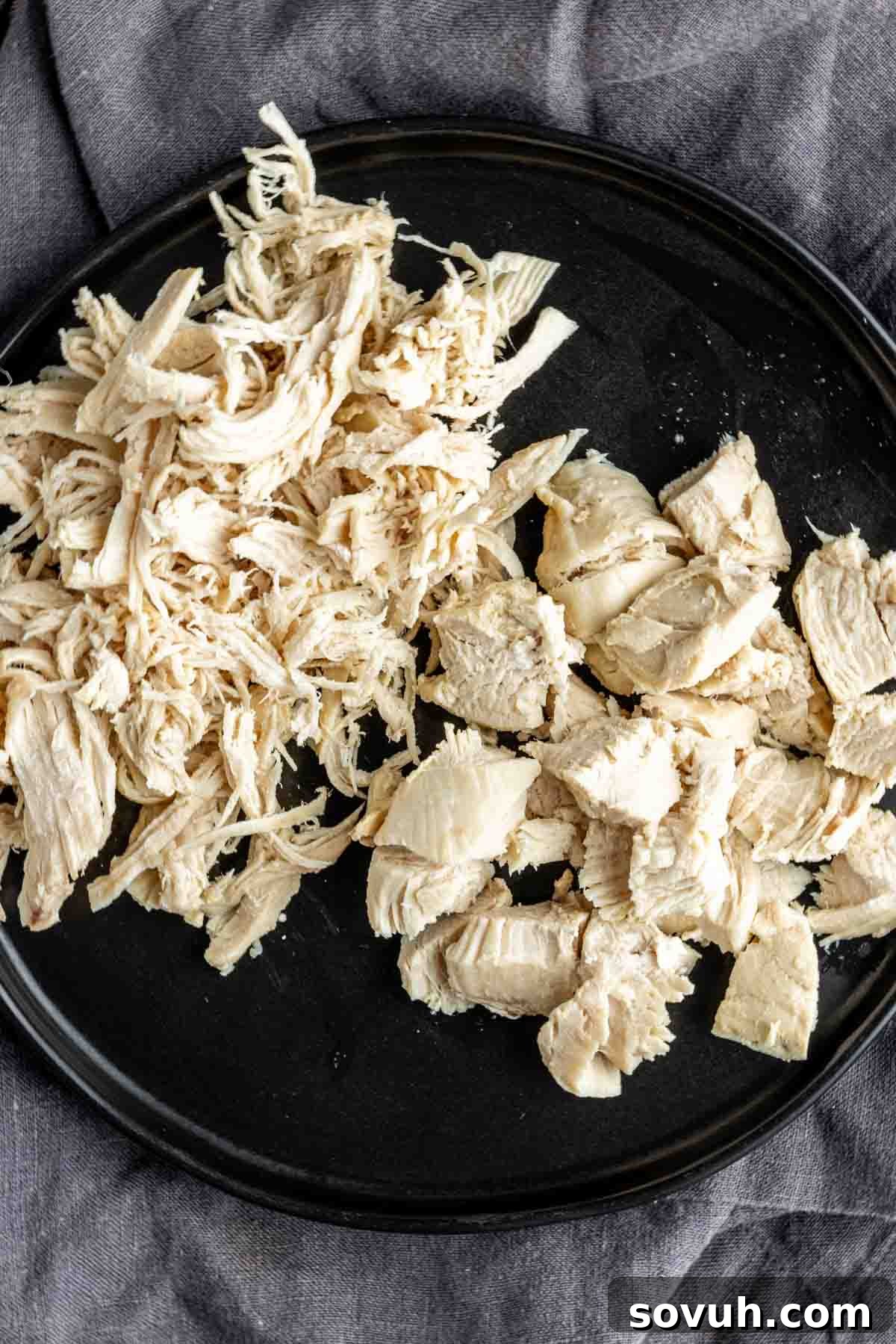
- Rest and Prepare: Carefully remove the cooked chicken from the pot using tongs or a slotted spoon. Place it on a cutting board or plate and allow it to cool slightly before handling. This brief resting period helps the juices redistribute, resulting in more tender and flavorful chicken. Once cool enough, shred or chop the chicken according to your recipe needs.
- Preserve the Broth (Optional but Recommended): Don’t discard that flavorful cooking liquid! Let the broth cool completely, then strain it through a fine-mesh sieve to remove any solids. Store it in an airtight container in the refrigerator for up to 3-4 days or freeze it for up to 3 months. This homemade chicken broth is an excellent flavorful base for soups, stews, and gravies, like our Rotisserie Chicken Soup with Tortellini or Slow Cooker Taco Soup.
How Long To Boil Frozen Chicken? Ensuring Perfect Cook Times
The cooking time for boiling frozen chicken is a crucial factor to ensure both safety and optimal texture. It largely depends on the size and cut of the chicken piece. As a general rule of thumb, cooking chicken from frozen typically takes about 50% longer than cooking thawed chicken. Always prioritize internal temperature over time alone.
Use these estimated times as a general guide for boiling frozen chicken:
- Boneless Chicken Breast or Chicken Thighs (approximately 6 ounces): 20 – 25 minutes
- Bone-in Chicken Breast or Chicken Thighs (approximately 6 ounces): 25 – 30 minutes
- Chicken Legs (Drumsticks) (approximately 4 ounces): 15 – 20 minutes
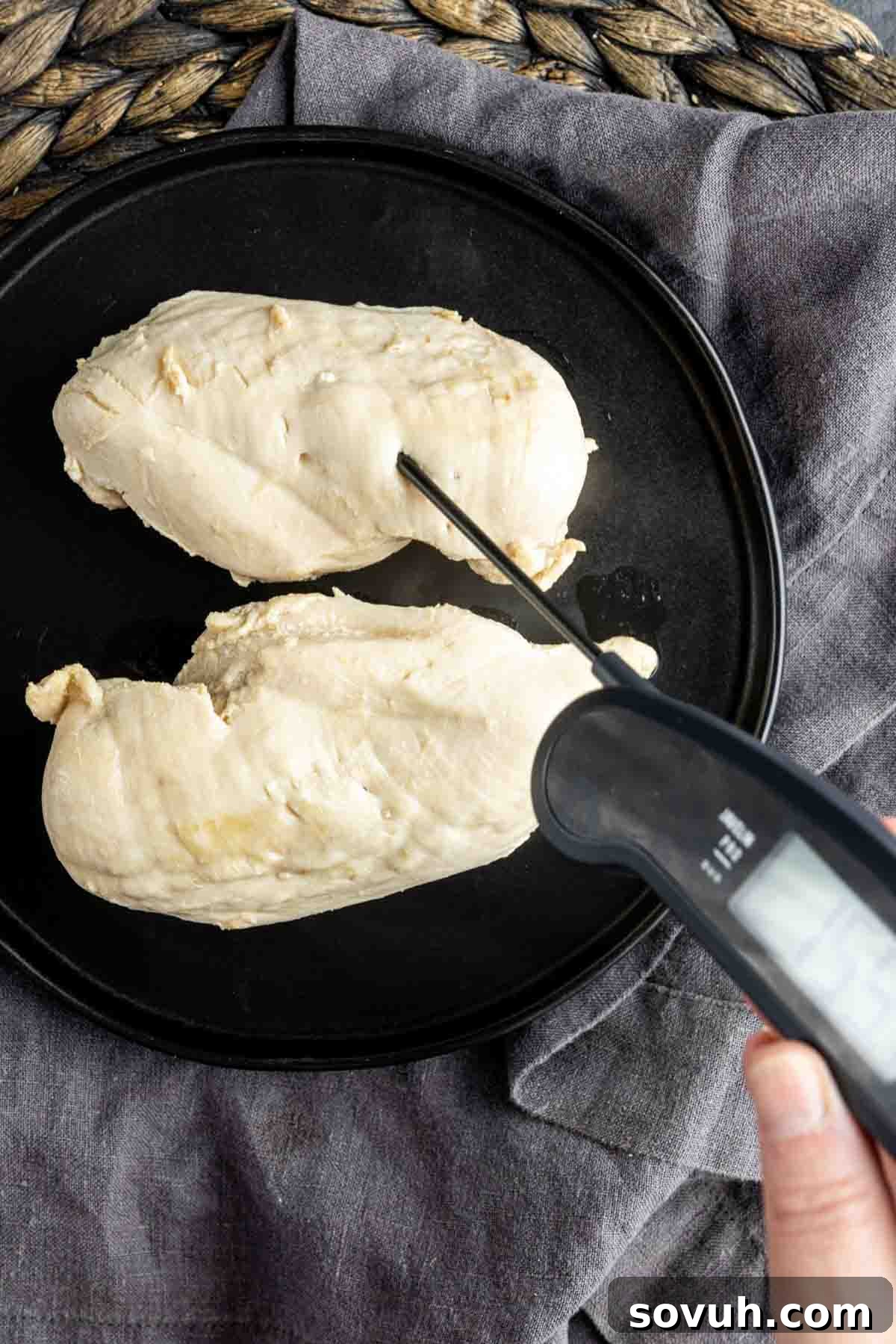
To ensure the chicken is thoroughly cooked and safe to eat, it is absolutely essential to use a digital meat thermometer. Insert the thermometer into the thickest part of the chicken, making sure it doesn’t touch any bone. The chicken is safe to consume once it reaches an internal temperature of 165°F (74°C).
Tips for Perfectly Boiled Chicken
- Don’t Overcrowd the Pot: Give your chicken pieces enough space in the pot to cook evenly. Overcrowding can lower the water temperature and extend cooking times.
- Maintain a Gentle Simmer: A vigorous boil can make the chicken tough. A gentle simmer ensures even, tender cooking.
- Skim the Scum: As the chicken boils, some foam or “scum” may rise to the surface. Skim this off with a spoon for a cleaner, clearer broth.
- Season Appropriately: Don’t underestimate the power of salt and other aromatics. They infuse flavor into the chicken as it cooks, preventing bland results.
- Rest Before Shredding/Cutting: Just like with roasted meats, allowing boiled chicken to rest for 5-10 minutes after cooking helps the juices redistribute, keeping the meat moist and tender.
Food Safety When Boiling Frozen Chicken
Food safety is paramount when cooking any type of poultry, especially when starting from a frozen state. The U.S. Department of Agriculture (USDA) confirms that it is perfectly safe to cook frozen chicken on the stovetop by boiling, provided you follow proper guidelines. The key is to ensure the chicken reaches a safe minimum internal temperature of 165°F (74°C) throughout. Using a reliable instant-read food thermometer is non-negotiable for verifying this temperature and preventing foodborne illnesses.
It’s crucial to distinguish between safe and unsafe cooking methods for frozen chicken. While boiling on the stovetop is safe, you should **NEVER** cook frozen chicken in a slow cooker or microwave. These appliances cook too slowly or unevenly, potentially allowing the chicken to remain in the “danger zone” (between 40°F and 140°F or 4°C and 60°C) for too long. This temperature range is ideal for bacterial growth, which can lead to food poisoning. Always opt for stovetop boiling or oven baking for frozen poultry.
Frequently Asked Questions About Boiling Frozen Chicken
Can Frozen Chicken Be Boiled Without Thawing?
Yes, absolutely. According to the USDA, it is entirely safe to boil frozen chicken on the stovetop. The critical factor is to ensure the chicken is cooked to a safe minimum internal temperature of 165°F (74°C). This temperature must be checked with a good instant-read food thermometer. The direct heat of boiling water effectively cooks the chicken through, making it safe for consumption.
Is It Better to Boil Chicken Frozen or Thawed?
As long as you are boiling your chicken on the stove, it does not significantly matter if you start with frozen or thawed chicken in terms of safety or final tenderness. The primary difference is the cooking time; thawing your chicken first will result in a faster cooking process. However, the end result — tender, succulent chicken — will be the same. Cooking from frozen offers unparalleled convenience when you’re short on time.
Can You Get Salmonella From Boiling Frozen Chicken?
No, you cannot get Salmonella from boiling frozen chicken, provided it is cooked correctly. Boiling frozen chicken on the stove is a completely safe method of cooking as long as you ensure it reaches a safe minimum internal temperature of 165°F (74°C). Cooking chicken to this temperature effectively kills any potential bacteria, including Salmonella, ensuring the meat is safe to eat.
Versatile Chicken Recipes Made with Boiled Chicken
Boiled chicken is a true culinary chameleon, adapting beautifully to an incredible range of dishes. Once your chicken is perfectly cooked and cooled, you can easily shred it or chop it into small pieces, making it an ideal ingredient for quick and healthy meals. It serves as a lean protein source that can be incorporated into almost anything.
Think beyond just plain chicken! Boiled chicken forms the heart of many comforting and flavorful recipes. Use it to bulk up salads, providing a satisfying protein boost, or stir it into creamy soups for added richness and texture. It’s excellent in sandwiches, wraps, and even as a versatile topping for pizzas or an addition to stir-fry dishes. The possibilities are truly endless, making meal prep a breeze.
Moreover, the flavorful broth created during the boiling process is liquid gold. Don’t let it go to waste! This homemade broth can serve as a robust base for stews, risottos, gravies, and countless other recipes, adding a depth of flavor that store-bought broths often can’t match.
Here are some of our favorite recipes that beautifully showcase the versatility of boiled chicken:
- Buffalo Chicken Dip Recipe (Oven) or Crock Pot Buffalo Chicken Dip – The ultimate party appetizer!
- Slow Cooker BBQ Pulled Pork (can be adapted with shredded chicken)
- King Ranch Chicken Casserole – A hearty, cheesy, Tex-Mex classic.
- Air Fryer Taquitos – Crispy, flavorful, and easy to make with pre-cooked chicken.
- Curry Chicken Salad – A vibrant and exotic twist on a classic.
- Buffalo Chicken Salad – Spicy and zesty, perfect for lunch.
- Avocado Chicken Salad {Keto} – Creamy, healthy, and full of good fats.
- Chicken Tortilla Casserole – Layers of flavor for a comforting family meal.
- Chicken Enchilada Casserole – A cheesy, saucy crowd-pleaser.
- Chicken Alfredo Zucchini Lasagna {Low Carb} – A lighter take on a rich dish.
- Chicken Alfredo Lasagna Roll Ups – Individual portions of creamy goodness.
- Buffalo Chicken Pasta Salad – A kicky pasta salad perfect for picnics.
- Shredded Chicken Taco Bowl (Low Carb) – Customizable and healthy, great for meal prep.
- Balsamic Glazed Chicken Pizza – A gourmet topping for your homemade pizza night.

Like this guide and the recipes?
Make sure to follow us on Instagram and Pinterest for more culinary inspiration and helpful tips.
How to Boil Frozen Chicken
Servings: 4
Prep Time: 5 mins
Cook Time: 30 mins
Total Time: 35 mins
Created By: Kat Jeter & Melinda Machado
Forgot to take the chicken out to thaw…Can I boil frozen chicken? We’ve got the answer with step-by-step instructions and recipe ideas.
Print Recipe
Ingredients
- 24 ounces Frozen chicken – frozen bone-in or boneless chicken breast, chicken thighs, or chicken legs. (See note 1)
- 64 ounces Chicken broth
- 2 teaspoons Kosher salt
Instructions
- Place the chicken in a pot and cover it with broth.
- Add salt to the broth. Optional: You can add pepper, garlic, onion, celery, carrots, bay leaves, thyme, and parsley to the pot for added flavor.
- Bring the broth to a boil over high heat.
- Reduce the heat to medium-low and let the chicken simmer for about 20-30 minutes or until the internal temperature reaches 165°F (74°C).
- Remove the chicken from the pot and let it cool before shredding or using it in your recipe. (See note 2)
Notes
- If you use chicken with the skin on, you’ll want to remove the skin once the chicken is fully cooked as it will have an unpleasant, rubbery texture.
- You can let the broth cool and store it in an airtight container in the refrigerator or freezer as a flavorful base for soups like our Rotisserie Chicken Soup with Tortellini or Slow Cooker Taco Soup.
- Nutritional values are calculated based on 24 ounces of frozen chicken breast.
Nutrition
Serving: 6 ounces, Calories: 284kcal, Carbohydrates: 2g, Protein: 46g, Fat: 6g, Saturated Fat: 1g, Polyunsaturated Fat: 1g, Monounsaturated Fat: 1g, Trans Fat: 0.02g, Cholesterol: 147mg, Sodium: 2292mg, Potassium: 848mg, Vitamin A: 87IU, Vitamin C: 7mg, Calcium: 12mg, Iron: 3mg
Nutrition Disclaimer: We are not certified nutritionists. Nutrition facts are an estimate and are provided as a courtesy. They are generated by an online API which recognizes ingredient names and amounts and makes calculations based on the serving size. Results may vary.
Course: Main
Cuisine: American
Conclusion: Embrace the Convenience of Boiled Frozen Chicken
Forgetting to thaw chicken is a common kitchen predicament, but it no longer needs to be a roadblock to preparing a delicious and healthy meal. Boiling frozen chicken on the stovetop is not only a safe and effective method but also a highly convenient one. It yields consistently tender results and provides a bonus — a rich, flavorful homemade broth perfect for future culinary adventures.
By following our simple step-by-step instructions, understanding the importance of food safety, and using a meat thermometer to ensure proper doneness, you can confidently transform frozen chicken into a versatile ingredient ready for a myriad of recipes. From quick salads to comforting casseroles, boiled chicken streamlines your meal prep and expands your cooking possibilities. So, next time you find that chicken rock-solid in the freezer, remember: dinner is still on, thanks to the power of boiling!
