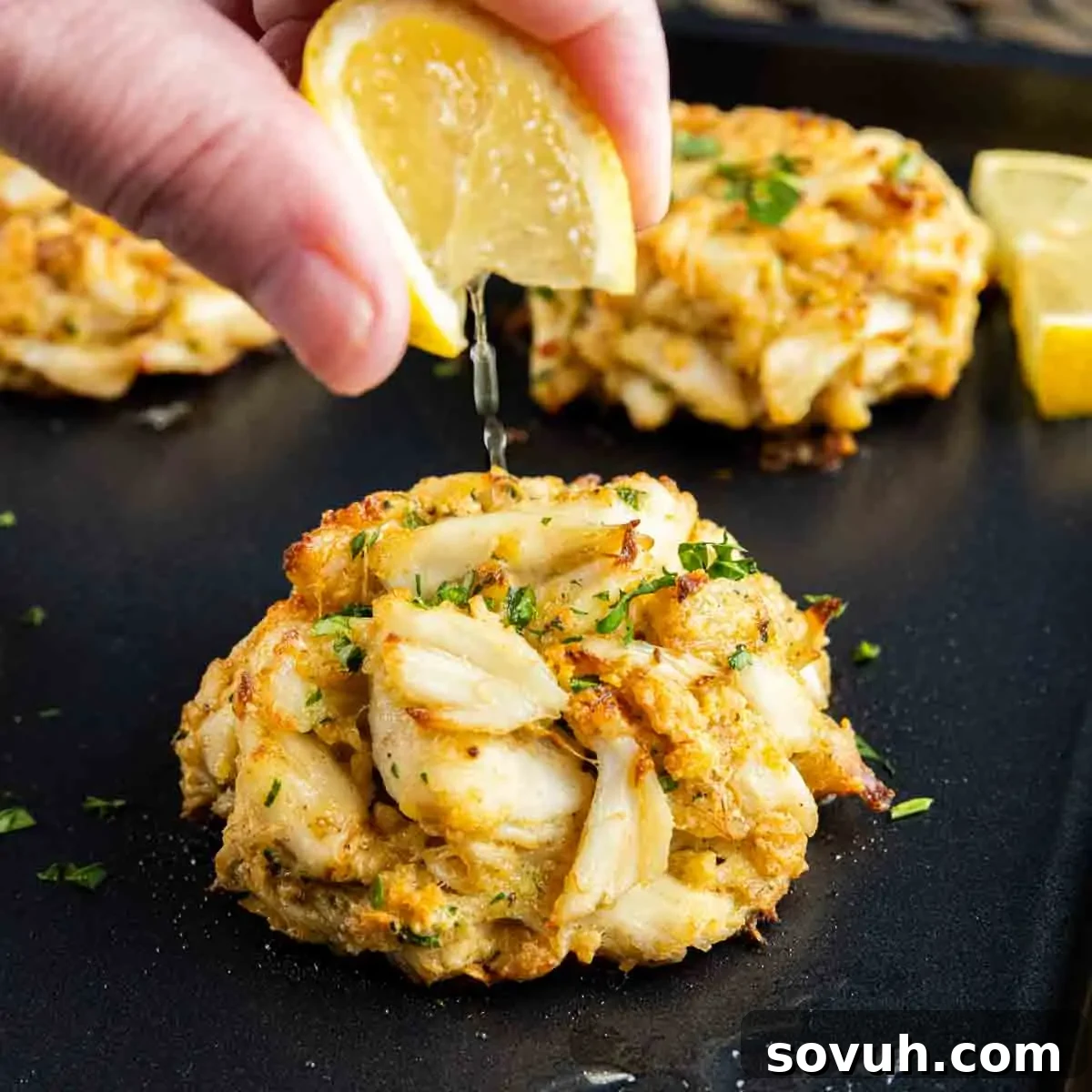
Authentic Maryland Crab Cakes: A Taste of the Chesapeake Bay
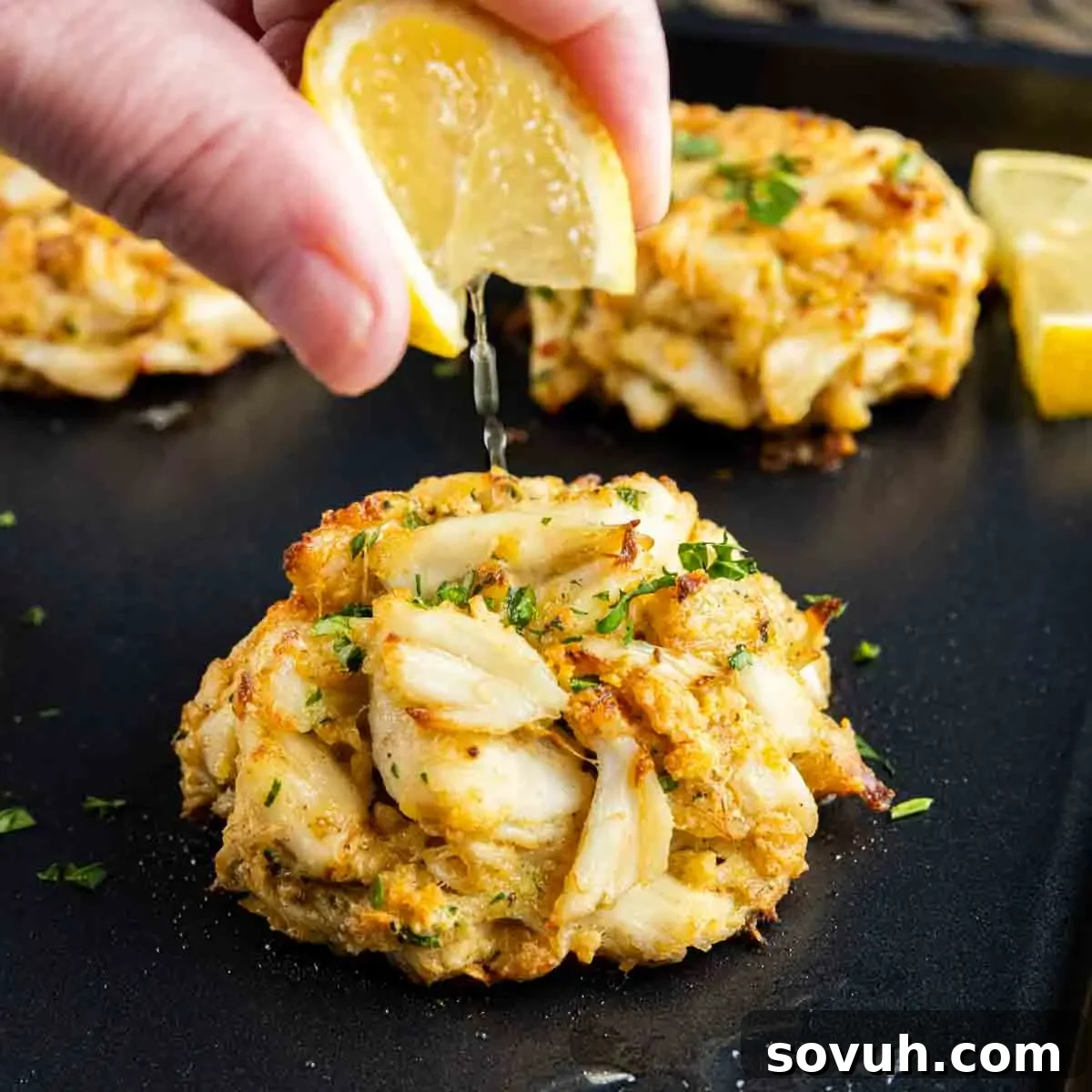
There’s nothing quite like a perfectly seasoned, tender, and succulent Maryland crab cake to transport you straight to the shores of the Chesapeake Bay. For those of us living in this vibrant region, blue crabs and their iconic pairing with Old Bay seasoning are more than just food – they’re a way of life, a culinary heritage passed down through generations. This recipe for Maryland-style crab cakes isn’t just easy and delicious; it’s an ode to tradition, designed to help you create a true taste of Maryland in your own kitchen.
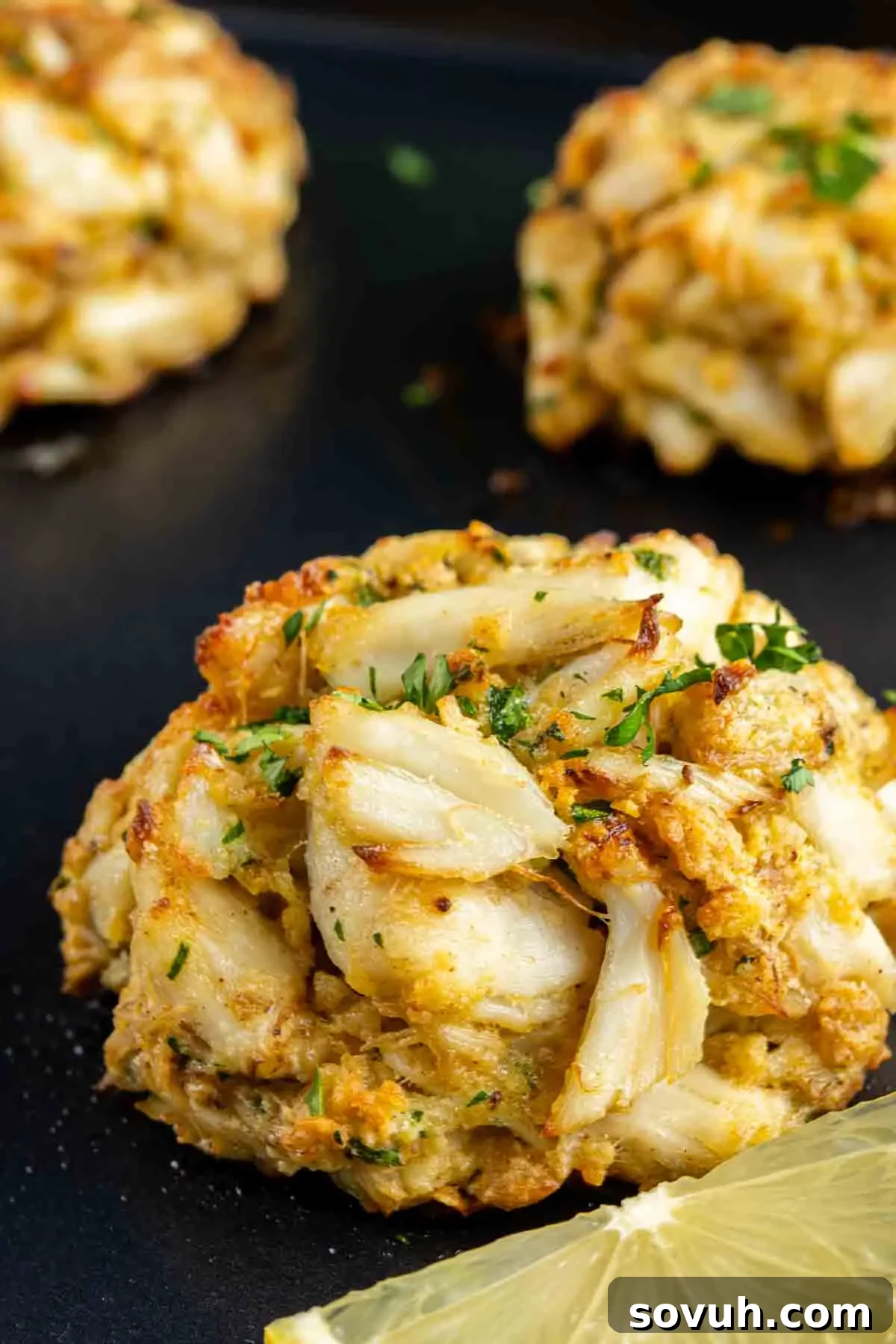
Crafted with the finest fresh lump crab meat and a thoughtfully balanced blend of seasonings, these baked crab cakes are guaranteed to be a showstopper at any gathering, impressing friends and family with their authentic flavor and delicate texture. Unlike many recipes that rely heavily on fillers, our approach focuses on letting the sweet, natural flavor of the crab shine through, bound just enough to create a cohesive yet incredibly tender patty. Baked to golden perfection, these crab cakes offer a healthier alternative to their fried counterparts without compromising on that coveted Maryland taste you’ll undoubtedly fall in love with.
Table of contents
- The Maryland Crab Cake Philosophy
- Essential Ingredients for Unforgettable Jumbo Lump Crab Cakes
- Step-by-Step Guide: Crafting Your Baked Crab Cakes
- Expert Tips for Flawless Old Bay Crab Cakes
- Frequently Asked Questions
- Perfect Pairings: What to Serve with Crab Cakes
- Storing and Reheating Your Delicious Crab Cakes
- Storing Crab Cakes
- Reheating
- Explore More Crab-tastic Recipes
Note: This post may contain affiliate links. That means if you click on a link and make a purchase we may receive a small commission. Thank you!

The Maryland Crab Cake Philosophy
To truly understand and appreciate a Maryland crab cake, one must grasp the fundamental principles that define its authenticity and unparalleled flavor. Anyone from Maryland will tell you that the secret to a genuinely great crab cake boils down to three core elements, each meticulously honored in this recipe:
- Quality Ingredients are Paramount: The journey to an exceptional crab cake begins long before any mixing takes place. It demands a discerning selection of ingredients, with the type of crab meat leading the charge. For the classic Maryland experience, lump crab meat, particularly jumbo lump, is not merely preferred but essential. Its large, sweet, delicate chunks provide the signature texture and rich flavor that other grades simply cannot replicate. Investing in high-quality, fresh crab meat ensures the star of the dish truly shines.
- The Enduring Soul: Old Bay Seasoning: The role of Old Bay Seasoning in a Maryland crab cake cannot be overstated; it is, quite literally, the heart and soul of the dish. This iconic spice blend, a staple in every Maryland kitchen, delivers a unique symphony of flavors—a warm, slightly sweet, and subtly spicy kick that perfectly complements the natural sweetness of the crab. It’s a flavor profile deeply ingrained in the regional culinary identity, providing that unmistakable “Maryland taste” that purists crave. Using Old Bay isn’t just a suggestion; it’s a non-negotiable step for authenticity.
- Minimal Filler for Maximal Flavor: This is perhaps the most crucial distinction of a true Maryland crab cake. While a small amount of filler is necessary to bind the ingredients and help the cake hold its shape, the art lies in using as little as possible. The goal is to highlight the glorious crab meat, not mask it. Excessive filler dilutes the crab’s delicate flavor and alters the desired tender, flaky texture. Our recipe strikes this delicate balance, ensuring the crab meat remains the undisputed star, allowing its natural deliciousness to take center stage with every bite.
Essential Ingredients for Unforgettable Jumbo Lump Crab Cakes
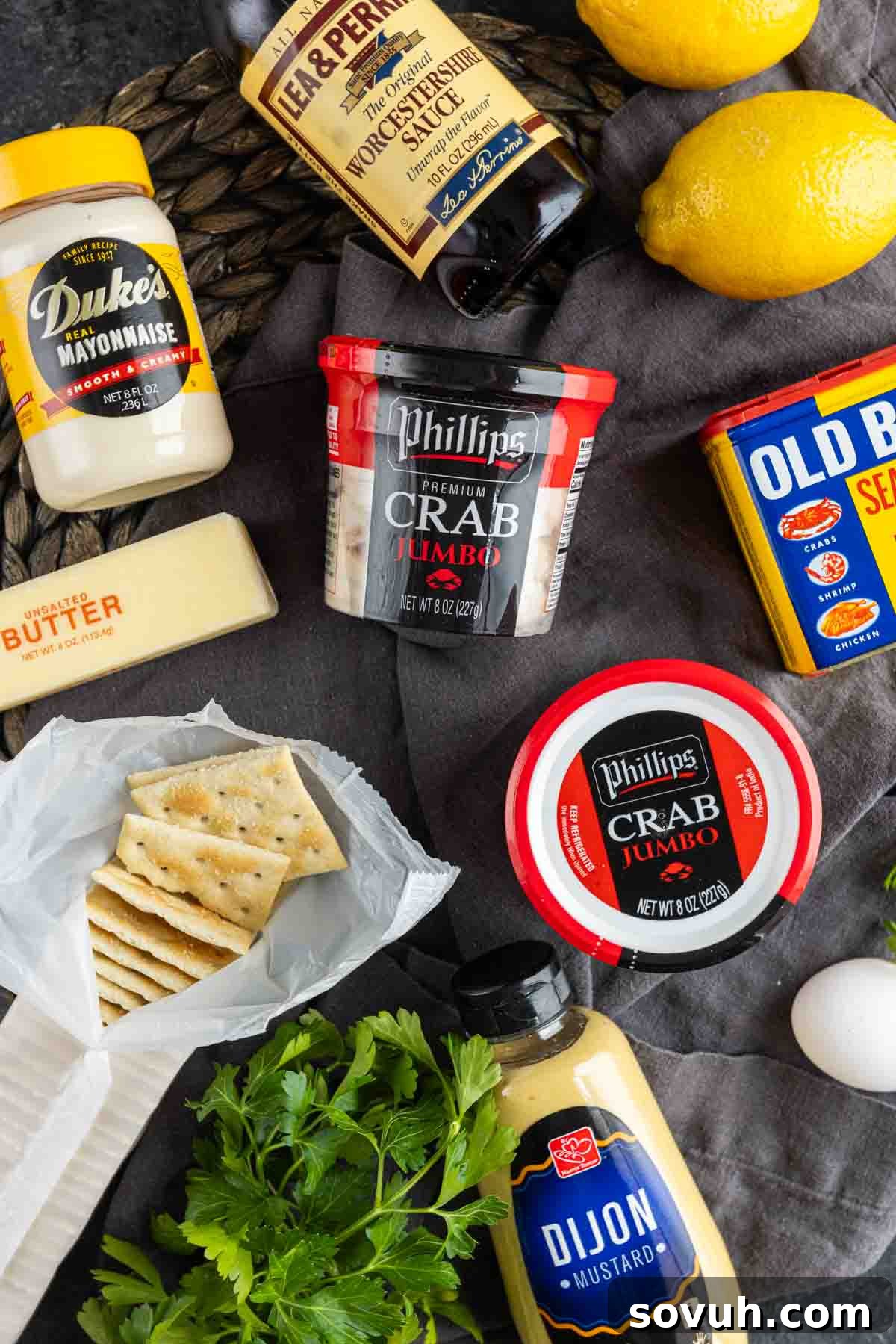
Creating the perfect Maryland crab cake relies on a handful of key ingredients, each playing a vital role in achieving that quintessential flavor and texture. Here’s a closer look at what you’ll need and why it matters:
- Egg: This serves as a crucial binder, helping to hold all the components of the crab cake together as it bakes. Without it, your beautiful patties might crumble.
- Mayonnaise: More than just a creamy condiment, mayonnaise adds essential moisture and richness to the crab cakes, contributing to their tender texture while also aiding in binding. Opt for a good quality, full-fat mayonnaise for the best results.
- Fresh Parsley: This herb provides a bright, fresh flavor that cuts through the richness of the crab and mayonnaise without overpowering it. Freshly chopped parsley is preferred for its vibrant taste and color.
- Dijon Mustard: A touch of tangy Dijon mustard adds a subtle depth and piquant flavor that complements the seafood beautifully. It’s a classic pairing for a reason.
- Worcestershire Sauce: Just a splash of Worcestershire sauce introduces a complex, savory, and slightly tangy note, enhancing the overall umami of the crab cakes.
- Lemon Juice: Freshly squeezed lemon juice is vital for brightening up the entire mixture. Its acidity balances the richness of the other ingredients. Remember to set aside a couple of extra lemon slices to squeeze over the finished crab cakes before serving for an extra zing.
- Seasonings:
- Salt: Essential for seasoning the crab meat and balancing the flavors.
- Old Bay Seasoning: The undisputed champion of Maryland seafood seasonings. This iconic blend, with its unique mix of savory, sweet, and spicy notes, is non-negotiable for authentic Maryland crab cakes. Its distinctive flavor is what makes these crab cakes truly special. Beyond crab cakes, Old Bay is incredibly versatile, perfect for Old Bay chicken wings, shrimp casserole, Instant Pot Shrimp Boil, and Maryland crab dip.
- Saltine Crackers: Finely crumbled saltine crackers are the traditional and preferred filler for authentic Maryland crab cakes. They offer a neutral flavor and light texture that helps bind the mixture without making it heavy or detracting from the crab. Avoid using too many; the goal is minimal filler.
- Jumbo Lump Crab Meat: This is the absolute star of the show. Insist on good-quality, fresh, or pasteurized jumbo lump crab meat. Its large, sweet, and flaky pieces are what define a superior crab cake. Many locals swear by brands like Phillips Premium Jumbo Lump Crab Meat for its consistent quality.
- Butter: Melted butter is brushed over the tops of the crab cakes before baking. This step is crucial for achieving that beautiful golden-brown exterior and adding another layer of rich flavor to the finished product.
Step-by-Step Guide: Crafting Your Baked Crab Cakes
Creating authentic Maryland crab cakes at home is simpler than you might think. Follow these steps carefully to ensure tender, flavorful results every time:
Step 1 – Prepare Oven: Begin by preheating your oven to 450 degrees Fahrenheit (232 degrees Celsius). This high temperature helps the crab cakes achieve a beautiful golden crust without overcooking the delicate crab inside.
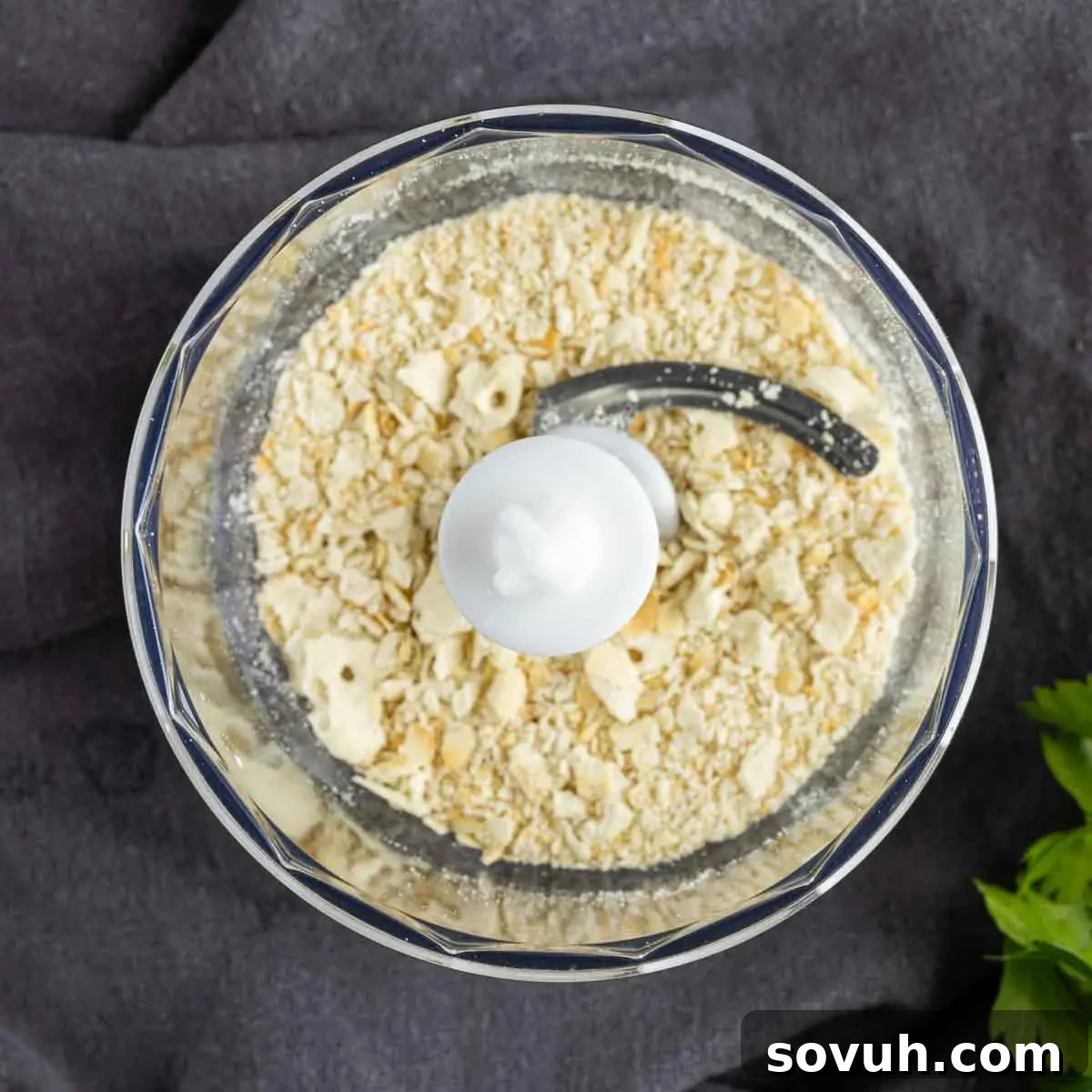
Step 2 – Make Crackers Crumbs: Place the saltine crackers into a food processor and pulse until they are finely ground into crumbs. The goal is a fine, even consistency, similar to breadcrumbs but with the neutral flavor of saltines. If you don’t have a food processor, you can place the crackers in a zip-top bag and crush them with a rolling pin.
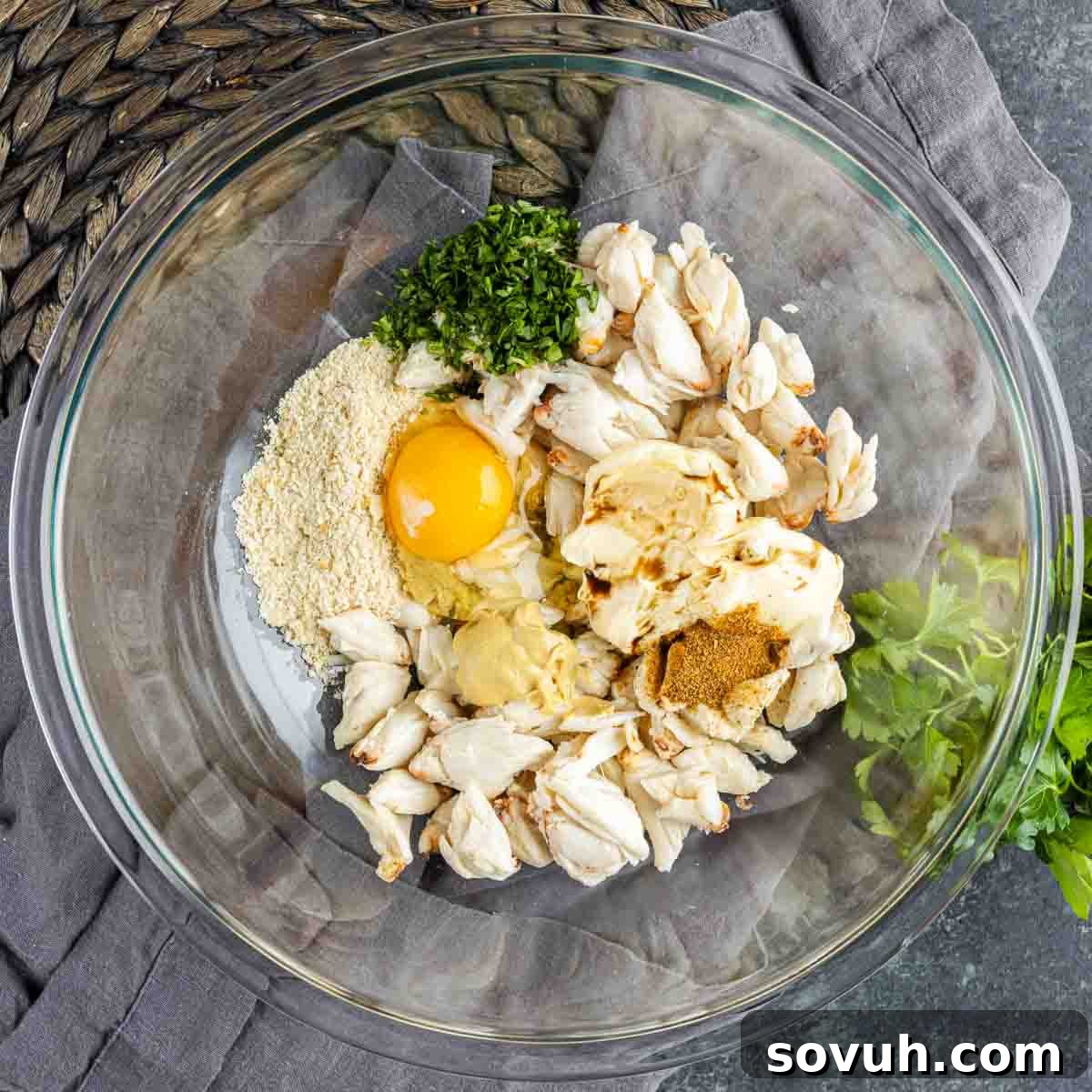
Step 3 – Gently Combine Ingredients: In a large mixing bowl, gently combine the large egg, mayonnaise, finely chopped fresh parsley, Dijon mustard, Worcestershire sauce, fresh lemon juice, salt, Old Bay seasoning, the prepared saltine cracker crumbs, and most importantly, the jumbo lump crab meat. Using a spatula, carefully fold the ingredients together. The key here is to be extremely gentle to keep the beautiful lump crab meat as intact as possible. Overmixing will break down the crab and lead to a stringy texture, which is not what we want.
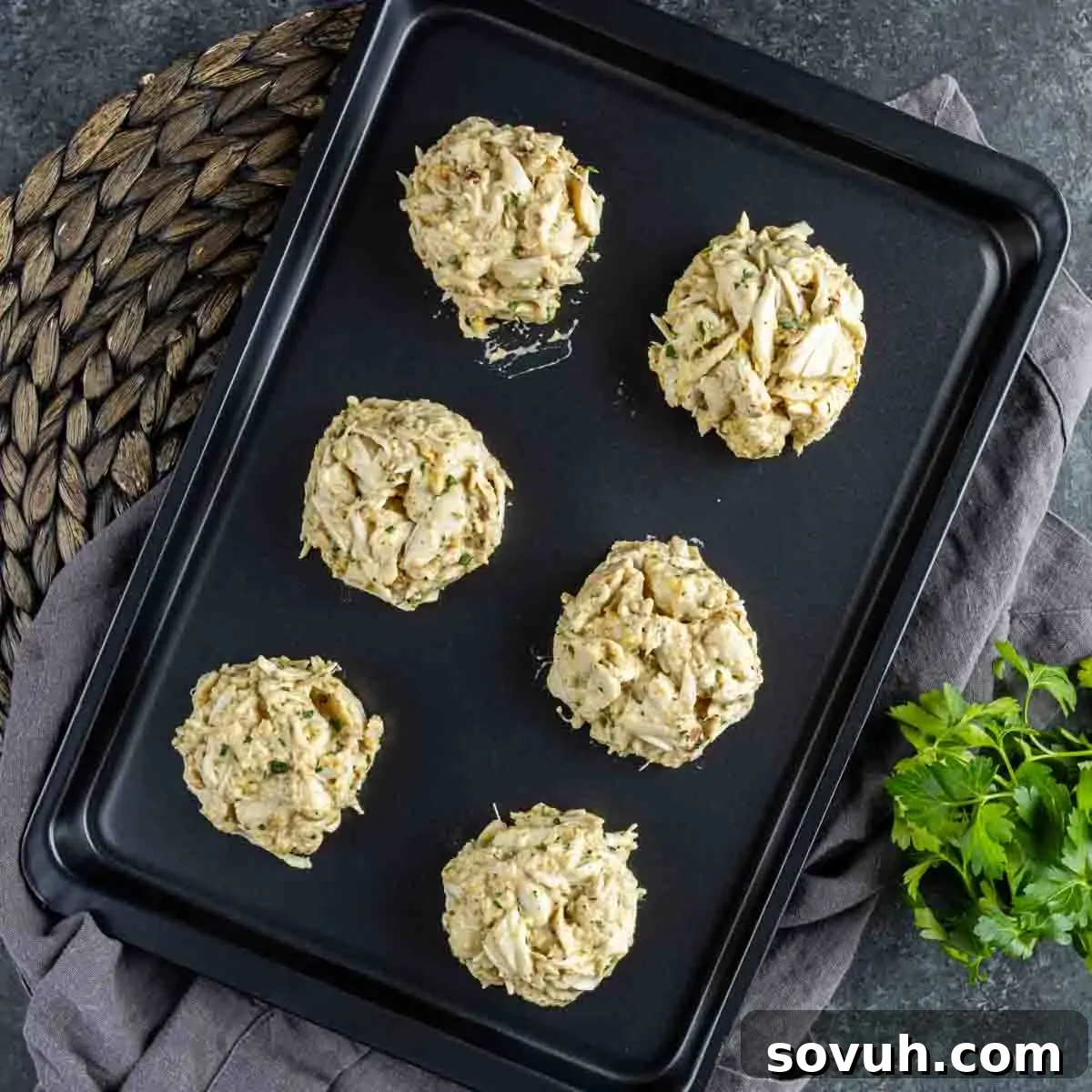
Step 4 – Portion and Form: Use a 1/2 cup measuring cup to portion out the crab cake mixture. First, gently scoop the mixture into the measuring cup, then lightly press down to pack it together just enough so it holds its shape. Invert the measuring cup onto your prepared baking sheet and gently tap to release the crab cake. If needed, use your hands to gently press any stray pieces back into a neat patty shape. This recipe typically yields about 6 perfectly sized crab cakes.
Step 5 – Chill for Stability: Once all your crab cakes are formed and placed on the baking sheet, transfer the sheet to the refrigerator for a minimum of 30 minutes. Chilling the crab cakes is a crucial step; it allows the binders to firm up, which helps the crab cakes hold their shape beautifully and prevents them from falling apart during baking.
Step 6 – Prepare for Golden Brown: When the crab cakes are nearing the end of their chilling time, melt the butter. Place the butter in a small microwave-safe bowl and microwave for about 15 seconds, or until it’s completely melted. Just before baking, gently brush the melted butter over the tops and sides of each chilled crab cake. This helps them achieve a desirable golden-brown color and a slightly crisp exterior.
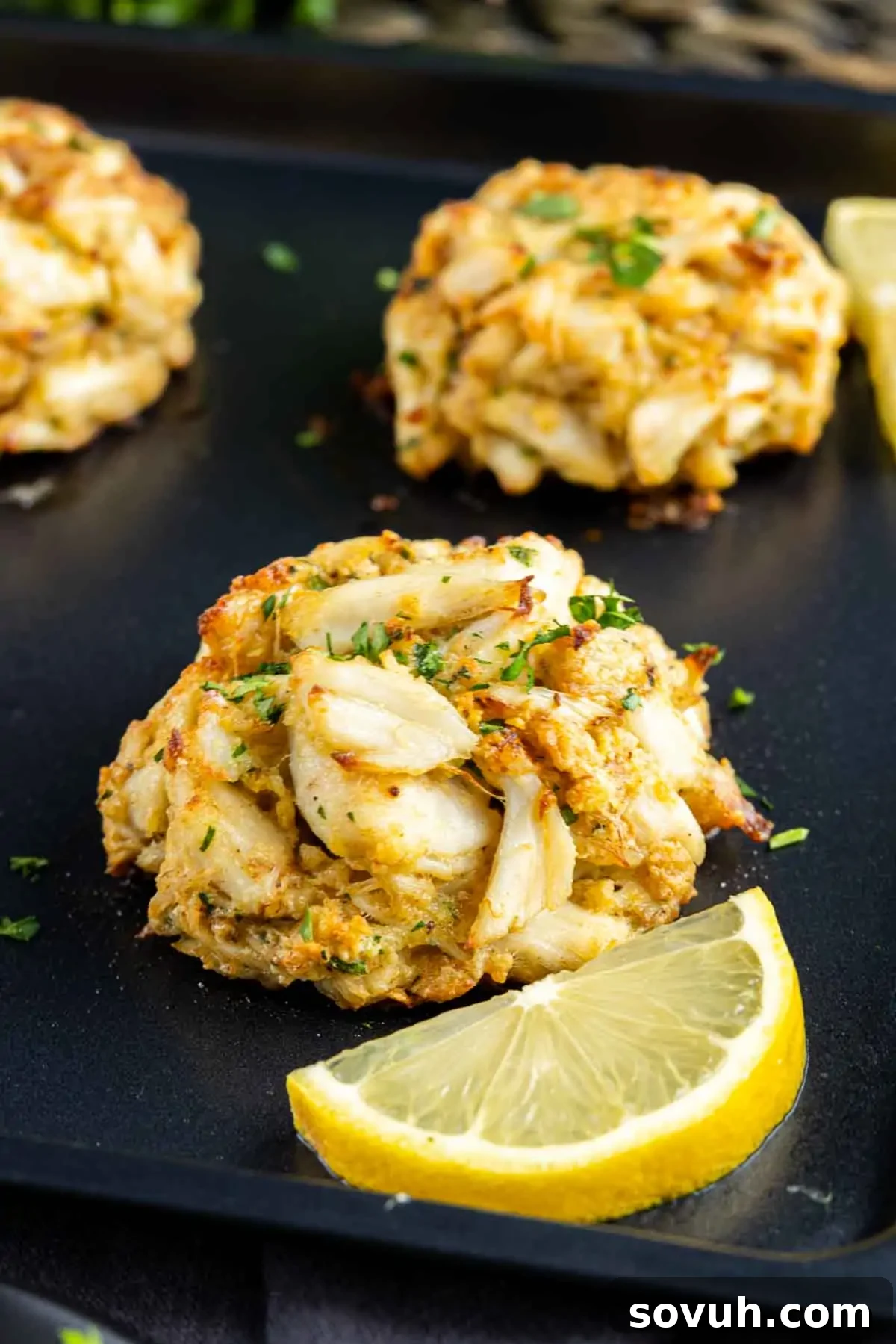
Step 7 – Bake to Perfection: Carefully place the baking sheet with the buttered crab cakes into the preheated oven. Bake for 12-15 minutes, or until the internal temperature reaches 145 degrees Fahrenheit (63 degrees Celsius) and the outside is beautifully golden brown. Avoid overbaking, as this can dry out the crab meat.
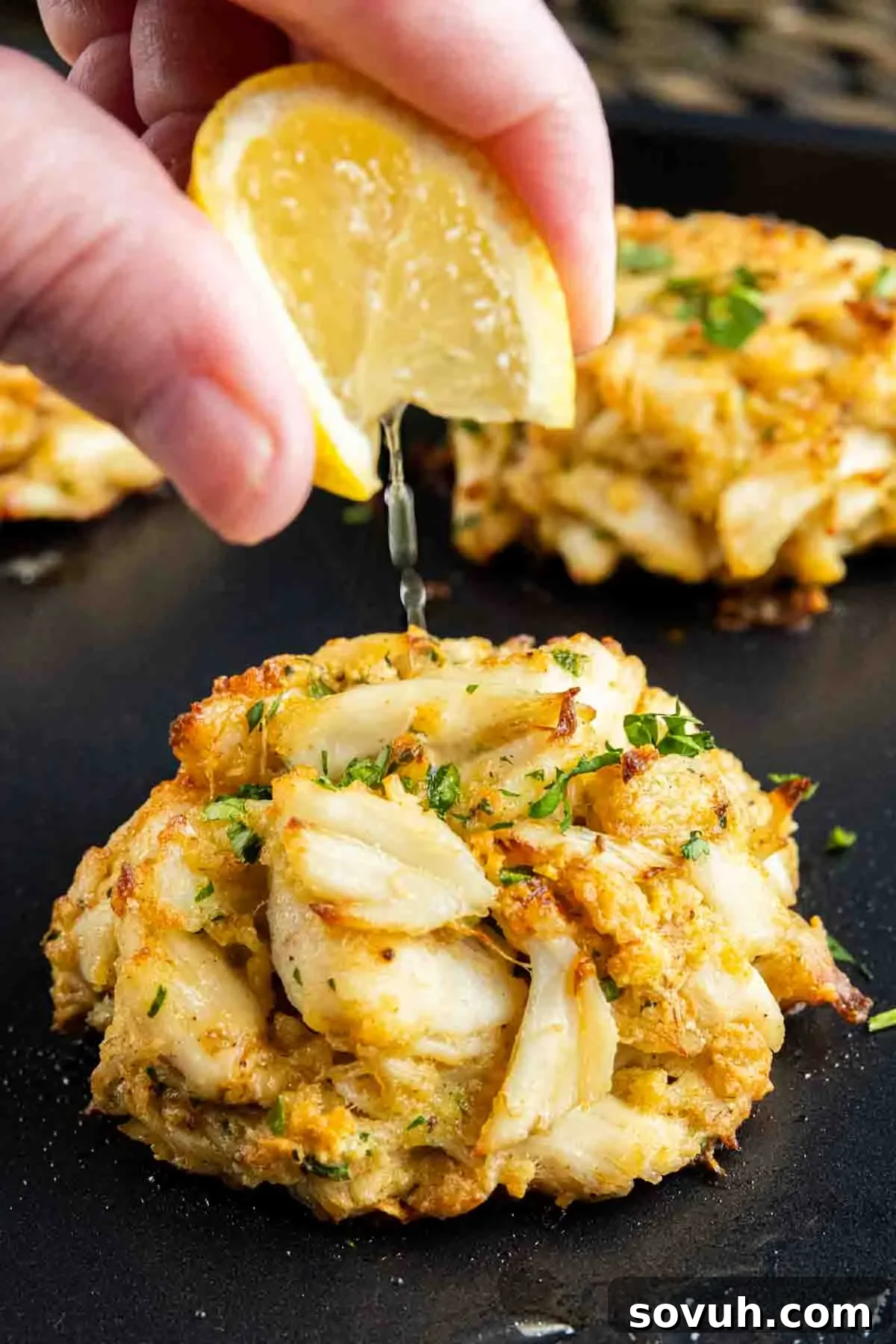
Step 8 – Serve with Zest: Once baked, remove the crab cakes from the oven. Let them rest for a minute or two before serving immediately with fresh lemon wedges. A squeeze of fresh lemon juice is the perfect bright finish, enhancing the natural flavors of the crab.
Expert Tips for Flawless Old Bay Crab Cakes
Achieving the perfect Maryland crab cake is a culinary art that, with a few expert tips, anyone can master. Here are some essential pointers to ensure your crab cakes are consistently delicious and structurally sound:
- The Secret is in the Seasoning Balance: While Old Bay is indispensable, the key is to enhance, not overpower, the delicate sweetness of the crab. Don’t be shy with it, but ensure it harmonizes with the crab, rather than dominating the palate. A subtle spice blend allows the quality of your crab to truly shine.
- Handle with Care – Avoid Overmixing: This is perhaps the most critical tip. Crab meat, especially jumbo lump, is fragile. Overmixing will break down the beautiful lumps, resulting in a shredded, stringy texture instead of distinct, succulent pieces. Use a spatula to gently fold the ingredients until just combined. Less is definitely more here.
- Chill for Superior Structure: Ensuring your crab cakes are thoroughly chilled before cooking is vital. The cold helps the binding ingredients (like egg and mayonnaise) to firm up, preventing the patties from falling apart when they hit the heat of the oven. A minimum of 30 minutes in the refrigerator makes a significant difference.
- Don’t Overcrowd the Pan: When baking, ensure there’s enough space between each crab cake on the baking sheet. Overcrowding can lead to uneven cooking and steaming, preventing the cakes from developing that desirable crispy, golden-brown crust.
- Monitor Internal Temperature: For food safety and optimal texture, aim for an internal temperature of 145°F (63°C). Using a meat thermometer ensures they are cooked through without being overdone and dried out.
- Quality of Crab is Non-Negotiable: As emphasized before, the type and freshness of your crab meat will make or break your crab cakes. Always opt for the best quality jumbo lump crab meat you can find. It’s worth the investment for an authentic experience.
- Baked for Health and Flavor: While some prefer pan-frying, baking offers a healthier alternative that still delivers a beautifully golden and tender crab cake. The melted butter brushed on top ensures a rich flavor and appealing color without the excess oil of frying.
Frequently Asked Questions
Here are some common questions about making Maryland crab cakes, along with expert answers to guide you:
While canned crab meat can be used in a pinch, it typically lacks the superior flavor and texture of fresh or pasteurized lump crab meat. For an authentic Maryland crab cake experience, we highly recommend using high-quality jumbo lump crab meat. The difference in taste and presentation is significant.
Several factors contribute to a stable crab cake. First, ensure your mixture has just enough binder (egg and mayonnaise) without being overly wet. Second, and crucially, always chill the patties for at least 30 minutes before cooking. This firms up the ingredients and helps them hold their shape. Finally, avoid overmixing the crab meat, as this can shred the lumps and reduce their ability to bind.
While Old Bay is the traditional and signature seasoning for Maryland crab cakes, you can certainly experiment with other spice blends. However, be aware that the flavor profile will differ significantly. You might try a mix of paprika, celery salt, black pepper, and a pinch of cayenne. But for true authenticity, Old Bay is irreplaceable.
Yes, baking is generally a healthier cooking method than frying. It significantly reduces the amount of added oil and fat, resulting in a lighter crab cake without sacrificing flavor or the desired crispy exterior. Our recipe achieves a wonderful texture through baking, making it a great choice for those seeking a lighter option.
Properly stored in an airtight container in the refrigerator, cooked crab cakes can last up to 3-5 days. For longer storage, you can freeze them (see detailed instructions below).
Absolutely! You can prepare the crab cake mixture, form the patties, and then refrigerate them on a baking sheet, covered, for up to 24 hours before baking. This makes them an excellent option for entertaining or meal prep.
For the best flavor and binding properties, use a good quality, full-fat mayonnaise. Brands like Hellmann’s (Best Foods) or Duke’s are often preferred for their rich flavor and creamy texture.
Saltine crackers are traditionally used in Maryland crab cakes because they provide a neutral, light binder that doesn’t compete with the delicate flavor of the crab. Breadcrumbs, especially seasoned ones, can sometimes impart too much flavor or create a denser texture. Fine cracker crumbs are key to maintaining that light, flaky consistency.

Perfect Pairings: What to Serve with Crab Cakes
Maryland crab cakes, with their rich, tender texture and savory flavor, are incredibly versatile and pair beautifully with a wide array of side dishes. Whether you’re serving them as an elegant appetizer or a hearty main course, here’s a lineup of accompaniments that will perfectly complement your crab cakes, creating a harmonious and unforgettable dining experience:
- Lemon Wedges: A simple yet essential accompaniment. A fresh squeeze of lemon juice over your crab cakes brightens their flavor, adds a zesty tang, and enhances the delicate sweetness of the crab without overpowering it. Always have plenty on hand!
- Classic Sauces: Elevate your crab cakes with a creamy, flavorful sauce.
- Lemon Aioli: A rich, garlicky, and tangy sauce that complements seafood perfectly.
- Classic Tartar Sauce: The traditional choice, offering a creamy, briny, and slightly acidic counterpoint.
- Remoulade Sauce: A spicier, more complex cousin to tartar sauce, often featuring Creole mustard, paprika, and herbs for a zesty kick.
- Potato Perfection: Potatoes in almost any form are a fantastic match for crab cakes, providing a comforting and satisfying element.
- Mashed Potatoes: Creamy and smooth, they offer a gentle contrast to the crab cakes.
- French Fries: Crispy and salty, they’re a fun and popular choice, especially if serving a more casual meal.
- Baked Potatoes: A hearty and customizable option, offering a fluffy interior.
- Roasted Potatoes: Seasoned and roasted until tender-crisp, they provide a delightful textural contrast.
- Crisp Coleslaw: A vibrant, tangy homemade southern coleslaw is an ideal side. Its refreshing crunch and sweet-tart dressing beautifully cut through the richness of the crab cakes, creating a balanced bite.
- Golden Hushpuppies: A personal favorite, these savory, deep-fried cornmeal fritters are a Southern seafood staple. Their slightly sweet and crispy exterior makes them a perfect, comforting partner to any seafood dish, including crab cakes.
- Fresh Mixed Green Salad: For a lighter, healthier option, you can never go wrong with a beautiful mixed green salad. A simple vinaigrette dressing allows the crab cakes to remain the star while adding freshness and crunch. Baked crab cakes already make for a relatively healthy meal, and pairing them with a fresh salad enhances that appeal.
- Seasonal Roasted Vegetables: Lightly roasted asparagus, green beans, or corn on the cob provide fresh, seasonal flavors and a pleasant texture contrast.
- Rice Pilaf: A fluffy and subtly seasoned rice pilaf can serve as a gentle, absorbent base, soaking up any delicious juices or sauces.
Storing and Reheating Your Delicious Crab Cakes
Ensuring your homemade Maryland crab cakes remain as delicious the next day as they were fresh out of the oven requires proper storage and reheating techniques. Here’s how to preserve their flavor and texture:
Storing Crab Cakes
- Cool Completely: Before storing, it’s crucial to allow your cooked crab cakes to cool down to room temperature. Storing them while warm can trap moisture, leading to sogginess and creating an environment for bacterial growth.
- Choose the Right Container: Once cooled, transfer your crab cakes into an airtight container. This is vital to prevent them from drying out, absorbing other odors from the refrigerator, or becoming stale. You can place parchment paper between layers if stacking multiple crab cakes to prevent sticking.
- Refrigerate or Freeze:
- Refrigeration: Cooked crab cakes can be safely stored in the refrigerator for 3-5 days. Ensure the container is sealed tightly.
- Freezing: If you plan to store them for longer, freezing is an excellent option. For best results, place the cooled crab cakes on a baking sheet and freeze them individually until solid (about 1-2 hours). Then, transfer the frozen crab cakes to a freezer-safe airtight container or heavy-duty freezer bag, removing as much air as possible. They can be stored in the freezer for up to 2 months. Label with the date.
- Freezing Uncooked Crab Cakes: You can also freeze uncooked crab cake patties. Form them as directed, then freeze them solid on a baking sheet before transferring them to an airtight container or freezer bag. Thaw in the refrigerator before baking.
Reheating
The key to reheating crab cakes is to restore their internal warmth while regaining that desirable crispy exterior without drying out the delicate crab meat. Here are the best methods:
- Oven or Toaster Oven (Recommended for Crispy Exterior): This is the ideal method for dishes like crab cakes that benefit from a crispy exterior.
- Preheat your oven or toaster oven to around 350°F (175°C).
- Place the crab cakes on a baking sheet. You can lightly spray them with cooking oil or brush with a tiny bit of melted butter if desired.
- For already cooked crab cakes, cover them loosely with aluminum foil to prevent excessive drying out, especially if they were frozen.
- Bake for 10-15 minutes (or 20-25 minutes if frozen), or until warmed through and the exterior is crisp again. The time needed will vary based on size and whether they were refrigerated or frozen, but you’re aiming for a warm center and a revived crust.
- Air Fryer (Excellent for Crispness): The air fryer is fantastic for reheating crab cakes quickly and making them wonderfully crispy.
- Preheat the air fryer to 350°F (175°C).
- Place the crab cakes in a single layer in the air fryer basket, ensuring they are not overcrowded.
- Cook for 8-12 minutes, flipping halfway through, or until warmed through and the exterior is crispy and golden. Adjust time for frozen crab cakes (likely 15-20 minutes).
- Microwave (Quick but Less Crispy): The microwave is the quickest choice, but it may result in a softer texture and less crisp exterior.
- Place crab cakes on a microwave-safe dish.
- To help retain moisture and prevent a rubbery texture, cover the dish with a damp paper towel.
- Heat in short bursts (30-60 seconds) at a time, checking for warmth and flipping halfway through, until heated through. This method is best for speed, not texture.
Explore More Crab-tastic Recipes
- The BEST Maryland Crab Dip
- Maryland Crab Pretzel
- Crab Stuffed Mushrooms
- Chesapeake Crab Burger
- Quick and Easy Crab Balls
Like this recipe?
Make sure to follow us on Instagram and Pinterest for more recipes like this.
Maryland Crab Cakes
Servings: 6
Prep Time: 15 mins
Cook Time: 15 mins
Chill Time: 30 mins
Total Time: 1 hr
Created By: Kat Jeter & Melinda Machado
Maryland-style crab cakes are made with fresh lump crab meat and classic Old Bay seasoning. These crab cakes are sure to be a hit at any party or gathering.

Print Recipe
Ingredients
- 1 large Egg
- 1/4 cup Mayonnaise
- 1 Tablespoon Finely chopped fresh parsley
- 2 teaspoons Dijon mustard
- 1 teaspoon Worcestershire sauce
- 1 teaspoon Fresh lemon juice
- 1.5 teaspoons Old Bay seasoning
- 1/8 teaspoon salt
- 15 Saltine crackers
- 16 ounces Jumbo lump crab meat
- 3 tablespoons Butter
Instructions
- Preheat oven to 450 degrees F (232°C).
- Place the saltine crackers into a food processor and chop until they are in fine crumbs.
- In a large bowl, combine a large egg, mayonnaise, parsley, Dijon mustard, Worcestershire sauce, lemon juice, salt, Old Bay seasoning, saltine cracker crumbs, and jumbo lump crab meat. Use a spatula to gently fold the ingredients together, doing your best to keep the lump crab meat as intact as possible.
- Use a 1/2 cup measuring cup to portion out the crab cakes. First, gently scoop the mixture into the measuring cup, then press down on it lightly to pack it together. Turn the measuring cup upside down over your baking sheet and gently tap the crab cake out. Use your hand to press any stray pieces back into shape if needed.
- Place the baking sheet in the refrigerator for 30 minutes to chill the crab cakes. This will help them hold their shape as they bake.
- Once the crab cakes have chilled, place butter in a small microwave-safe dish and microwave for 15 seconds or until melted.
- Gently brush the melted butter over the tops of the crab cakes.
- Place the baking sheet in the oven and bake for 12-15 minutes or until the internal temperature is 145 degrees F (63°C) and the outside is golden brown.
- Remove from the oven and serve immediately with fresh lemon wedges.
Nutrition
Serving: 1 crab cake, Calories: 224 kcal, Carbohydrates: 6g, Protein: 16g, Fat: 15g, Saturated Fat: 5g, Polyunsaturated Fat: 5g, Monounsaturated Fat: 4g, Trans Fat: 0.3g, Cholesterol: 82mg, Sodium: 899mg, Potassium: 199mg, Fiber: 0.4g, Sugar: 0.4g, Vitamin A: 316 IU, Vitamin C: 7mg, Calcium: 51mg, Iron: 1mg
Nutrition Disclaimer: We are not certified nutritionists. Nutrition facts are an estimate and are provided as a courtesy. They are generated by an online API which recognizes ingredient names and amounts and makes calculations based on the serving size. Results may vary.
Course: Main
Cuisine: American
