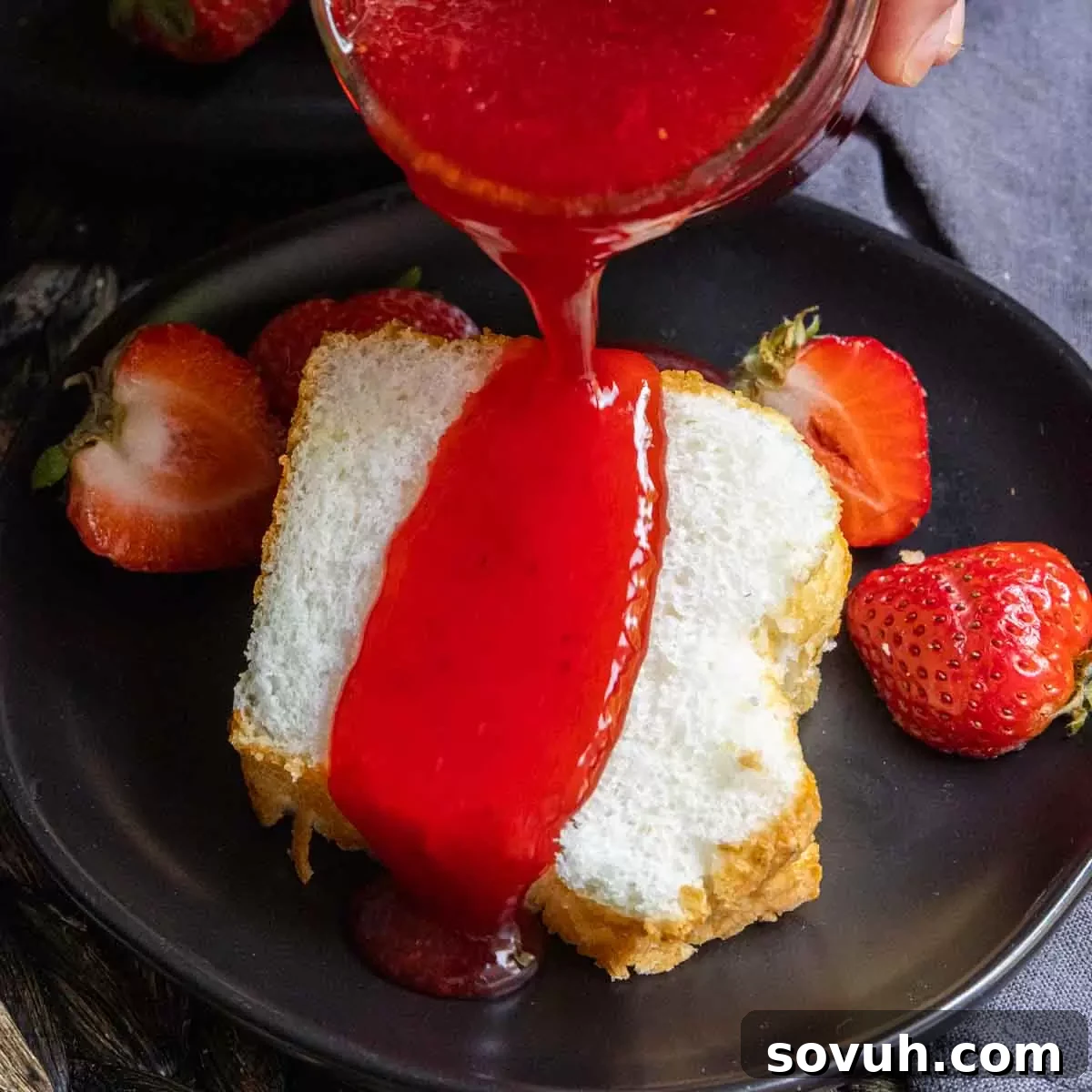
Indulge in the vibrant essence of summer with our incredibly easy-to-make homemade strawberry coulis! This delightful, velvety smooth strawberry sauce isn’t just a topping; it’s a versatile culinary magic wand that adds a burst of intense strawberry flavor and a touch of elegance to virtually any dish. Whether you’re enhancing a decadent dessert, elevating your breakfast experience, or even experimenting with savory pairings, this luscious sauce is the perfect way to transform an abundance of fresh summer strawberries into a truly special treat.
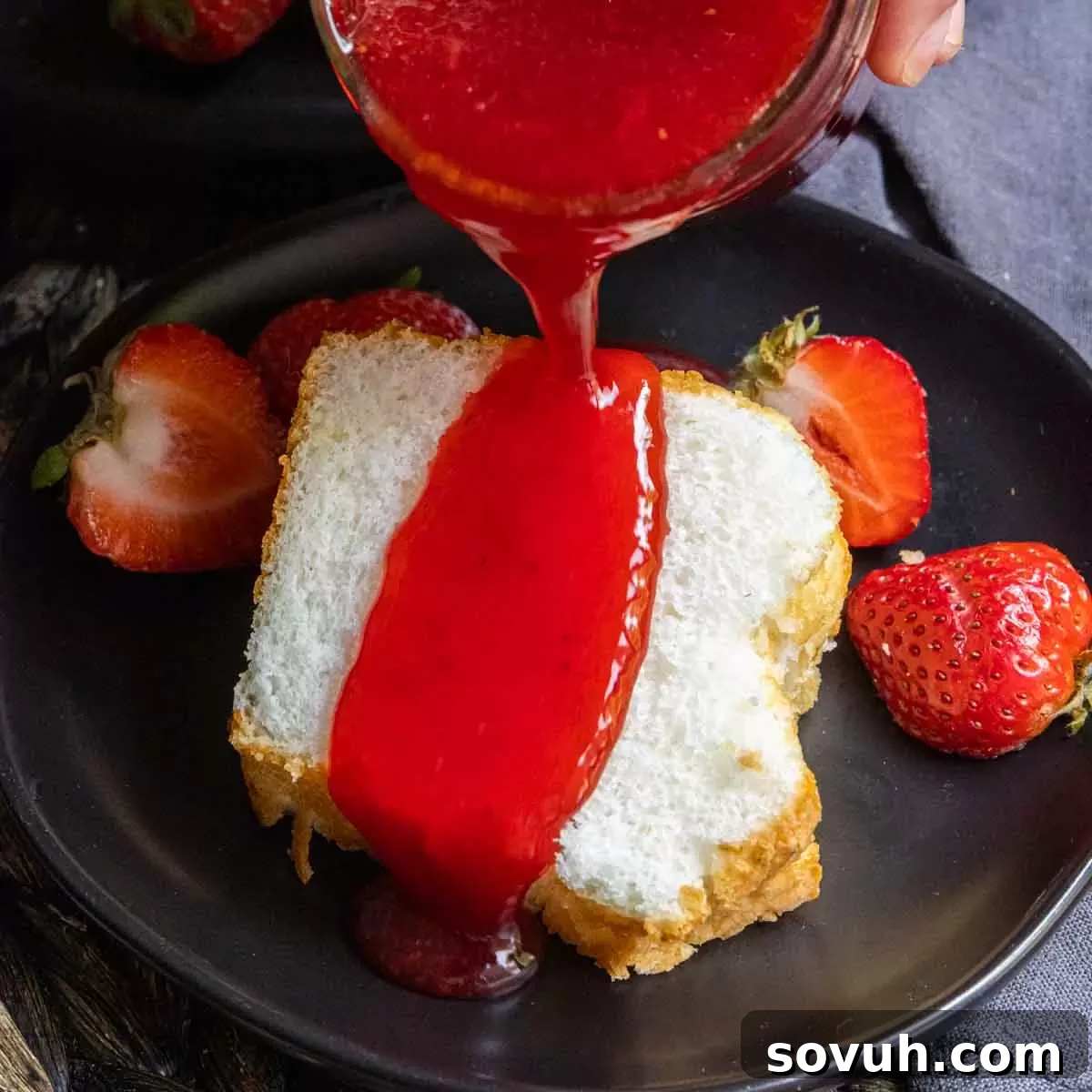
There’s nothing quite like strawberry season. The aroma of freshly picked, ripe strawberries is simply intoxicating. And when you find yourself with baskets overflowing with these ruby-red gems, creating a simple yet sublime strawberry sauce, famously known as strawberry coulis, becomes an absolute must. This recipe isn’t just about using up fruit; it’s about capturing the very essence of summer in a jar, ready to brighten your meals year-round.
Making your own strawberry coulis is surprisingly straightforward, requiring just a few key ingredients: ripe strawberries, a touch of sugar to enhance their natural sweetness, and a hint of acid to balance and brighten the flavors. With these humble components, you can whip up an extraordinary sauce that takes everything from desserts to refreshing beverages to a whole new level. Forget complicated recipes; this simple strawberry coulis is all about pure, unadulterated strawberry goodness.
Note: This post may contain affiliate links. Should you click a link and make a purchase, we may receive a small commission at no extra cost to you. Thank you for supporting our content!
Table of Contents
- What is Strawberry Coulis Made Of?
- How to Make Homemade Strawberry Coulis
- Coulis vs. Compote: Understanding the Difference
- How to Thicken Strawberry Coulis
- Versatile Uses for Strawberry Sauce (Coulis)
- Explore Other Easy Sauce Recipes
- Making Strawberry Coulis with Frozen Strawberries
- How to Properly Store Strawberry Coulis
- Can You Freeze Strawberry Coulis?
- Printable Strawberry Coulis Recipe
What is Strawberry Coulis Made Of?
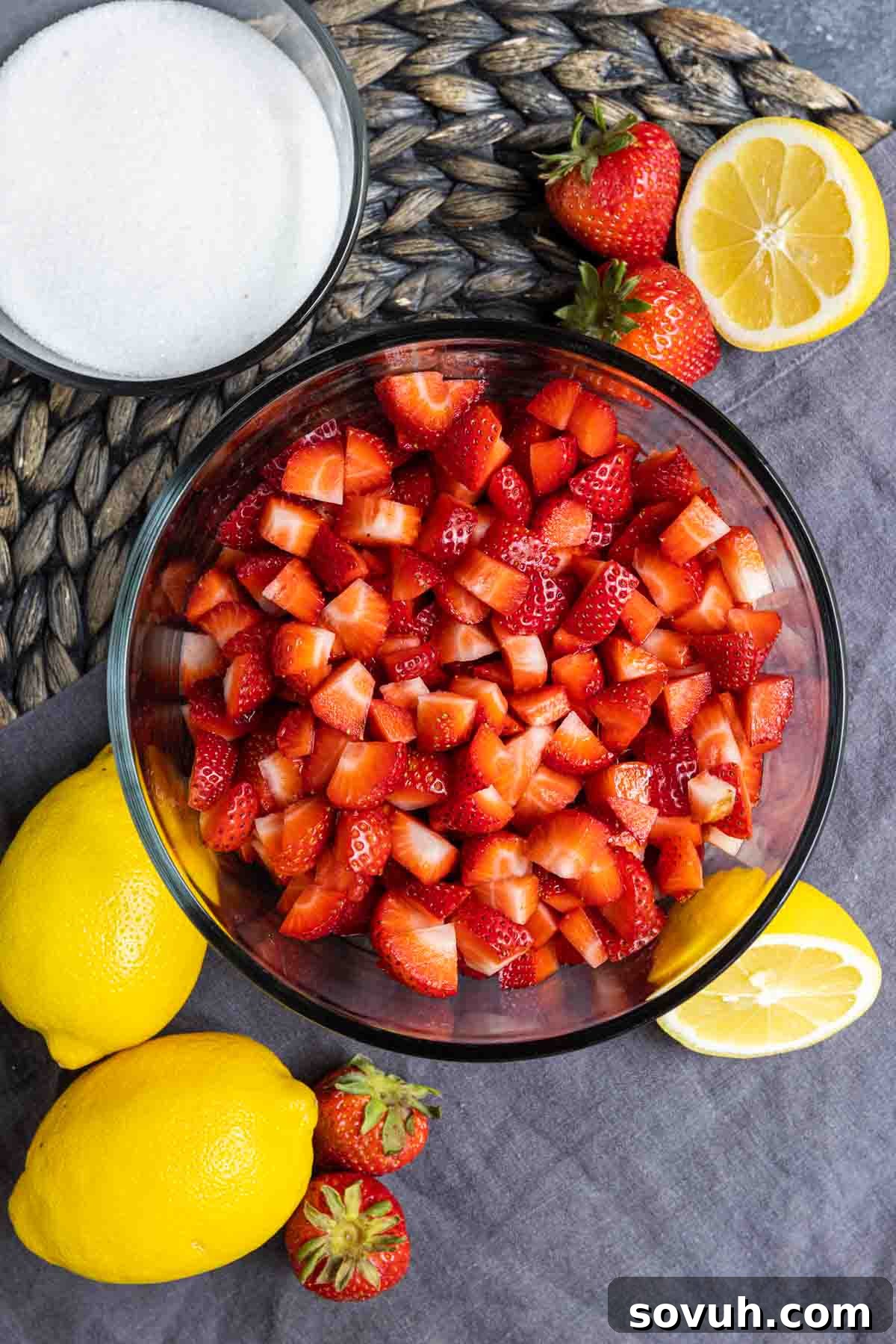
At its heart, a classic strawberry coulis is a testament to the idea that simplicity often yields the most extraordinary results. This elegant sauce relies on a handful of high-quality ingredients to shine. Understanding each component helps you achieve the perfect balance of flavor and texture:
- Strawberries: The star of the show! For the most vibrant flavor, we highly recommend using fresh, ripe strawberries when they are in season. Look for berries that are bright red, plump, and fragrant. However, don’t despair if fresh berries aren’t available; frozen strawberries work beautifully too, offering a convenient alternative year-round. The weight specified in our recipe refers to the chopped strawberries after their stems have been removed, ensuring accurate measurements for consistent results.
- Sugar: A touch of granulated white sugar is used to sweeten the coulis, enhancing the natural sweetness of the strawberries and balancing their tartness. The amount can be adjusted to your personal preference and the sweetness of your berries. We do not recommend using powdered sugar, as its fine texture can affect the final consistency and clarity of the sauce.
- Lemon Juice: A splash of fresh lemon juice is crucial. It acts as a natural flavor enhancer, brightening the overall taste of the strawberry coulis and preventing it from tasting overly sweet or flat. The acidity of the lemon juice also helps to preserve the vibrant red color of the strawberries during cooking.
These three ingredients, when combined and cooked with care, transform into a versatile and delicious strawberry coulis that will impress anyone who tastes it.
How to Make Homemade Strawberry Coulis
Creating this exquisite homemade strawberry coulis is a rewarding process, and surprisingly simple! Follow these step-by-step instructions to achieve a perfectly smooth and flavorful sauce that will impress your family and friends.
Step 1 – Combine Ingredients. Begin by adding your prepared fresh or thawed frozen strawberries, granulated sugar, and fresh lemon juice into a medium-sized saucepan. Give them a gentle stir to ensure everything is well combined before heating. This initial mix allows the sugar to start drawing out the natural juices from the strawberries.
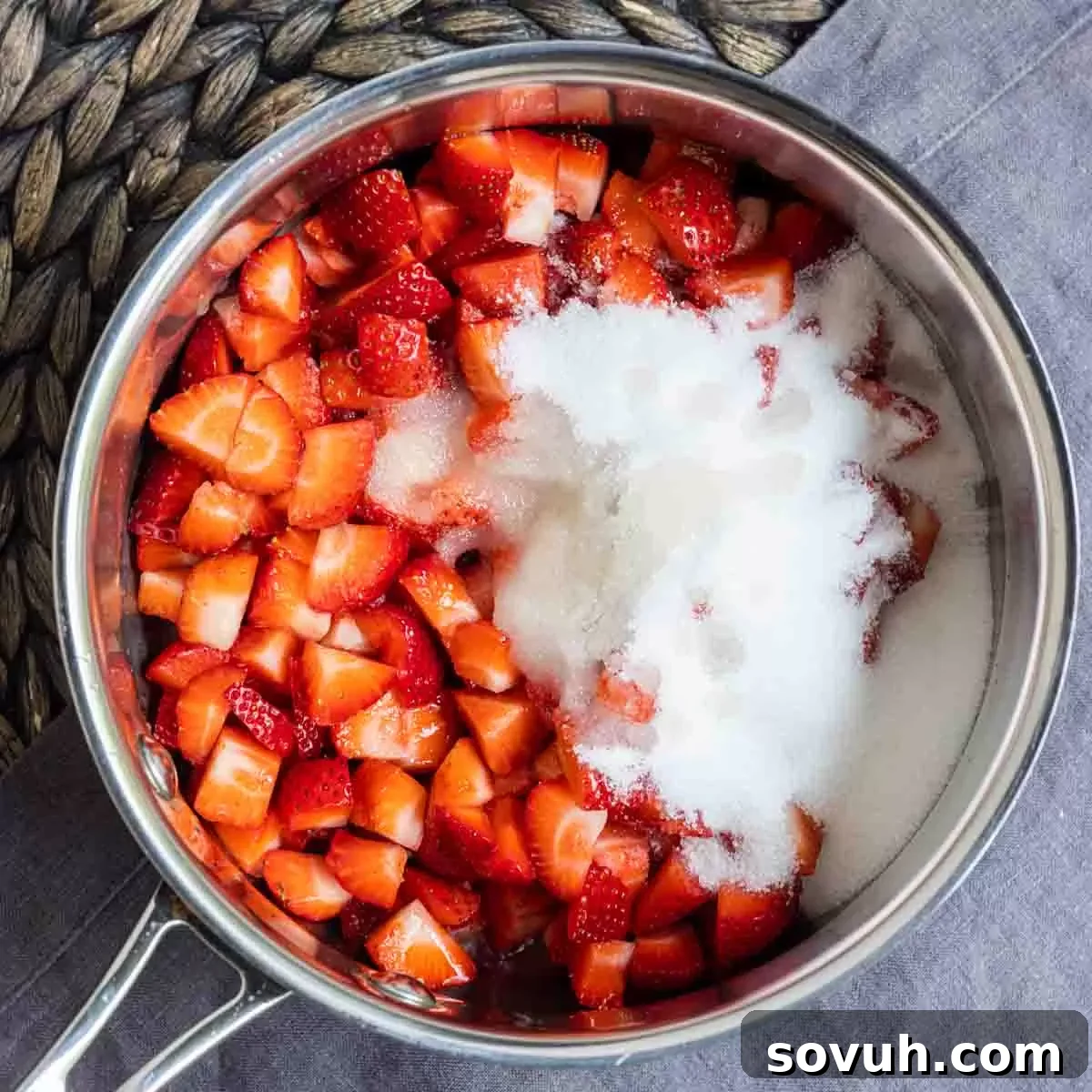
Step 2 – Cook and Mash. Place the saucepan over medium-high heat. Start cooking the mixture, stirring constantly to prevent sticking and burning. As the strawberries begin to heat up, they will release more of their juices. Once the mixture comes to a boil, reduce the temperature to medium-low to maintain a gentle simmer. Continue cooking for approximately 20 minutes. During this time, use the back of your spoon or a potato masher to gently mash the strawberries as they soften. This helps to break them down and extract maximum flavor.
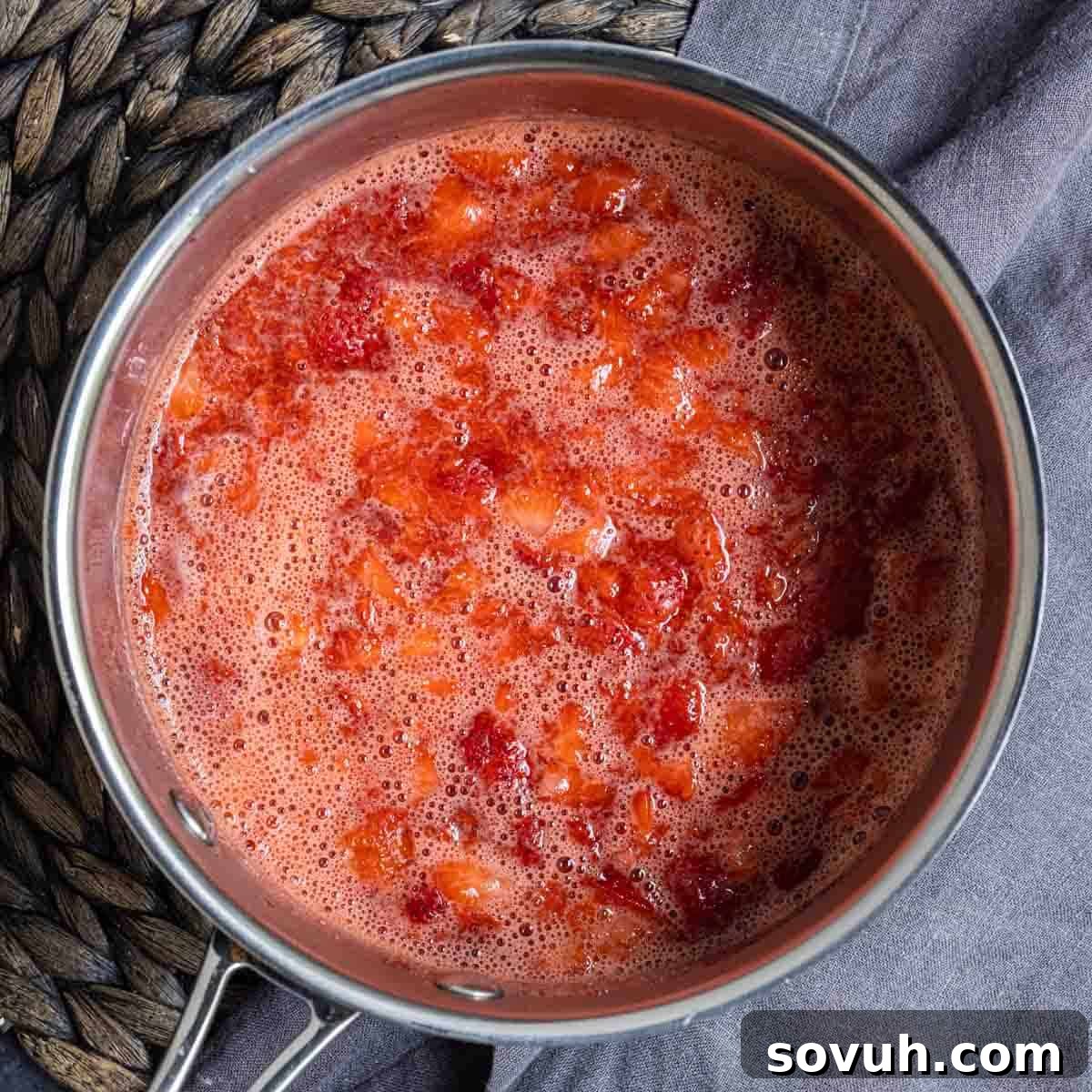
Step 3 – Puree the Berries. Once the strawberries are thoroughly softened and have broken down into a jam-like consistency, remove the pan from the heat. Now, it’s time to create that signature smooth texture. Use an immersion blender directly in the saucepan to puree the berries until completely smooth. If you don’t have an immersion blender, carefully transfer the mixture to a standard blender or food processor and process until smooth. Alternatively, for a slightly less refined but still delicious coulis, you can continue to mash the berries with a fork or a potato masher until your desired consistency is reached.
Step 4 – Strain for Smoothness. For a truly elegant and silky-smooth strawberry coulis, straining is an essential step. Place a fine-mesh strainer over a clean bowl. Pour the pureed strawberry mixture into the strainer. Using the back of your spoon or a rubber spatula, press down firmly on the strawberries, pushing as much of the liquid through the sieve as possible. This process effectively removes any unwanted pulp and seeds, leaving you with a beautifully clear and refined sauce.
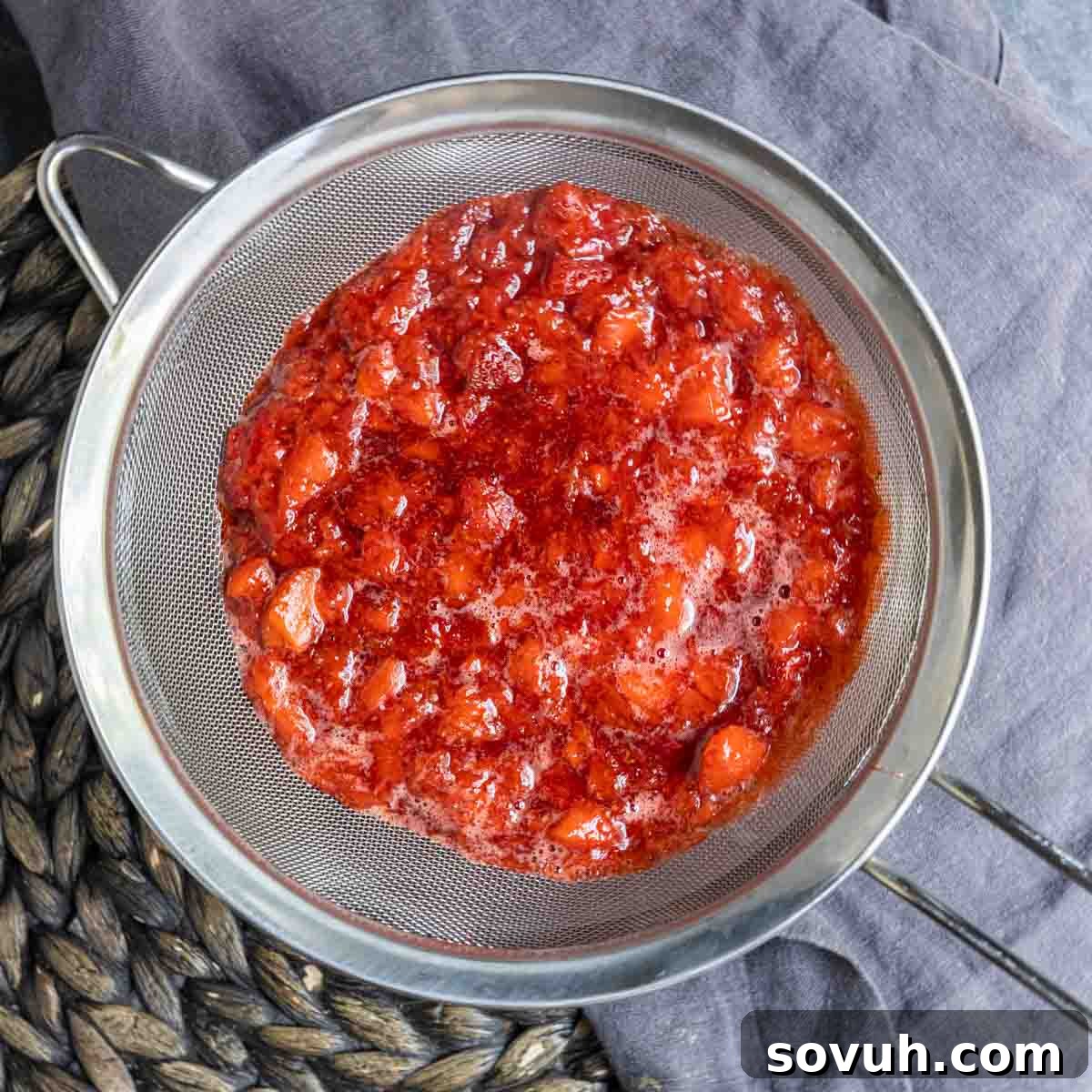
Step 5 – Final Reduction. Discard the leftover pulp and seeds from the strainer. Pour the strained, smooth strawberry liquid back into your saucepan. Return the saucepan to medium heat and continue cooking for another 10 minutes. During this final cooking stage, the sauce will thicken as more liquid evaporates, concentrating its flavors. Stir occasionally and watch for the moment when the coulis is thick enough to coat the back of your spoon. This indicates it has reached the perfect consistency.
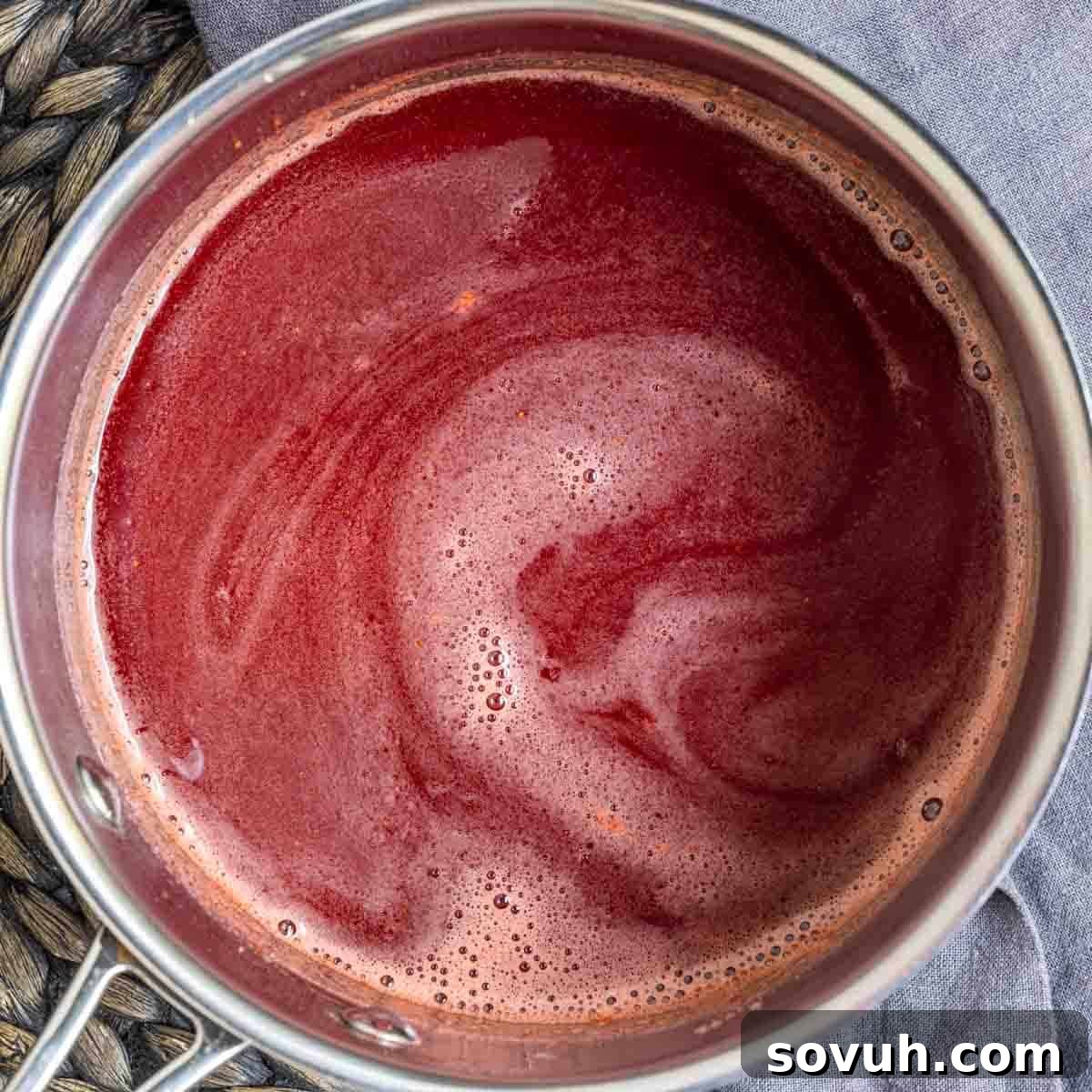
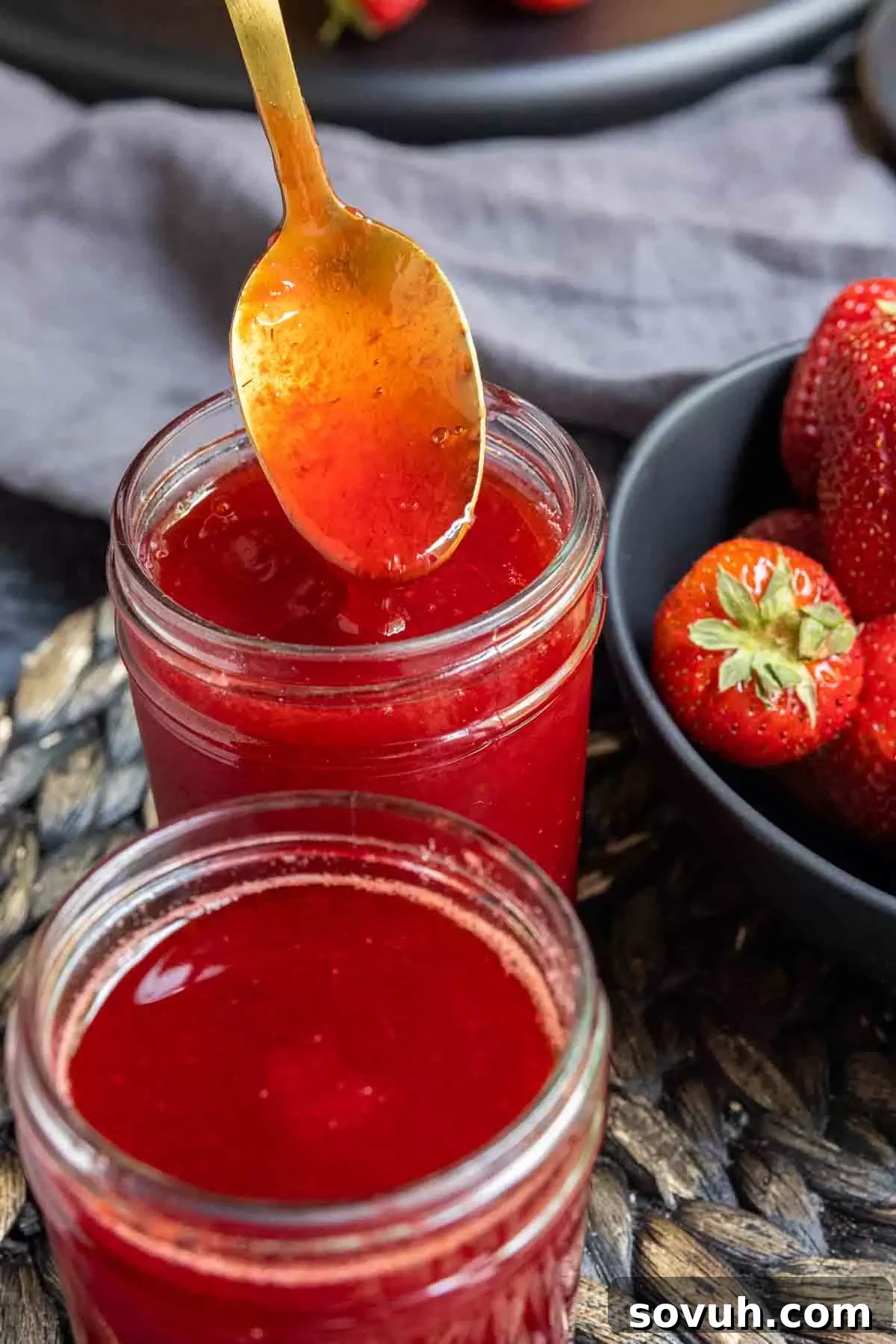
Step 6 – Cool and Serve. Once your strawberry coulis has reached the desired thickness, remove it from the heat and allow it to cool completely to room temperature. As it cools, it will continue to thicken slightly. If you’re not serving it immediately, transfer the coulis to an airtight container and store it in the refrigerator. For the best experience, bring the coulis back to room temperature before serving to allow its full flavor profile to emerge. Enjoy this exquisite homemade sauce!
Coulis vs. Compote: Understanding the Difference
While both coulis and compote are delicious fruit-based preparations, they possess distinct characteristics that dictate their culinary applications. Understanding these differences can help you choose the right preparation for your dish.
Coulis: A coulis (pronounced “koo-LEE”) is a smooth, vibrant, and typically thin sauce made from pureed fruits or vegetables. The process involves cooking the fruit (often with a touch of sugar and acid), blending it until perfectly smooth, and then, crucially, straining it through a fine-mesh sieve. This straining step removes any seeds, pulp, or fibrous bits, resulting in a beautifully clear, pourable liquid with an intense, concentrated flavor. Strawberry coulis, for instance, is known for its elegant, silky texture, making it ideal for drizzling over plated desserts, creating intricate patterns, or swirling into lighter preparations.
Compote: In contrast, a compote (pronounced “KOM-pote”) is a chunky fruit preparation. It’s made by cooking pieces of fruit, often whole or roughly chopped, in a sugar syrup. The key characteristic of a compote is that the fruit pieces retain their shape and texture, offering a more rustic and substantial mouthfeel. While the fruit softens, it doesn’t break down completely into a puree, and it is typically not strained. Compotes are excellent for serving alongside pancakes, topping oatmeal, filling pastries, or accompanying richer dishes where you want the texture of the fruit to be prominent.
The choice between strawberry coulis and strawberry compote ultimately depends on the desired texture, visual presentation, and how you intend to use it in your specific recipe. If you’re aiming for elegance and a refined finish, coulis is your go-to. If you prefer a more rustic, fruit-forward texture, compote is the way to go.
How to Thicken Strawberry Coulis
Occasionally, you might find your homemade strawberry coulis is thinner than desired, especially if your strawberries were particularly juicy or if you prefer a richer, more viscous sauce. Don’t worry, there are several effective methods to achieve that perfect spoon-coating consistency. Here are a couple of popular options:
- Reduce the sauce further: This is often the simplest and most natural method. Pour your thin strawberry coulis back into a clean saucepan. Place it over low to medium-low heat and gently simmer. The goal is to allow the excess liquid to evaporate slowly, which will naturally concentrate the flavors and thicken the sauce. Stir occasionally to prevent the coulis from sticking to the bottom of the pan or scorching. Remember that coulis will continue to thicken slightly as it cools, so be careful not to over-reduce it while it’s hot. Aim for a consistency that coats the back of a spoon, knowing it will become a bit thicker when chilled.
- Incorporate a thickening agent: If you’re in a hurry or want a more controlled thickening process, a thickening agent can be very useful. Common choices include cornstarch or arrowroot powder. To use, first create a “slurry” by mixing a small amount (start with 1 teaspoon for every 1-2 cups of coulis) of your chosen thickening agent with an equal amount of cold water until smooth. This prevents lumps. Heat your strawberry coulis in a saucepan over medium heat, then gradually whisk the slurry into the simmering coulis. Continue stirring constantly for 1-2 minutes as the mixture heats up; the thickening agent will activate, and the coulis will visibly thicken. Be cautious not to add too much, as an excessive amount can alter the clear, fresh taste and potentially create a starchy texture. Always add a little at a time until you reach your desired thickness.
- Consider Chia Seeds (for a rustic touch): While not traditional for a silky coulis, if you’re open to a slightly less refined texture, a teaspoon or two of chia seeds can naturally thicken the sauce as they absorb liquid. This method also adds a nutritional boost and a subtle textural element, making it more akin to a compote if not strained again.
The ultimate goal is a delightfully thickened consistency that allows the coulis to beautifully drizzle, elegantly coat your chosen dish, and hold its shape slightly without being overly gel-like. Experiment with these methods to find your preferred level of thickness, and savor every drop of your luscious strawberry coulis.
Versatile Uses for Strawberry Sauce (Coulis)
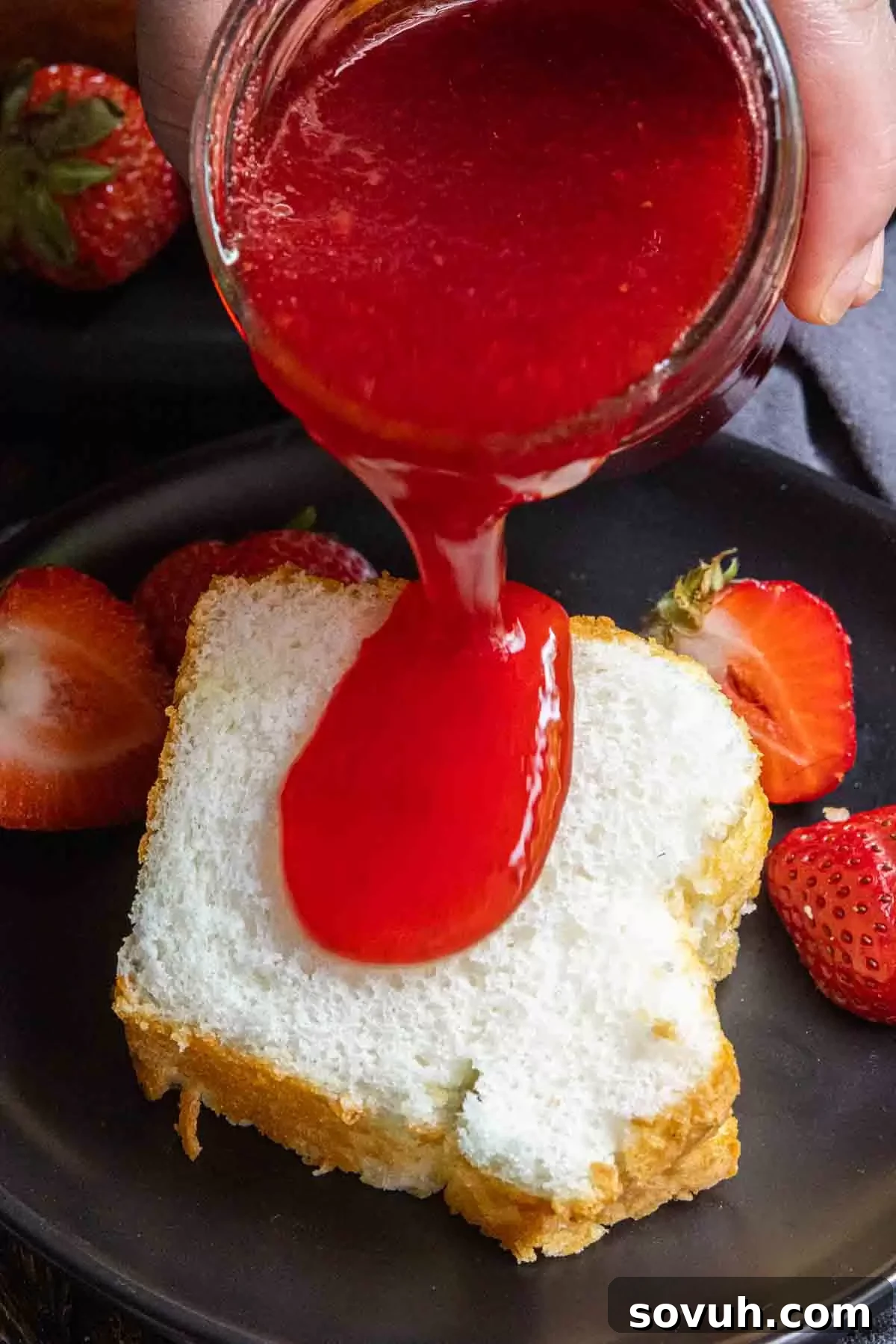
Strawberry coulis is far more than just a simple sauce; it’s a culinary gem that can infuse a burst of fresh, vibrant flavor and a touch of sophisticated elegance into a surprisingly wide array of dishes. Its perfect balance of sweetness and tang makes it incredibly versatile for both sweet and even some unexpected savory applications. Unleash your creativity with these delightful ways to incorporate strawberry coulis into your repertoire:
- Elevate Breakfast Favorites: Transform your morning routine into a gourmet experience. Generously drizzle strawberry coulis over fluffy pancakes, crispy waffles, or French toast. It’s a natural pairing that brings freshness and a delightful pop of color. Swirl a spoonful into your oatmeal, Greek yogurt, or overnight oats for an instantly upgraded and flavorful start to your day.
- Enhance Dessert Masterpieces: This is where strawberry coulis truly shines!
- Ice Cream and Sorbets: Take your plain vanilla ice cream or a scoop of creamy sorbet to new heights with a lavish drizzle. It’s a classic combination that never disappoints.
- Cheesecakes and Panna Cotta: A vibrant strawberry coulis cuts through the richness of cheesecakes and creamy panna cotta, adding a much-needed fruity counterpoint.
- Cakes and Tarts: A simple pound cake, angel food cake, or even a lemon pound cake (as we especially love!) is instantly elevated into a showstopper with this easy, sweet sauce. Use it as a topping or layer it within a multi-tiered cake.
- Fruit Salads: Drizzle over a fresh fruit salad to tie all the flavors together and add a glossy sheen.
- Chocolate Desserts: The tartness of strawberry coulis beautifully complements the richness of chocolate brownies, molten lava cakes, or chocolate mousse.
- Craft Refreshing Beverages: Stir strawberry coulis into sparkling water or lemonade for an instant, delightful mocktail. It’s also an excellent base for cocktails, such as a strawberry coulis margarita, a berry-infused sangria, or a sparkling wine spritzer. You can even blend it into smoothies for an extra layer of fruit flavor.
- Innovative Savory Pairings: Don’t limit yourself to sweet dishes!
- Glazes for Meat: A touch of strawberry coulis can be reduced further to create a delicious glaze for roasted chicken, duck, or pork, offering a surprising sweet and tangy contrast.
- Salad Dressings: Whisk a small amount of coulis into your homemade vinaigrette for a fruity, summery twist on your green salads. Its natural acidity and sweetness balance perfectly with crisp greens and goat cheese.
- Cheese Boards: Serve alongside a gourmet cheese board with soft cheeses like brie or goat cheese for a sophisticated pairing.
With its gorgeous color and irresistible taste, homemade strawberry coulis is a fantastic addition to any kitchen, promising to add a gourmet touch to everyday meals and special occasions alike.
Explore Other Easy Sauce Recipes
If you’ve enjoyed making this strawberry coulis, you might be keen to explore other delicious and easy sauce recipes to expand your culinary skills. Sauces are the backbone of many dishes, adding depth, flavor, and moisture. Here are some of our other favorite straightforward sauce recipes that are worth trying:
- Keto Big Mac Sauce
- Keto Alfredo Sauce
- Easy Chimichurri Sauce Recipe
- Peri Peri Sauce
- Easy Hot Pepper Sauce {Pepper Vinegar}
- Keto Tzatziki Sauce
- How to Make BBQ Sauce
- More Sauces & Seasonings
Making Strawberry Coulis with Frozen Strawberries
Absolutely! One of the best things about strawberry coulis is its adaptability. While fresh strawberries during peak season offer an unparalleled flavor, you can certainly make a fantastic strawberry coulis using frozen strawberries. This is a brilliant solution for enjoying this delightful sauce all year round, even when fresh berries are scarce or out of season. Here’s a detailed guide on how to achieve excellent results with frozen strawberries:
- Thawing the Strawberries: Before you begin, take the desired amount of frozen strawberries out of the freezer. While some recipes suggest cooking them from frozen, allowing them to thaw partially or completely is often beneficial. This softens the berries, making them easier to blend and ensuring a smoother cooking process. You can let them thaw at room temperature for about 15-30 minutes, or even overnight in the refrigerator for a more gradual thaw. You’ll notice they release a fair amount of liquid; keep this liquid, as it’s full of flavor.
- Initial Blending (Optional, but recommended for super smooth): Once the strawberries have softened (either partially or fully thawed), you can proceed in two ways. For an extra smooth coulis, transfer them directly to a blender or food processor with their released liquid. Blend until they form a smooth puree. This step helps break down the berries before cooking, potentially reducing overall cooking time. If you prefer a slightly less refined texture or are comfortable with more mashing during cooking, you can skip this step and go straight to the saucepan.
- Cooking the Mixture: Combine the thawed (or partially thawed and blended) strawberries with your desired amount of sugar and a splash of lemon juice in a medium saucepan. Follow the same cooking process as with fresh strawberries: bring the mixture to a boil over medium-high heat, then reduce to a simmer. Cook for about 20 minutes, continually stirring and mashing the berries (if you didn’t pre-blend) until they are very soft and broken down. The cooking time might be slightly longer if starting from mostly frozen berries to ensure they fully break down.
- Pureeing and Straining: Once the mixture is cooked and softened, remove it from the heat. Use an immersion blender (or transfer to a standard blender) to puree the strawberries until completely smooth. After pureeing, strain the mixture through a fine-mesh sieve into a clean bowl, pressing firmly to extract all the liquid and remove any remaining seeds or pulp. This step is crucial for achieving that signature silky coulis texture, as frozen strawberries can sometimes have a slightly tougher skin.
- Final Reduction: Discard the solids, pour the strained liquid back into the saucepan, and continue cooking over medium heat for another 10 minutes (or longer, if needed) until the sauce reaches your desired thickness. As with fresh berries, it will thicken further upon cooling.
The resulting strawberry coulis made with frozen strawberries will boast a wonderful vibrant color and an intensely fruity flavor, making it perfect for drizzling over desserts, pancakes, or incorporating into various recipes. Always remember to refrigerate any leftover coulis in an airtight container to maintain its freshness and quality.
How to Properly Store Strawberry Coulis
Proper storage is key to extending the life of your delicious homemade strawberry coulis, allowing you to enjoy its fresh flavors for days to come. Here’s a simple guide to storing it correctly:
- Cool Completely: Before storing, ensure your strawberry coulis has cooled completely to room temperature. Transferring hot or warm coulis directly to the refrigerator can create condensation, which can lead to spoilage and affect the texture.
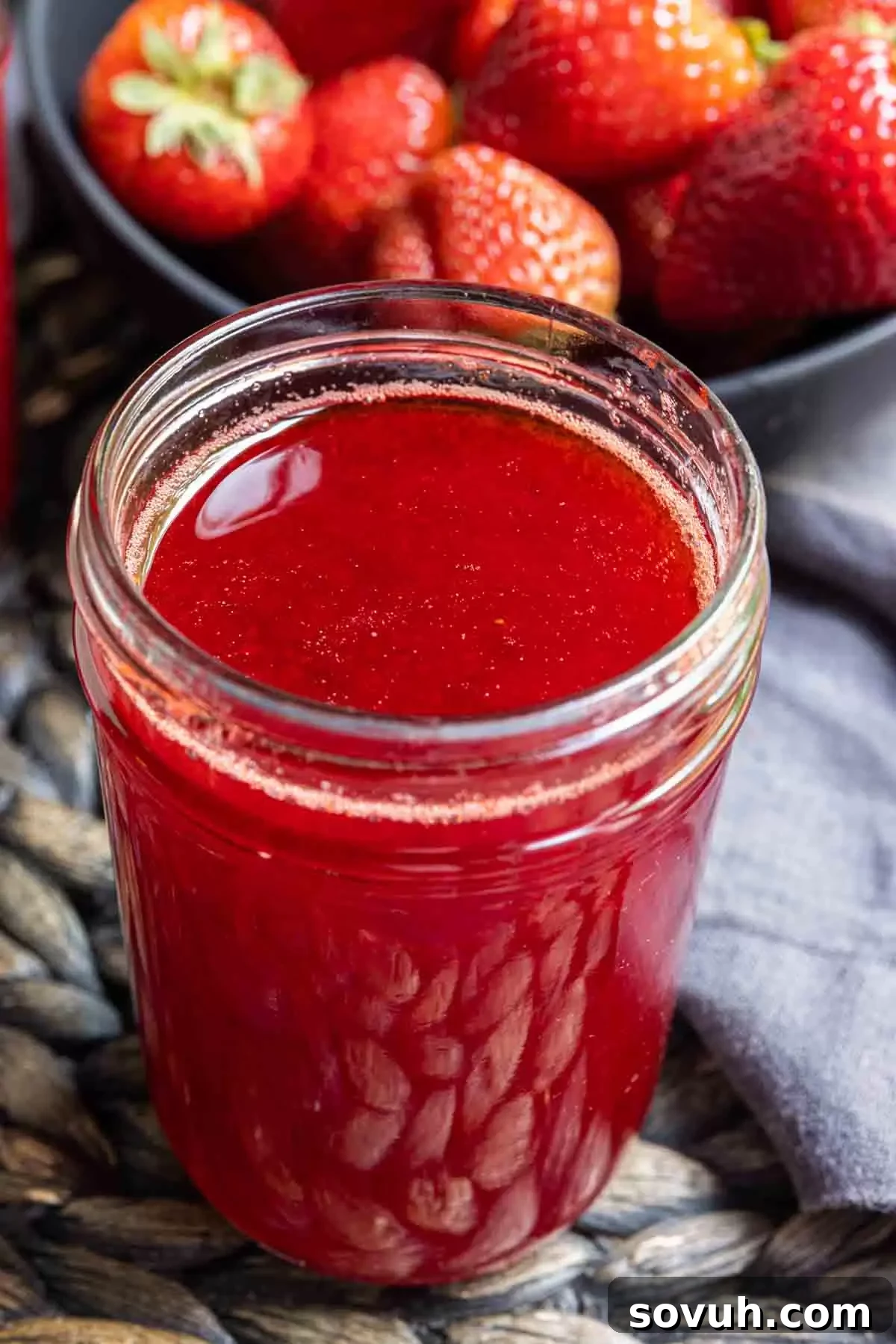
- Choose an Airtight Container: Select a clean, dry airtight container or a glass jar with a tight-fitting lid. Glass jars are often preferred as they don’t absorb odors or colors and can be easily sterilized.
- Seal Tightly: Once the coulis is in the container, seal it tightly. This prevents air from entering, which can cause oxidation, diminish flavor, and potentially lead to bacterial growth.
- Refrigerate: Place the sealed container in the refrigerator. The cool temperature will significantly slow down spoilage. Homemade strawberry coulis typically stays fresh and at its optimal quality for about 5-7 days when stored correctly in the refrigerator.
- Check for Spoilage: Always perform a quick check before using stored coulis. Look for any signs of spoilage, such as an off-odor, visible mold, or an unusual texture or color change. If in doubt, it’s best to discard it.
For convenience, consider portioning the coulis into smaller containers if you anticipate using it in smaller amounts. Remember to label the container with the date of preparation, which helps you keep track of its freshness. By following these simple storage tips, you can savor the vibrant taste of your strawberry coulis whenever inspiration strikes!
Can You Freeze Strawberry Coulis?
Yes, absolutely! Freezing strawberry coulis is an excellent way to preserve it for an extended period, allowing you to enjoy the taste of summer strawberries long after the season has passed. It’s a convenient method for batch prepping and ensures you always have a vibrant, flavorful sauce on hand. Here’s how to effectively freeze your homemade strawberry coulis:
- Cool Completely: Just like with refrigeration, it’s crucial to let the strawberry coulis cool down completely to room temperature (or even chill it in the refrigerator first) before freezing. Freezing hot liquids can affect their texture, create excessive condensation, and may even impact your freezer’s efficiency.
- Choose Freezer-Safe Containers: Transfer the cooled coulis into freezer-safe airtight containers, heavy-duty freezer bags, or even ice cube trays. If using containers, leave a small amount of headspace (about half an inch) at the top, as liquids expand slightly when frozen. For ice cube trays, pour the coulis into the compartments, freeze until solid, then pop out the frozen cubes and transfer them to a freezer bag. This creates convenient, single-serving portions.
- Seal and Label: Ensure your chosen containers or bags are sealed as tightly as possible to prevent air exposure, which can lead to freezer burn and flavor degradation. Don’t forget to label each container or bag with the date of freezing, so you can easily keep track of its shelf life.
- Freeze Flat: If using freezer bags, lay them flat on a baking sheet in the freezer until solid. This creates flat, stackable portions that save space. Once solid, you can remove the baking sheet.
- Thawing and Reheating: When you’re ready to use your frozen strawberry coulis, transfer the desired amount to the refrigerator and allow it to thaw slowly overnight. Alternatively, you can thaw it at room temperature for a few hours, or gently warm it in a saucepan over low heat. After thawing, you might notice a slight separation or a slightly thinner consistency due to the freezing process. Simply give it a good stir or whisk to restore its smooth consistency and vibrant texture before serving.
Frozen strawberry coulis maintains its best quality for about 2-3 months. While it remains safe to consume beyond this period, its flavor and texture might gradually diminish. Freezing is a fantastic way to maximize your strawberry harvest and enjoy the sunny taste of this versatile sauce throughout the year.
Like this recipe?
Make sure to follow us on Instagram and Pinterest for more delicious recipes and culinary inspiration like this one!
Printable Strawberry Coulis Recipe
Cook Time: 30 mins
Total Time: 1 hr
Strawberry Sauce (Strawberry Coulis)
Discover the magic of strawberry coulis, a simple homemade strawberry sauce that is the perfect way to use up those abundant summer strawberries!

Print Recipe
Ingredients
- 24 ounces Chopped strawberries, stems removed
- 3/4 cup Sugar
- 2 tablespoons Lemon Juice
Instructions
- In a medium saucepan add strawberries, sugar, and lemon juice.
- Over medium-high heat begin cooking the ingredients, stirring constantly until the mixture comes to a boil, then reduce temperature to medium-low. Continue cooking for about 20 minutes, mashing the strawberries with your spoon as you stir.
- Once the strawberries have softened, remove the pan from the heat and use an immersion blender to puree the berries. If you don’t have an immersion blender, you can also mash the berries with a fork or potato masher.
- Strain the strawberries through a fine-mesh strainer into a bowl to remove the pulp and seeds. Make sure to press down on the strawberries to get as much of the juice out as possible.
- Discard the leftover pulp and seeds and pour the liquid back into your saucepan. Continue cooking over medium heat for 10 more minutes, or until the sauce is thick enough that it coats the back of your spoon. (See note 1)
- Remove sauce from heat and let cool until it reaches room temperature. If you are not serving it right away, you can store it in an airtight container in the refrigerator. Bring it to room temperature before serving.
Notes
- As you are cooking the strained sauce, you can gently skim off any foam from the top. This will help you get a clear, beautiful strawberry sauce.
Nutrition
Calories: 134 kcal,
Carbohydrates: 34 g,
Protein: 1 g,
Fat: 0.4 g,
Saturated Fat: 0.02 g,
Polyunsaturated Fat: 0.2 g,
Monounsaturated Fat: 0.05 g,
Sodium: 1 mg,
Potassium: 179 mg,
Fiber: 2 g,
Sugar: 31 g,
Vitamin A: 14 IU,
Vitamin C: 69 mg,
Calcium: 19 mg,
Iron: 0.5 mg
