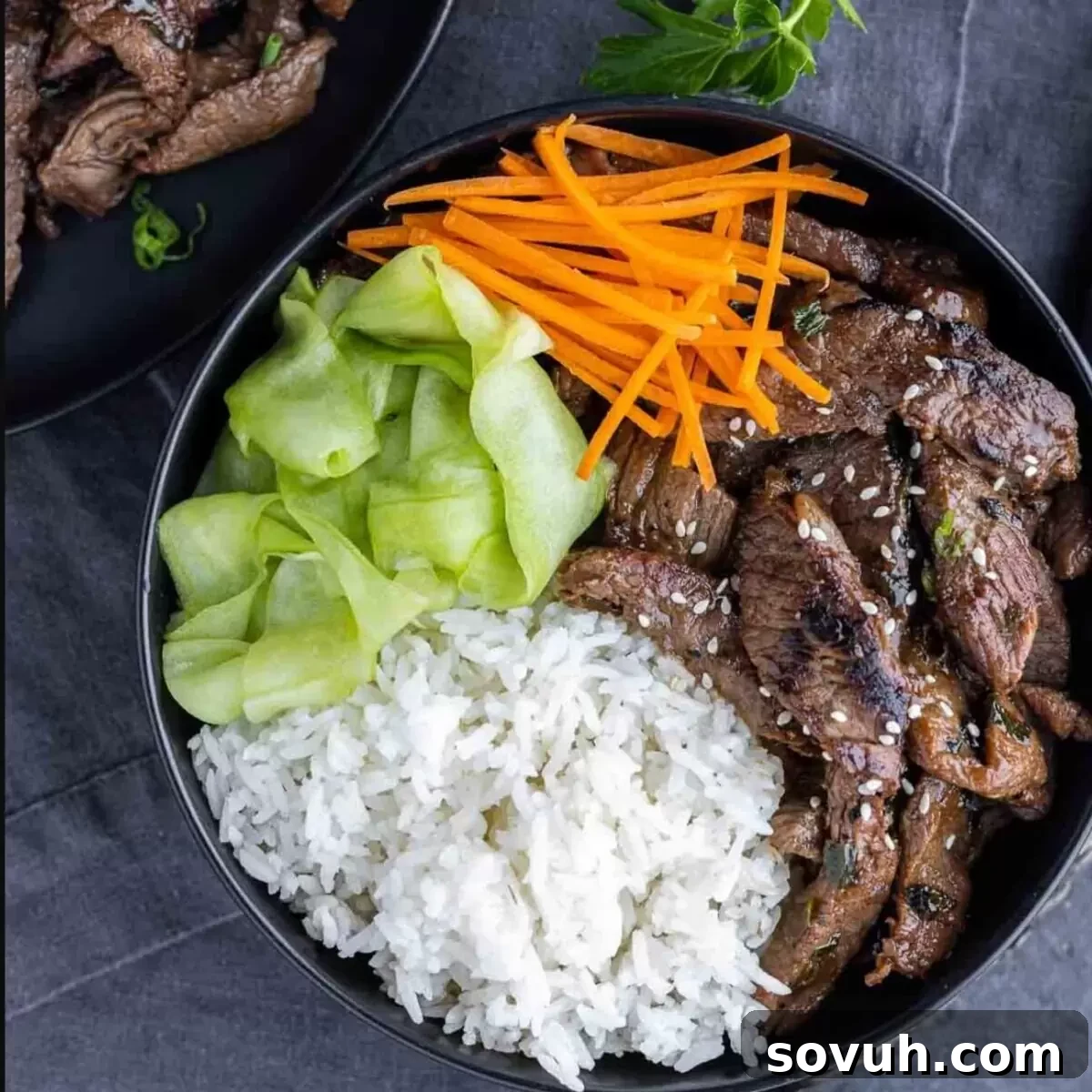
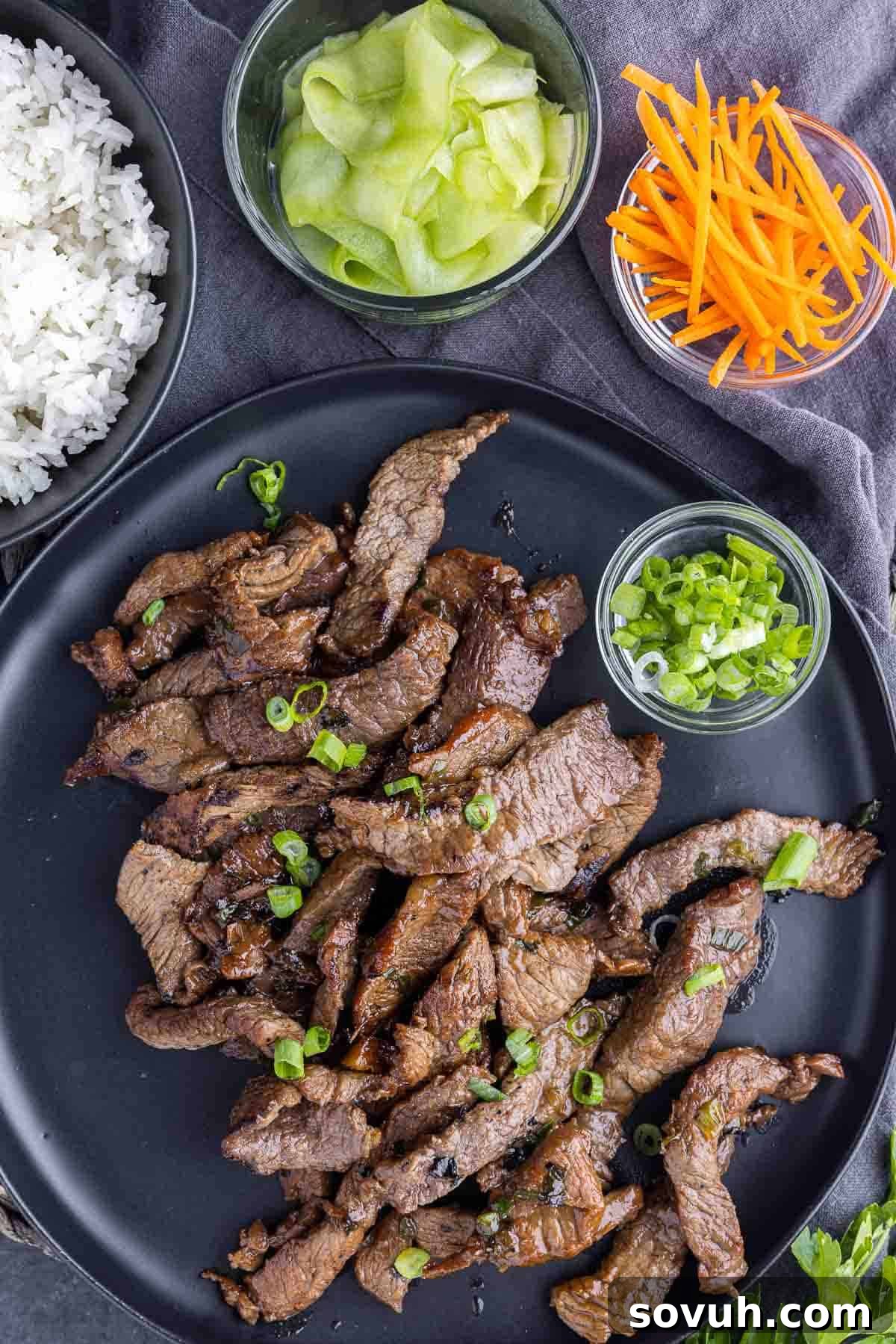
Discover the authentic flavors of Korea with our incredible Beef Bulgogi recipe, a beloved classic that brings the essence of Korean BBQ right to your kitchen. This dish features succulent, thinly sliced beef marinated in a perfectly balanced sweet and savory sauce, then quickly seared to tender perfection. Traditionally served over steaming white rice and crowned with vibrant, crunchy pickled cucumbers, this recipe offers an irresistible symphony of textures and tastes.
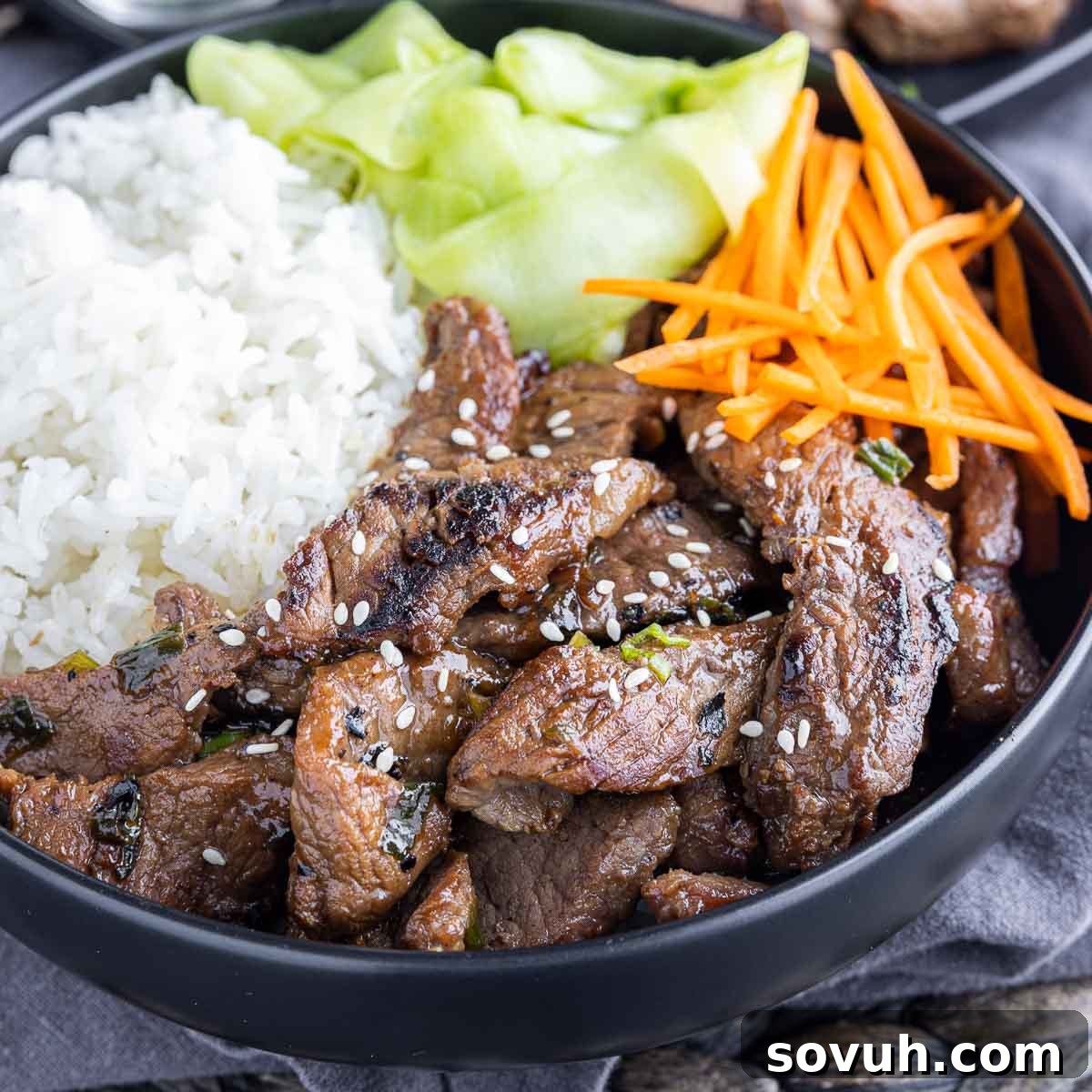
Experience Authentic Korean Beef Bulgogi at Home
Bulgogi, often referred to as “fire meat,” is a cornerstone of Korean cuisine, a dish steeped in tradition and renowned for its exquisite flavor profile. While many families cherish their unique renditions, this particular recipe holds a special place, passed down through generations. It was learned firsthand in Korea and has since become a cherished family favorite, a testament to its authentic and heartwarming taste. Our recipe focuses on creating the ideal balance: tender beef strips generously coated in a signature sweet and savory bulgogi sauce, then quickly stir-fried to achieve a caramelized exterior and juicy interior. The result is a wonderfully flavorful beef dish that pairs exceptionally well with fluffy white rice and a variety of traditional Korean garnishes, making it a perfect weeknight meal or a show-stopping dish for entertaining.
Note: This post may contain affiliate links. That means if you click on a link and make a purchase we may receive a small commission. Thank you!
The Heart of Korean Cuisine: What Makes Bulgogi So Special?
Bulgogi is more than just a dish; it’s a culinary tradition. Its origins trace back to ancient Korea, evolving from simple grilled meat to the marinated masterpiece we know today. What sets bulgogi apart is its incredible versatility and the depth of flavor achieved through the marinade. Each family often has a secret ingredient or a slight tweak that makes their version unique. Some prefer a spicier kick, while others might lean towards a sweeter profile, sometimes incorporating pureed fruits like Asian pears or kiwis not just for sweetness but also for their natural tenderizing properties. This adaptability means there’s a bulgogi for every palate, but the core remains consistent: thinly sliced meat, deeply flavored, and cooked to perfection.
Essential Ingredients for Your Homemade Bulgogi
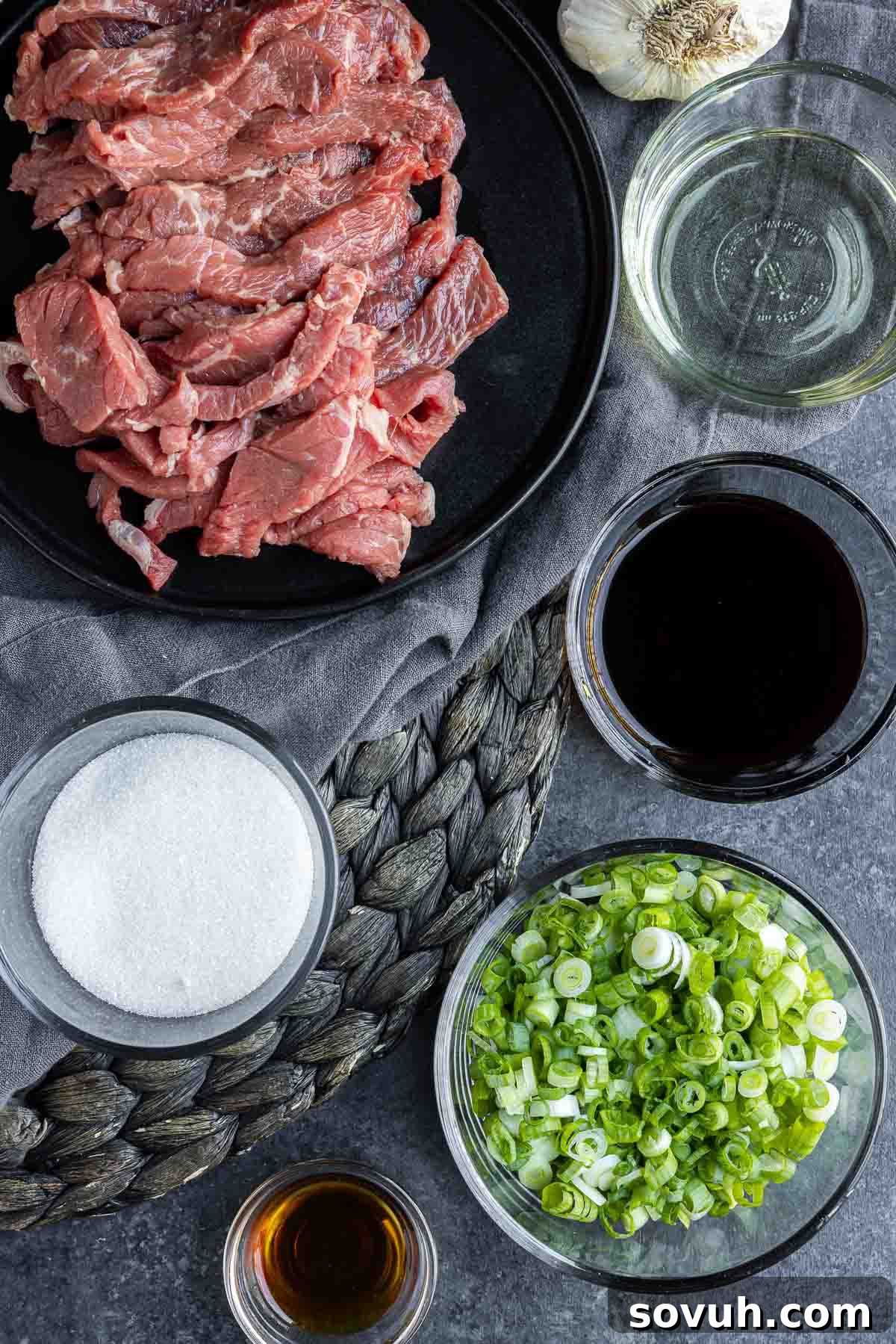
Crafting the perfect Korean beef bulgogi begins with selecting high-quality ingredients. Here’s a breakdown of what you’ll need and why each component is crucial to achieving that irresistible flavor:
- Thinly Sliced Beef: The foundation of bulgogi. We highly recommend using ribeye or sirloin for their excellent marbling and tenderness. However, cuts like skirt steak, flank steak, or even brisket can be used effectively. For a different twist, thinly sliced pork or chicken are also fantastic options. The key is thinness, which allows the meat to absorb the marinade fully and cook quickly.
- Sugar: A crucial element for the signature sweet-savory balance. We use granulated white sugar, but brown sugar adds a deeper, molasses-like note, or a combination of both can create a more complex sweetness. Sugar also helps in caramelization during searing, adding a beautiful crust.
- Oils (Vegetable Oil & Sesame Oil): Vegetable oil is ideal for searing the beef at high temperatures, ensuring an even cook without burning. Sesame oil, on the other hand, is a flavor powerhouse. Its distinct nutty aroma is indispensable in Korean cuisine and adds an authentic depth to the marinade. A light oil like canola or grapeseed can substitute for vegetable oil.
- Soy Sauce: The primary source of umami and saltiness. Opt for a good quality soy sauce for the best flavor. If you require a gluten-free option, tamari sauce is an excellent substitute that won’t compromise on taste.
- Garlic: Freshly minced garlic is highly preferred for its pungent, aromatic qualities, which are central to Korean flavors. While bottled crushed garlic can be used in a pinch, fresh garlic offers a superior, more vibrant taste.
- Green Onions (Scallions): These provide a fresh, mild oniony flavor and a touch of color to the marinade. There isn’t a perfect substitute for green onions in terms of their unique flavor and texture, so we recommend including them. If absolutely necessary, you could omit them, but the flavor profile will be slightly different. They also serve as a beautiful garnish.
Step-by-Step Guide to Crafting Perfect Bulgogi
Follow these simple instructions to prepare your own delicious beef bulgogi:
The Art of Marinating for Maximum Flavor
Marination is the secret to tender, flavorful bulgogi. The longer the beef soaks in its aromatic bath, the more profound the taste. Here’s how to prepare and marinate your meat:
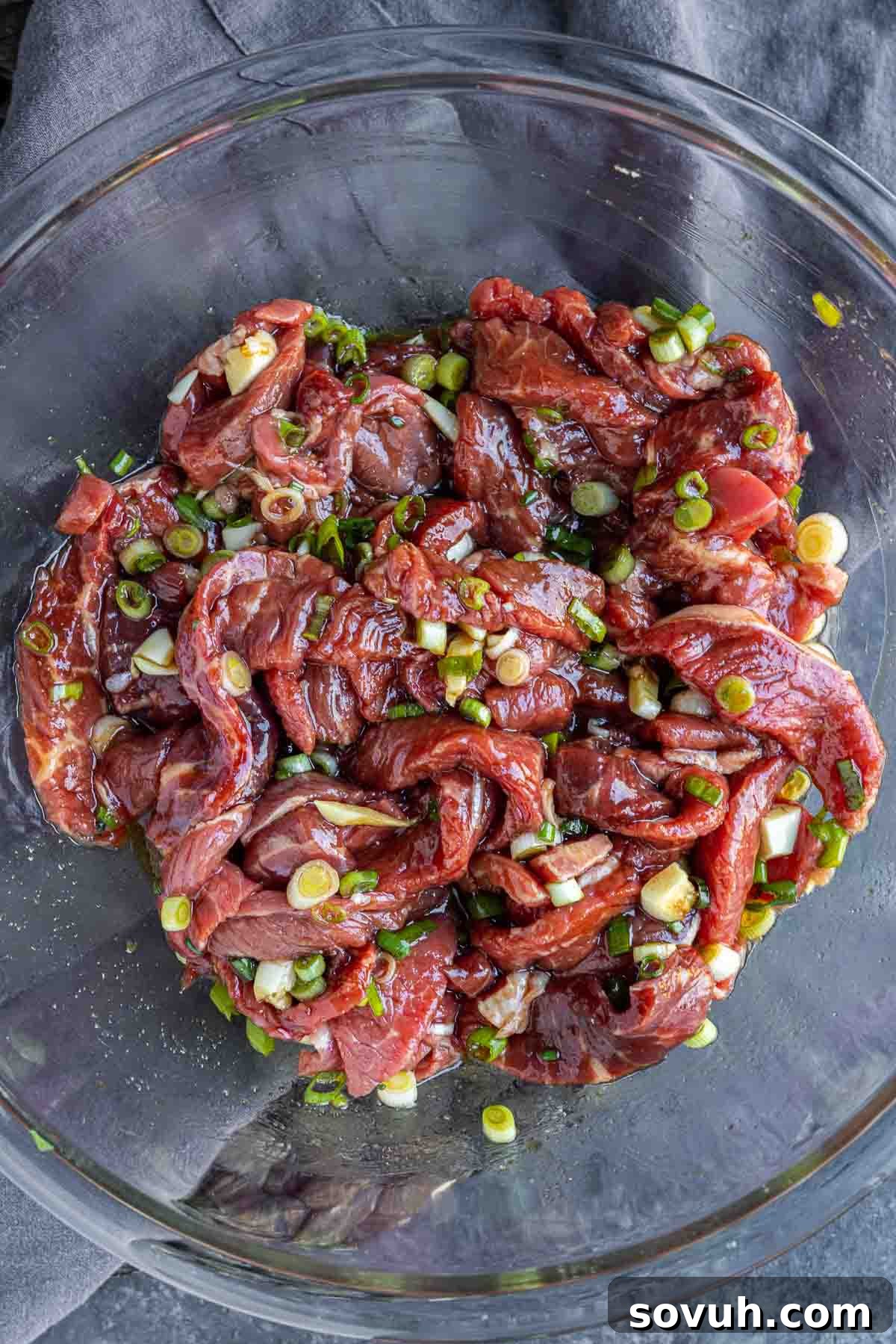
- Prepare the Beef: Begin by sprinkling the sugar evenly over the thinly sliced beef. Using your hands, gently but thoroughly work the sugar into the meat. This initial step helps tenderize the beef and allows it to absorb the flavors more effectively.
- Craft the Bulgogi Marinade: In a large, sealable container (a glass bowl with a lid or a large freezer bag works perfectly), combine the vegetable oil, sesame oil, soy sauce, minced garlic, and chopped green onion. Mix these ingredients thoroughly until well combined, creating a fragrant bulgogi sauce.
- Marinate for Depth: Add the sugar-rubbed beef into the prepared marinade. Toss the beef well to ensure every strip is evenly coated with the savory-sweet mixture. Securely seal the container and refrigerate the beef to marinate overnight. While a minimum of 4 hours will infuse good flavor, an overnight marinade (12-24 hours) truly allows the flavors to meld and the beef to become exceptionally tender.
Cooking Your Bulgogi to Tender Perfection
Once marinated, cooking bulgogi is a quick and satisfying process. The goal is a delicious sear without overcooking, keeping the beef juicy and tender.
- Heat the Skillet: When you’re ready to cook, heat a large skillet or wok over medium-high heat. A hot pan is essential for achieving a good sear and preventing the meat from steaming.
- Stir-Fry the Beef: Add the marinated beef (including any remaining marinade) to the hot skillet. Spread the meat in a single layer if possible, cooking in batches if necessary to avoid overcrowding the pan. Stir-fry constantly until the beef is fully cooked through and beautifully caramelized, typically 5-7 minutes per batch. The edges should be slightly crispy, and the meat tender.
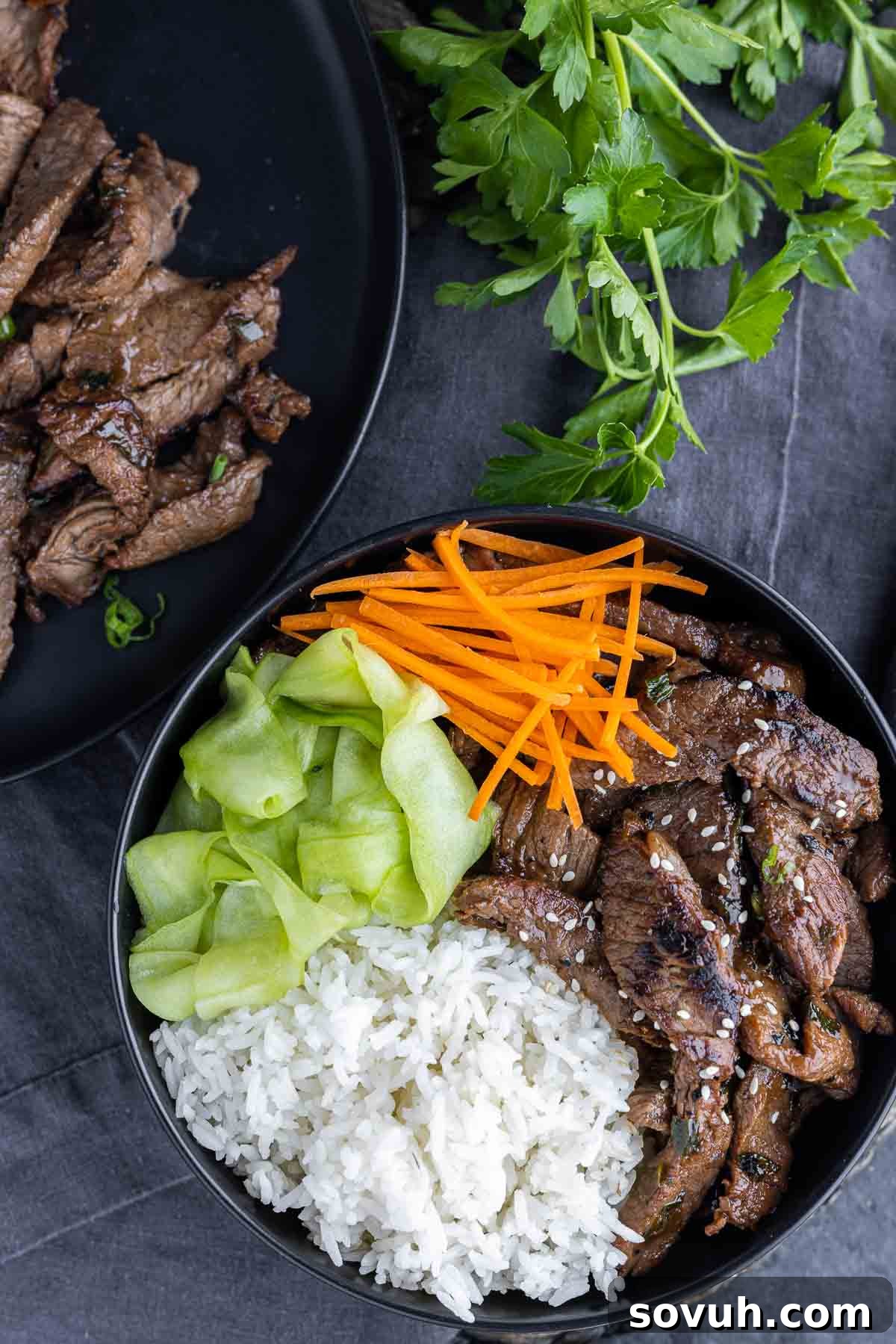
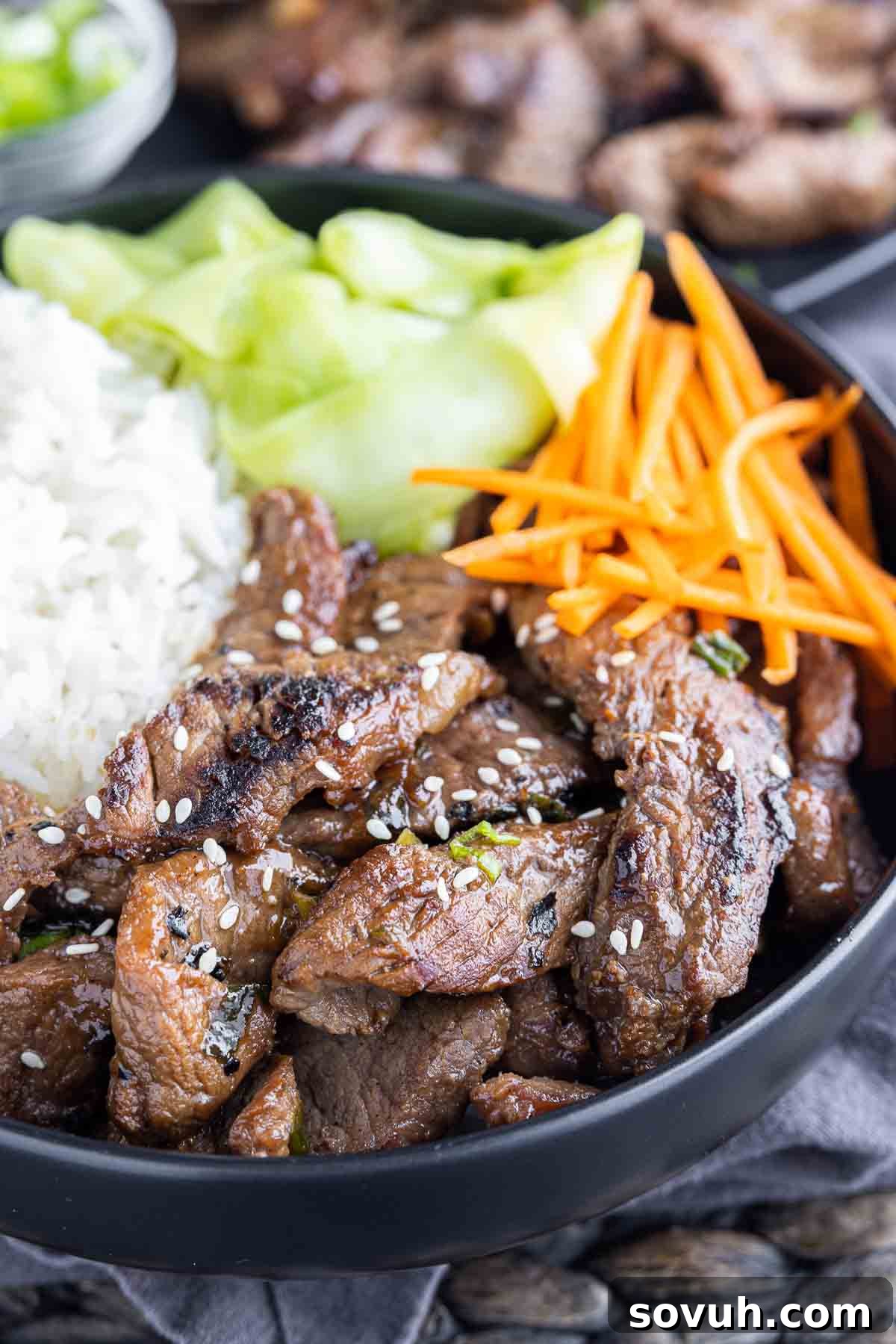
- Serve and Garnish: Remove the cooked beef from the pan. Serve it immediately over a generous bed of warm white rice. For an authentic experience, top with refreshing pickled cucumbers, a sprinkle of toasted sesame seeds, and perhaps a few extra slices of fresh green onion for a final flourish.
Frequently Asked Questions About Beef Bulgogi
What Exactly is Bulgogi?
Bulgogi is a traditional Korean barbecue dish, often recognized for its distinctively sweet and savory flavor profile and tender texture. While the fundamental concept of marinated grilled beef remains consistent, variations abound across different regions and families. Some recipes might emphasize spiciness, while others prioritize a richer, sweeter taste. Ingredients like pureed Asian pears or kiwis are commonly added to the marinade, serving not only to enhance the sweetness but also as natural tenderizers for the meat, resulting in an exceptionally soft and succulent bite. This versatility is part of what makes bulgogi a universally loved dish.
What are the Best Cuts of Meat for Beef Bulgogi?
For our recipe, we typically recommend either ribeye or sirloin due to their excellent balance of tenderness and flavor when thinly sliced. However, the beauty of bulgogi is its adaptability. Other great options include flank steak, skirt steak, or brisket, all of which benefit from thin slicing and a good marinade. Even ground beef can be used for a more casual, saucy bulgogi. If opting for ground beef, the preparation differs slightly: instead of marinating the meat raw, you’ll first prepare the bulgogi sauce separately. Then, brown the ground beef in a skillet, drain any excess fat, and add the prepared sauce, simmering until the beef is thoroughly cooked and beautifully coated in the rich, flavorful sauce.
What Does Bulgogi Taste Like?
Bulgogi offers a harmonious blend of flavors that is both comforting and exciting. The sugar in the marinade provides a noticeable sweetness, which is expertly balanced by the salty depth of soy sauce, the nutty richness of sesame oil, and the fresh, pungent notes of garlic and green onions. This combination creates a complex yet incredibly satisfying taste – savory with a hint of sweetness, umami-rich, and deeply aromatic. It’s a flavor that lingers deliciously on the palate, making it a truly memorable dish.
Expert Tips for Thinly Slicing Steak
Achieving perfectly thin slices of beef is paramount for authentic bulgogi. Thinness ensures maximum marinade absorption and rapid cooking, leading to a tender result. Here’s a professional trick to make it easier:
To effortlessly slice steak thinly, partially freeze it for about 30 to 60 minutes before cutting. You don’t want the meat to be frozen solid, but rather firmed up just enough to hold its shape while slicing. This slight freezing significantly reduces the meat’s floppiness, allowing for cleaner, more uniform, and much thinner cuts. Once firmed, remove the beef from the freezer, place it on a stable cutting board, and use a very sharp knife to slice against the grain into thin pieces, typically 1/8 to 1/4 inch thick, before proceeding with the marinating process.
Perfect Pairings: What to Serve with Your Bulgogi
Bulgogi is a star dish, but it shines even brighter when accompanied by complementary side dishes that balance its rich flavors and add textural contrast. Here are our favorite ways to serve it:
The traditional accompaniment is steamed rice. We typically serve bulgogi over fluffy white or wholesome brown rice, depending on preference. Whether you opt for quick-cooking or regular rice, a large batch of Instant Pot white rice always yields perfectly cooked, consistent results.
Toppings are essential for adding freshness and a delightful crunch. We always top our bulgogi with refreshing quick pickled cucumbers, thinly sliced carrots (often cut into matchsticks for visual appeal and texture), and a generous sprinkle of toasted sesame seeds. Our easy recipe for making pickled cucumbers ensures you get just the right balance of sweet and sour to cut through the richness of the beef.
For a truly authentic Korean meal experience, complement your bulgogi with an array of Korean side dishes, known as banchan. A must-have is spicy kimchi, offering a fermented tang and heat. Other popular banchan include seasoned bean sprouts (kongnamul muchim), spinach (sigeumchi namul), or radish salad (mu saengchae). To further customize your flavors, offer a selection of Korean sauces on the side, such as a fiery Gochujang sauce for a spicy kick or a savory Ssamjang sauce, perfect for wrapping the beef in lettuce leaves.
Meal Prep & Storage: How to Make Bulgogi Ahead of Time
Bulgogi is an excellent dish for meal prepping, allowing you to enjoy its delicious flavors even on busy days. Proper storage ensures the taste and texture remain superb:
To prepare bulgogi ahead of time, simply follow the recipe instructions for cooking the beef. Once cooked, let the bulgogi cool completely to room temperature before transferring it to an airtight container. Store this container in the refrigerator for up to 4 days. This makes it a convenient option for lunches or quick dinners throughout the week.
For longer storage, bulgogi freezes beautifully. Place the cooled beef in a freezer-safe airtight container or, even better, a sealable plastic freezer bag. When using a bag, press out as much air as possible before sealing to prevent freezer burn. Frozen bulgogi can be stored for up to 2 months. This allows you to have a ready-to-cook meal whenever the craving strikes.
When you’re ready to enjoy your prepared bulgogi, reheating is straightforward. If refrigerated, transfer the beef to a pan and heat over a medium flame, stirring occasionally, until it’s warmed through to your desired temperature. If using frozen bulgogi, first allow it to thaw completely in the refrigerator for 24 hours before reheating it using the same pan method.
More Delicious Beef Recipes to Explore
If you’ve enjoyed the rich flavors of our Beef Bulgogi, you’ll love these other easy and satisfying beef recipes from our collection:
- Traditional Beef Stroganoff
- Crock Pot Italian Beef
- Beef Braciole {Italian Stuffed Steak}
- Beef Enchilada Casserole
- Beer Braised Beef Enchiladas
- Easy Sheet Pan Beef Teriyaki
- Red Wine Braised Short Ribs
- Explore More Beef Recipes…
Love this recipe and want more culinary inspiration?
Make sure to follow us on Instagram and Pinterest for a daily dose of delicious recipes and cooking tips, just like this one!
Servings: 4
Prep Time: 10 mins
Cook Time: 10 mins
Marinate: 12 hrs
Total Time: 12 hrs 20 mins
Beef Bulgogi
Created By: Kat Jeter & Melinda Machado
Beef bulgogi is a popular Korean dish made of marinated beef strips. Typically served over rice and topped with pickled cucumbers, this recipe combines savory sweet meat with crunchy sweet and sour veggies.
Ingredients
- 2 pounds Thinly sliced beef
- 4 tablespoons Sugar
- 4 tablespoons Vegetable oil
- 1 tablespoon Sesame oil
- 5 tablespoons Soy sauce
- 5 cloves Garlic, minced
- 1 bunch Green onions, chopped
- 1 cup Quick pickled cucumbers
- 1 teaspoon Sesame seeds
- 2 cups Cooked white rice
Instructions
- Sprinkle meat with sugar and work it in thoroughly with your hands.
- Combine vegetable oil, sesame oil, soy sauce, garlic, and green onion in a large container that can be sealed. Mix ingredients thoroughly.
- Add the meat to the marinade and toss to coat evenly. Seal with the lid and place in the refrigerator to marinate overnight (for best results).
- When ready to cook, heat a skillet over medium-high heat. Add the meat to the skillet along with the marinade and stir-fry until the meat is cooked through and caramelized.
- Serve over white rice and top with pickled cucumber and a sprinkle of sesame seeds.
Nutrition
Nutrition Disclaimer: We are not certified nutritionists. Nutrition facts are an estimate and are provided as a courtesy. They are generated by an online API which recognizes ingredient names and amounts and makes calculations based on the serving size. Results may vary.
- Serving: 0.5 pound
- Calories: 605 kcal
- Carbohydrates: 38g
- Protein: 54g
- Fat: 25g
- Saturated Fat: 5g
- Polyunsaturated Fat: 10g
- Monounsaturated Fat: 8g
- Trans Fat: 1g
- Cholesterol: 125mg
- Sodium: 1392mg
- Potassium: 919mg
- Fiber: 1g
- Sugar: 13g
- Vitamin A: 84 IU
- Vitamin C: 3mg
- Calcium: 79mg
- Iron: 5mg
Course: Main
Cuisine: Korean
